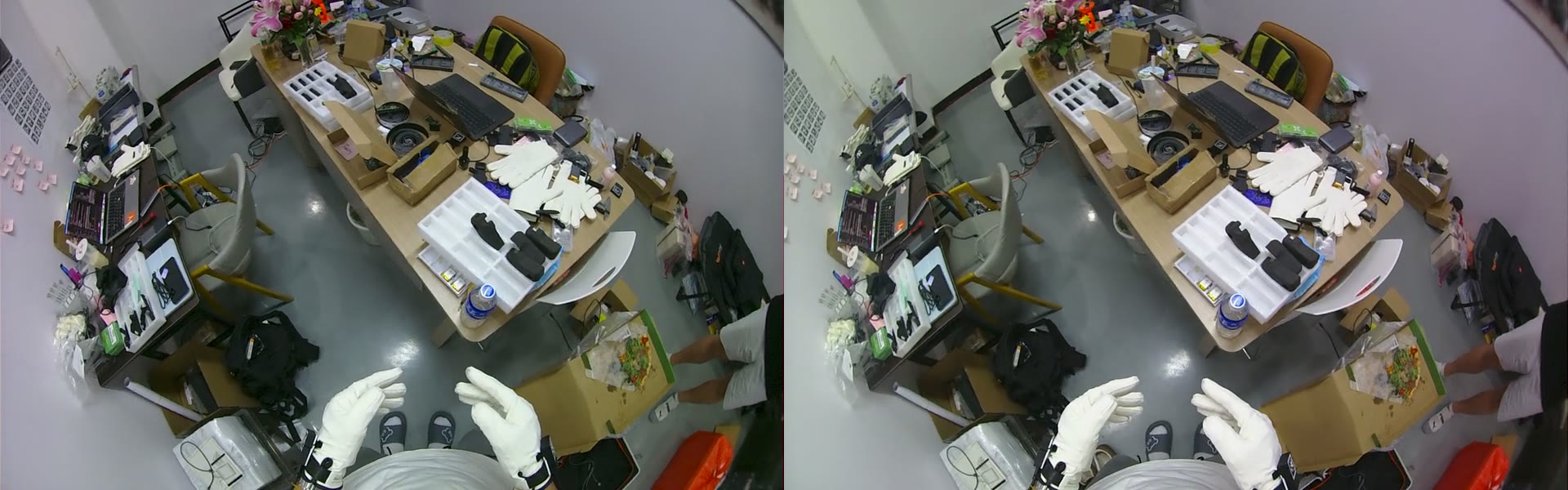
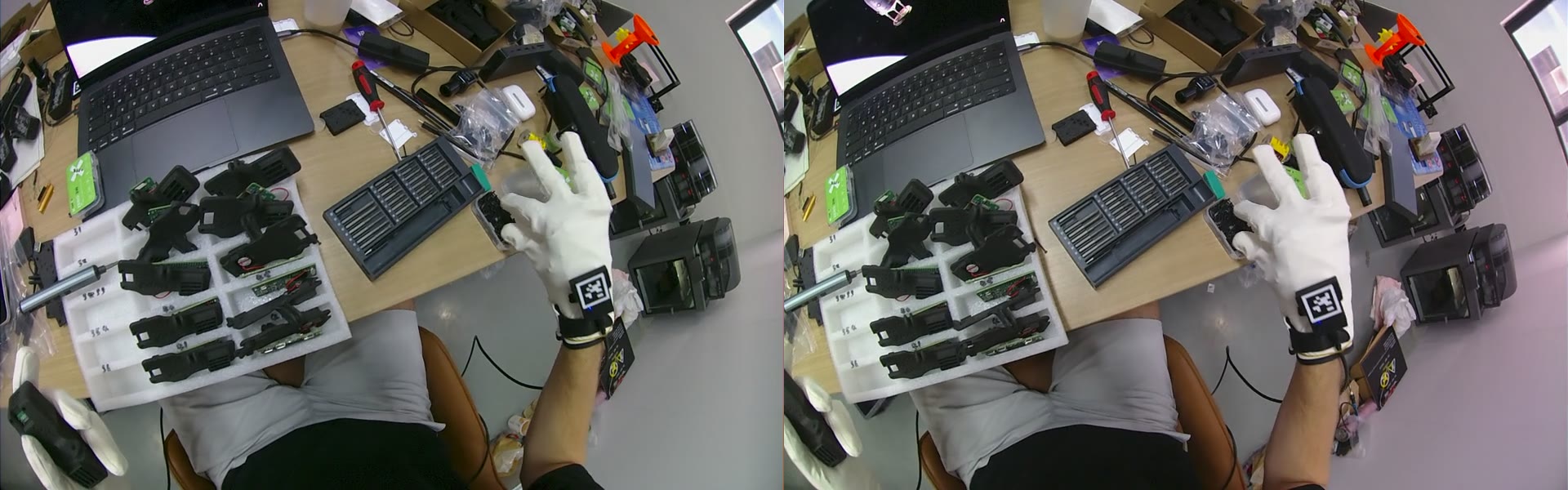
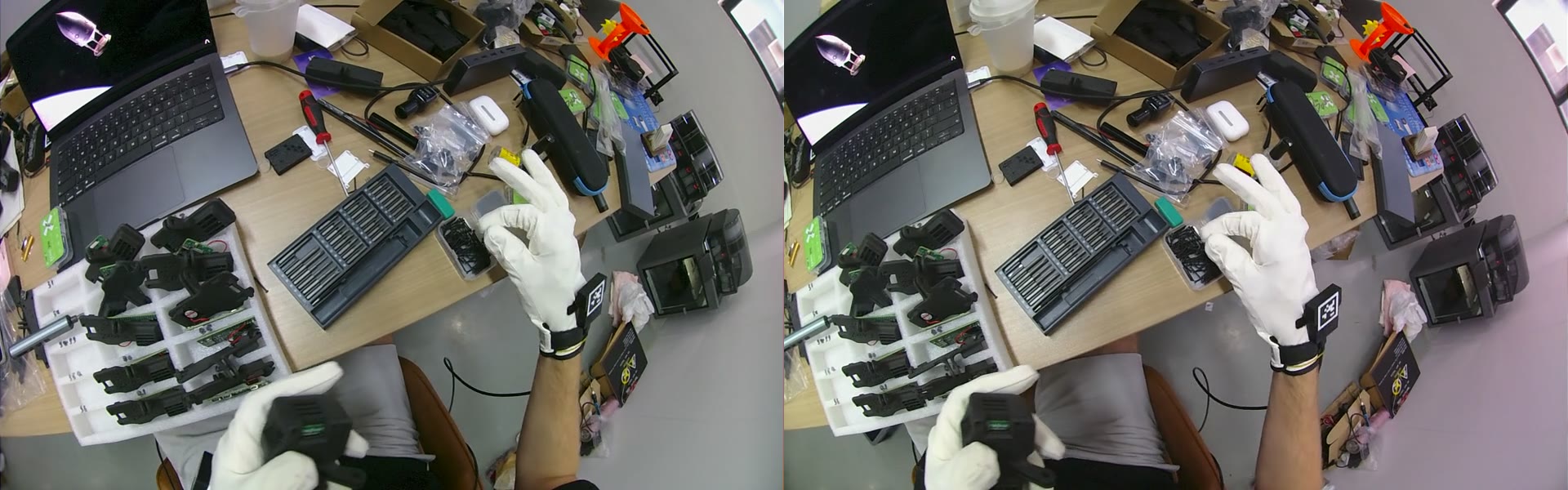
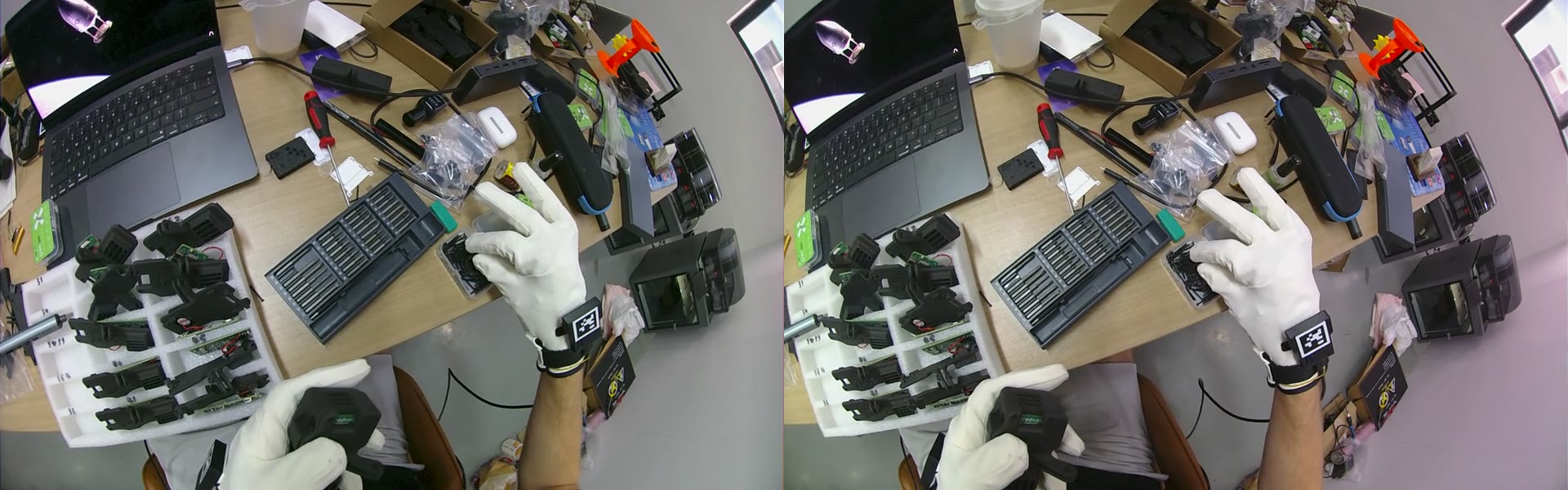
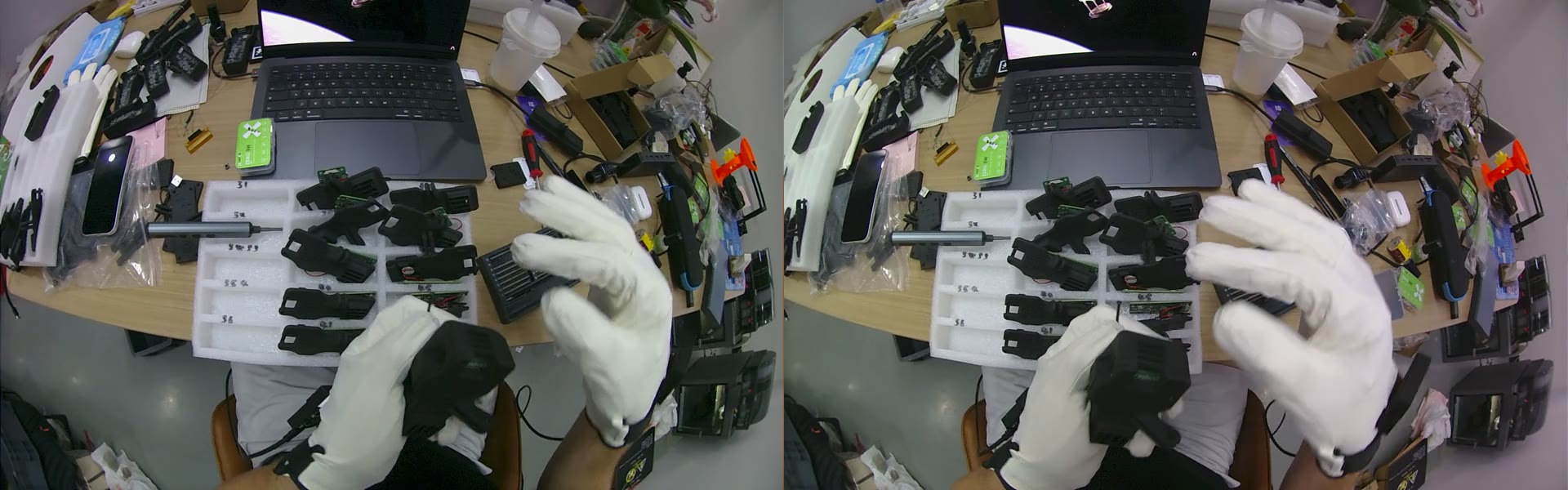
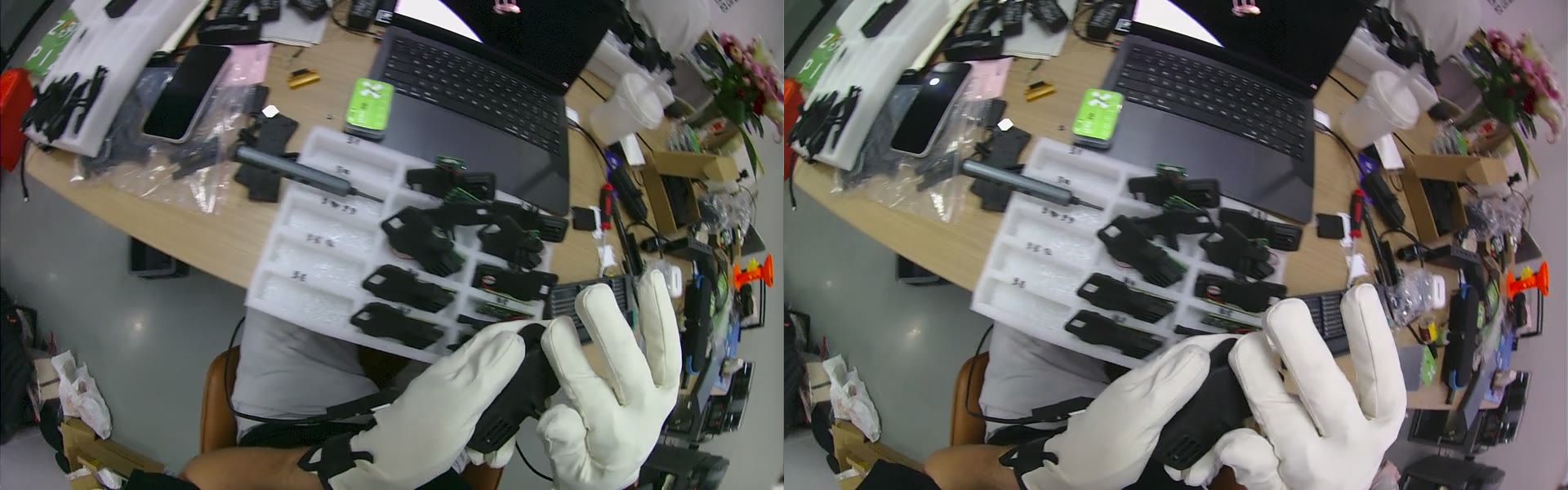
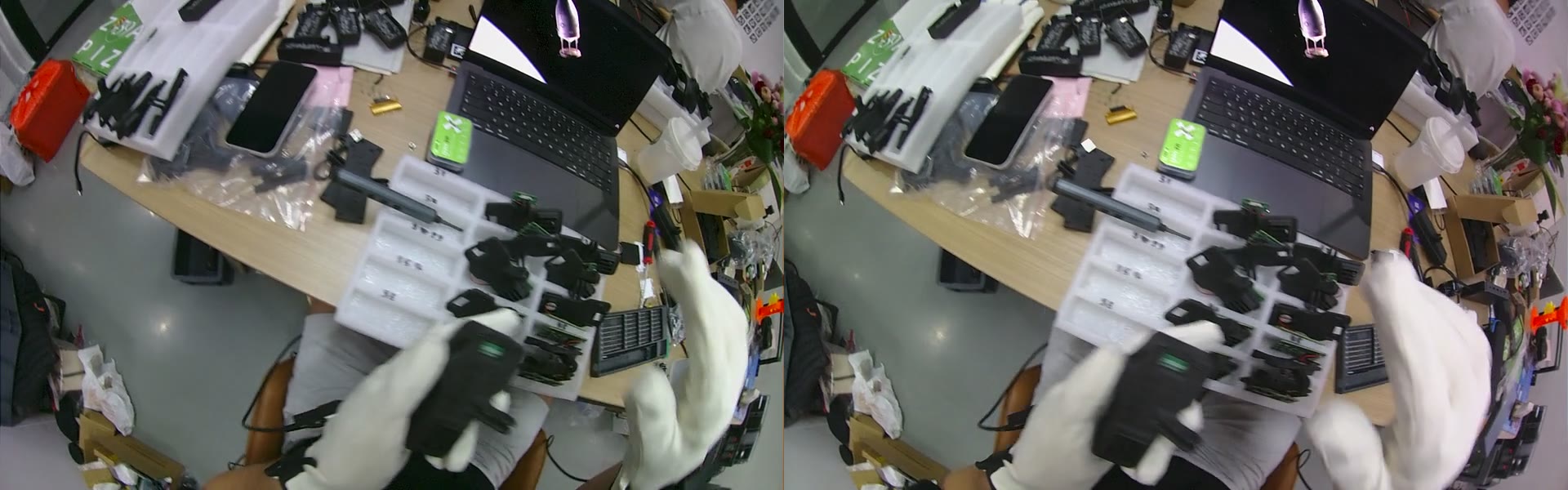
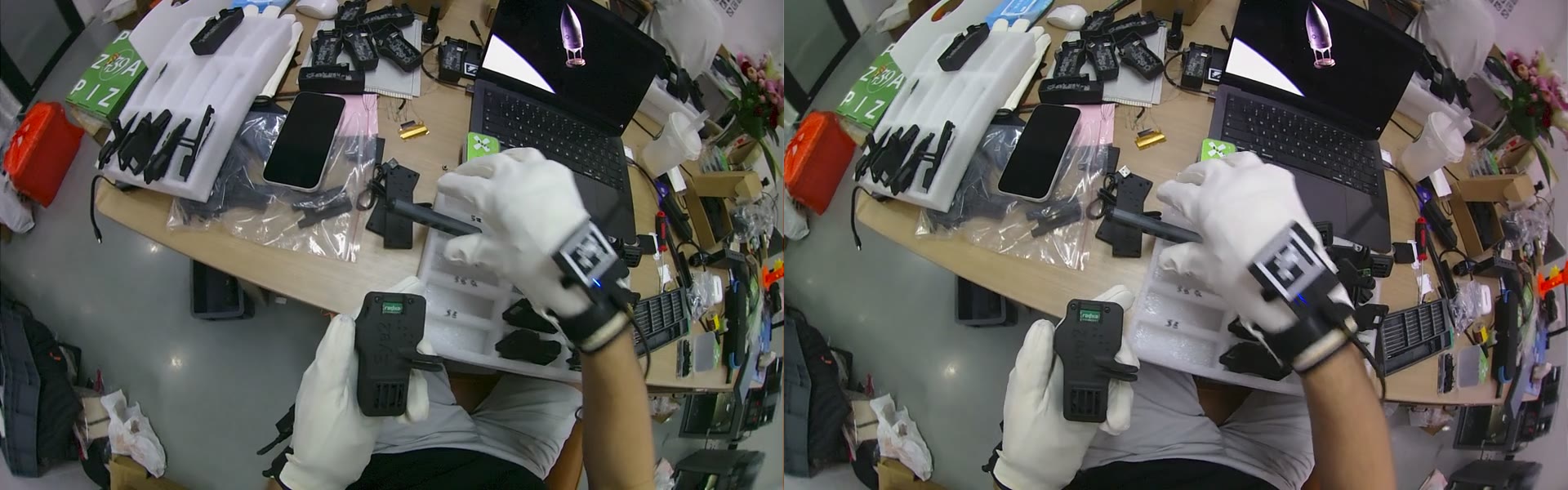
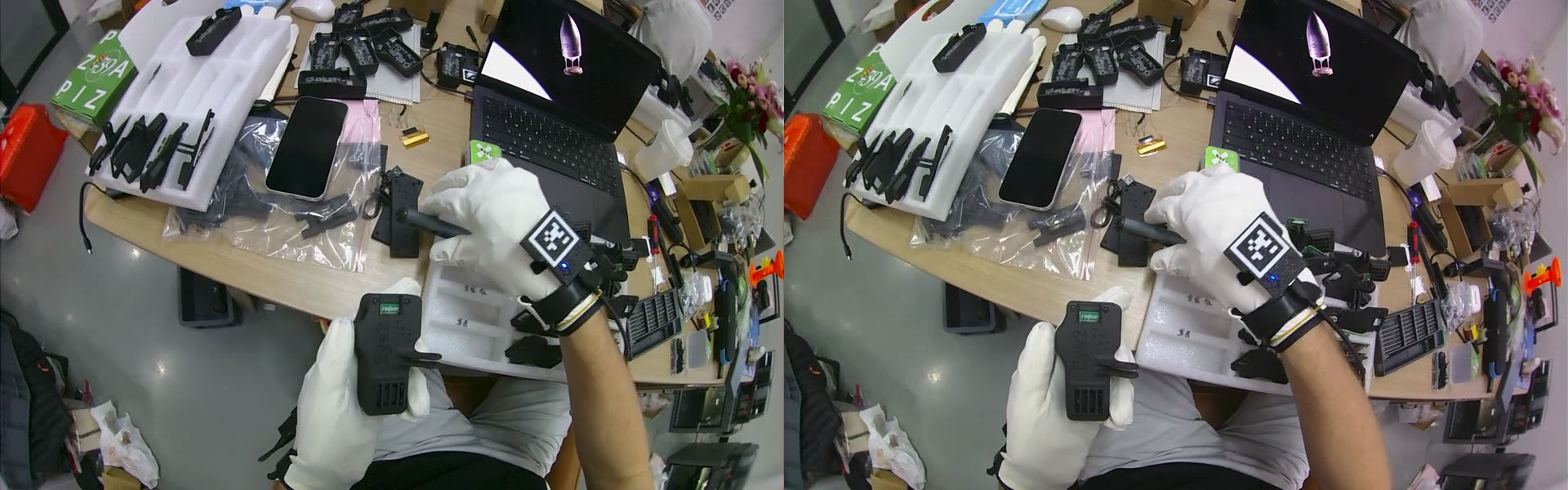
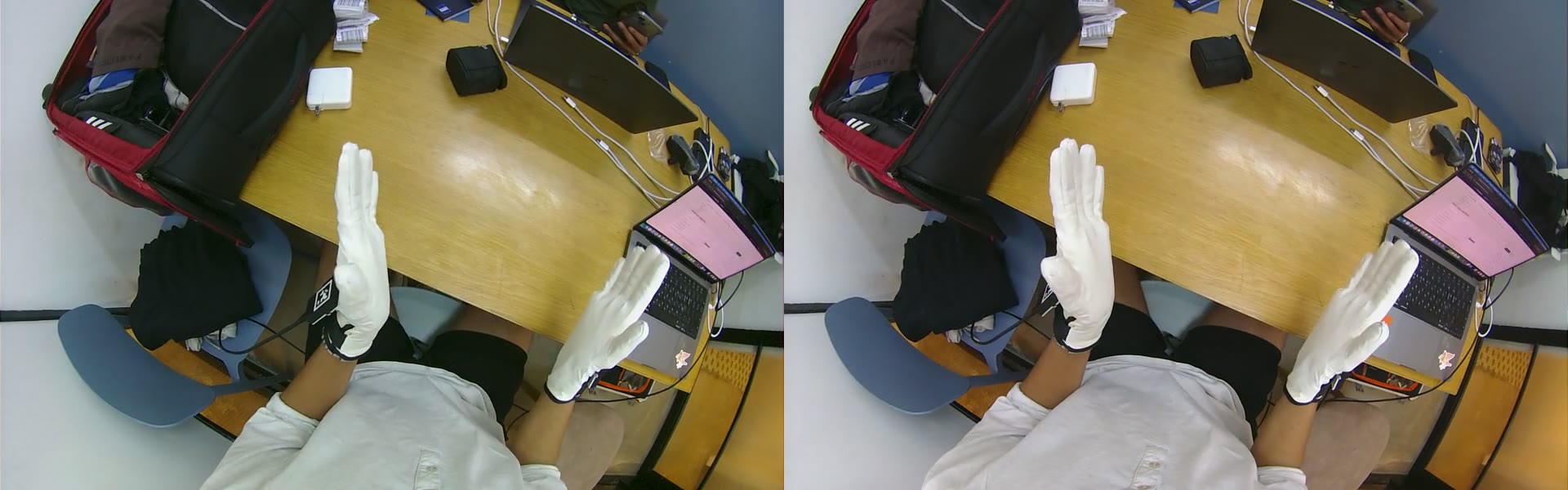
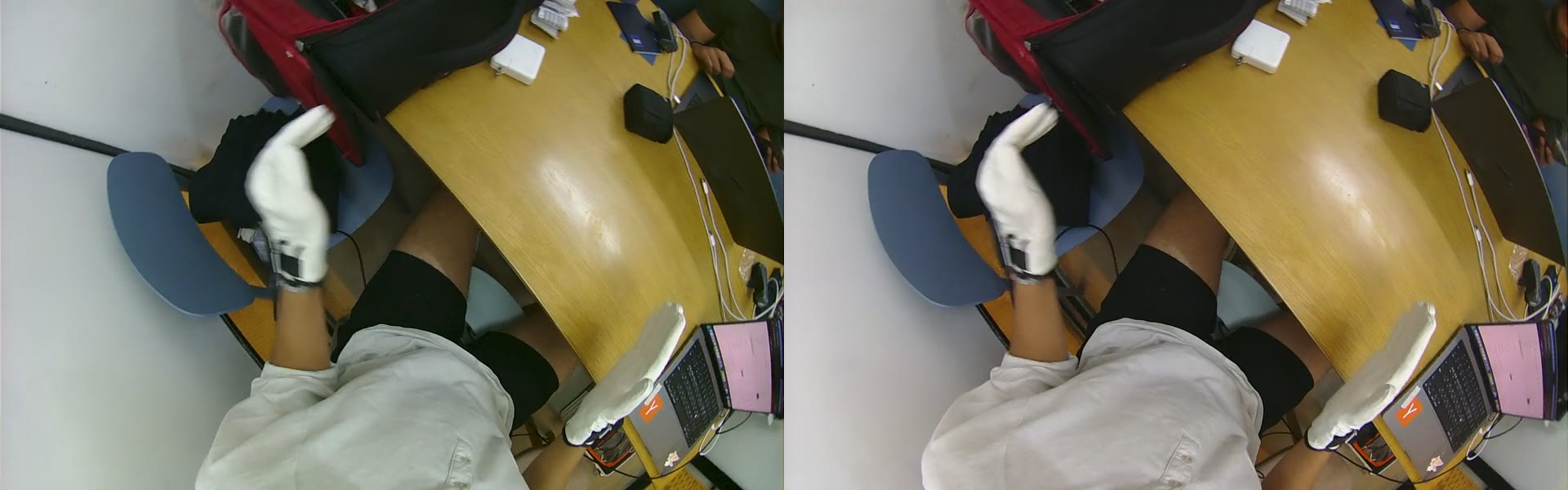
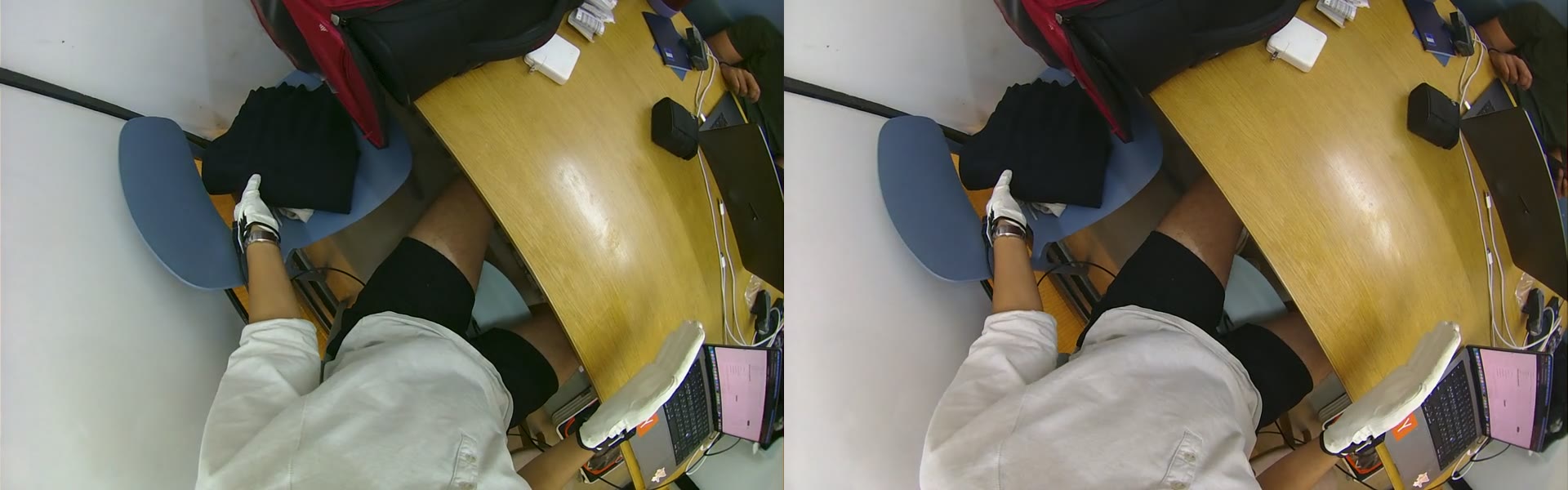
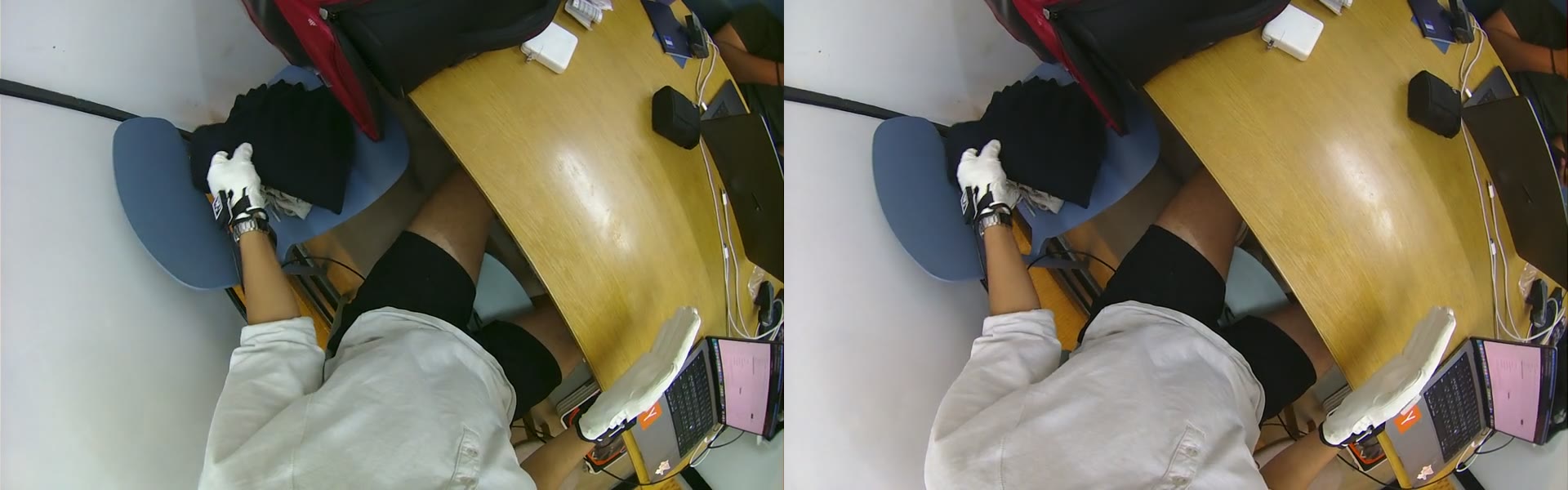
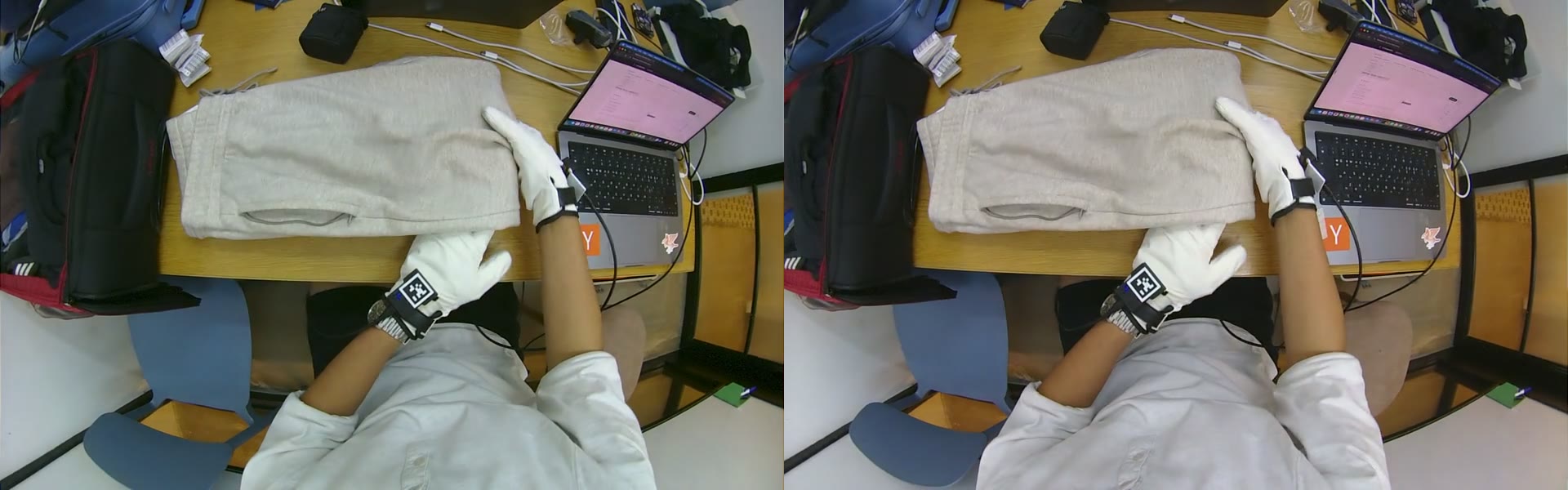
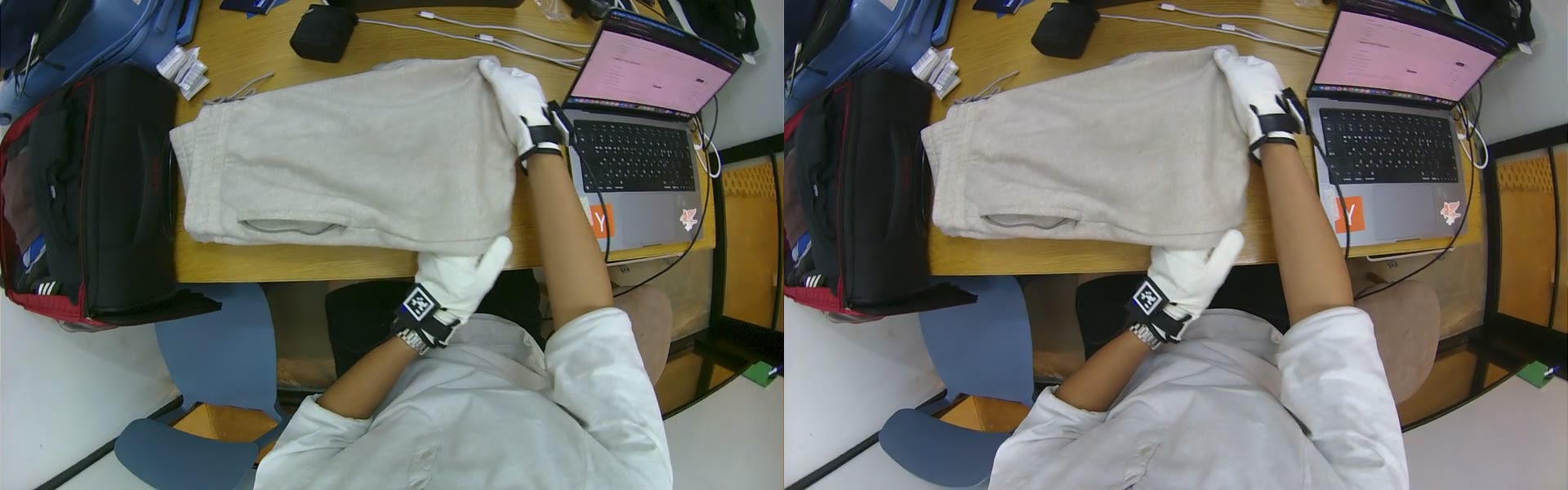
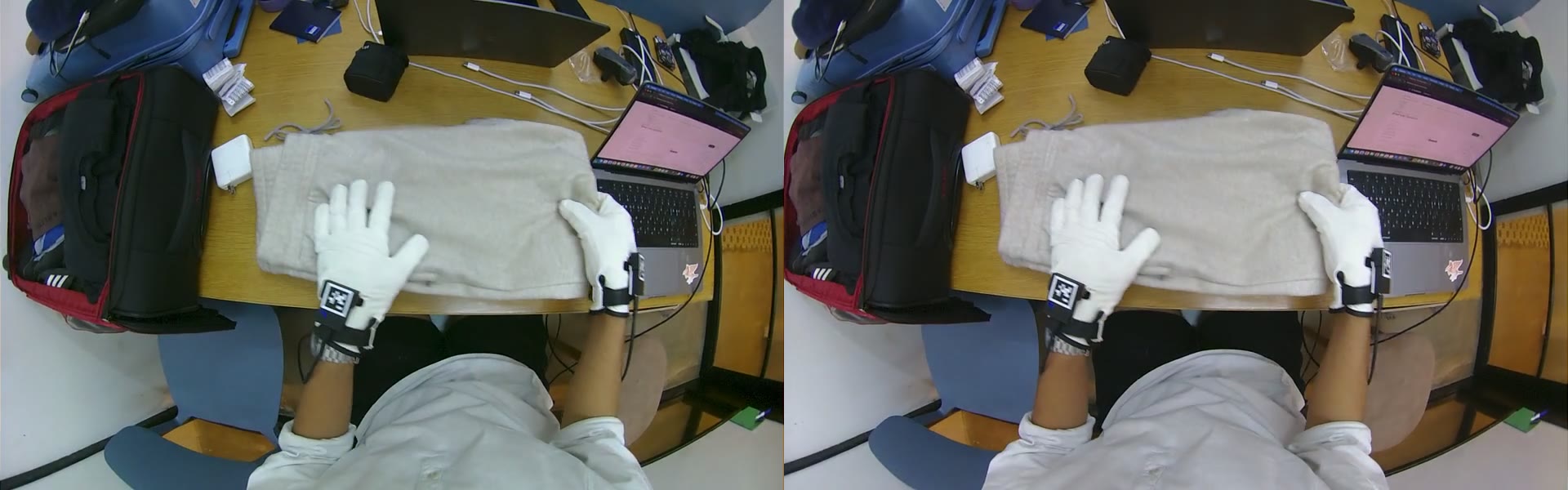
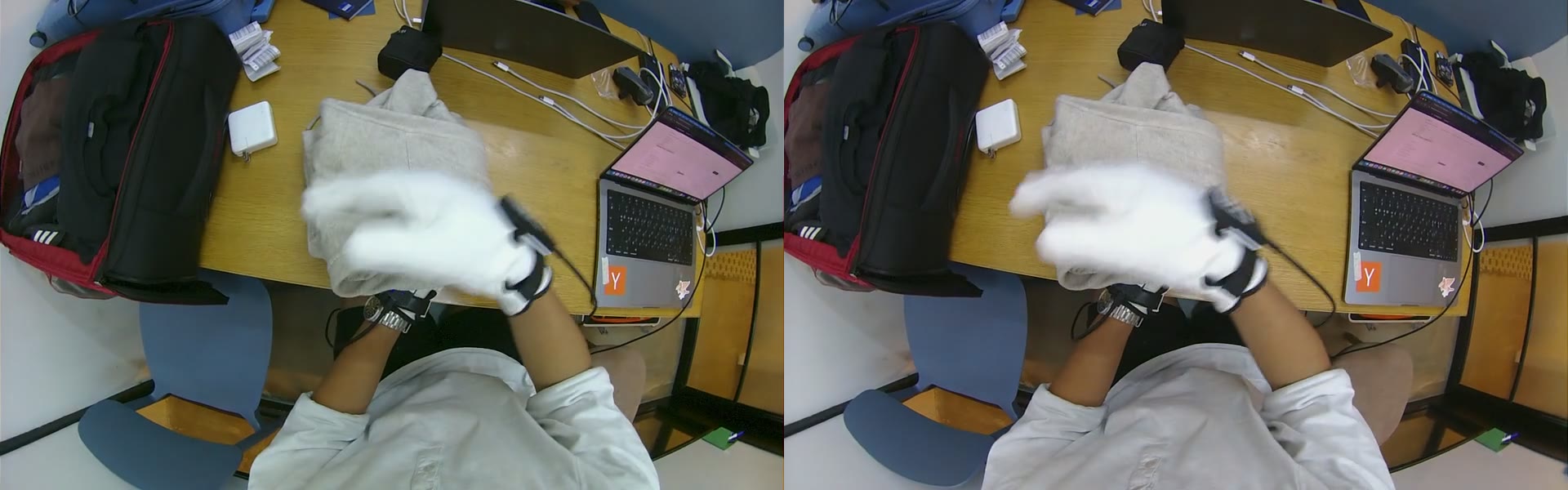
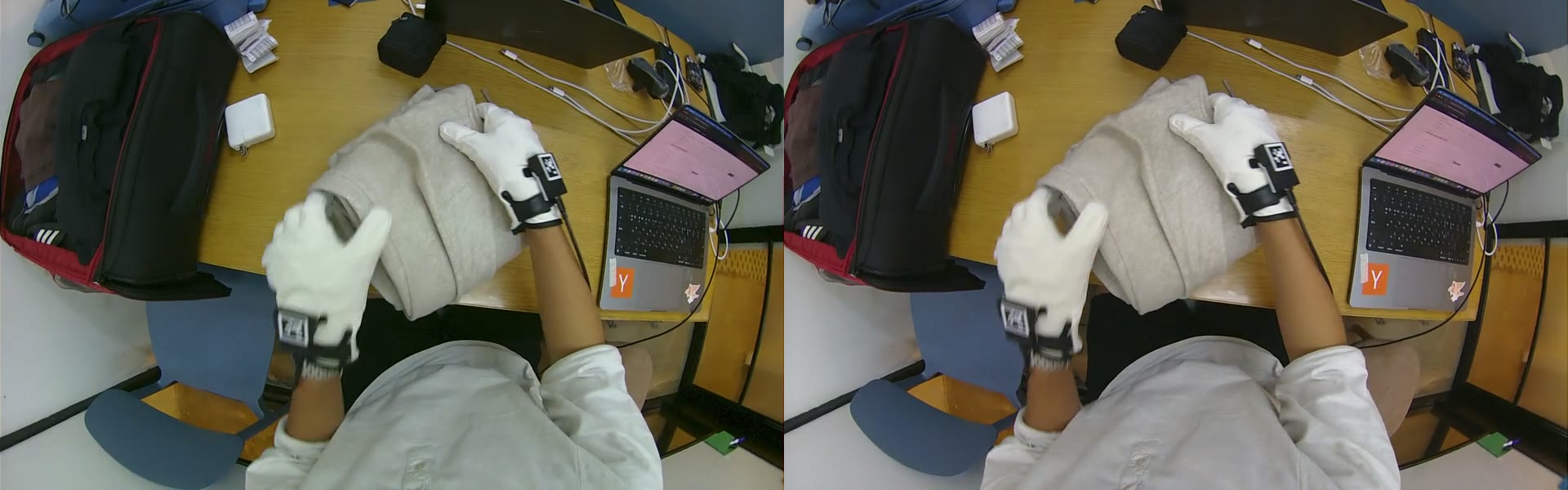
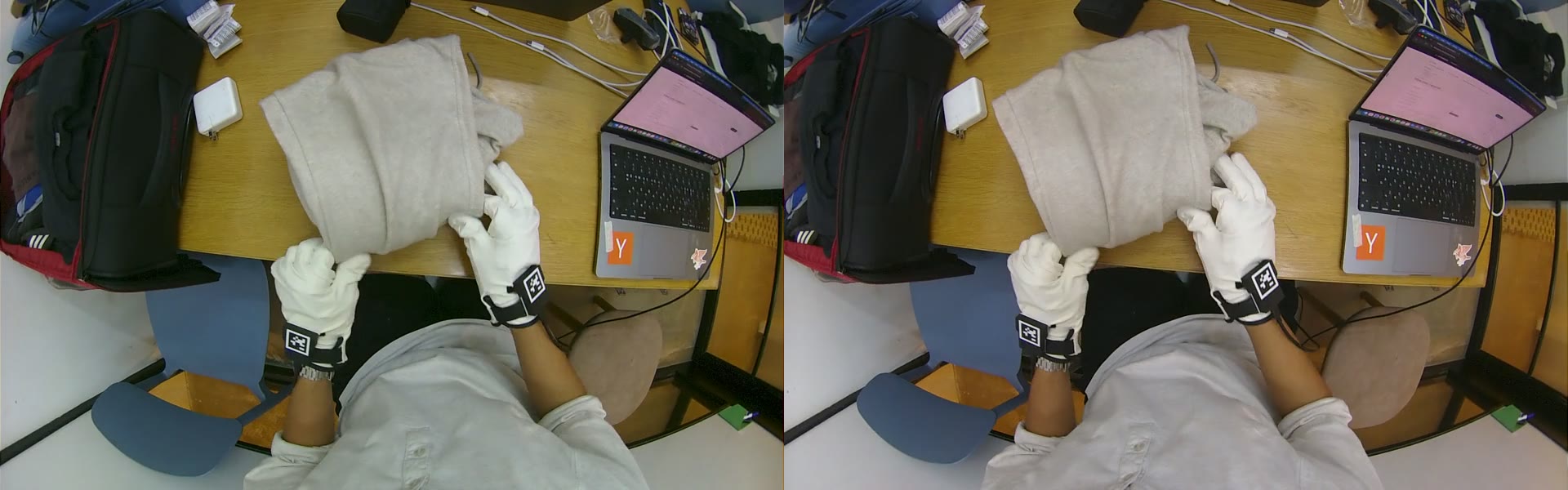
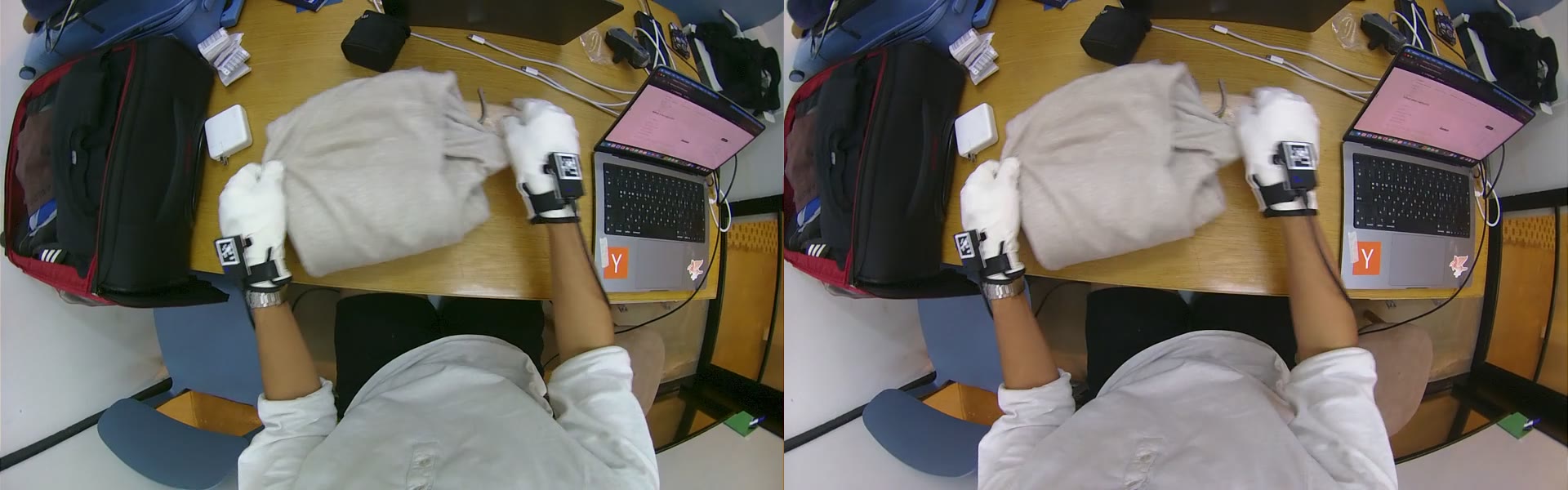
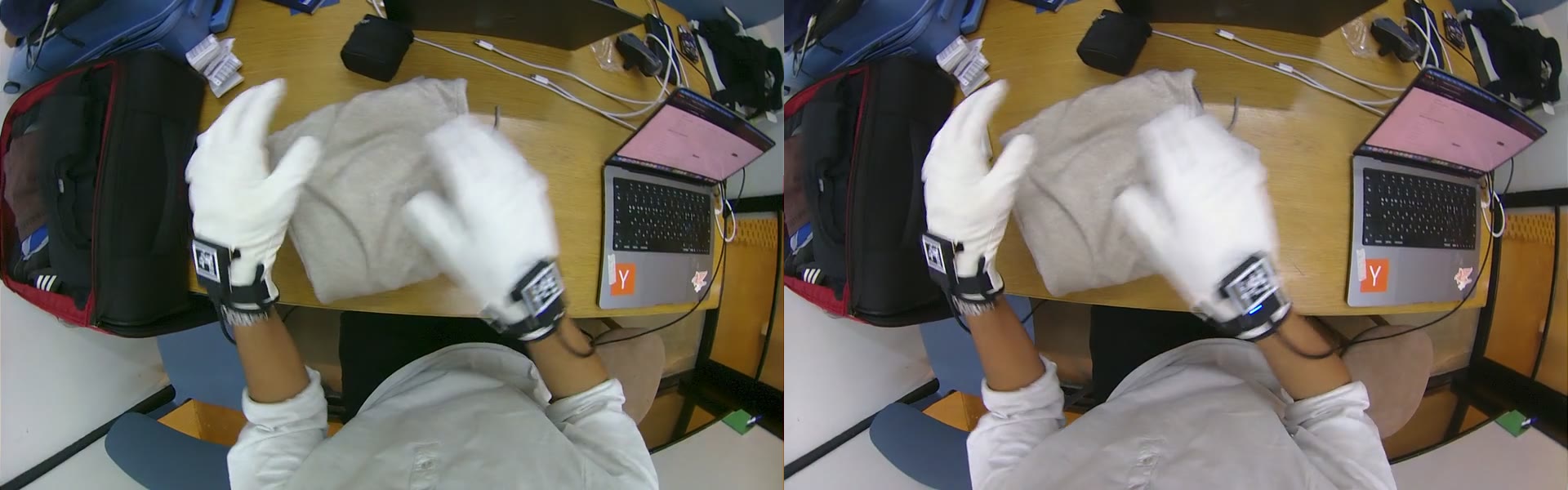
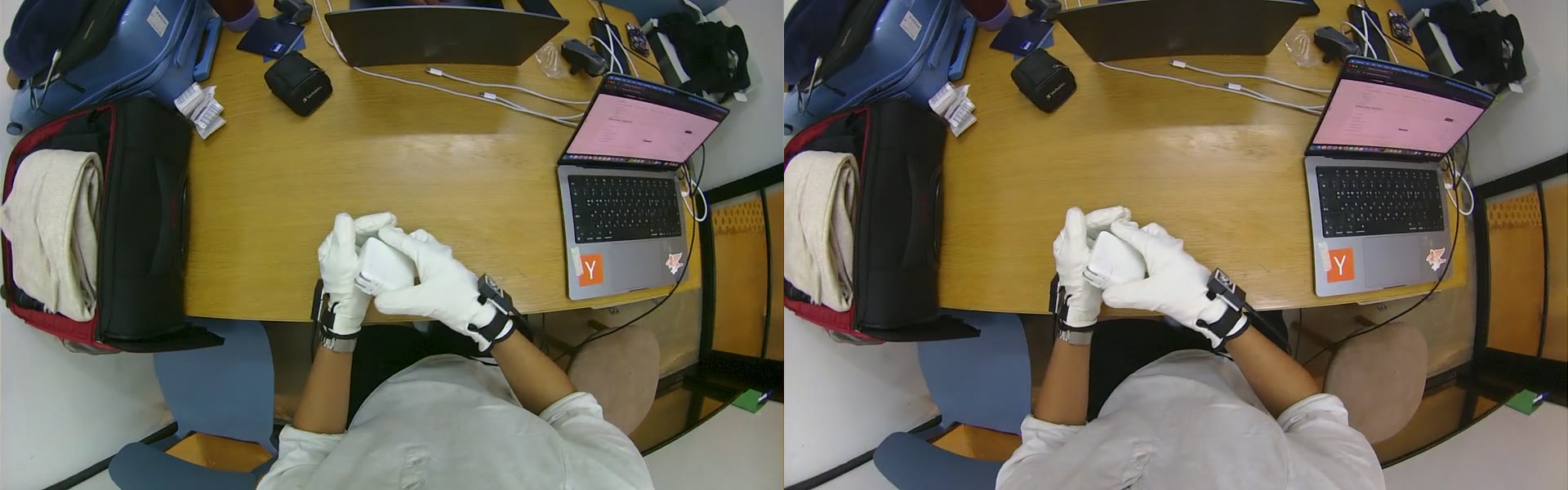
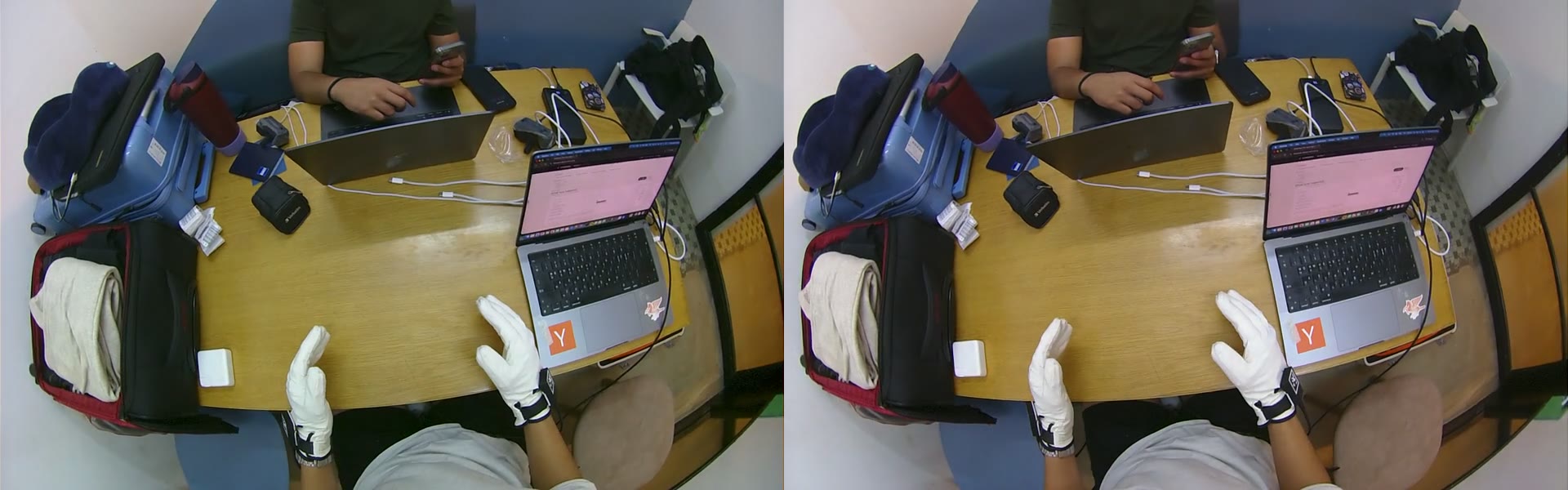
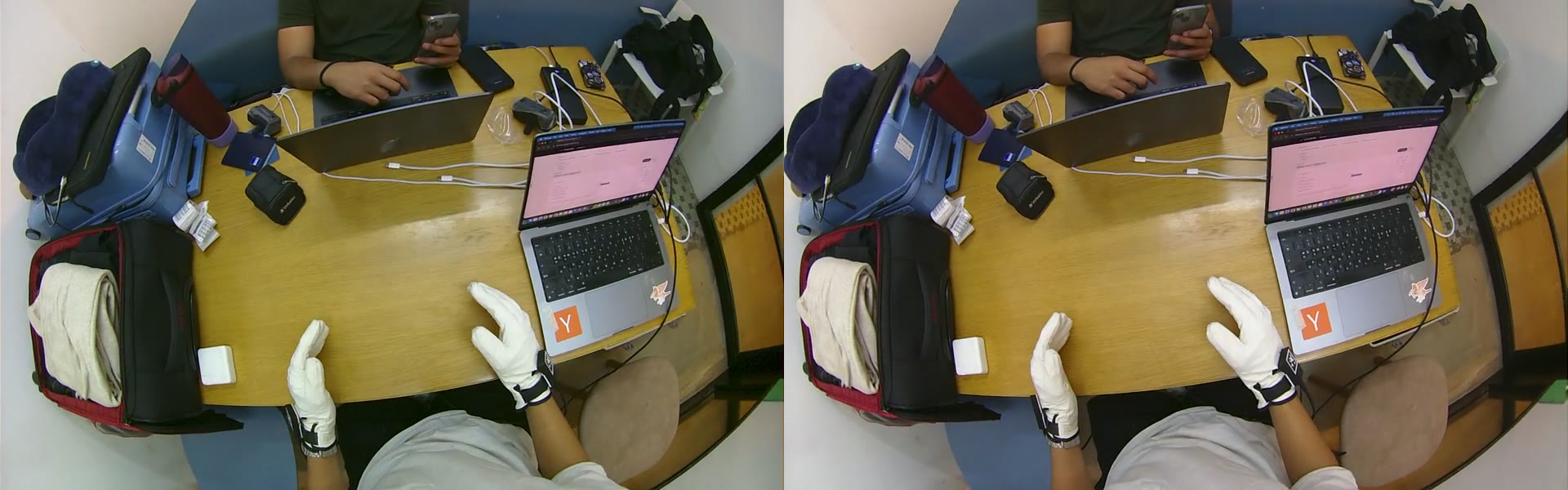
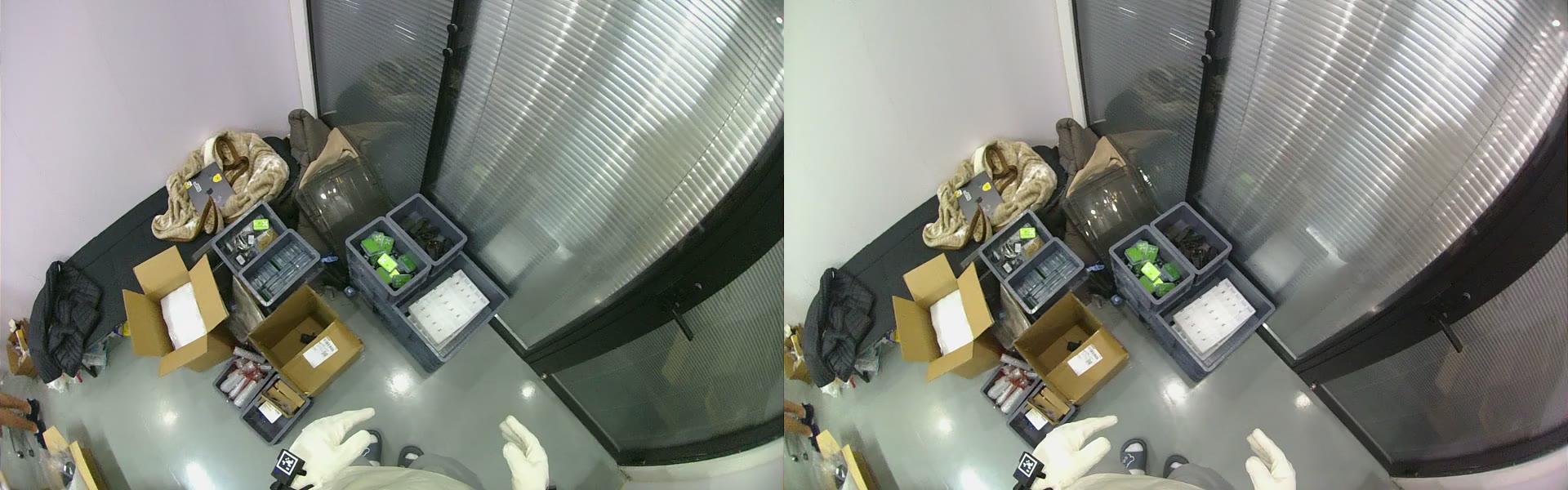
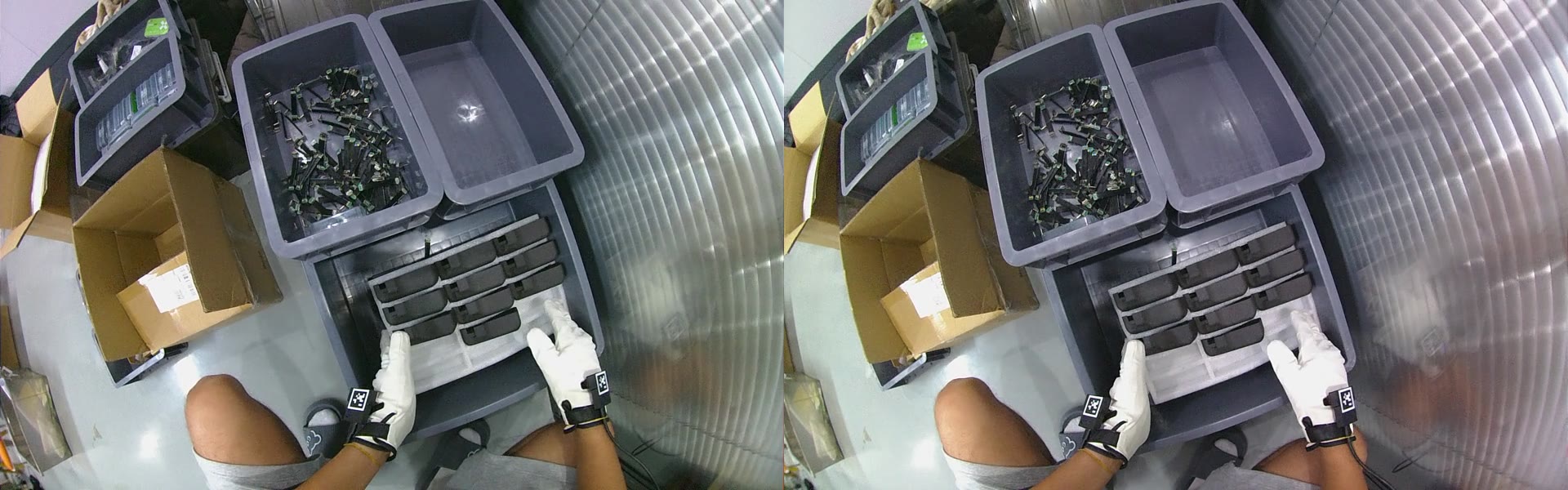
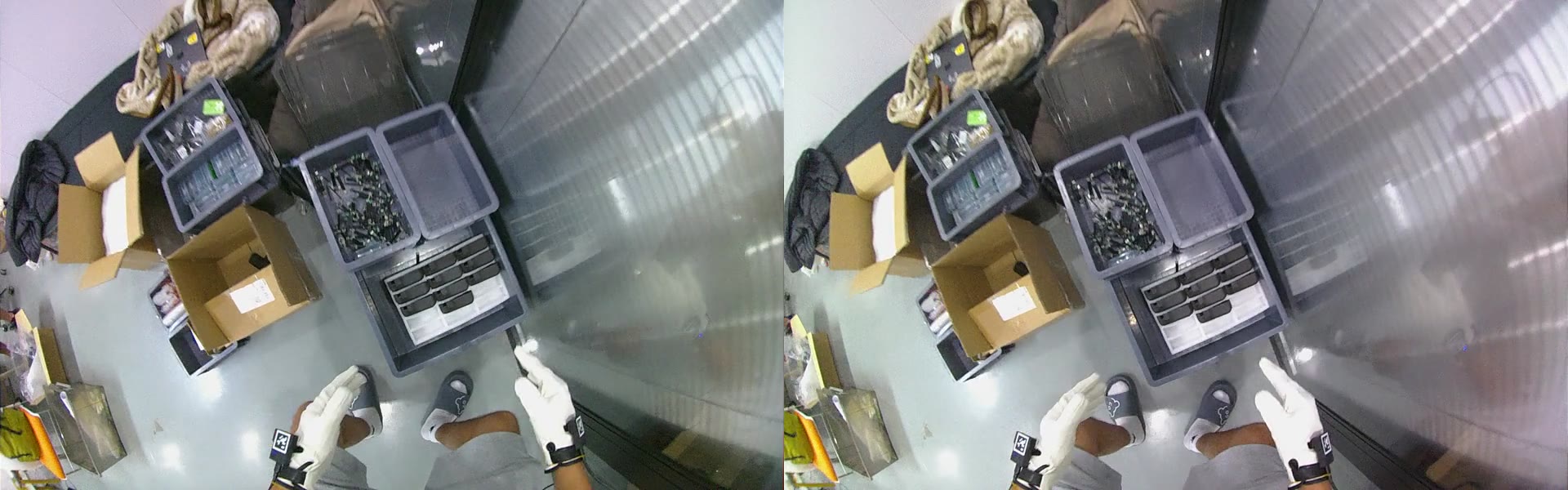
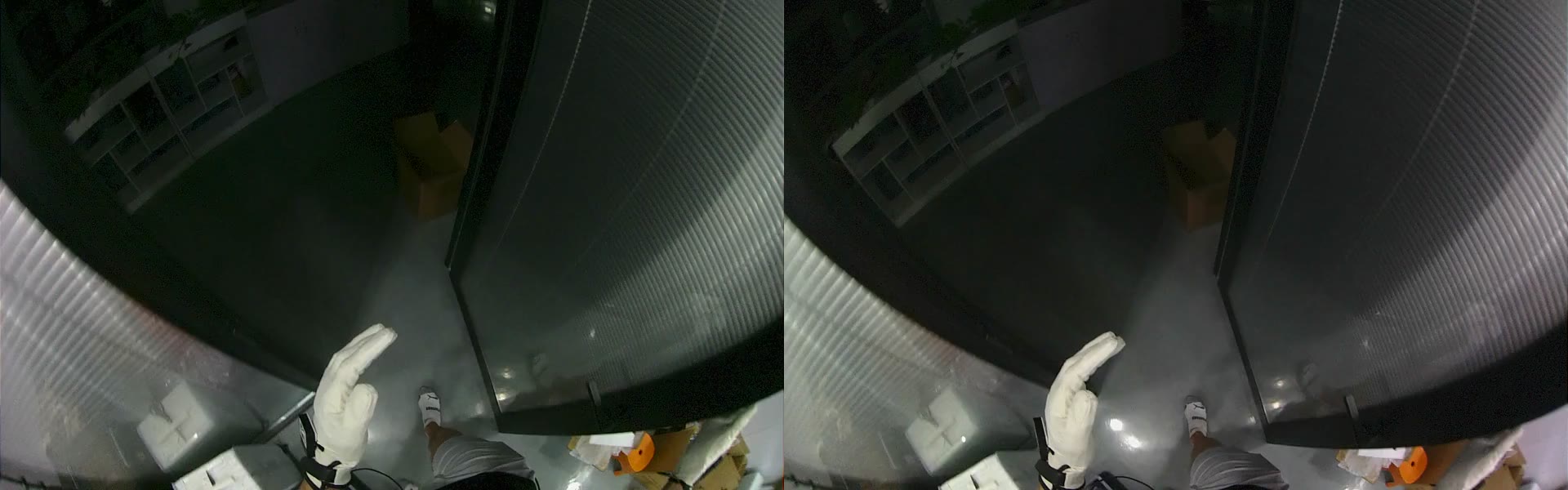
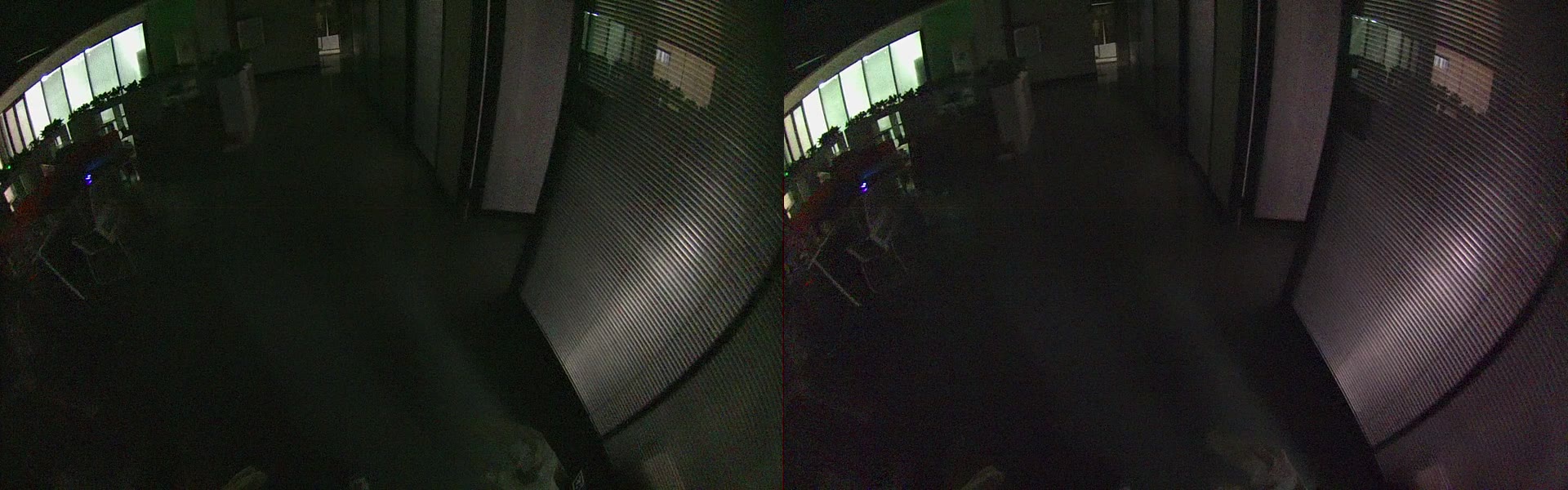
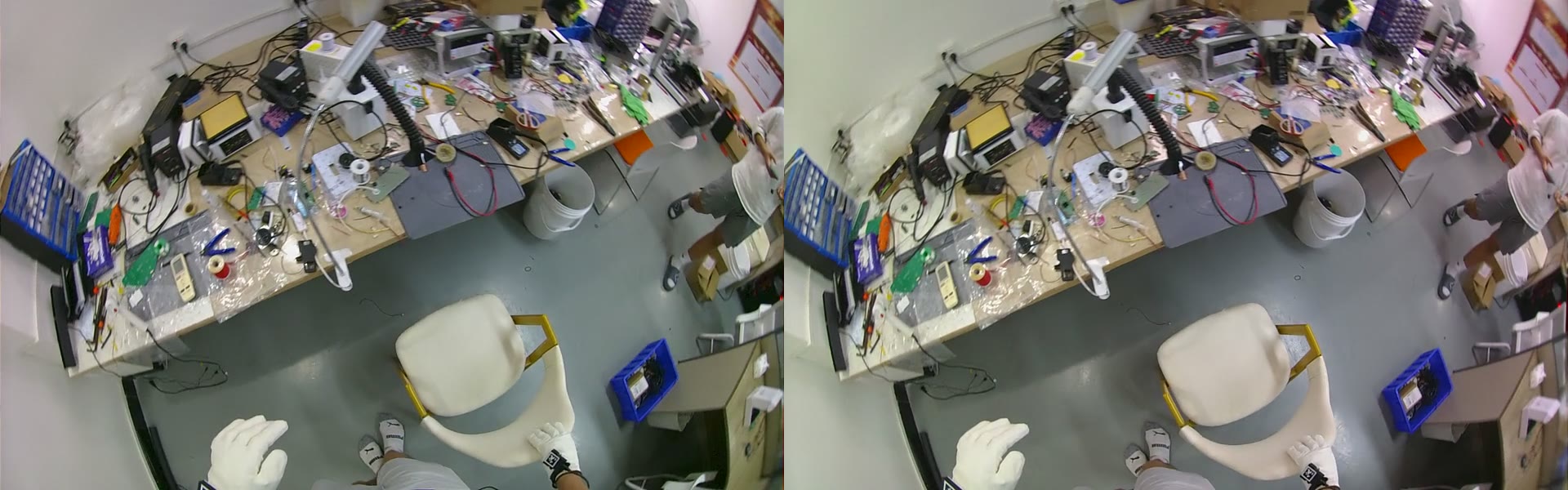
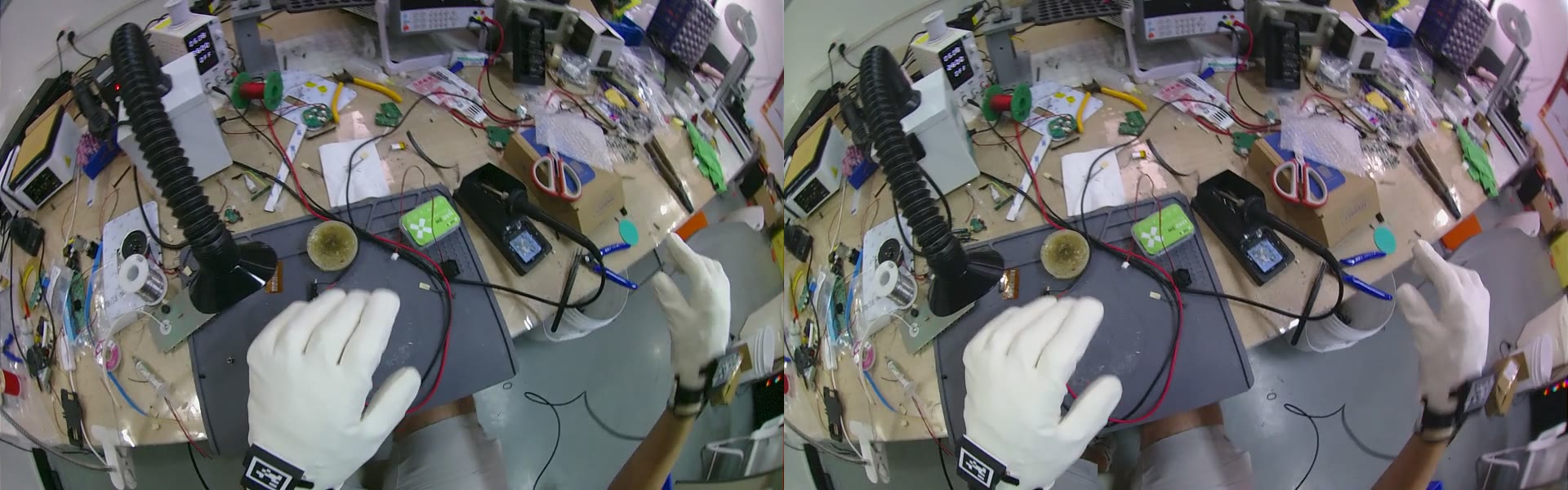
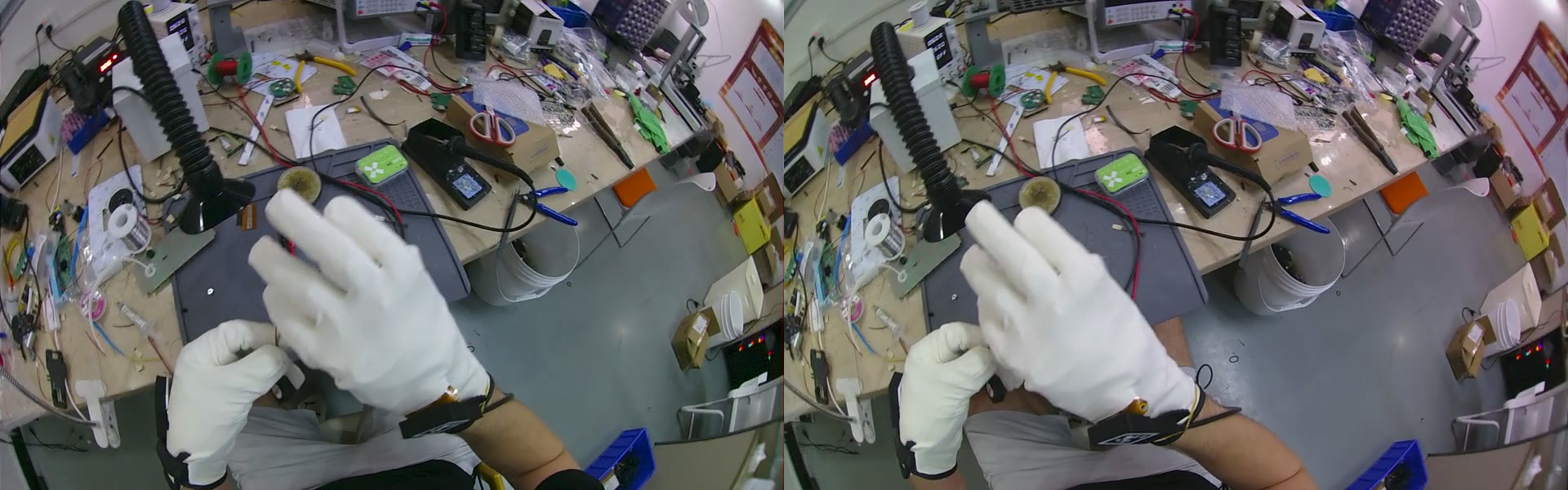
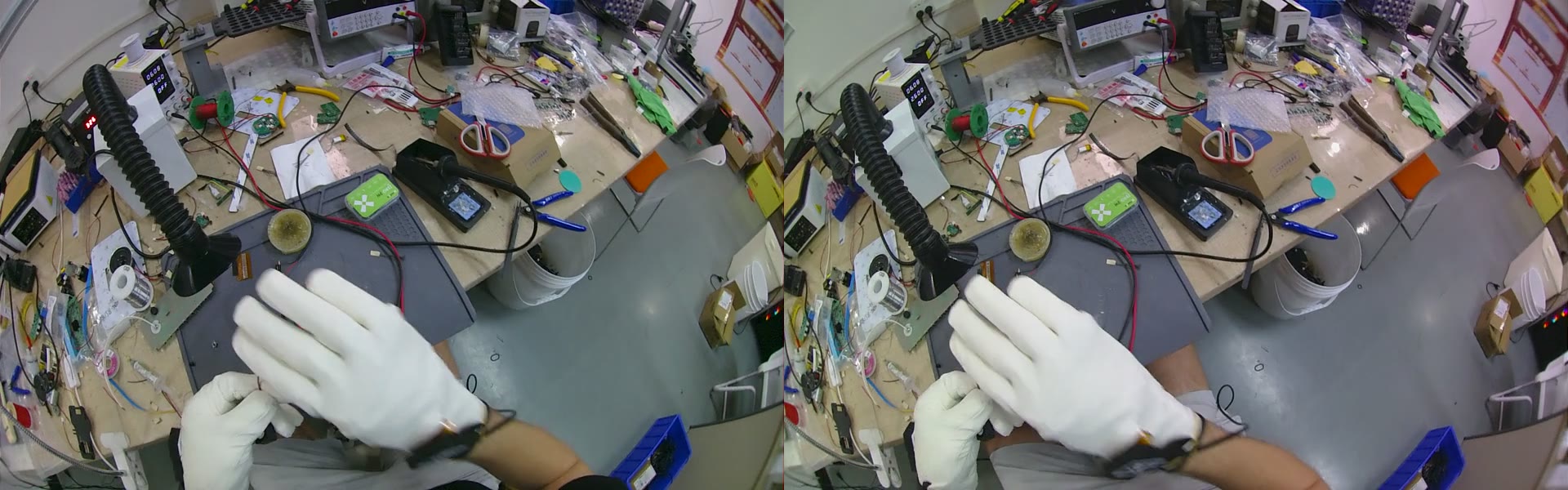
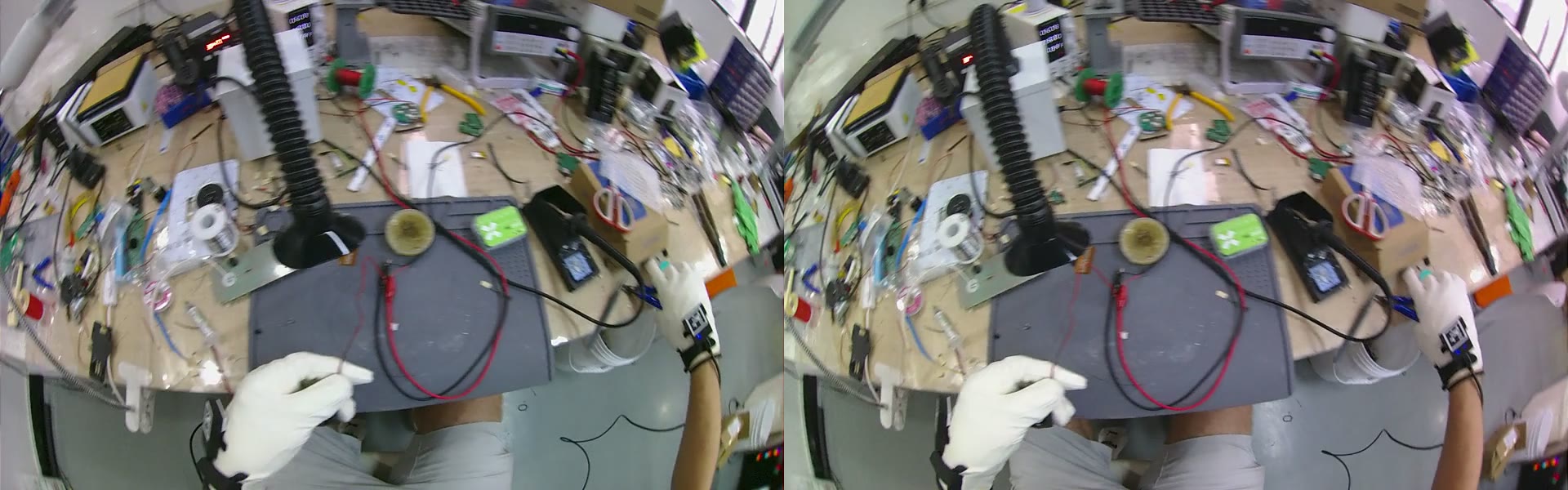
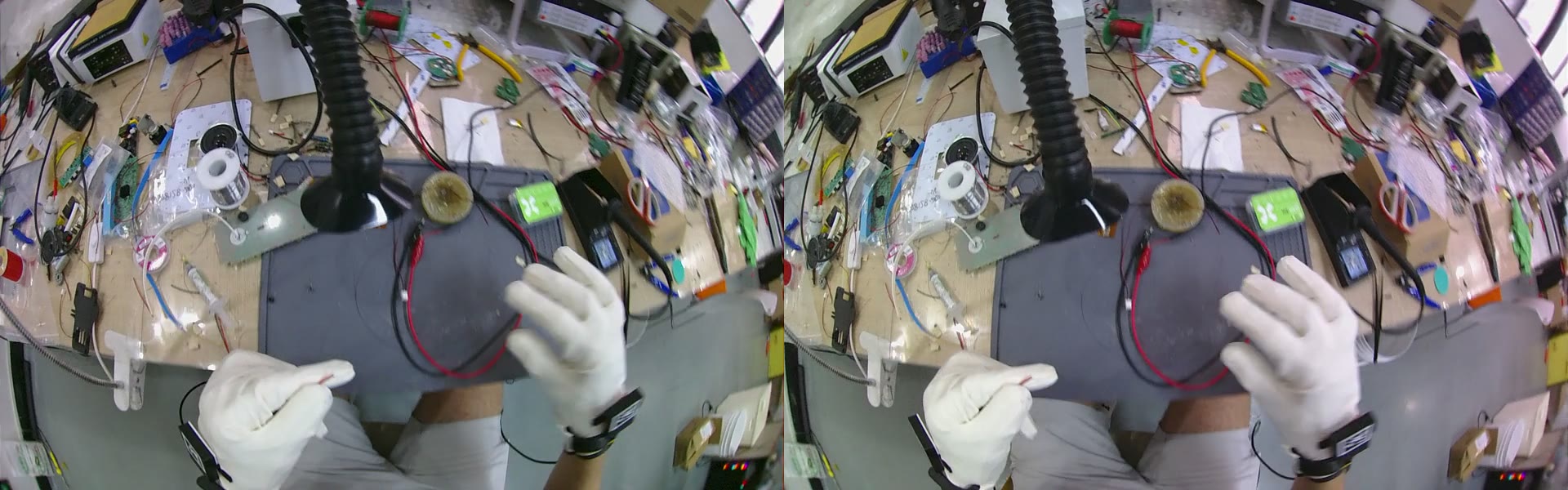
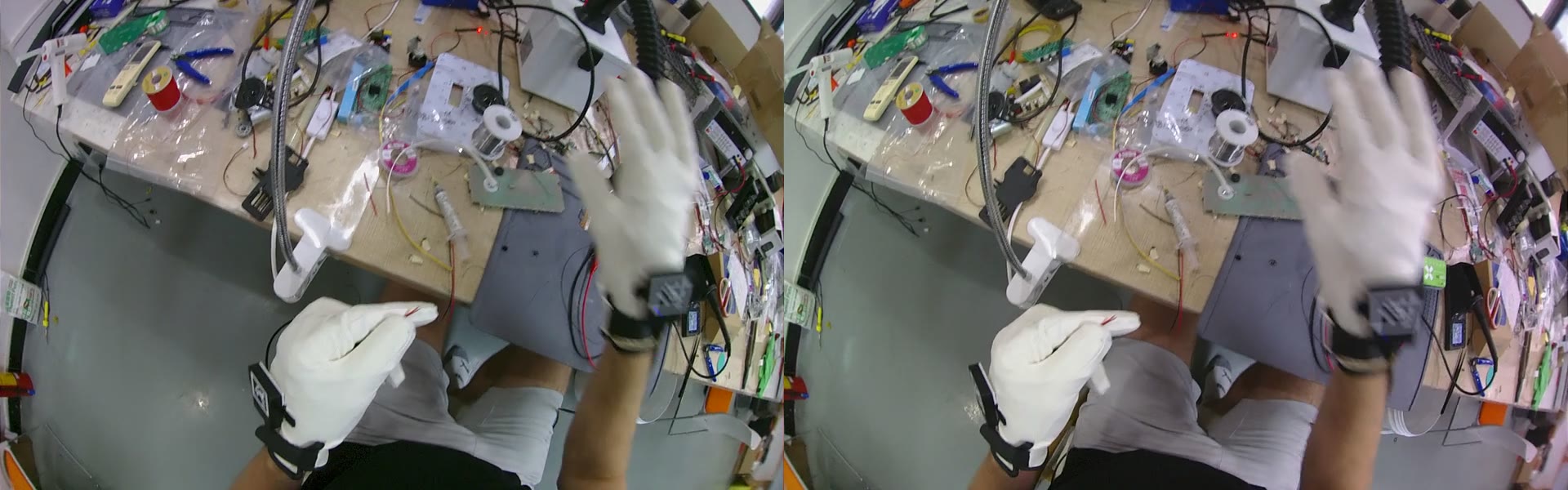
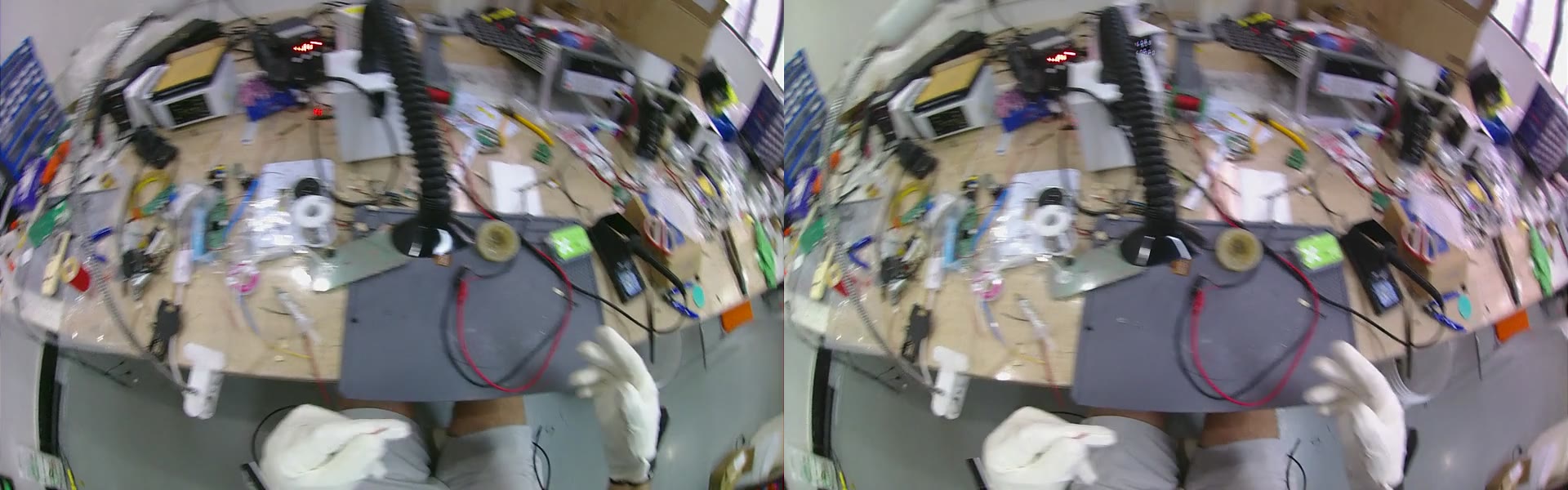
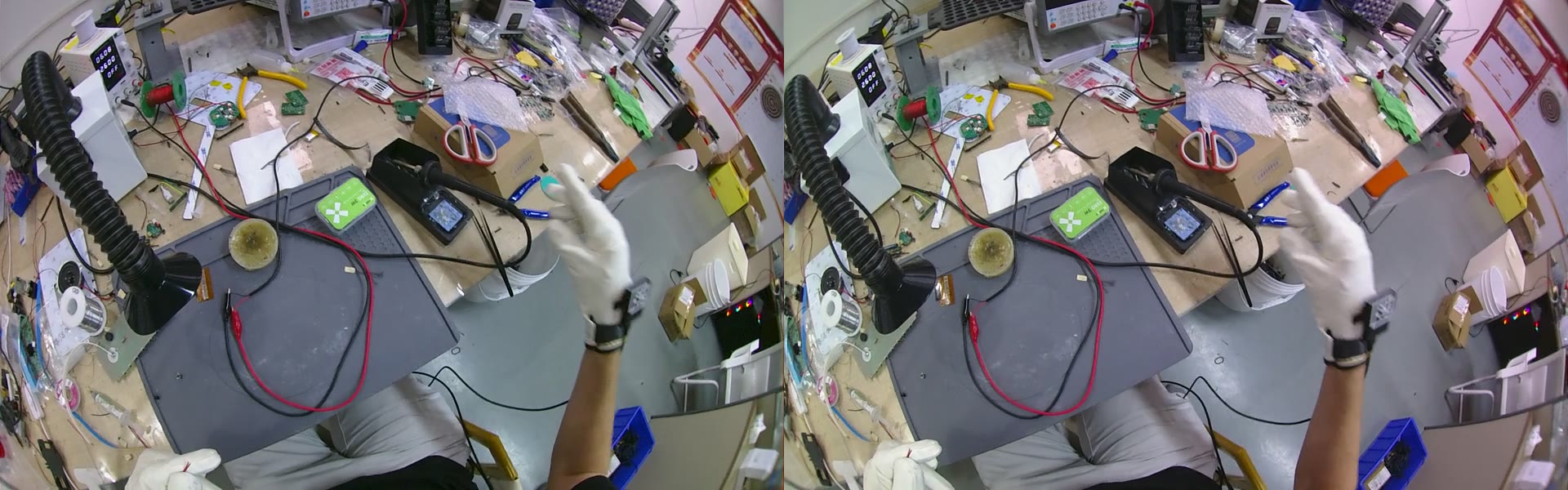
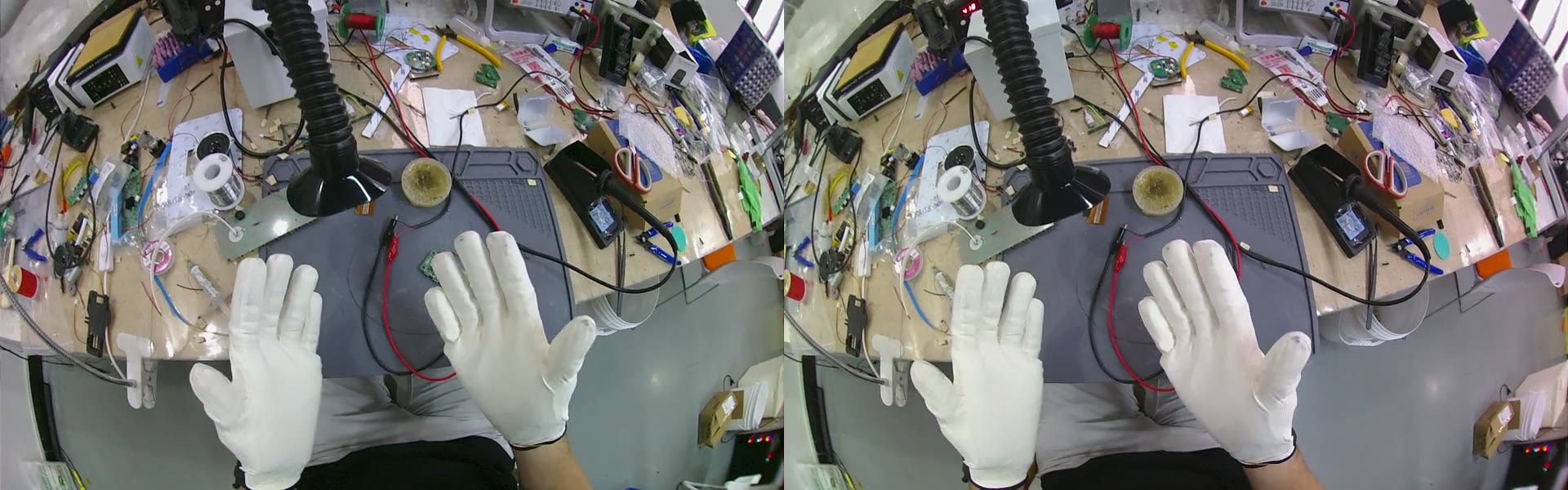
bagging.a01 · 0.000–2.000s · right hands · pending review
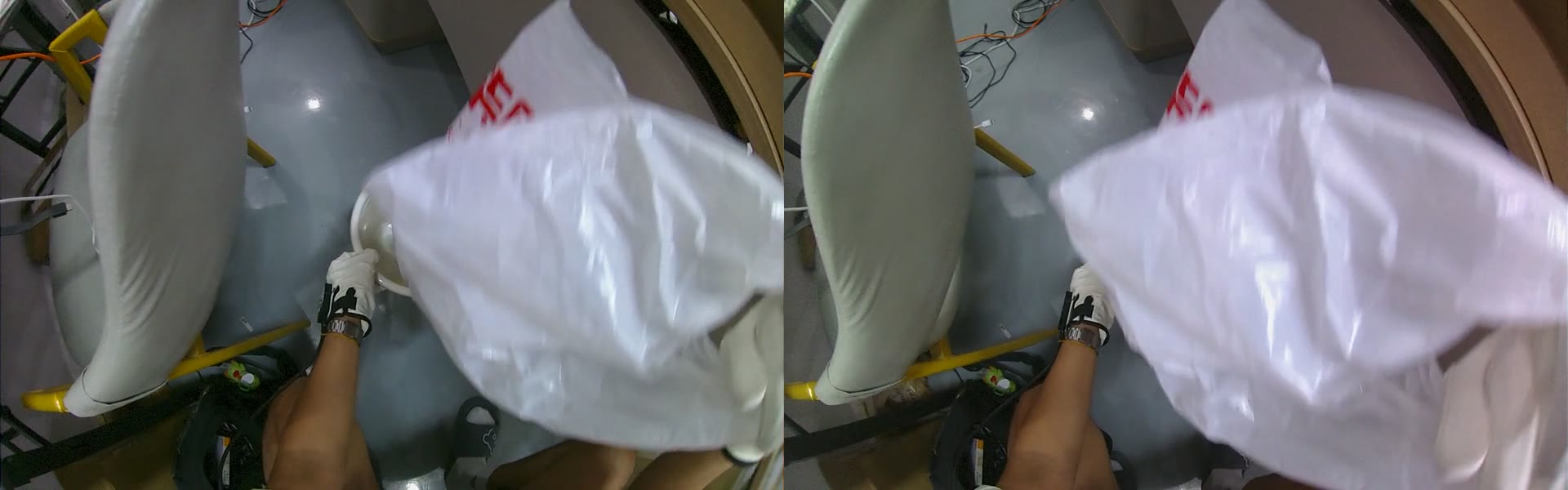
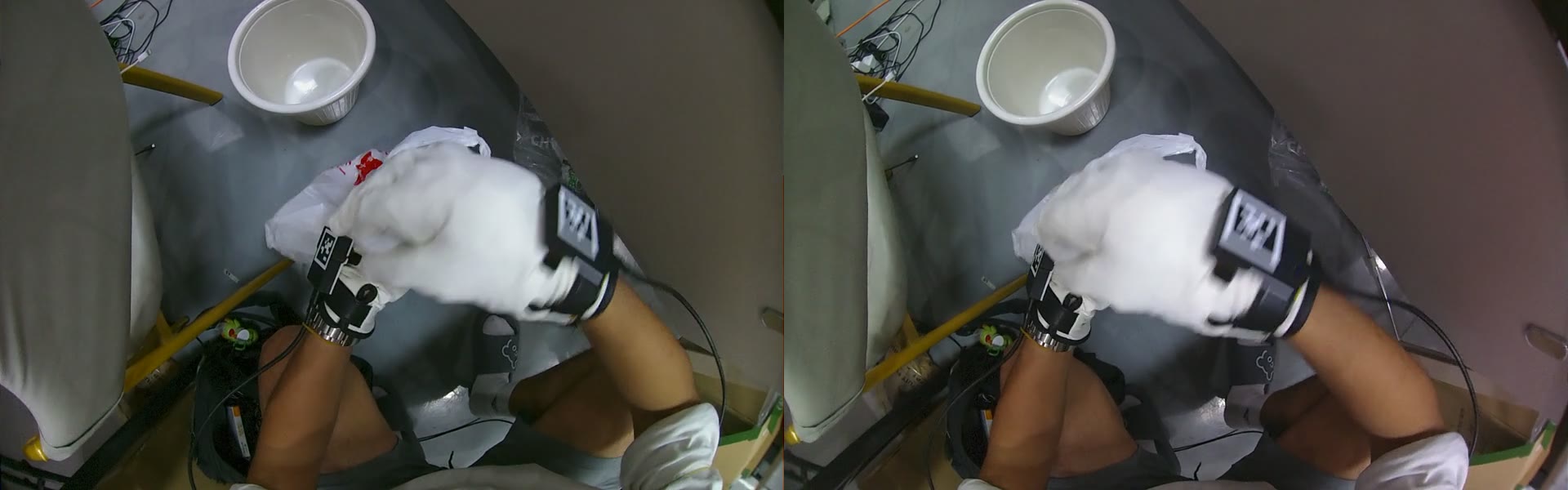
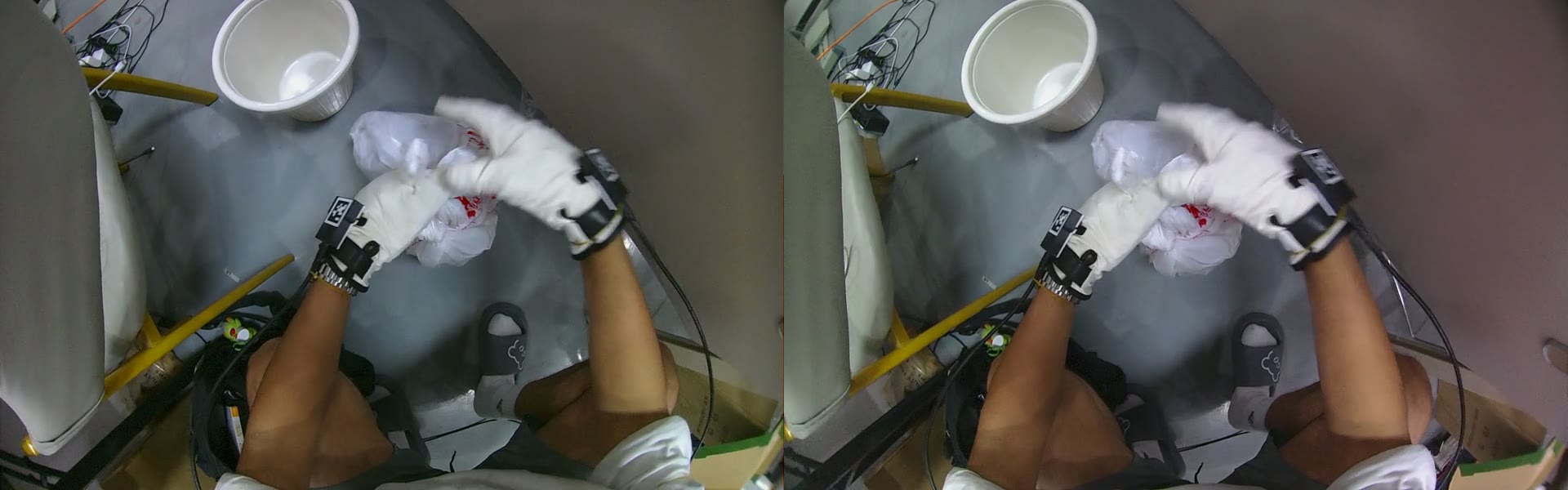
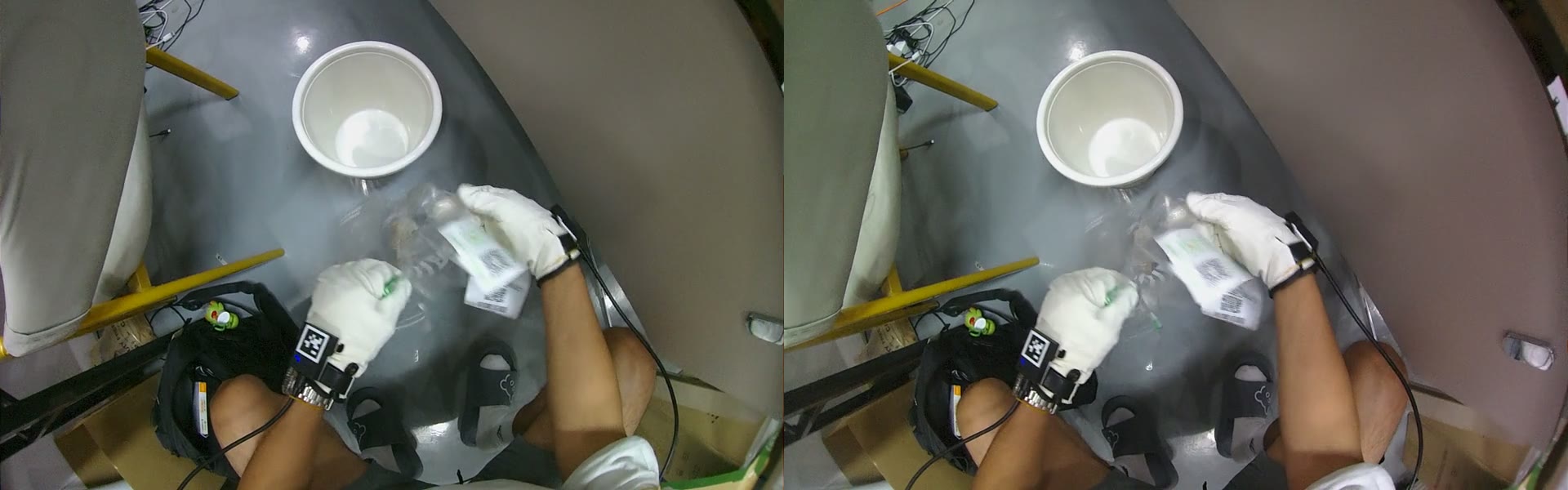
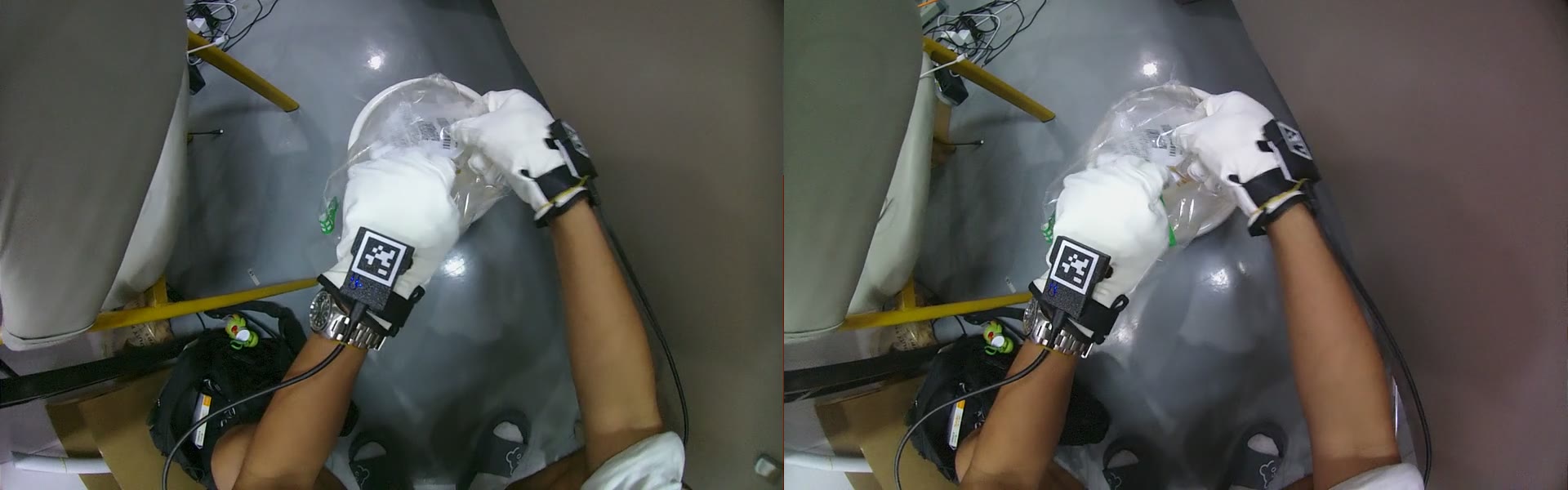
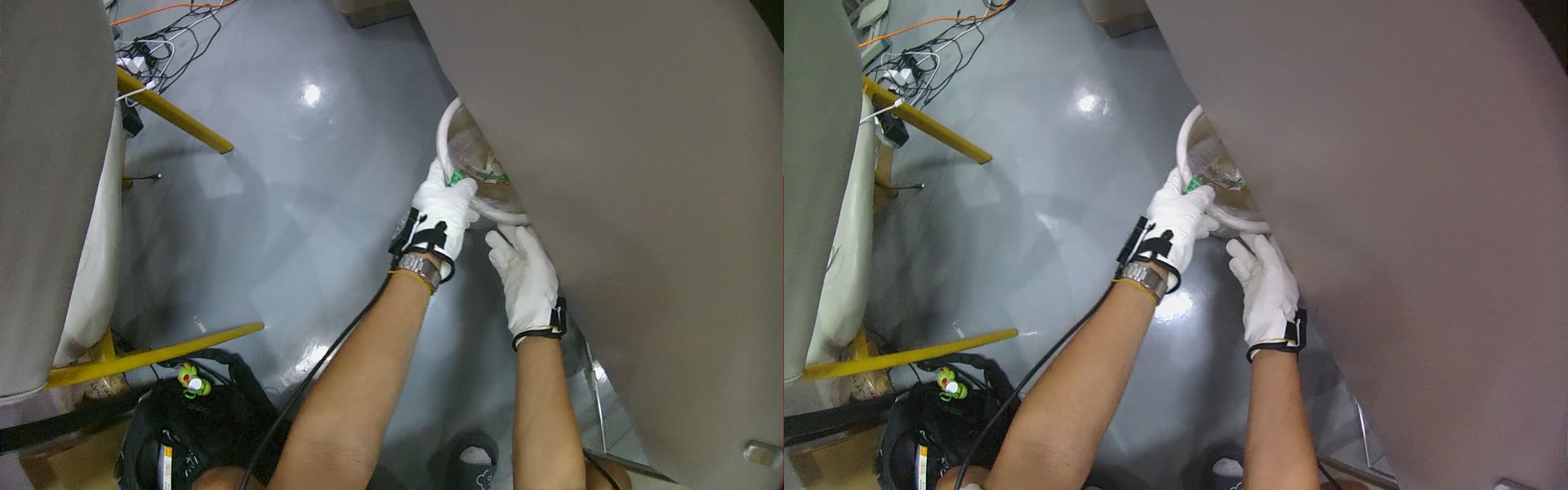
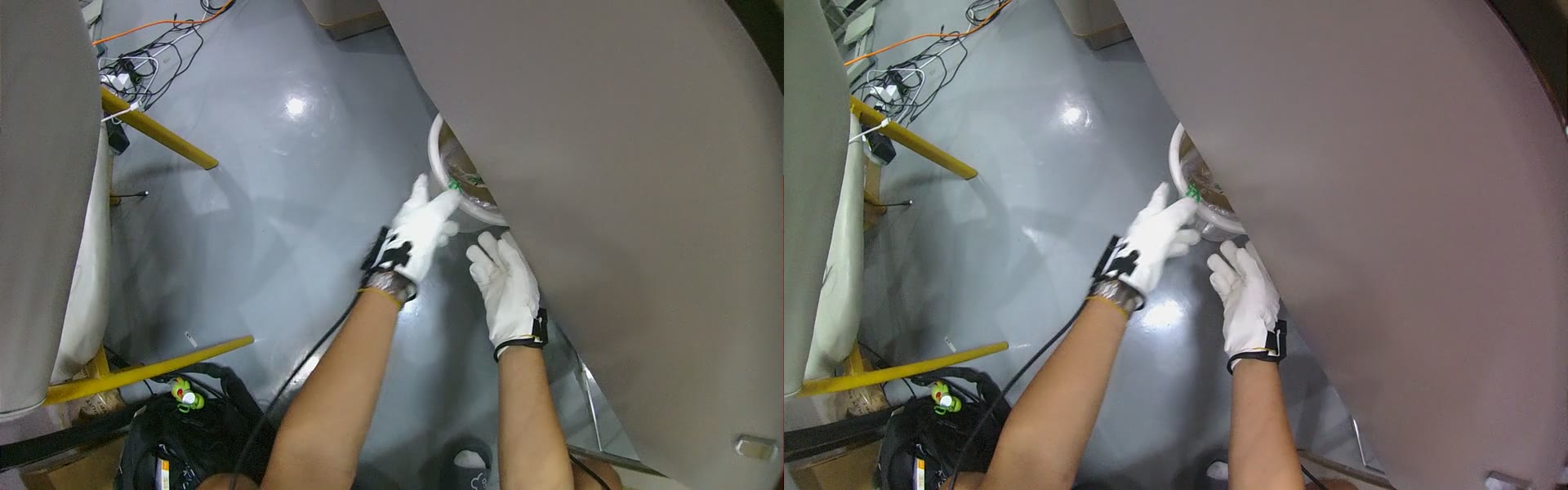
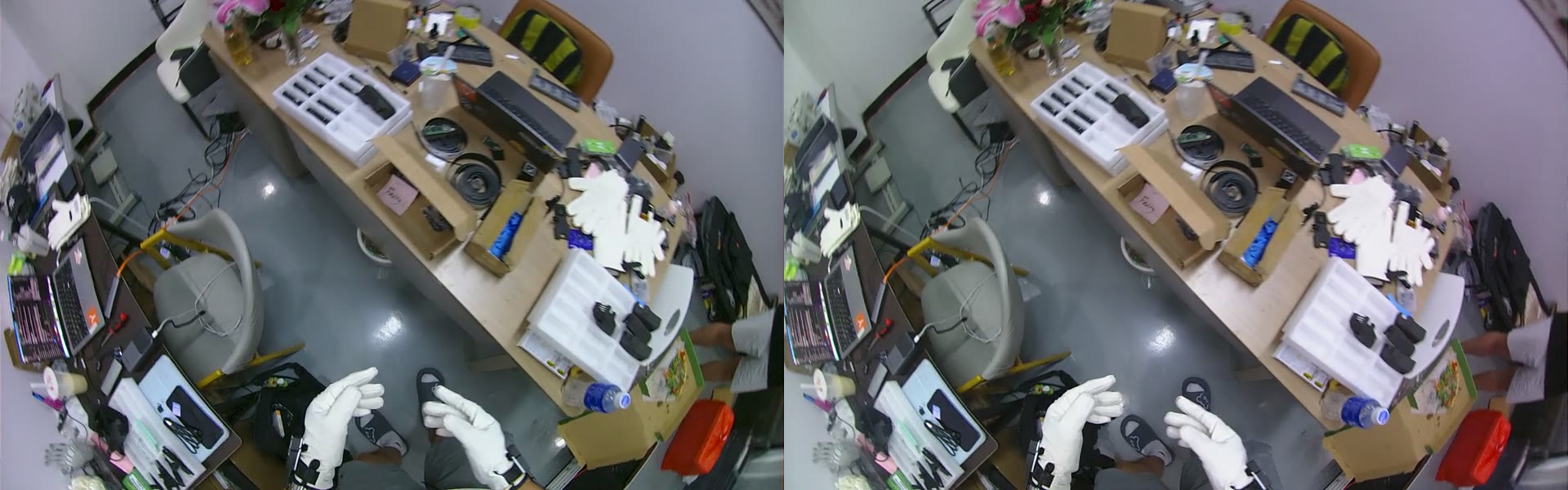
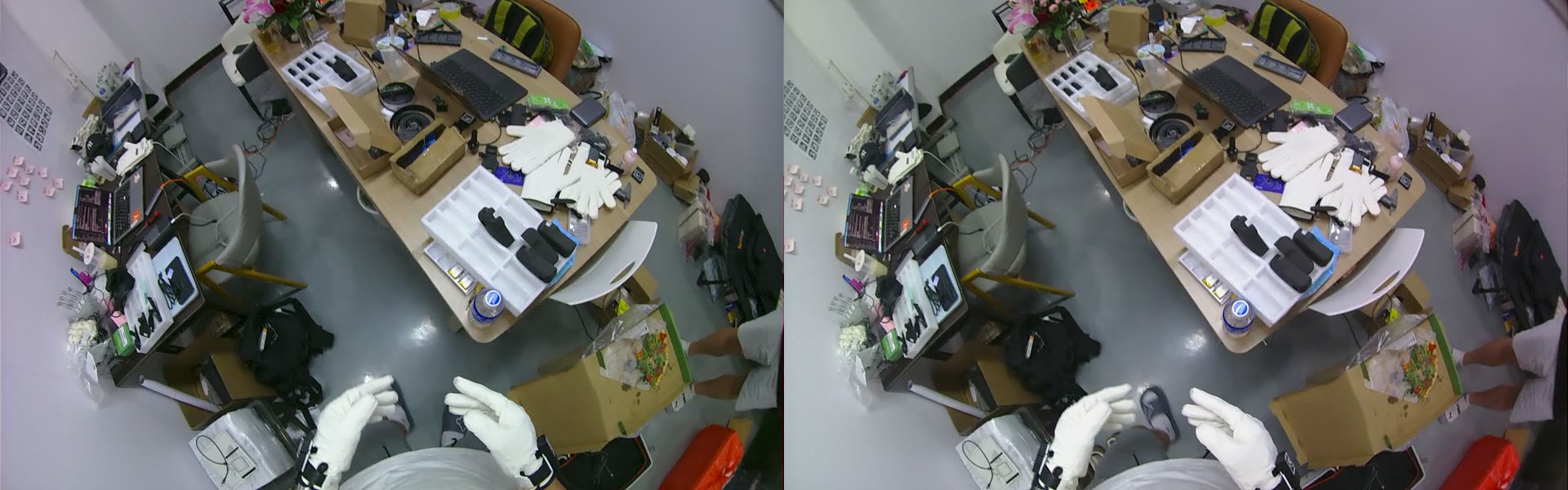
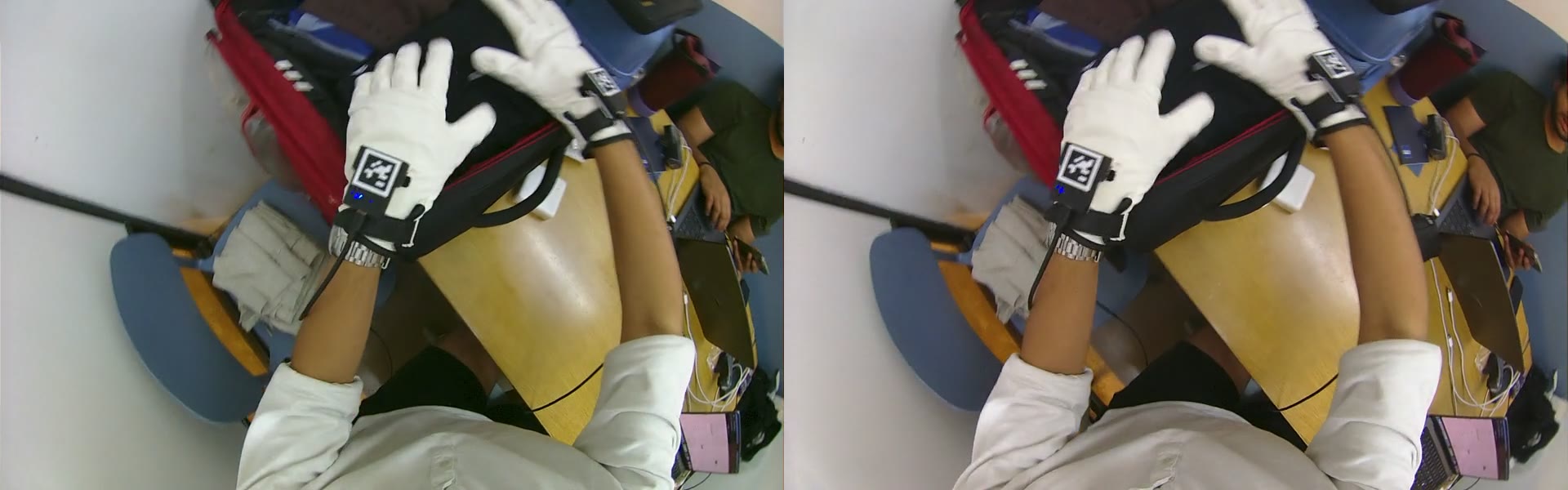
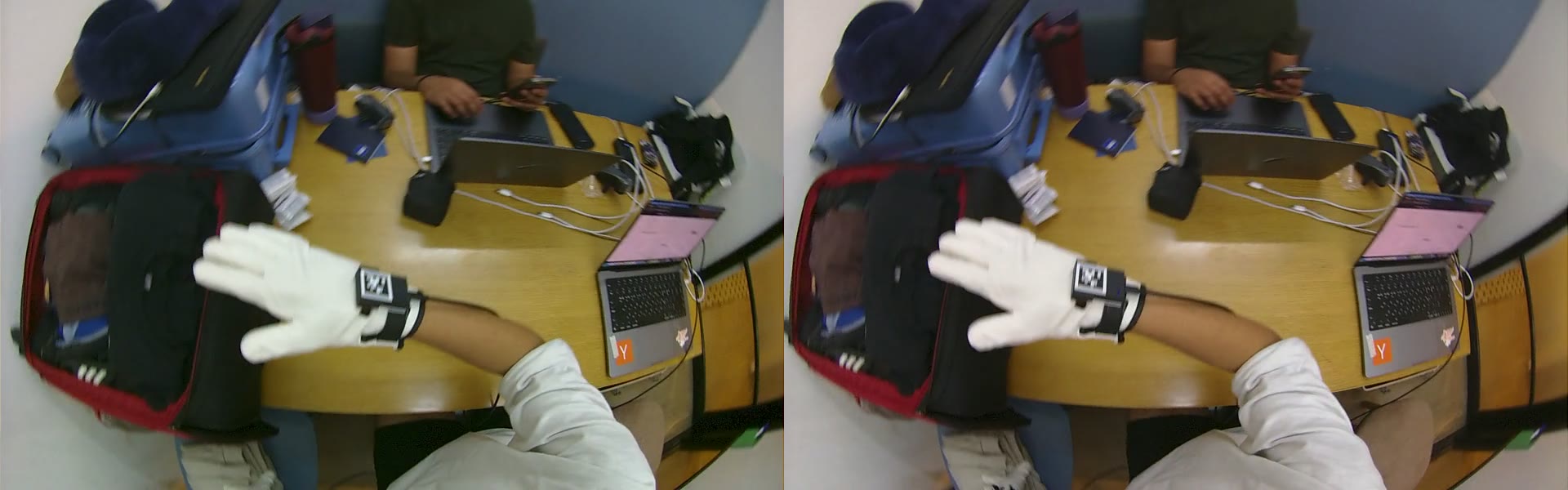
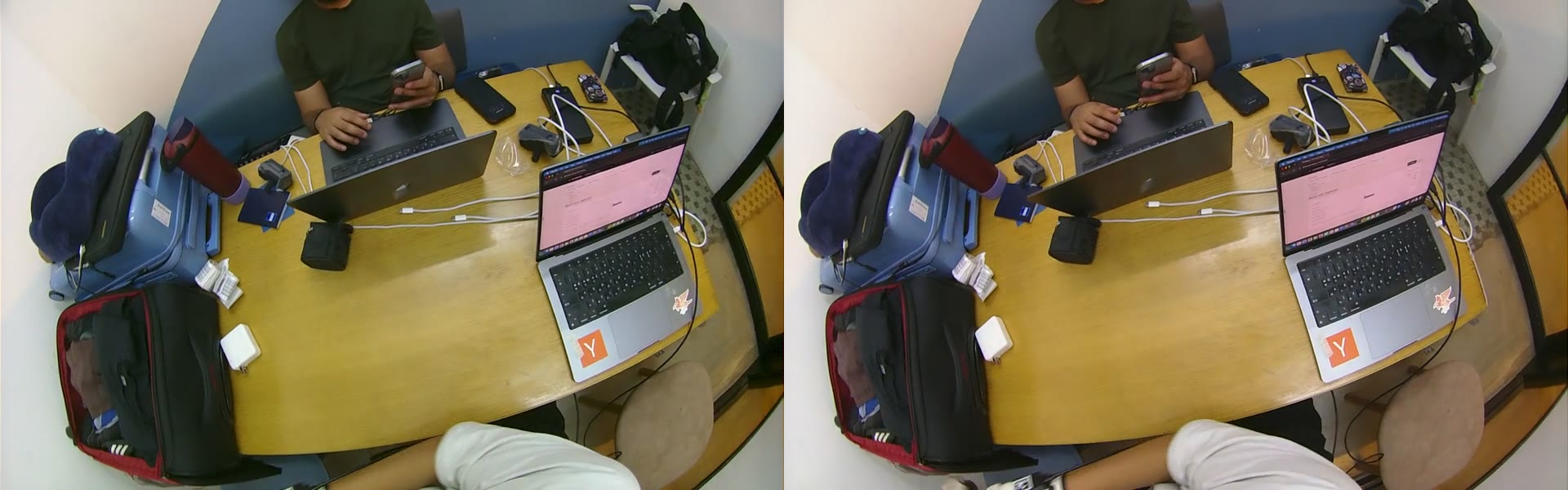
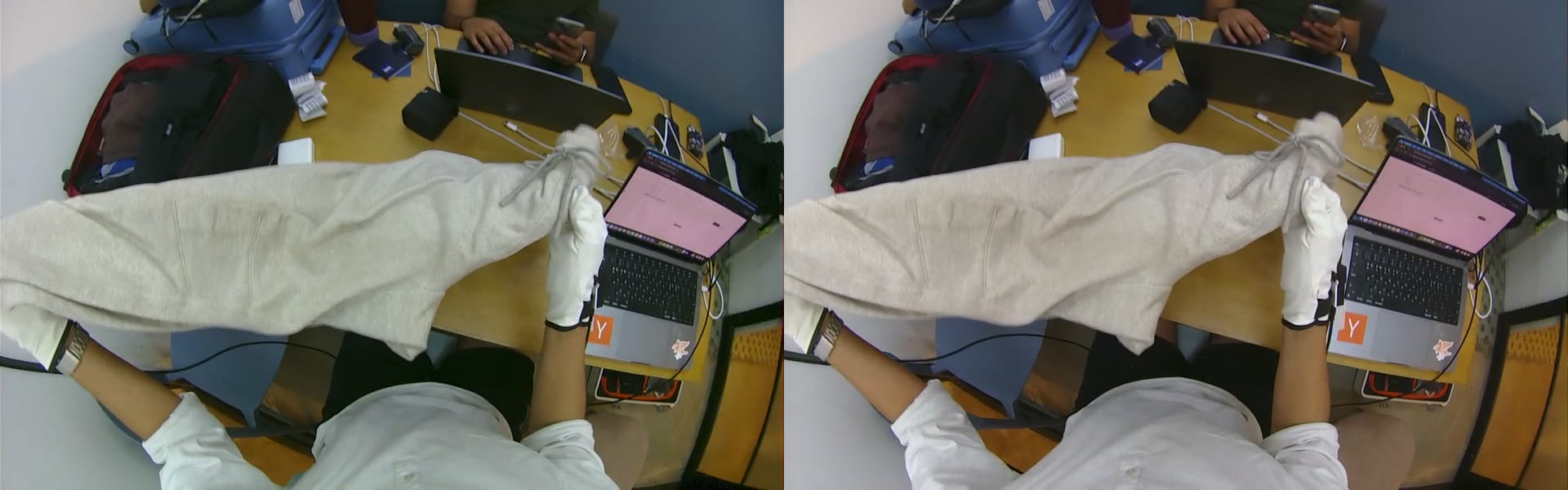
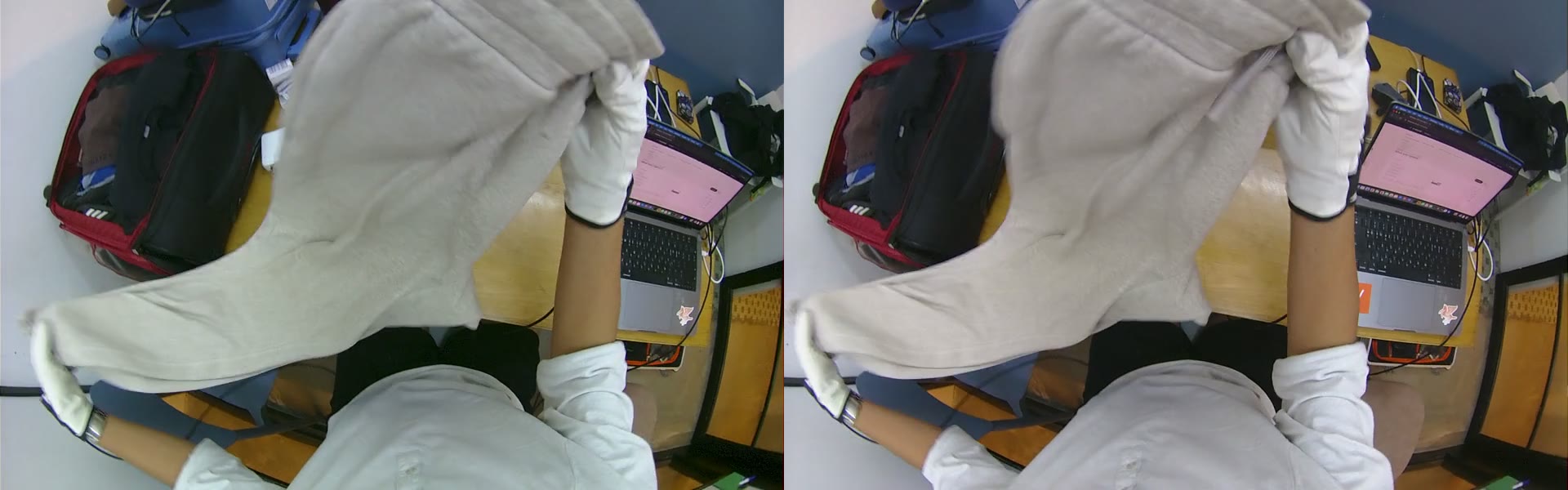
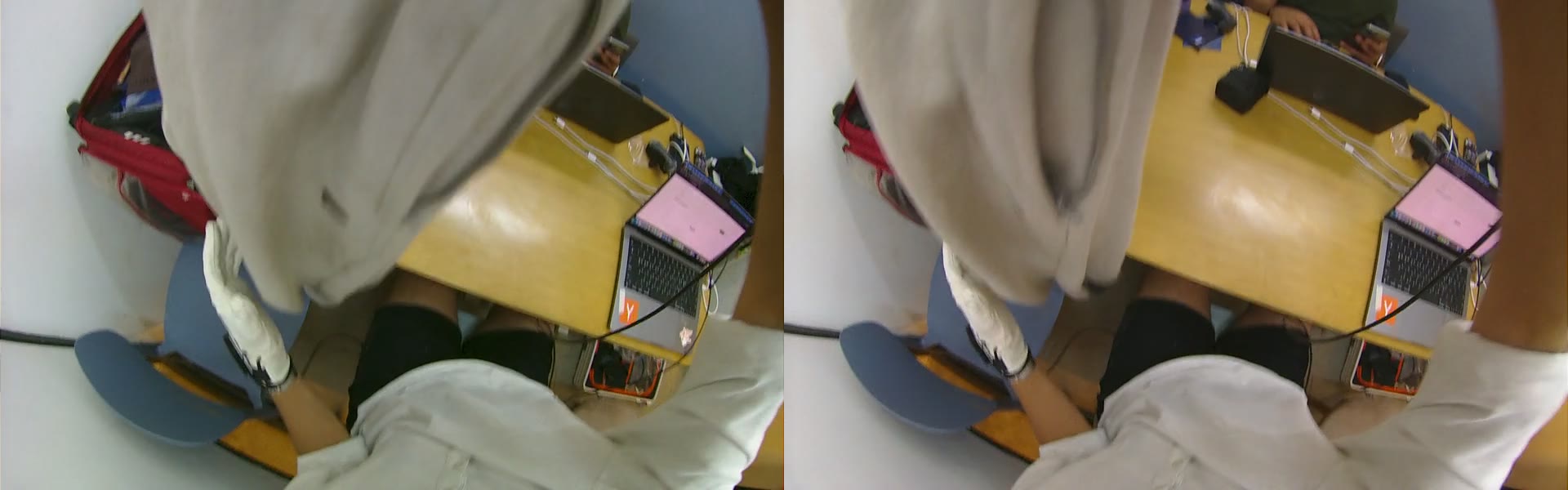
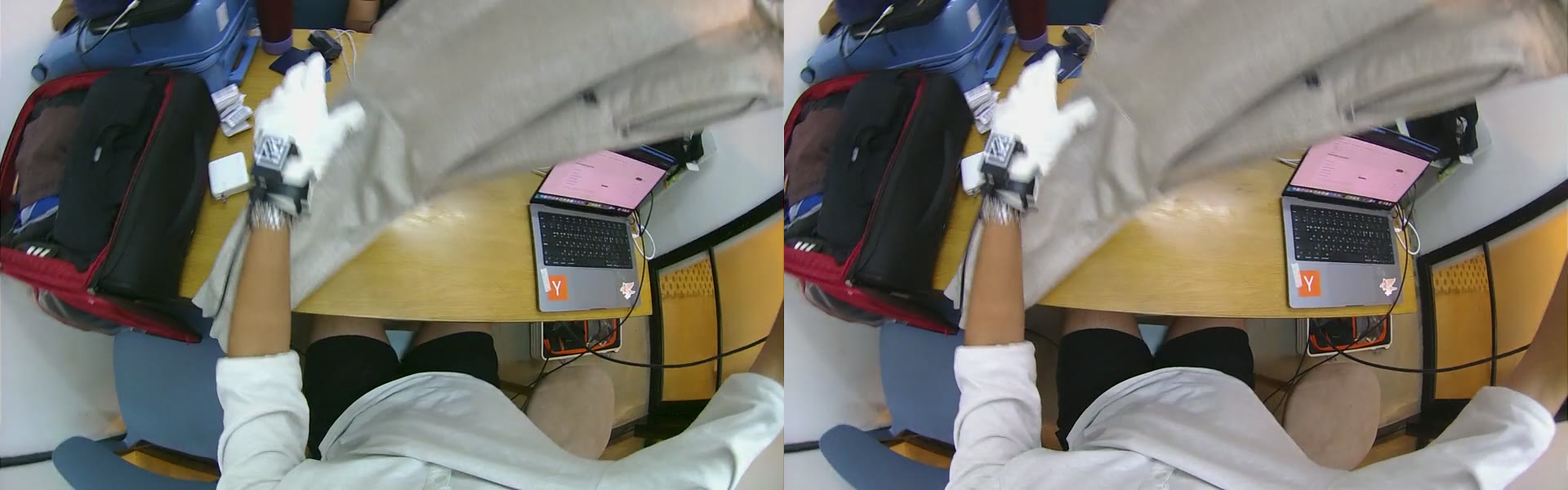
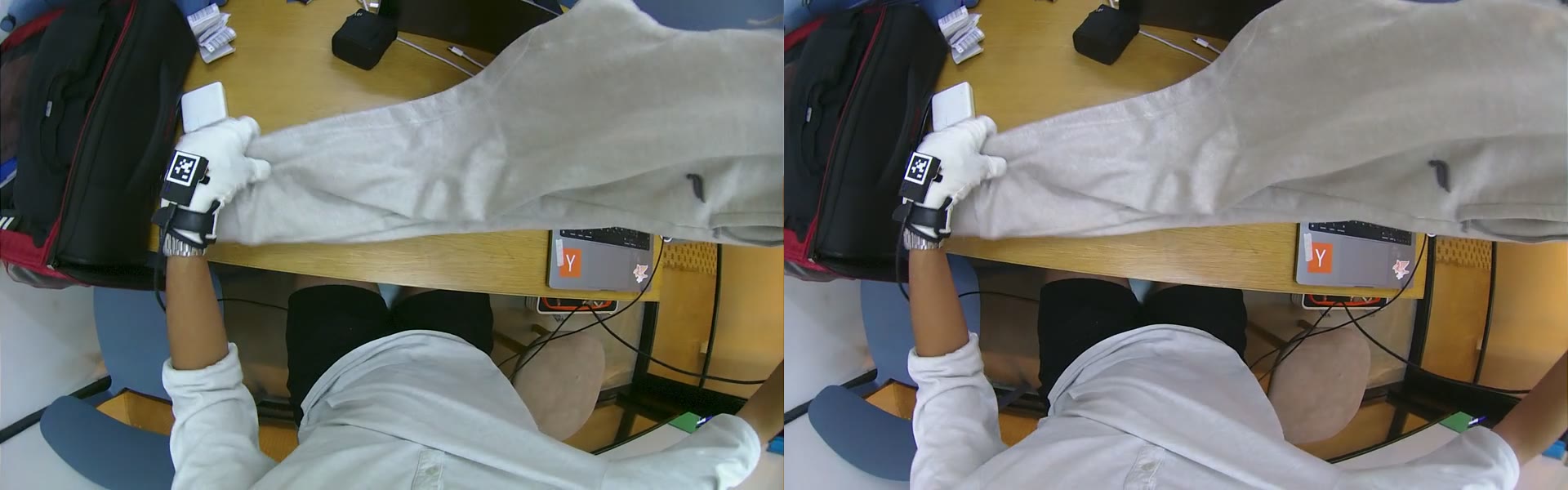
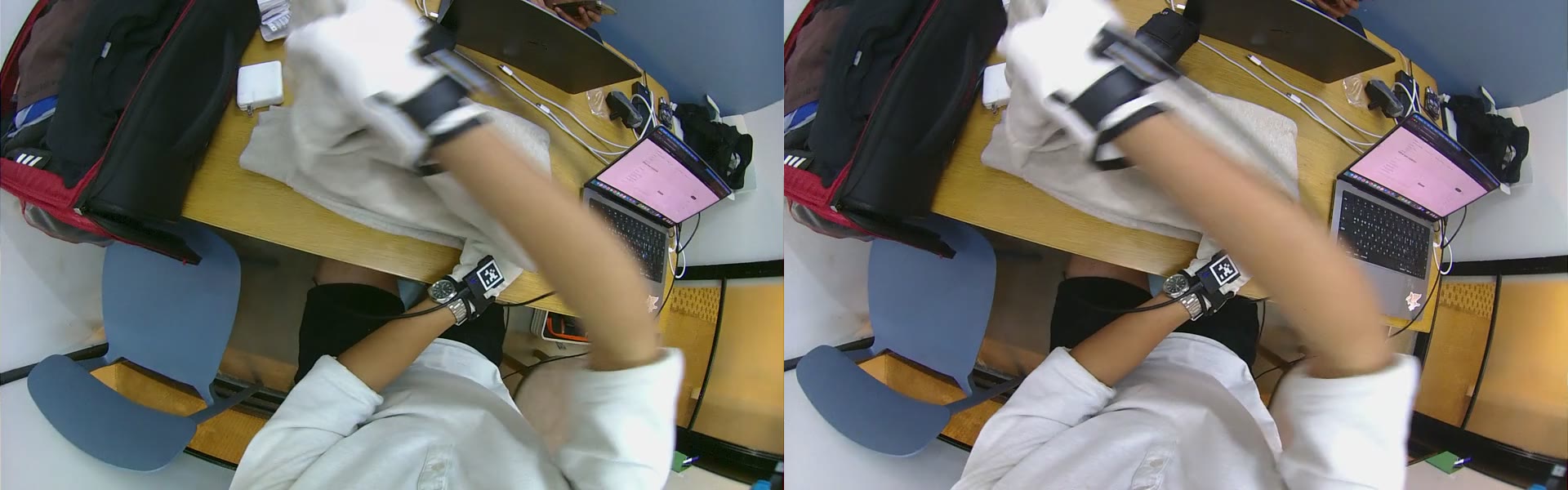
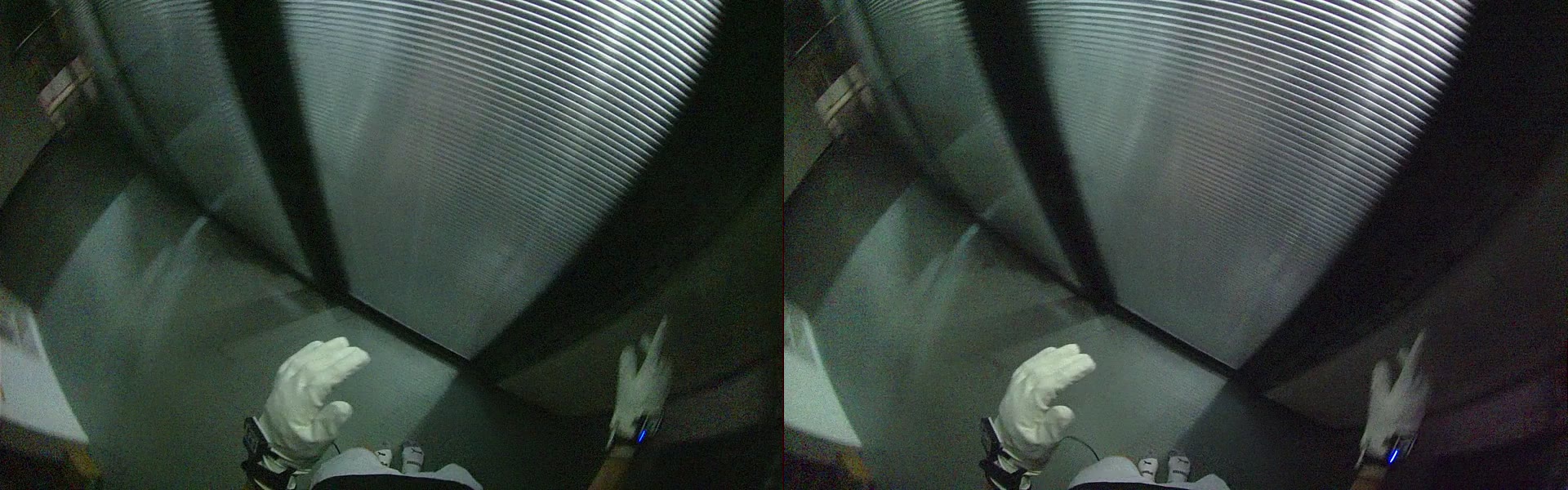
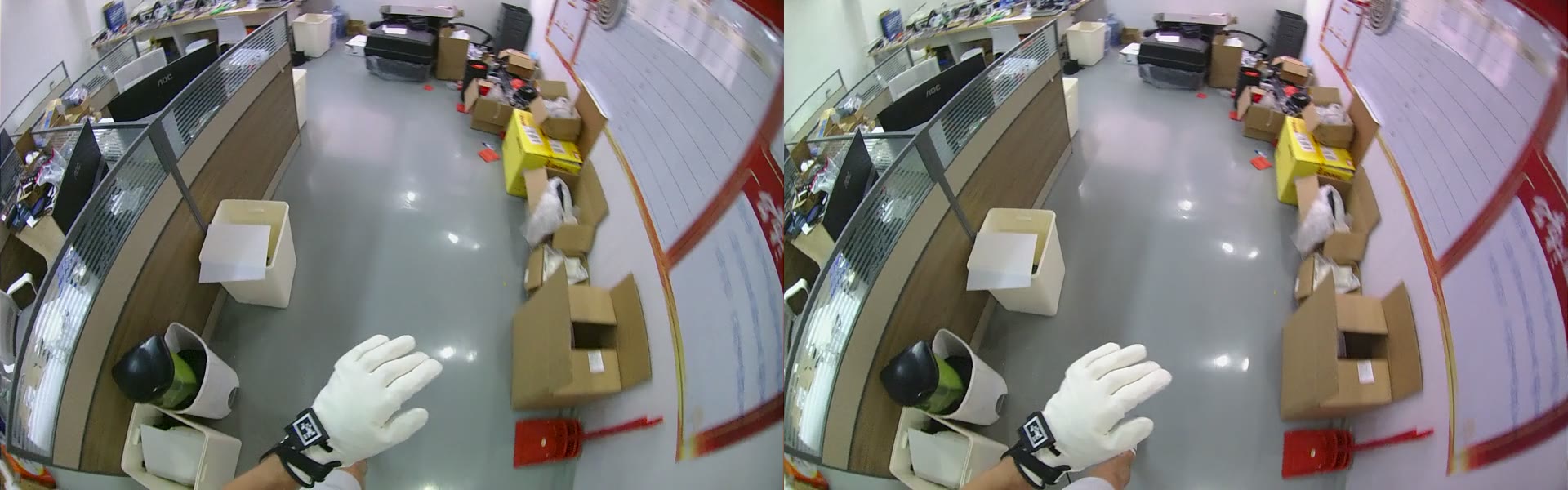
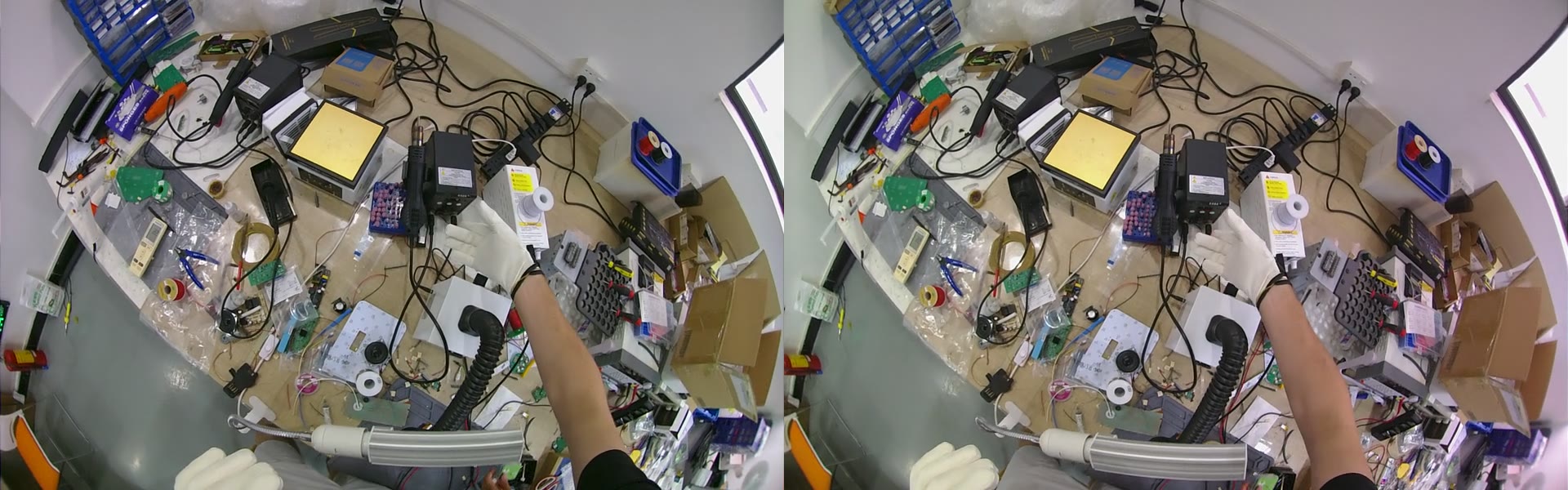
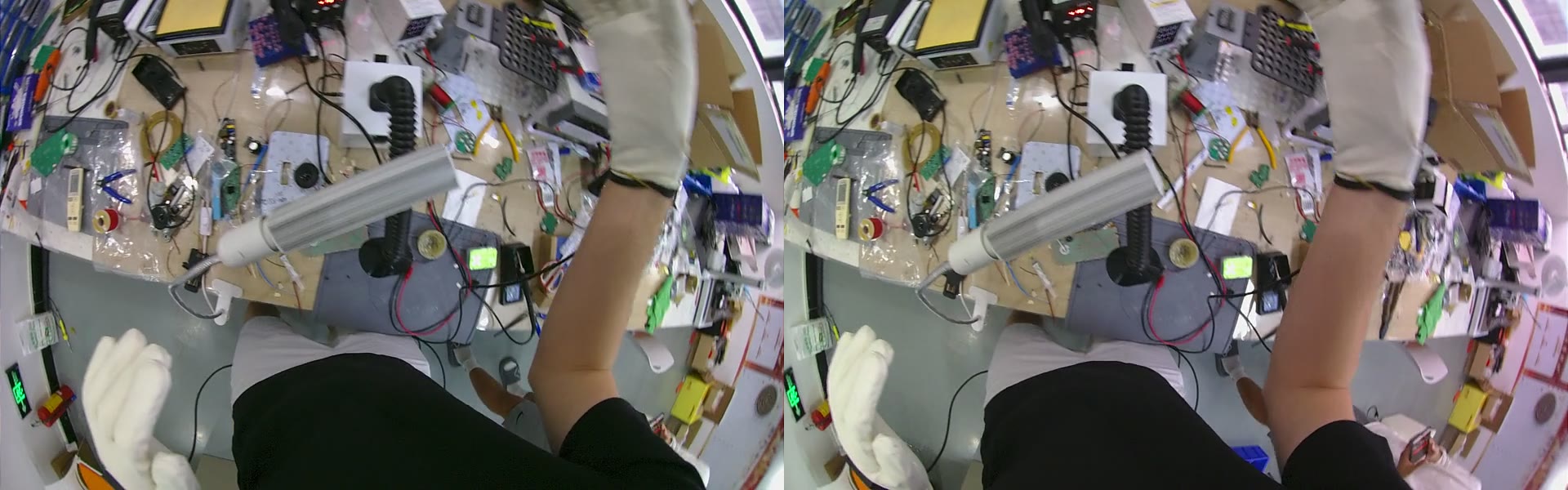
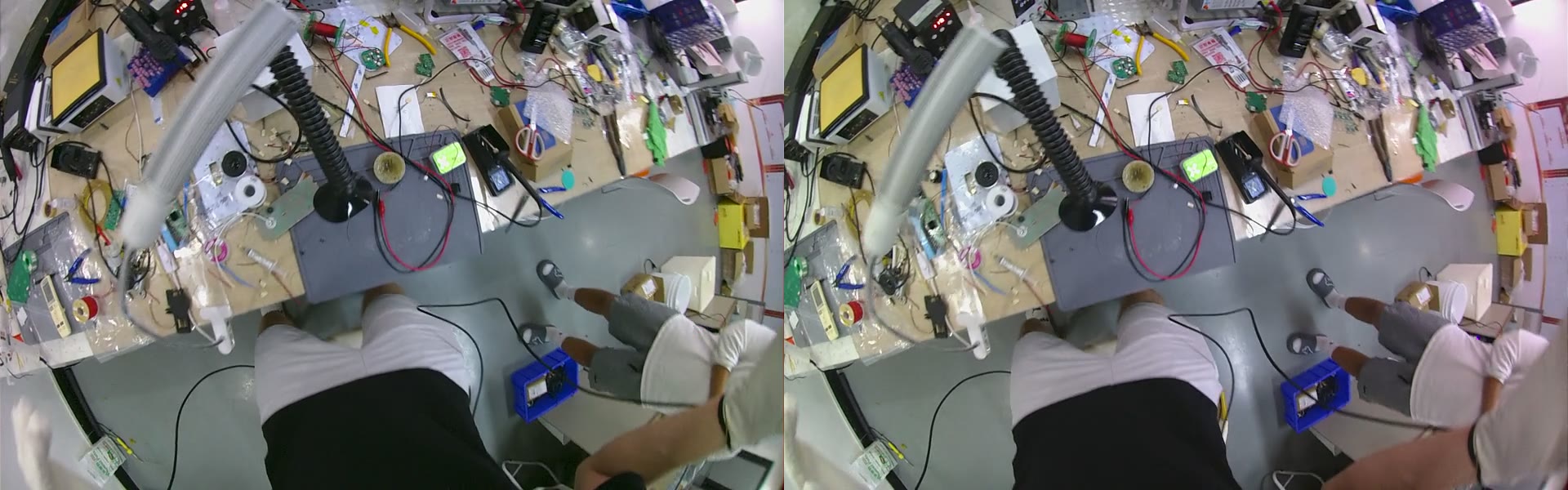
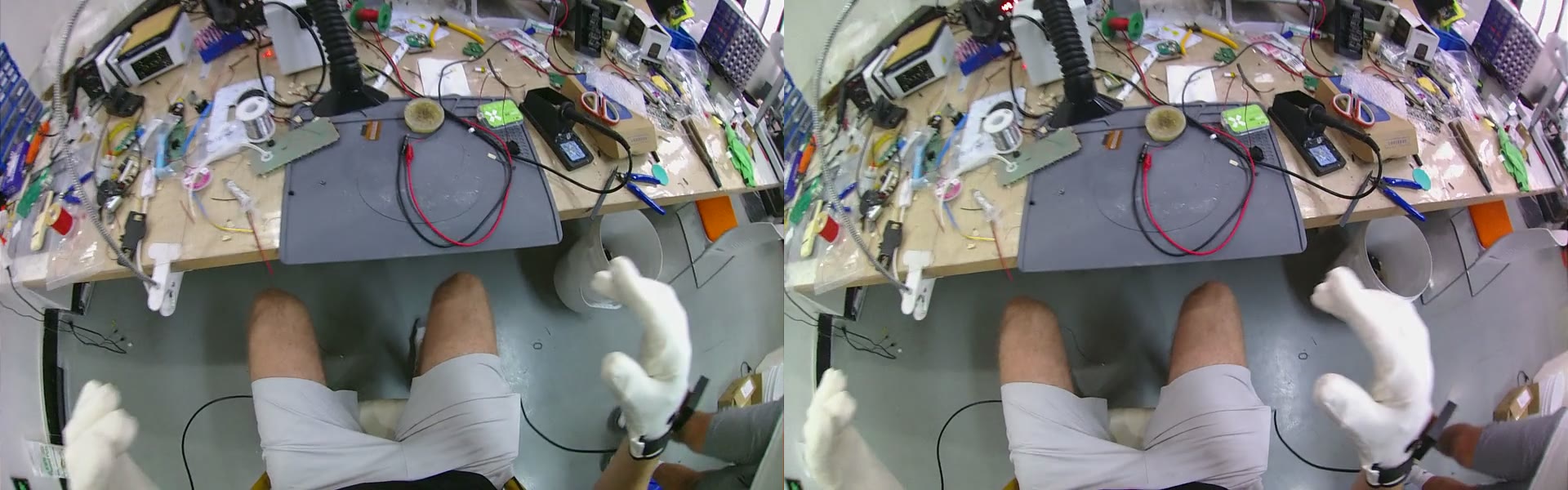
Turn and reach toward floor bin
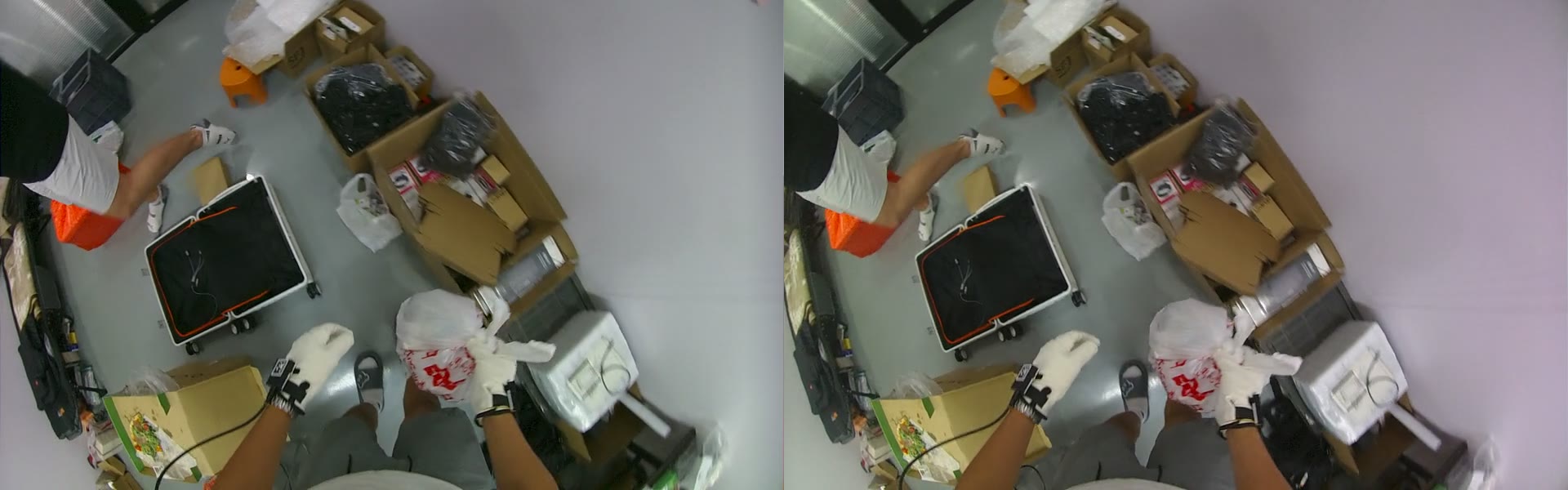
View tilts down between chair and table; right hand extends.
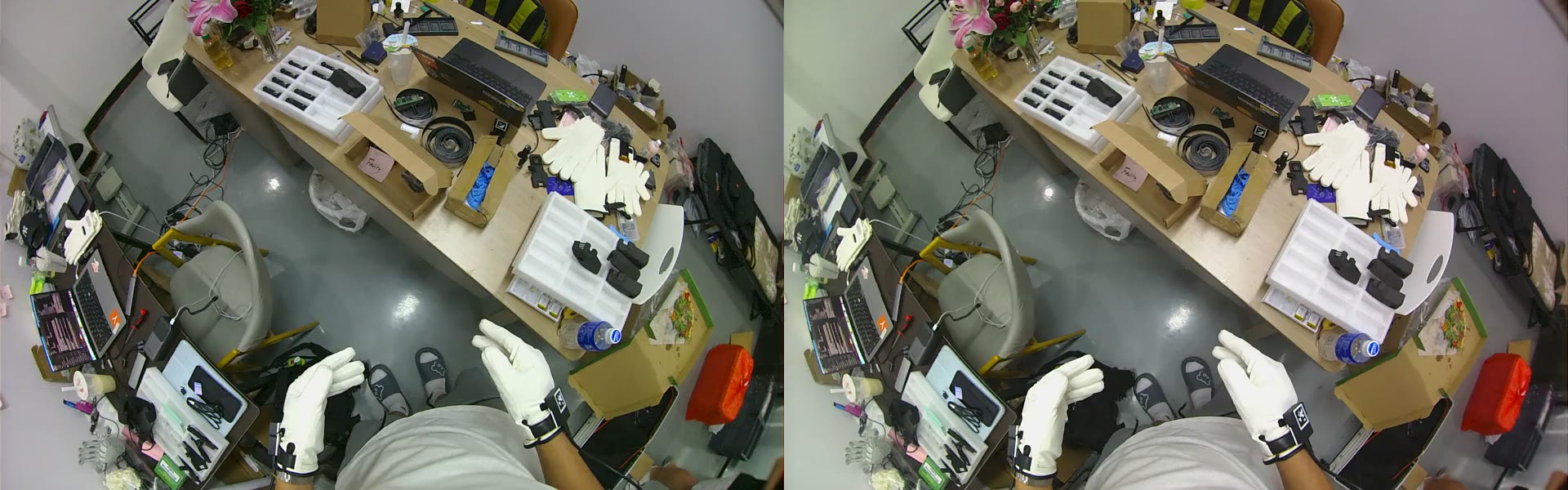
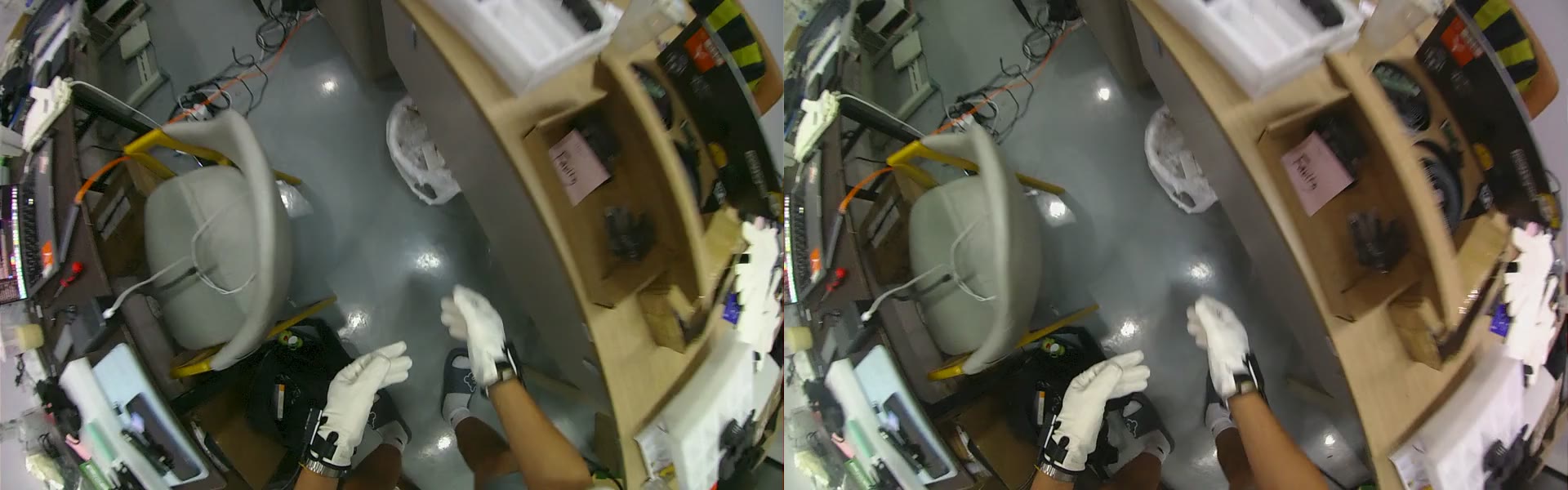
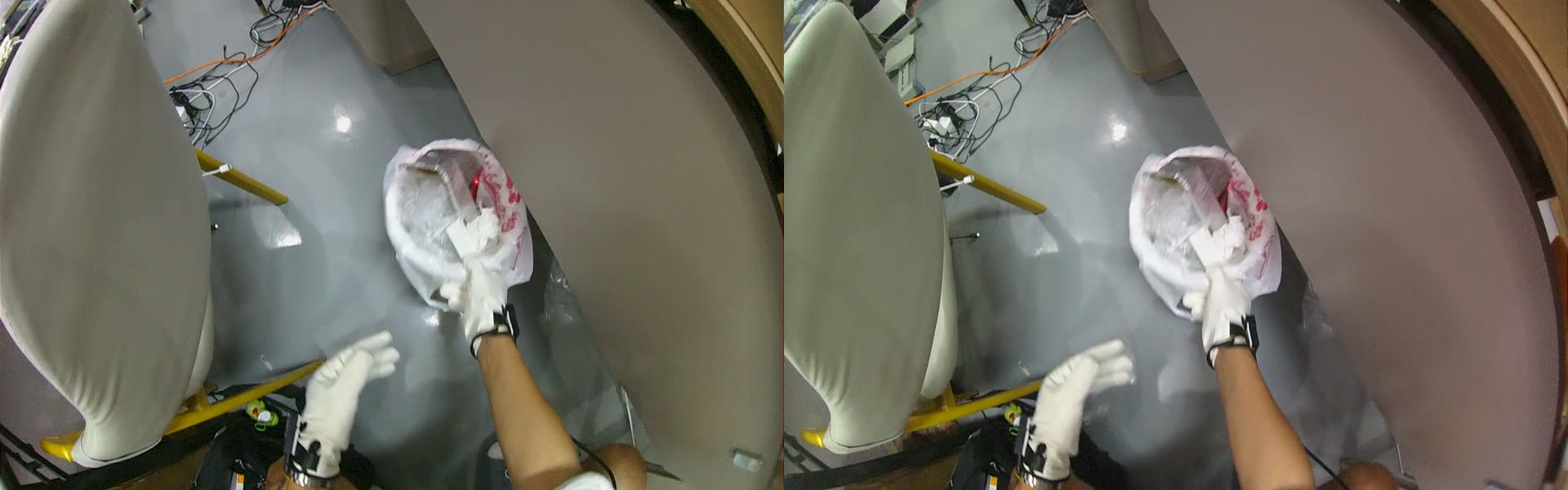
Start estimate range: [0, 1]s. End estimate range: [1, 3]s.
Five recordings, 6m 28s. An exploration of what the footage supports.
Web playback uses compressed review copies. Evidence images retain their original extracted quality.
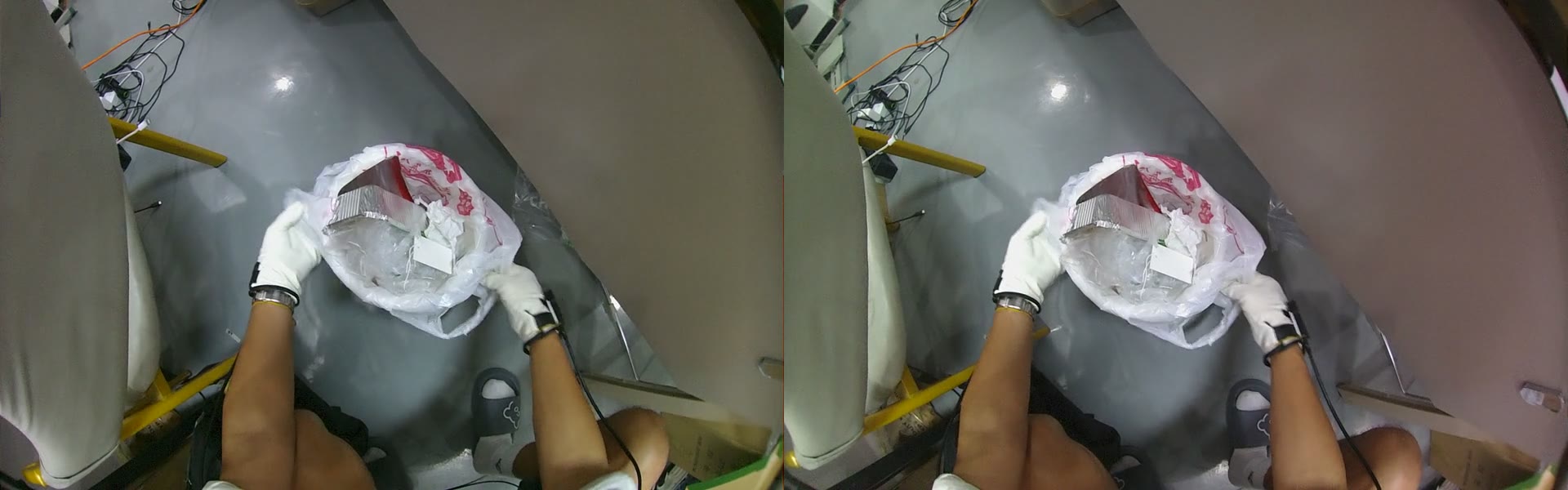
Remove a filled liner from a small floor bin, manipulate its handles, set it aside, and fit a transparent replacement bag.
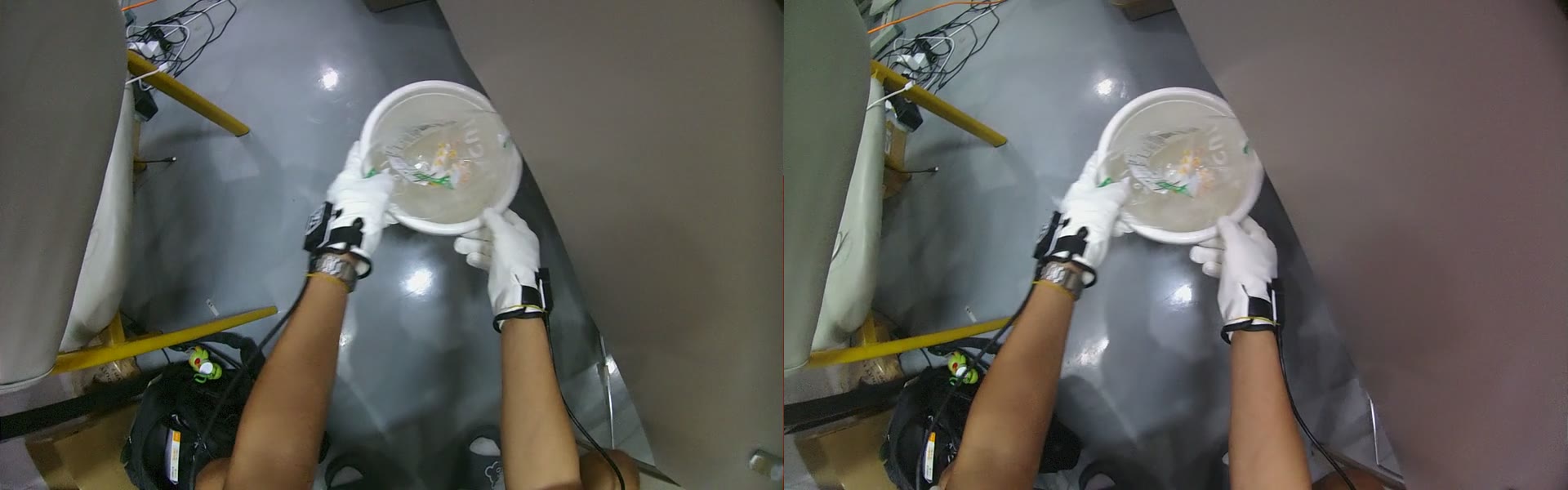
Visible outcome: A transparent bag is visible inside and around the rim of the white bin; the bin is moved back toward the table.
Original paired views. Contact sheets below use the left view. Duration 41.966s.
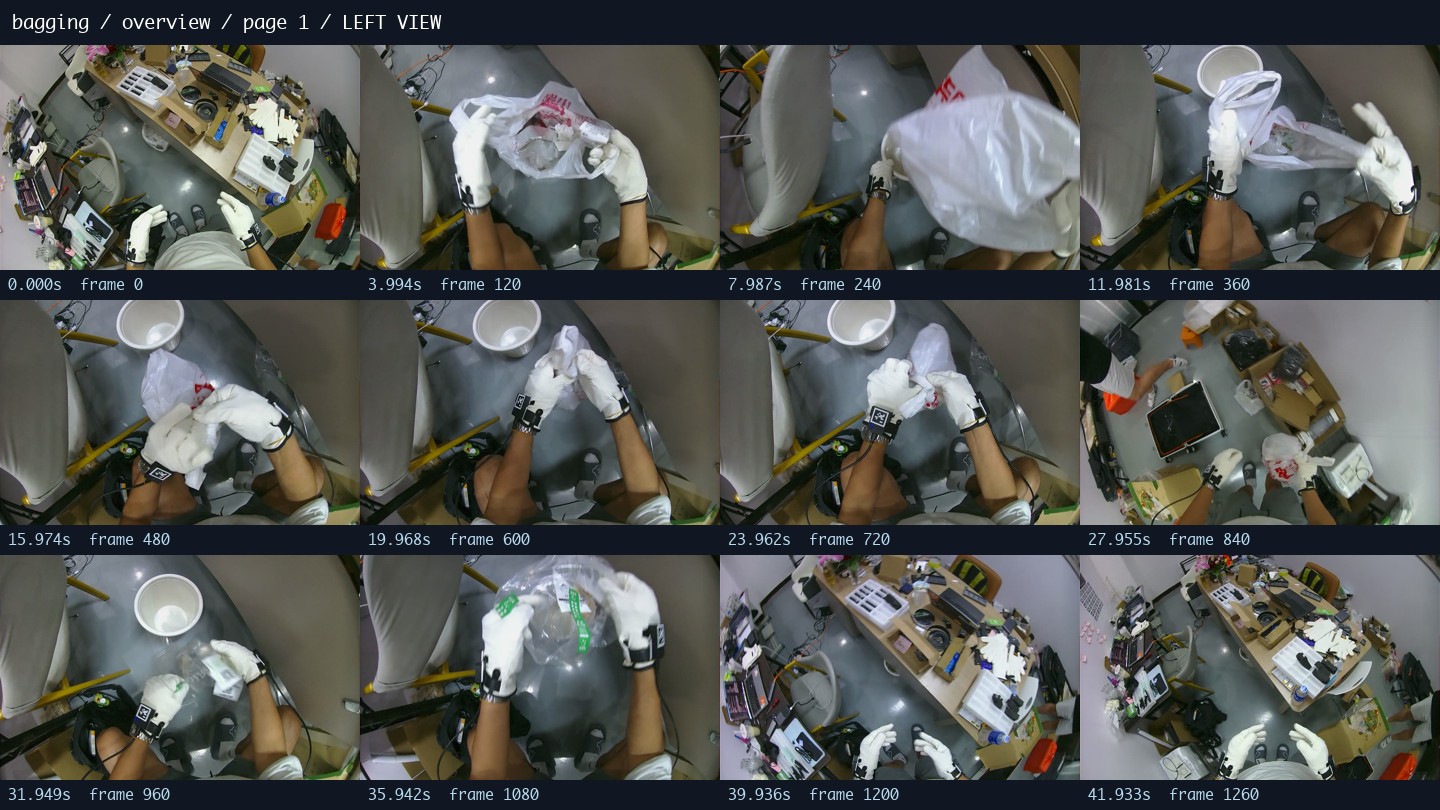
| Seconds | Step | Evidence |
|---|---|---|
| 0.00–8.00 | Approach bin and lift filled liner | Bin comes into view; bag rises and the empty white bin becomes visible. |
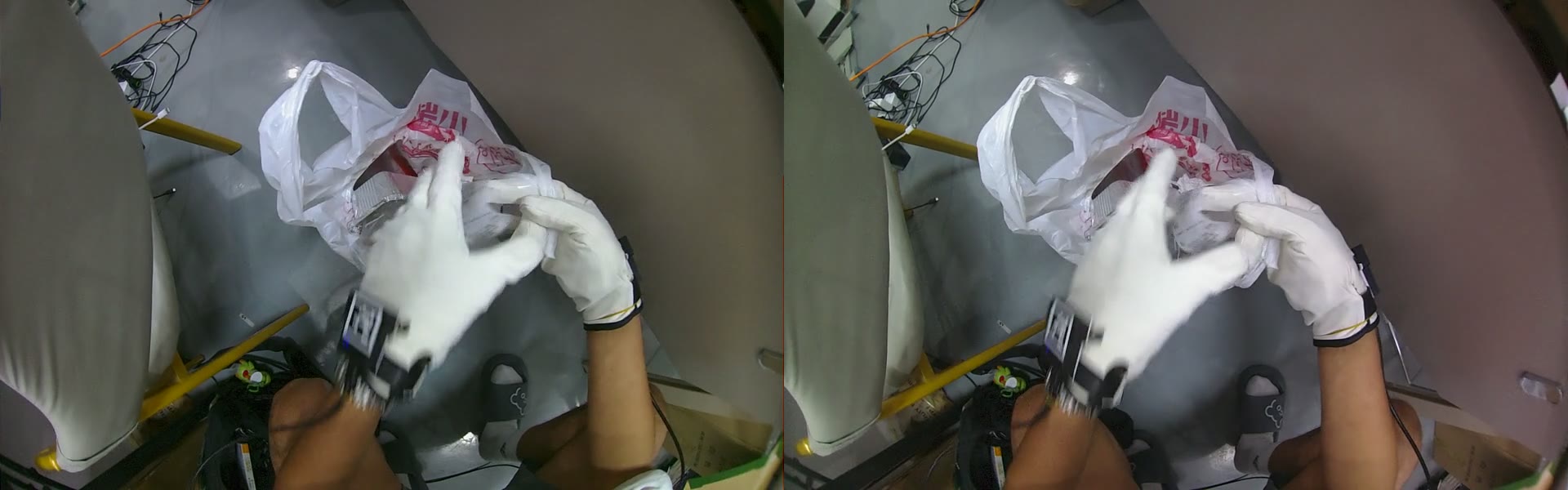
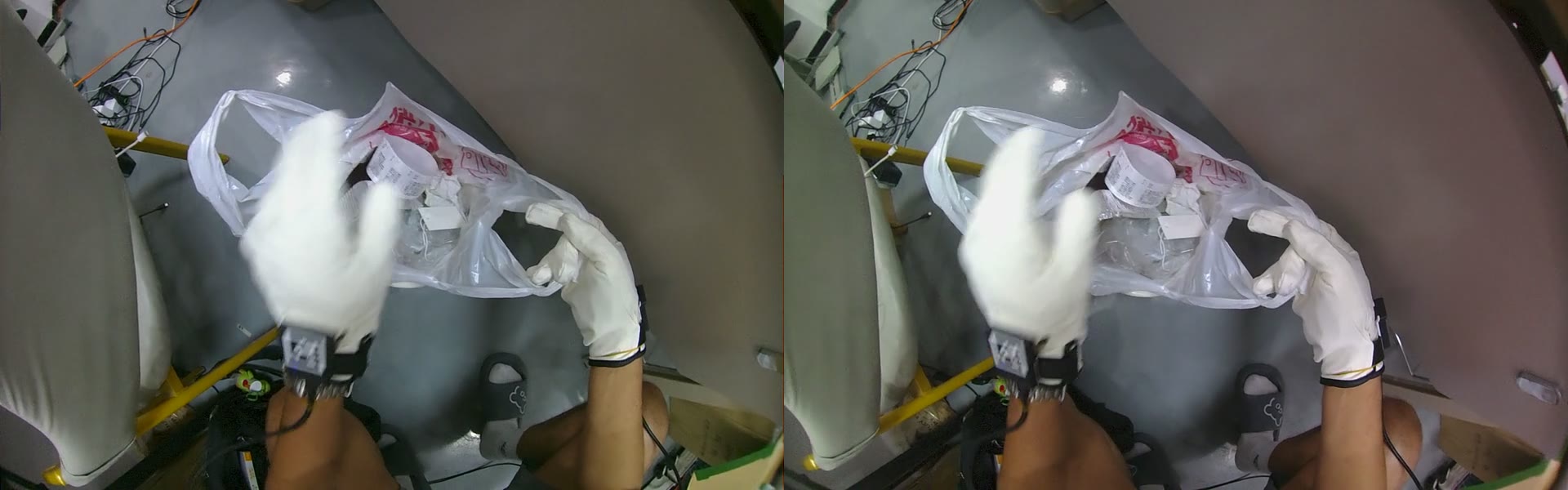
| 8.00–26.00 | Gather and manipulate bag handles | Both hands repeatedly cross, pull and regrip the bag handles. |
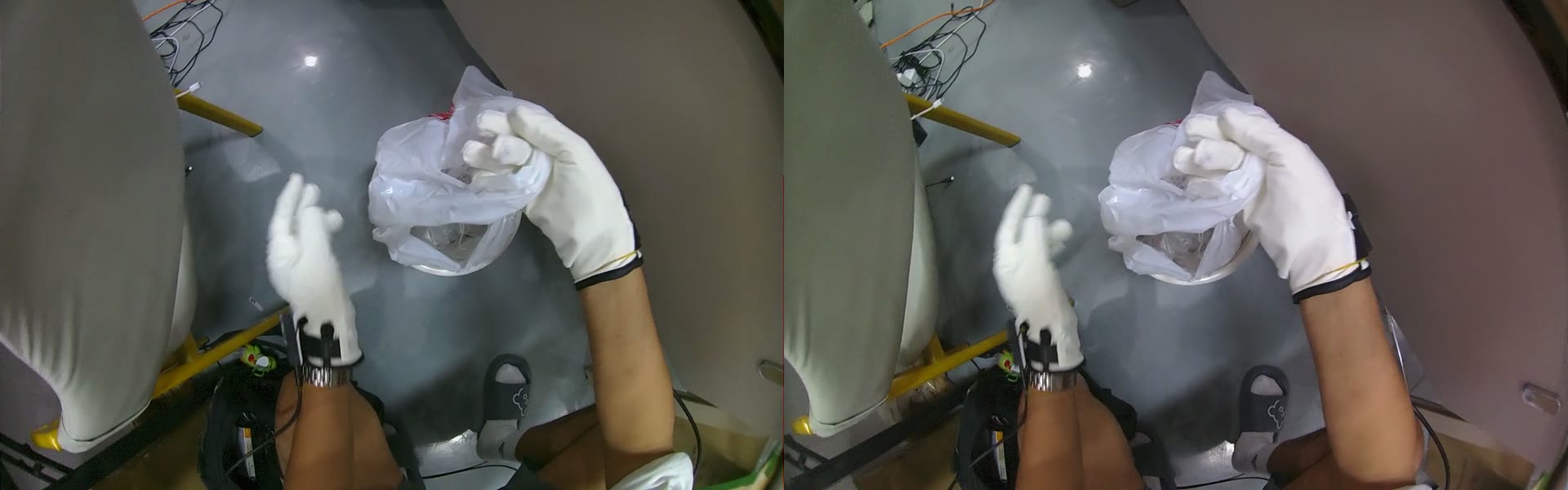
| 26.00–30.00 | Move filled bag aside and return | The wearer turns away holding the bag, then turns back toward the bin. |
| 30.00–38.50 | Open and fit replacement liner | Transparent bag is spread between the hands and lowered into the white bin. |
| 38.50–41.97 | Return bin and finish | Bin moves toward the table area and the hands withdraw. |
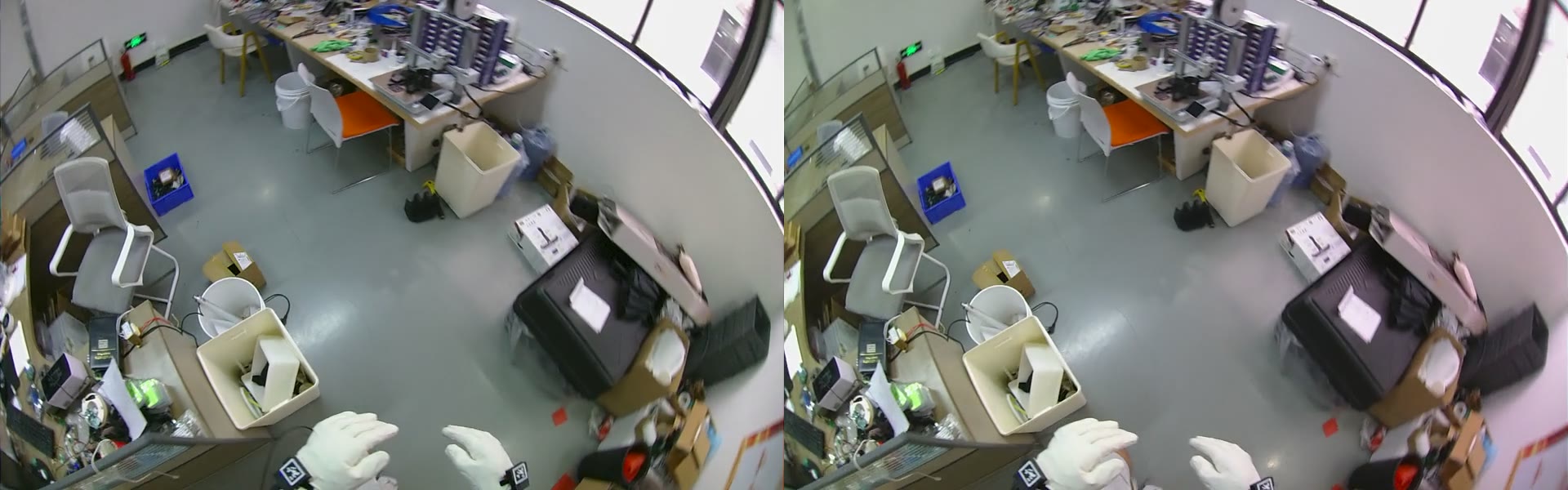
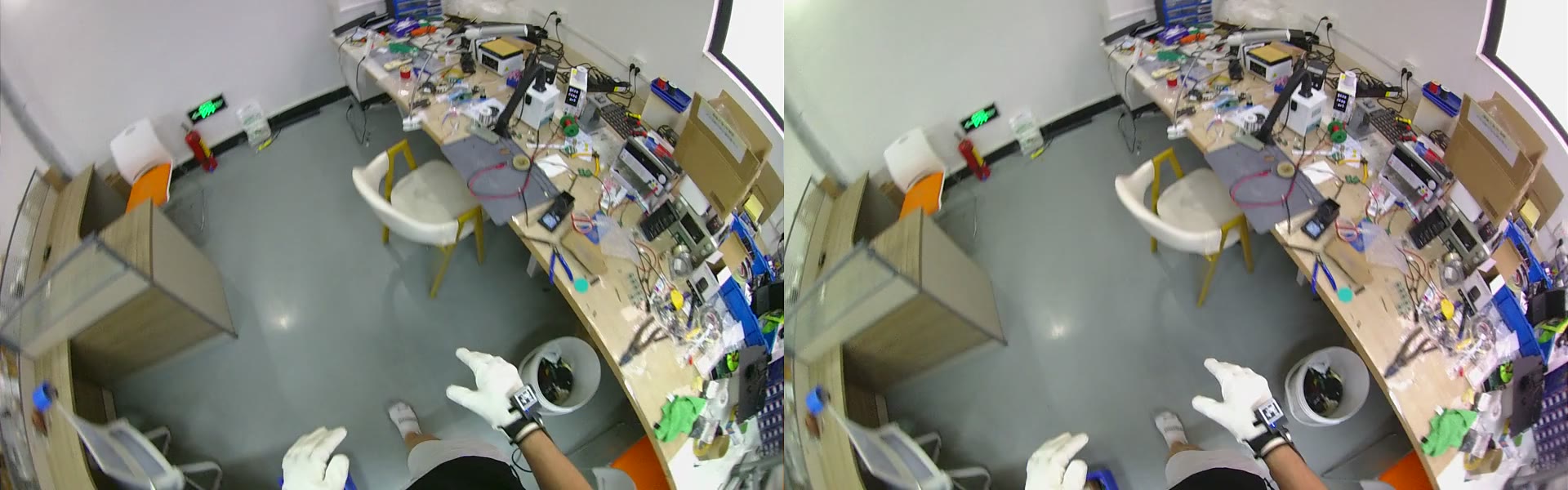
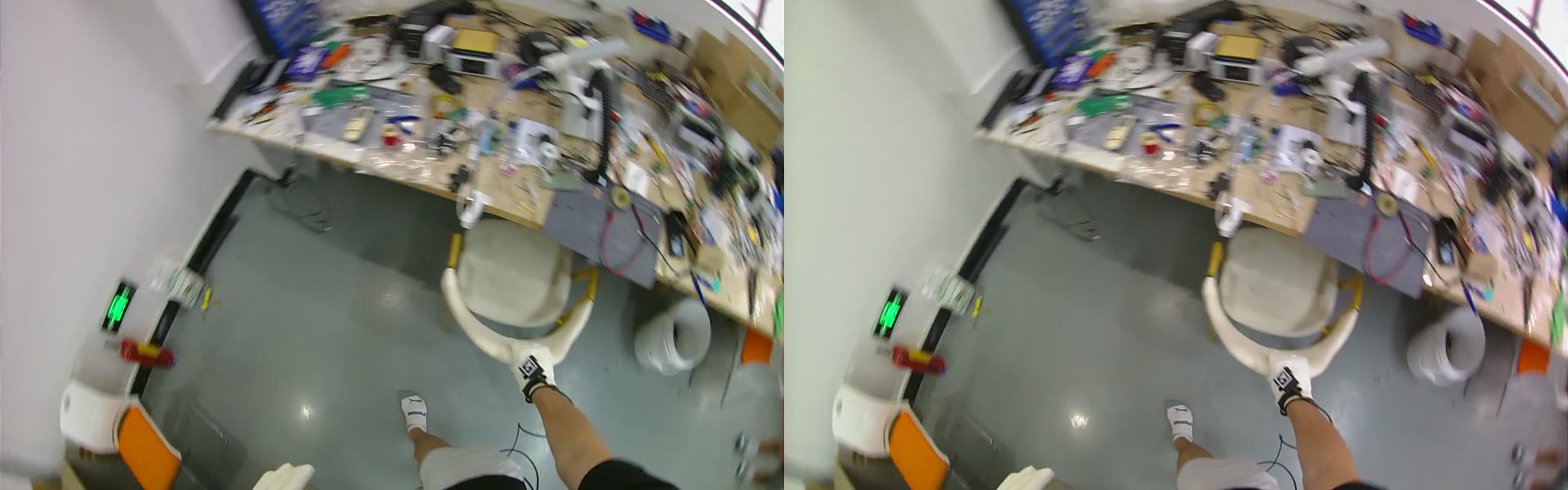
View tilts down between chair and table; right hand extends.
Start estimate range: [0, 1]s. End estimate range: [1, 3]s.
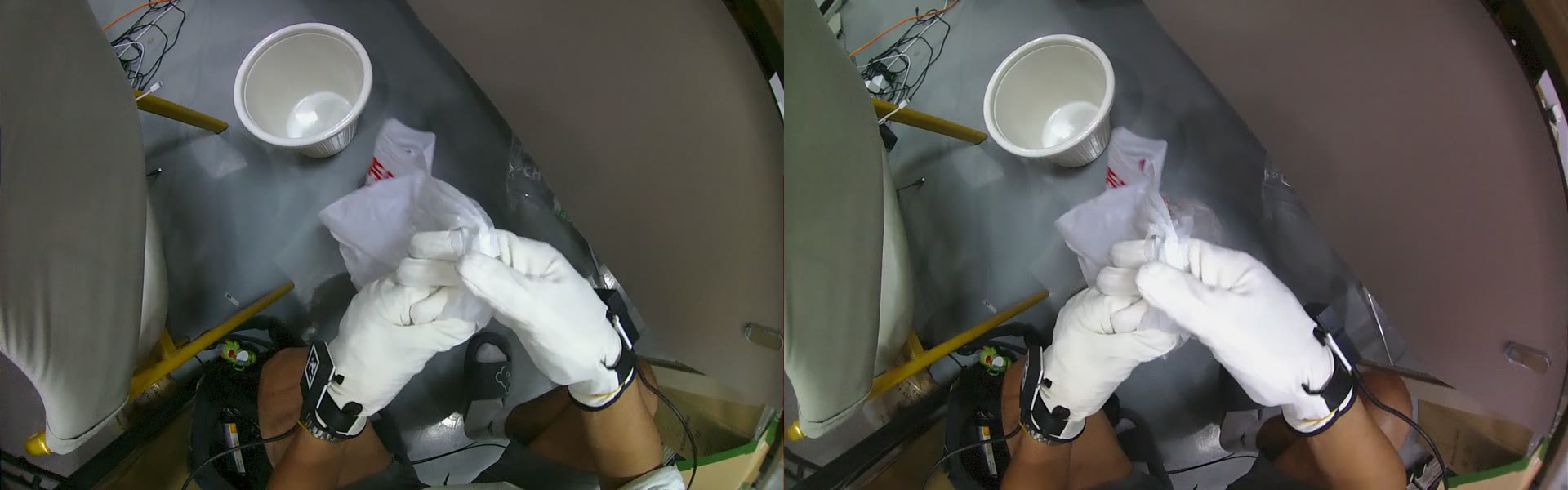
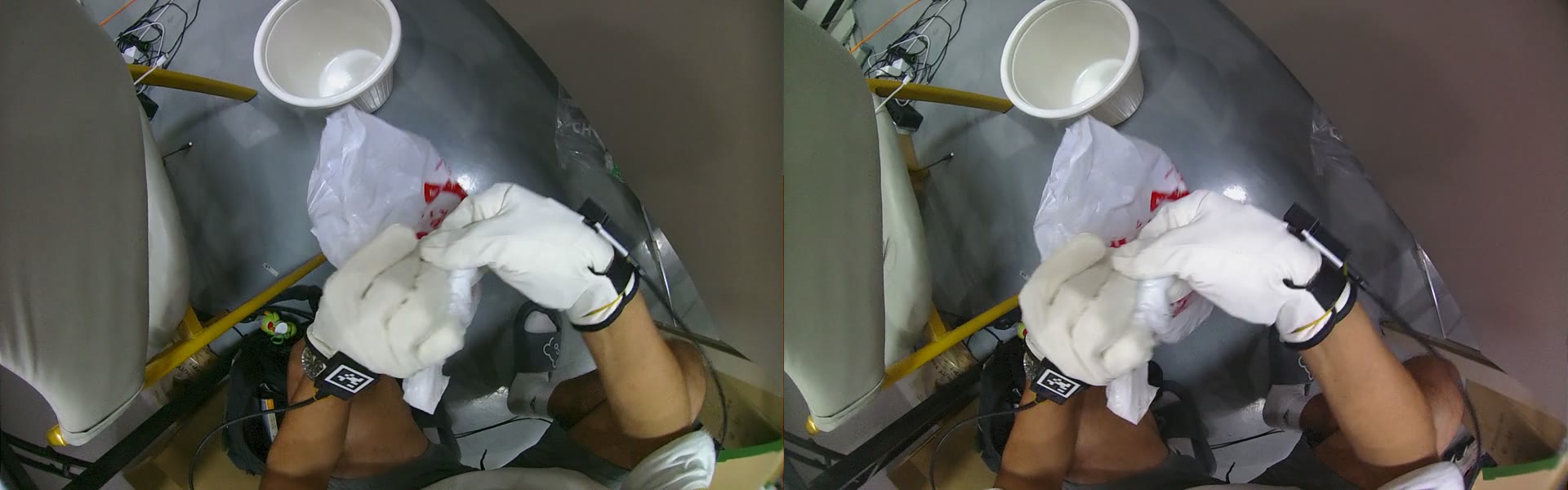
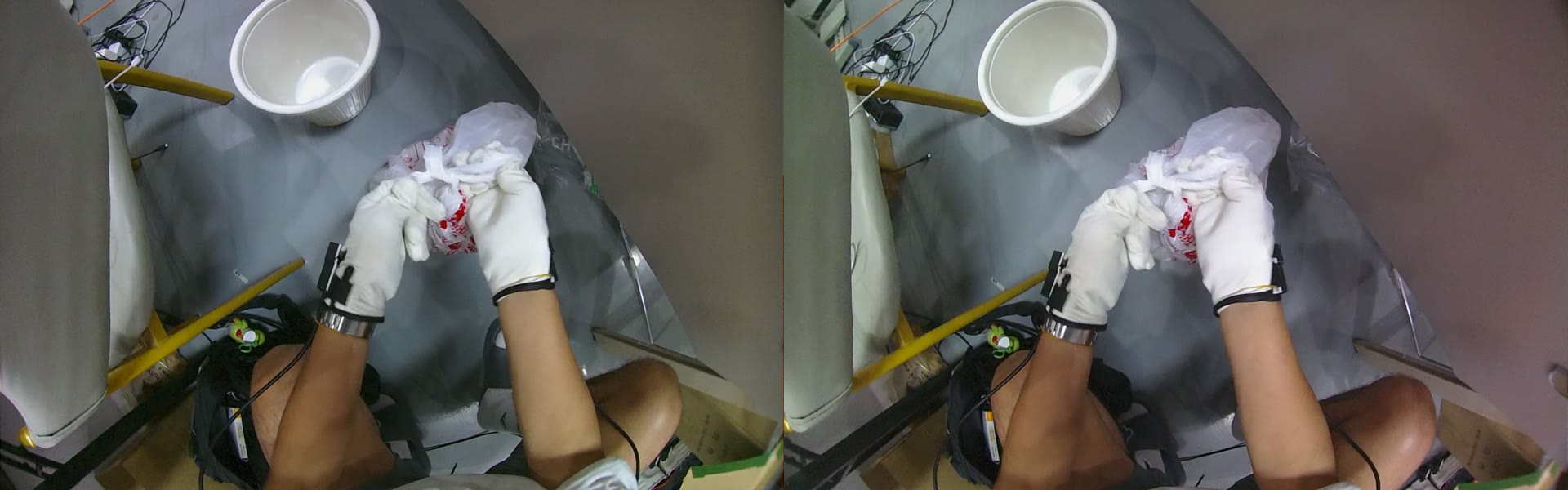
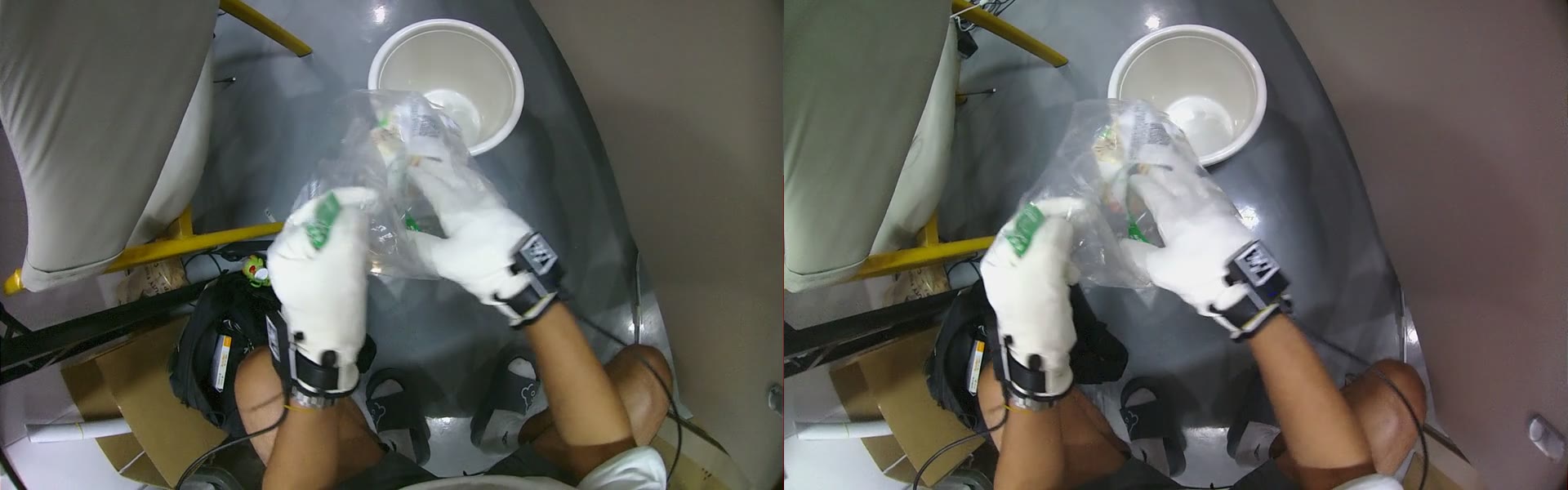
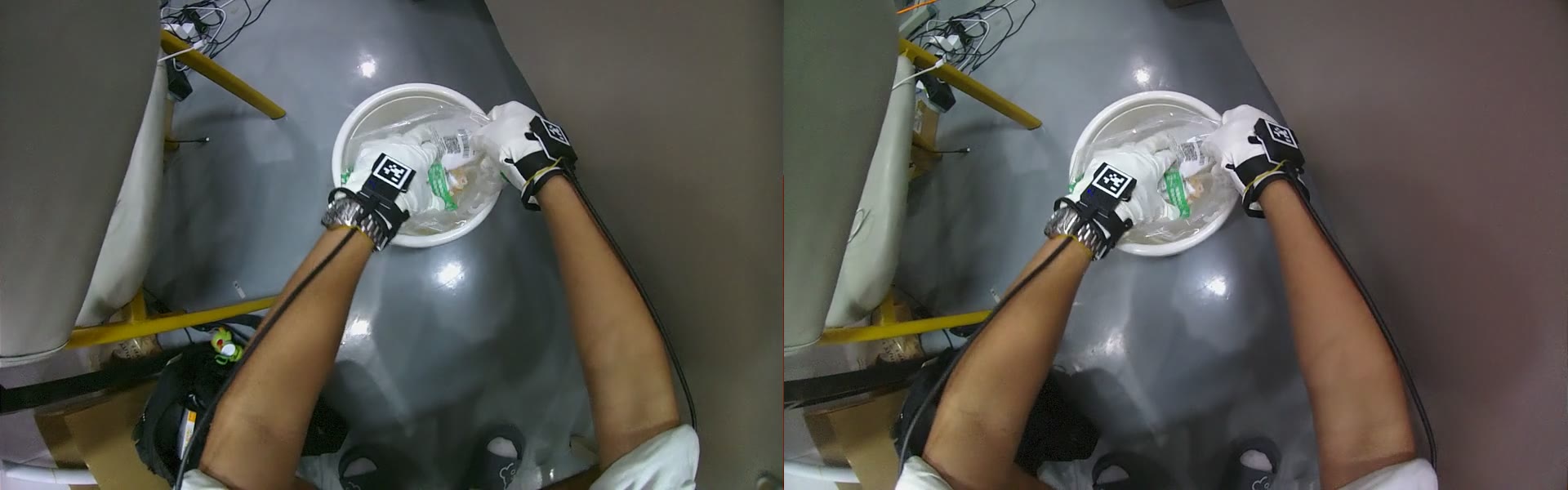
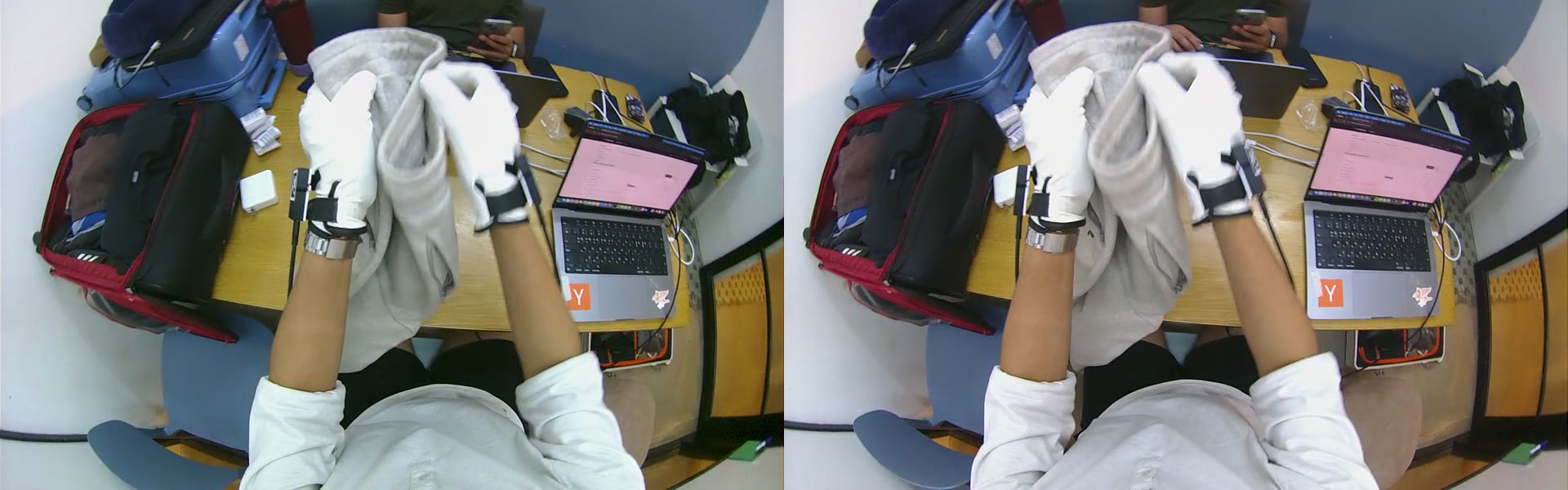
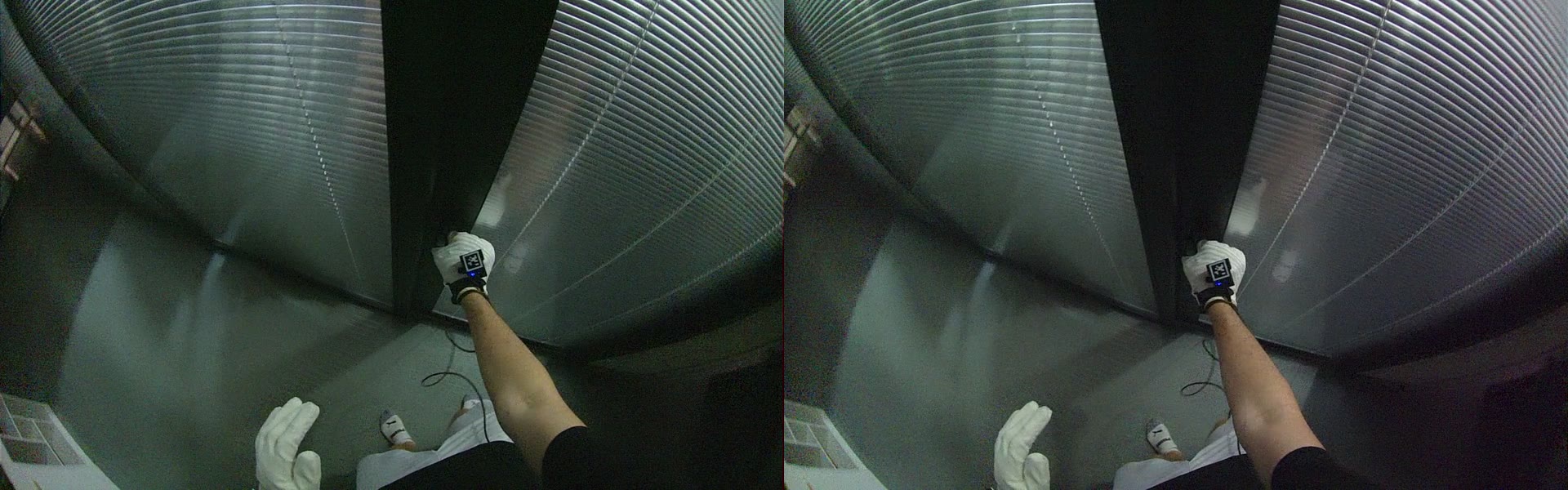
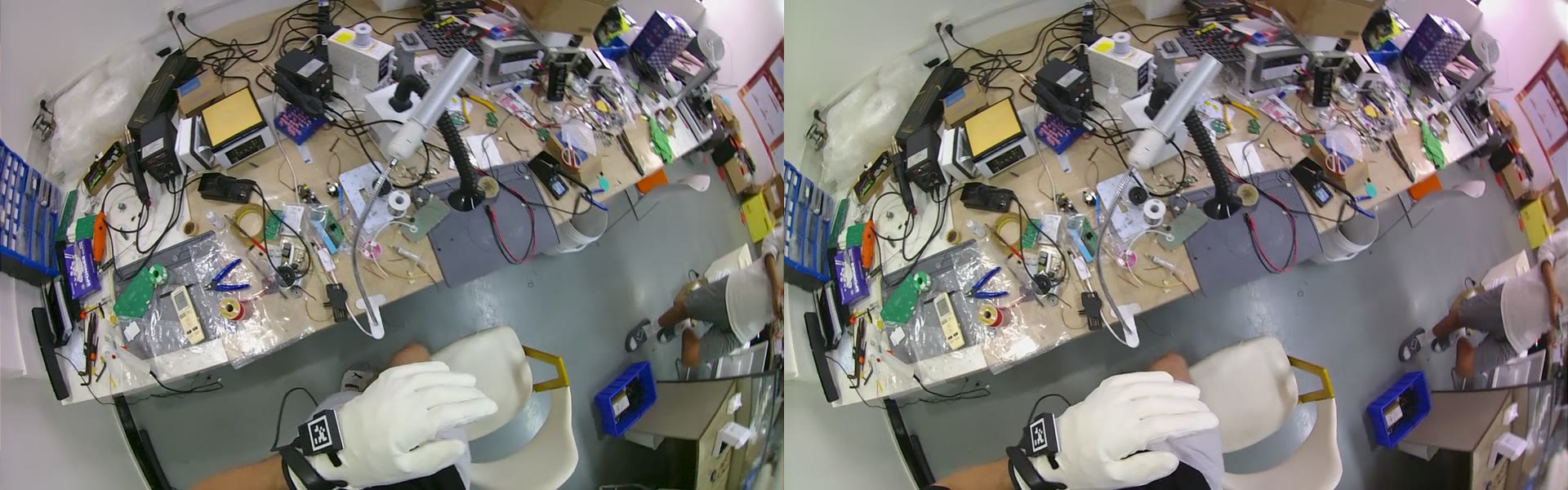
Both gloved hands hold opposite sides of the bag mouth.
Start estimate range: [1, 3]s. End estimate range: [5.5, 7.5]s.
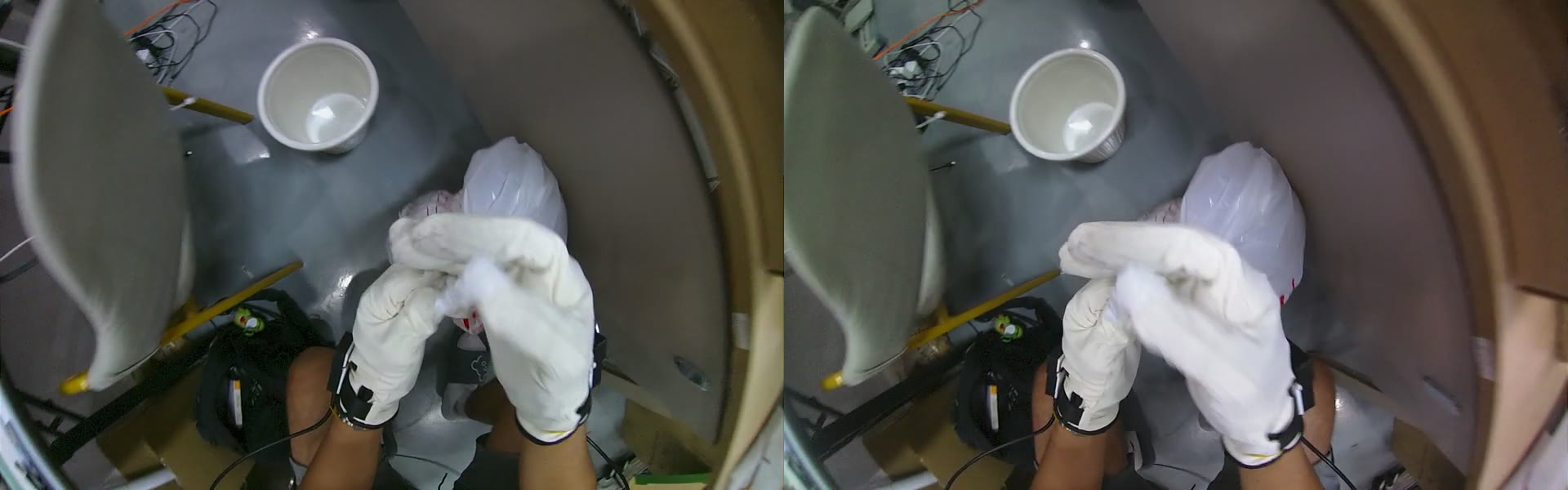
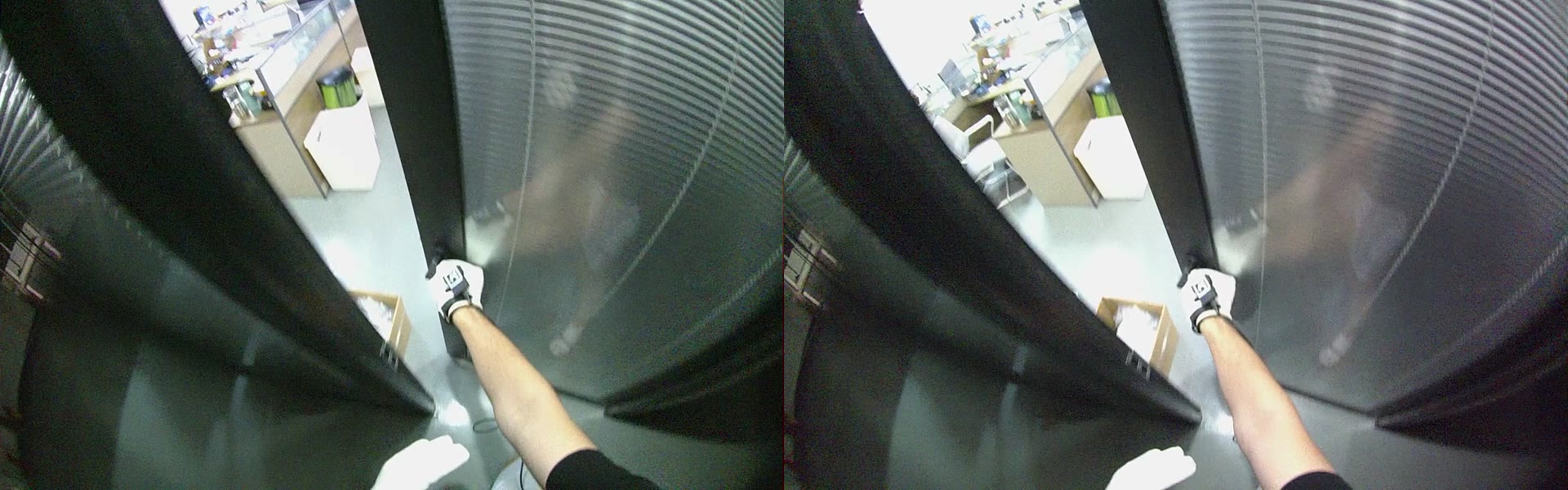
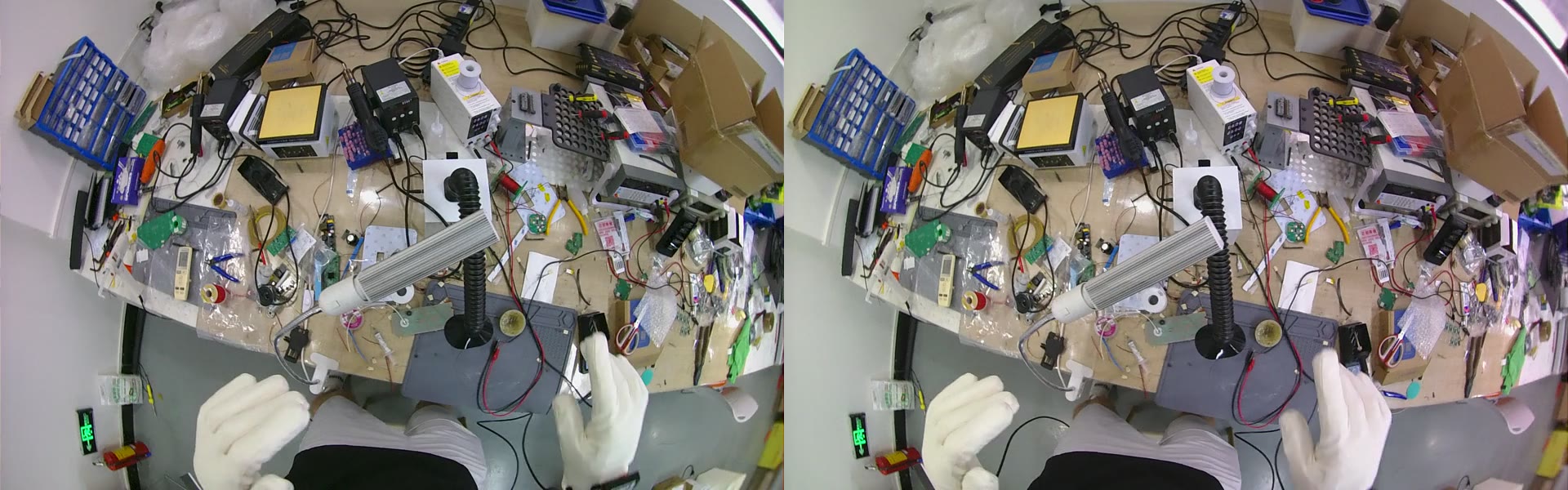
Bag rises toward camera; the white bin is exposed behind it.
Start estimate range: [5.5, 7.5]s. End estimate range: [7, 9]s.
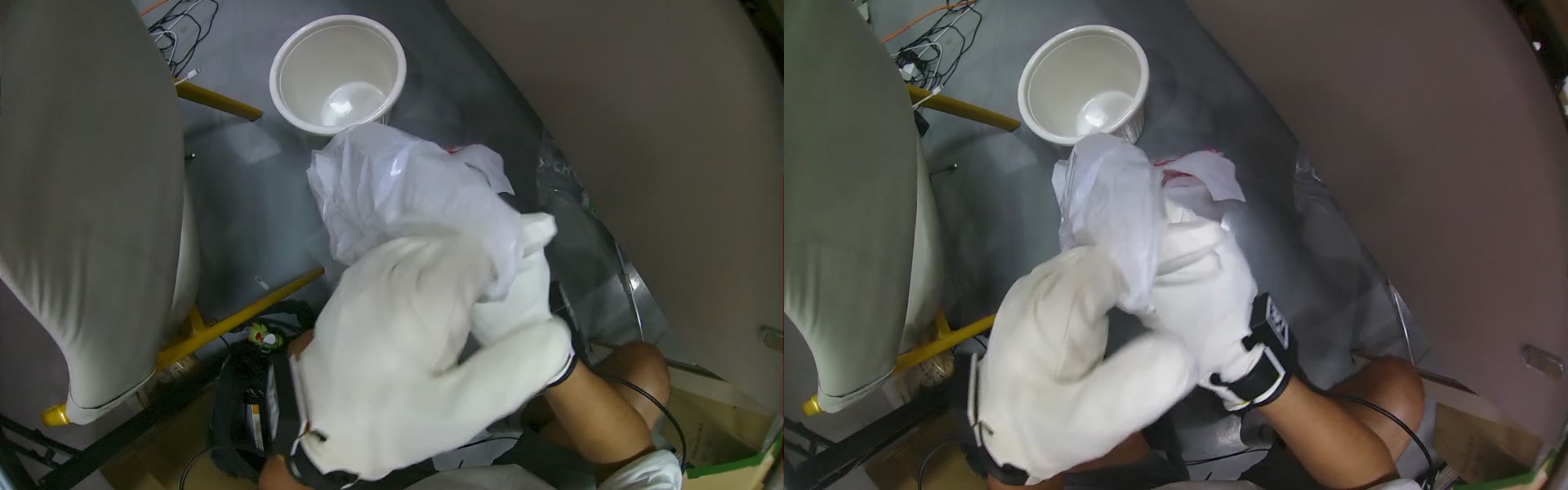
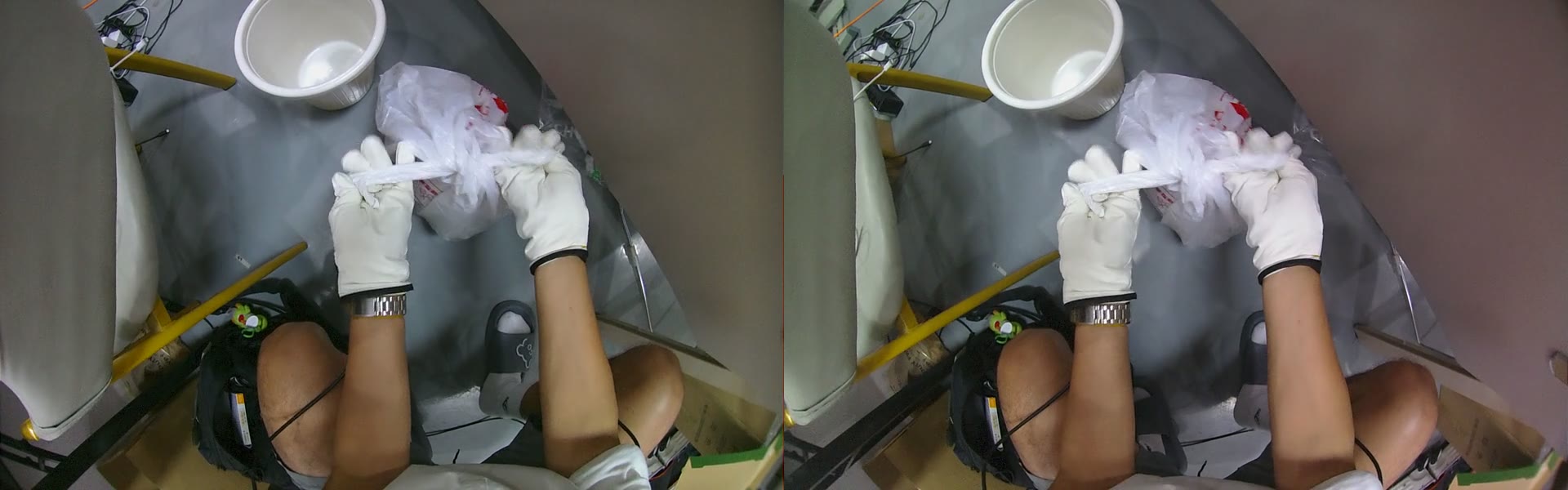
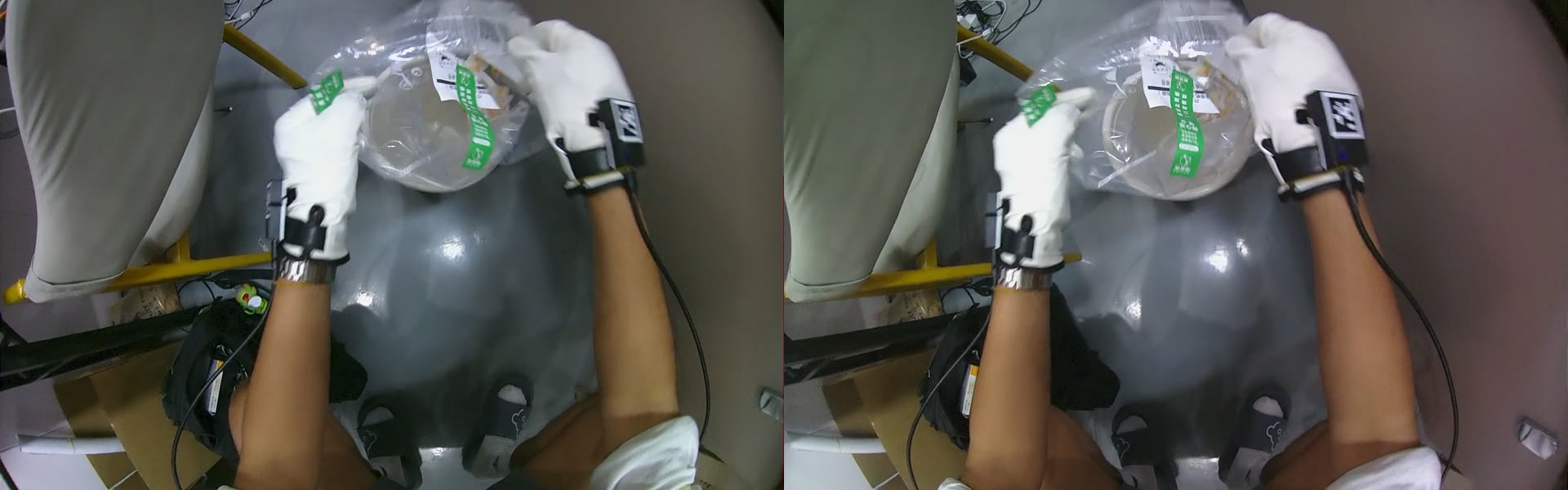
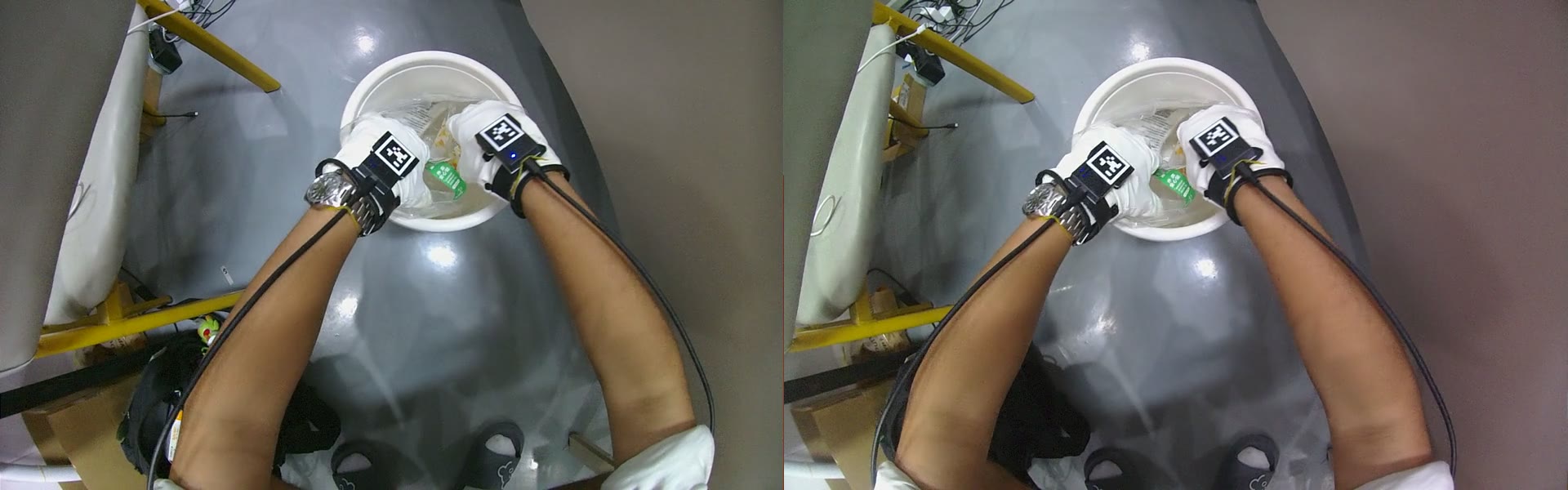
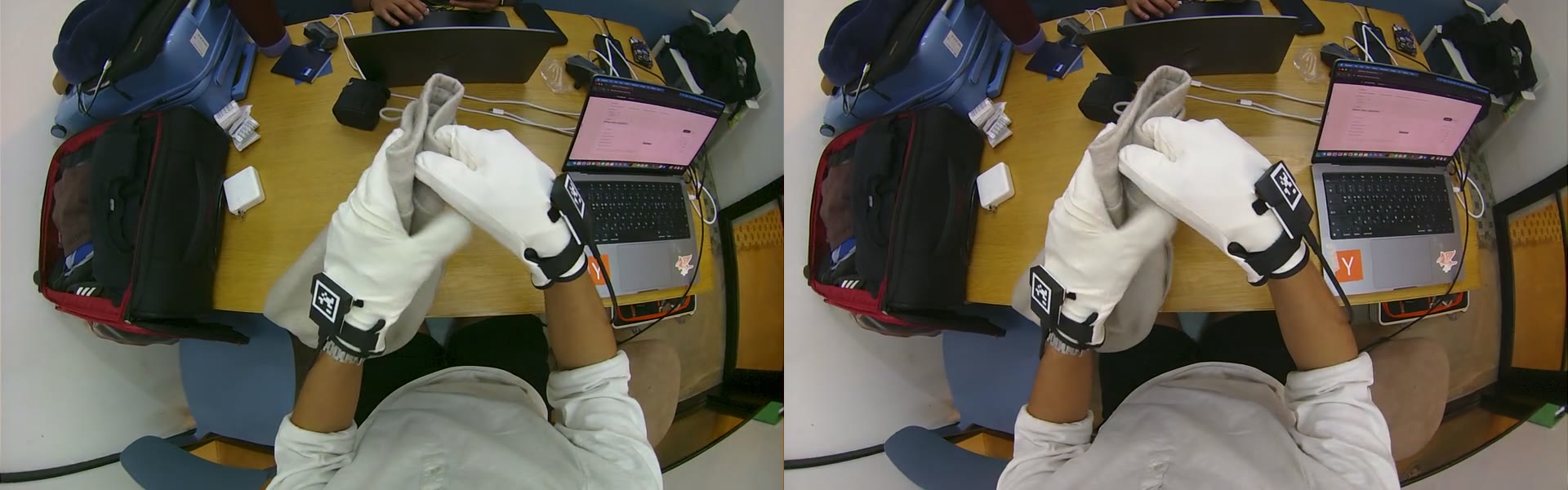
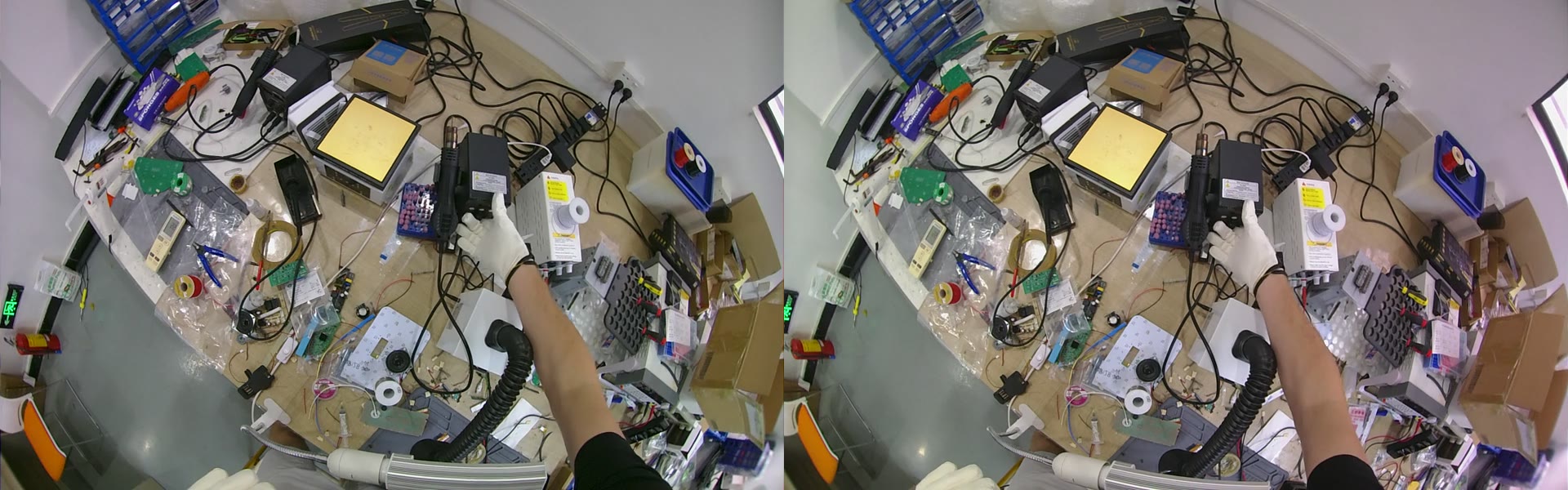
Both hands move the loose handles toward the bag neck.
Start estimate range: [7, 9]s. End estimate range: [11, 13]s.
Hands cross above the neck then pull sections of plastic in opposite directions.
A tying motion is apparent; exact knot structure is obscured.
Start estimate range: [11, 13]s. End estimate range: [17.5, 19.5]s.
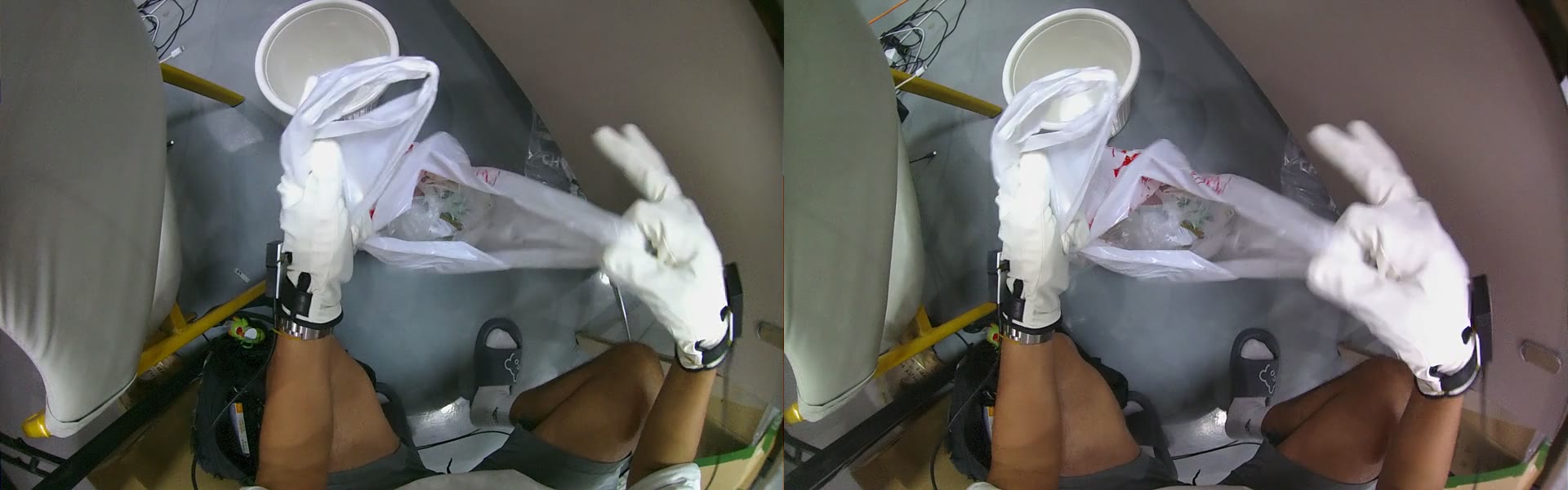
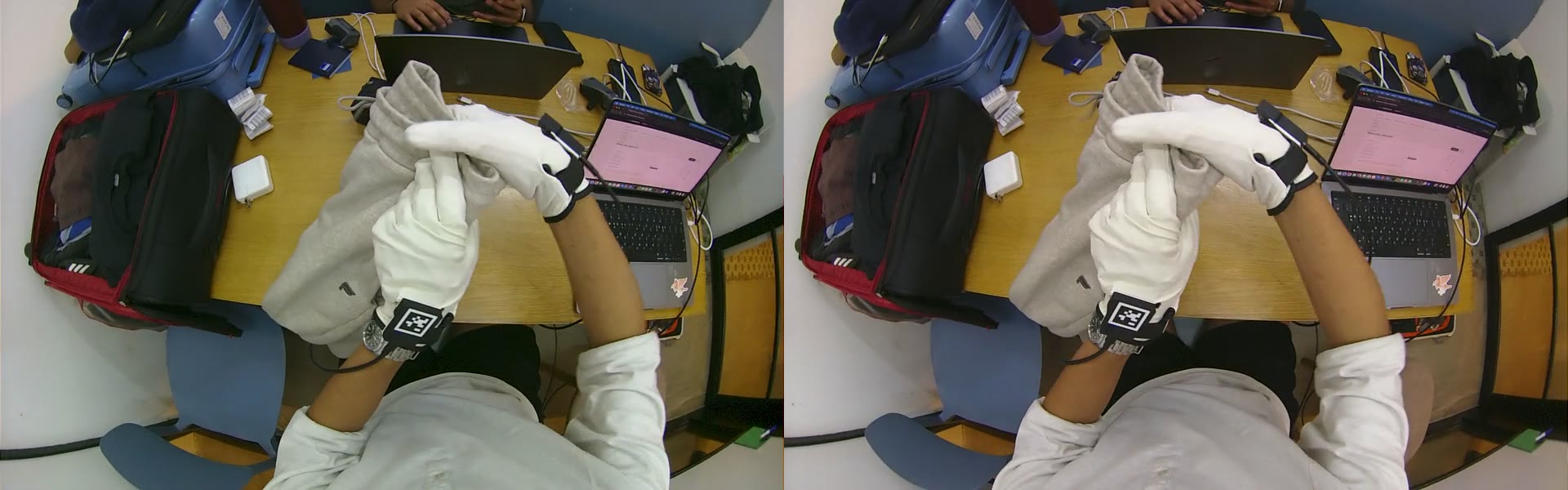
Both hands continue working and pulling the handles near the gathered neck.
Do not infer a secure or leakproof closure.
Start estimate range: [17.5, 19.5]s. End estimate range: [24.5, 26.5]s.
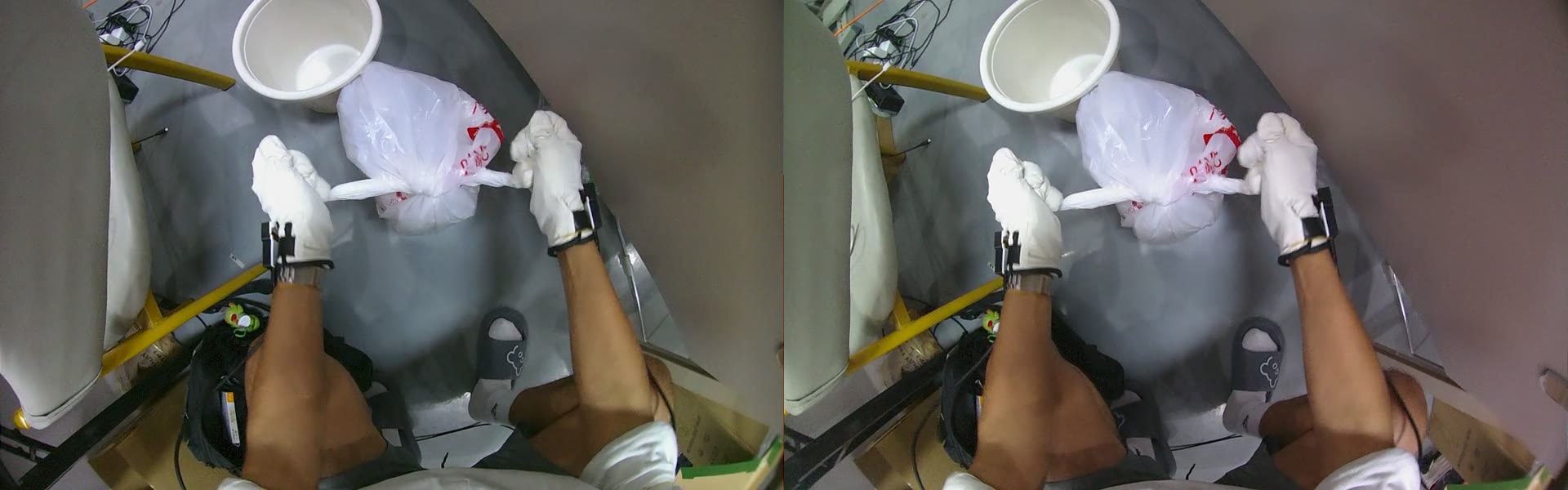
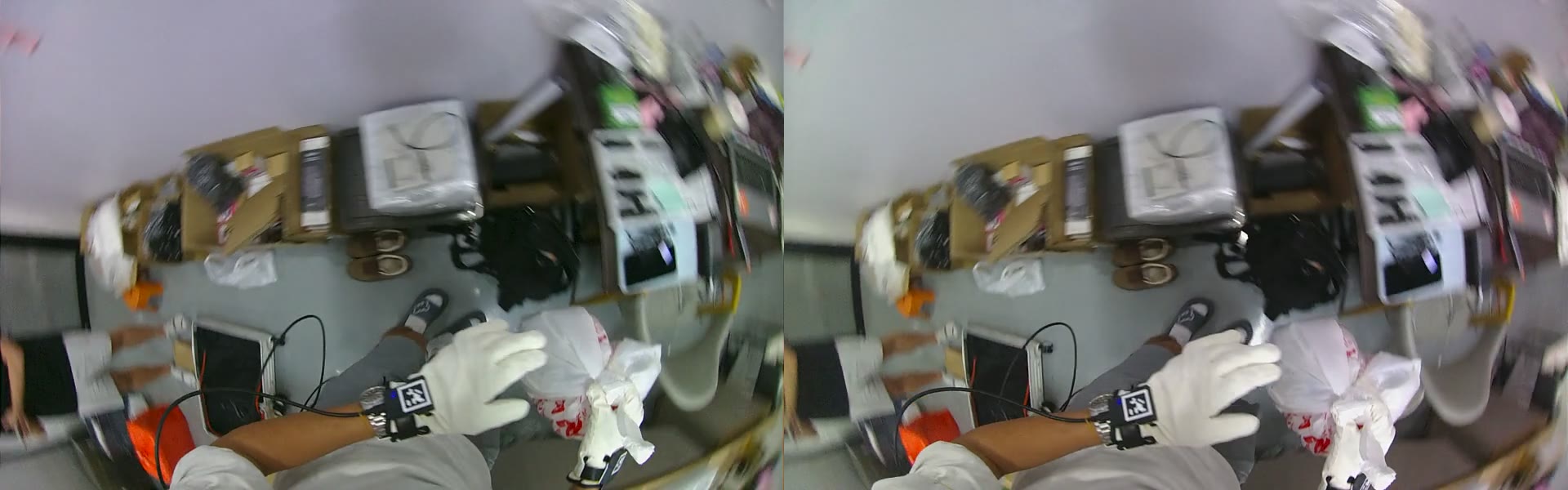
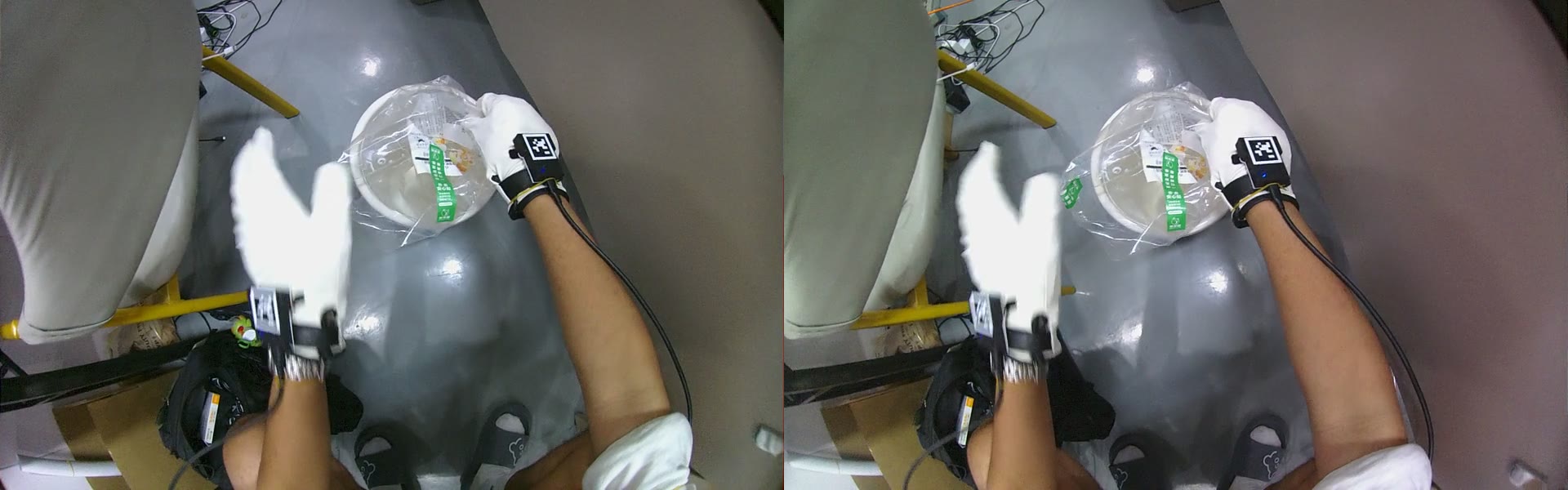
Bag is held by its gathered upper section as the view begins turning.
Start estimate range: [24.5, 26.5]s. End estimate range: [25, 27]s.
Bag moves with the wearer toward the adjacent work area.
Start estimate range: [25, 27]s. End estimate range: [27.5, 29.5]s.
Filled bag moves to the side; view returns toward the white bin.
Exact release and final resting surface are outside the main view.
Start estimate range: [27.5, 29.5]s. End estimate range: [29, 31]s.
Left hand reaches to bin while the right handles transparent plastic.
Start estimate range: [29, 31]s. End estimate range: [30.5, 32.5]s.
Hands pinch, pull apart and spread the transparent bag.
Start estimate range: [30.5, 32.5]s. End estimate range: [36.07552, 36.34176]s.
Opened plastic descends into the bin mouth.
Start estimate range: [36.07552, 36.34176]s. End estimate range: [36.608, 36.87424]s.
Both hands adjust transparent plastic at the rim.
Uniform seating around the full rim is not established.
Start estimate range: [36.608, 36.87424]s. End estimate range: [37.5, 39.5]s.
Bin and hands shift under the table edge before the wearer straightens.
Start estimate range: [37.5, 39.5]s. End estimate range: [38.5, 40.5]s.
Hands remain in front of the wearer after returning upright.
Start estimate range: [38.5, 40.5]s. End estimate range: [40.96608, 41.96608]s.
Knot security and leakage are not verified. · Contents are only partially visible. · Final liner seating below the rim is not fully visible.
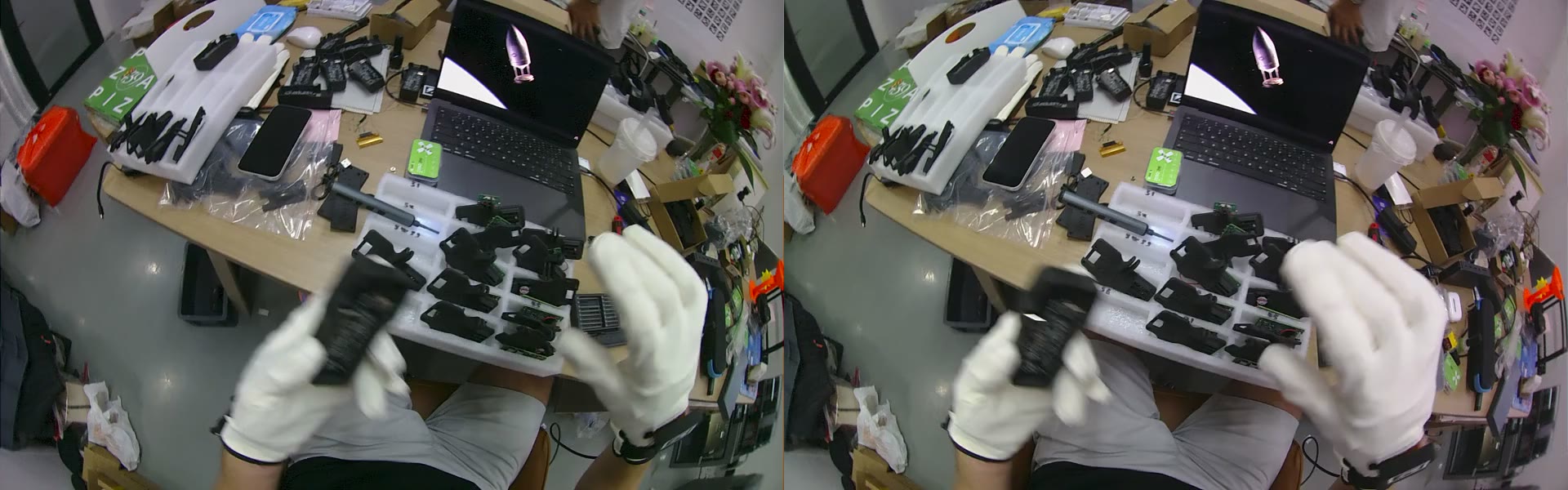
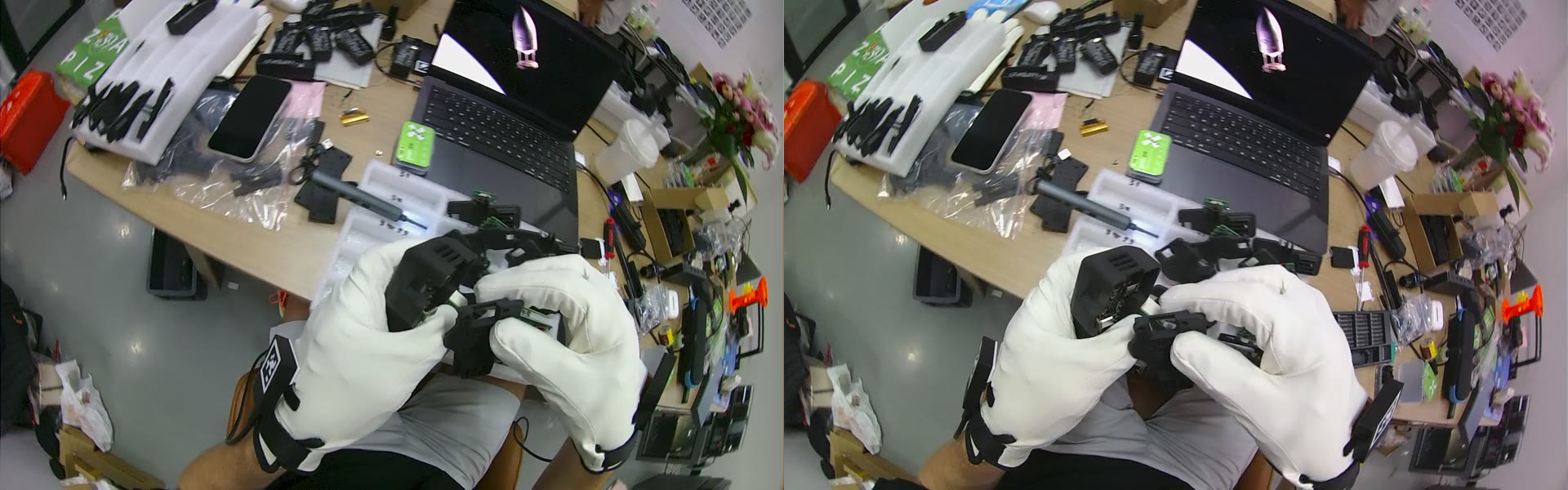
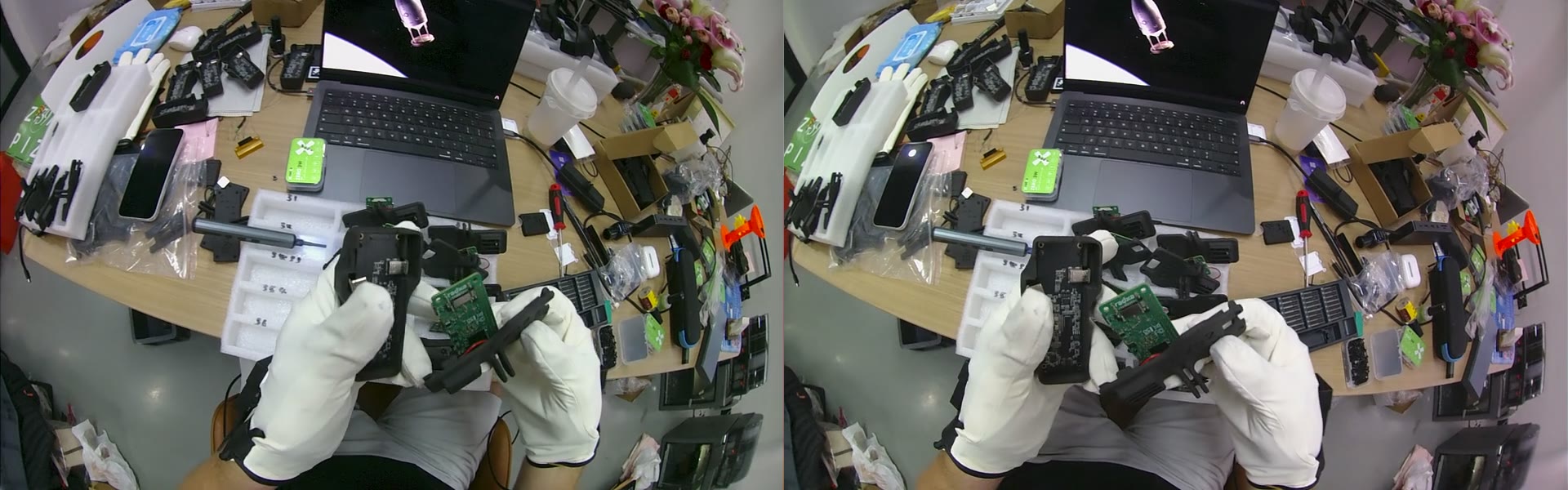
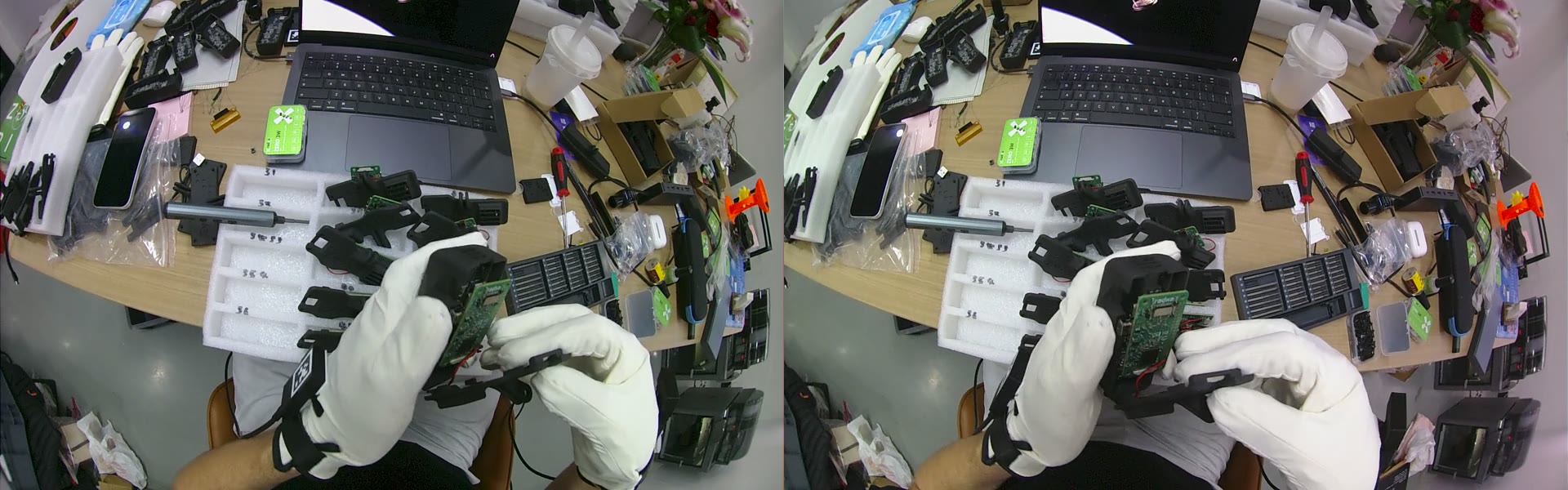
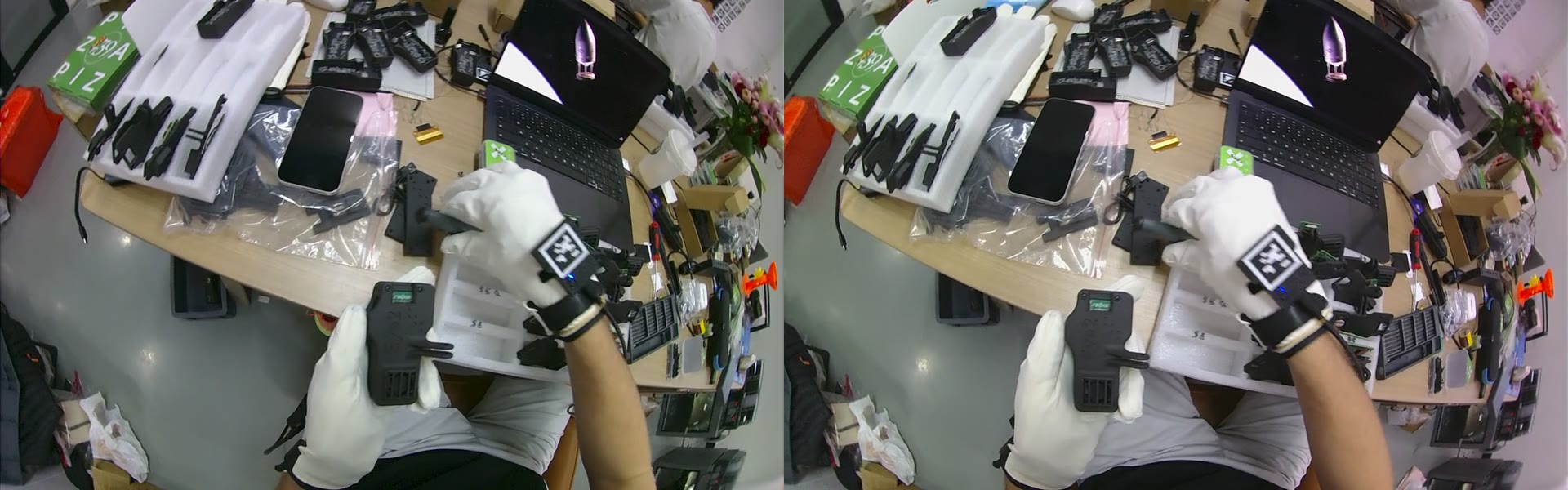
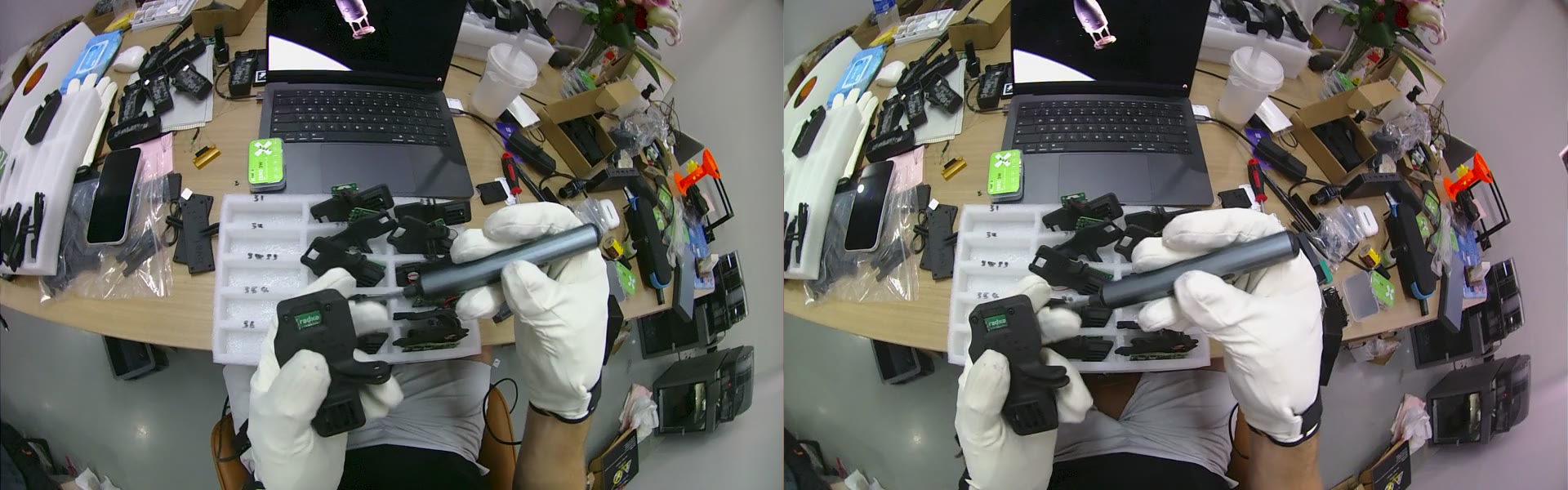
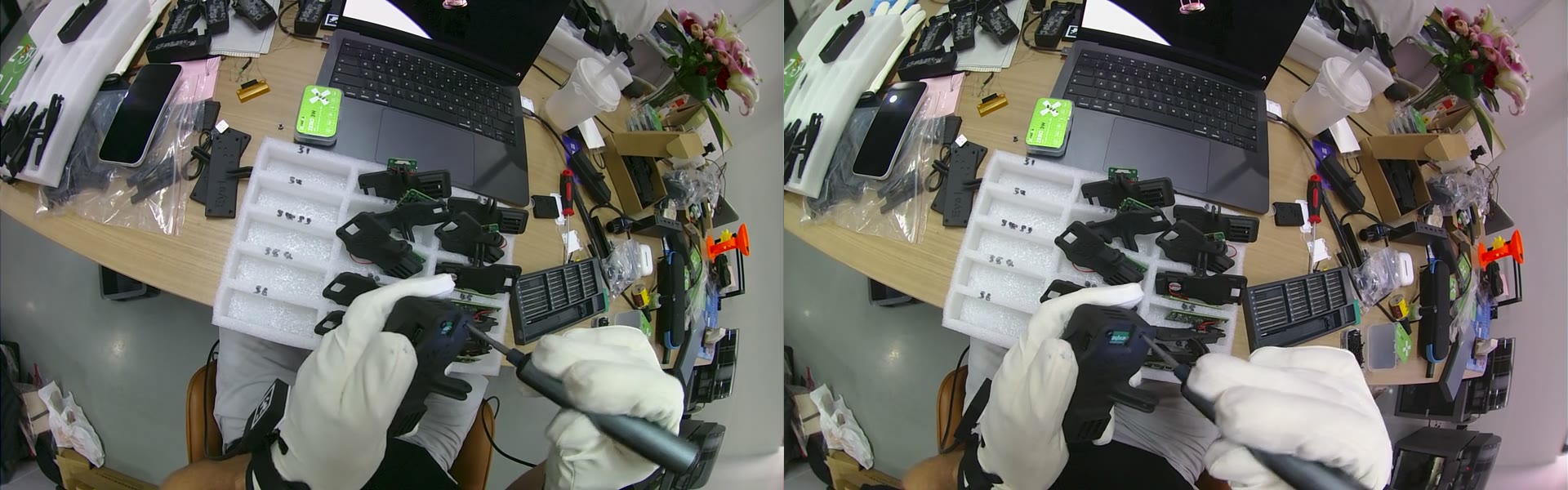
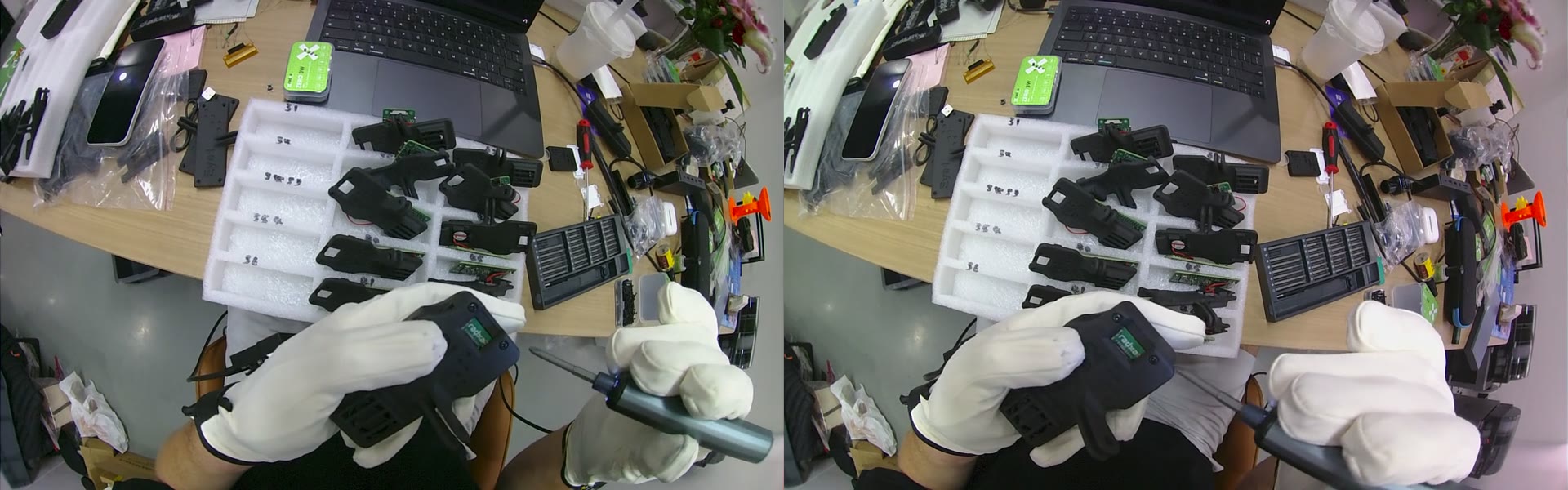
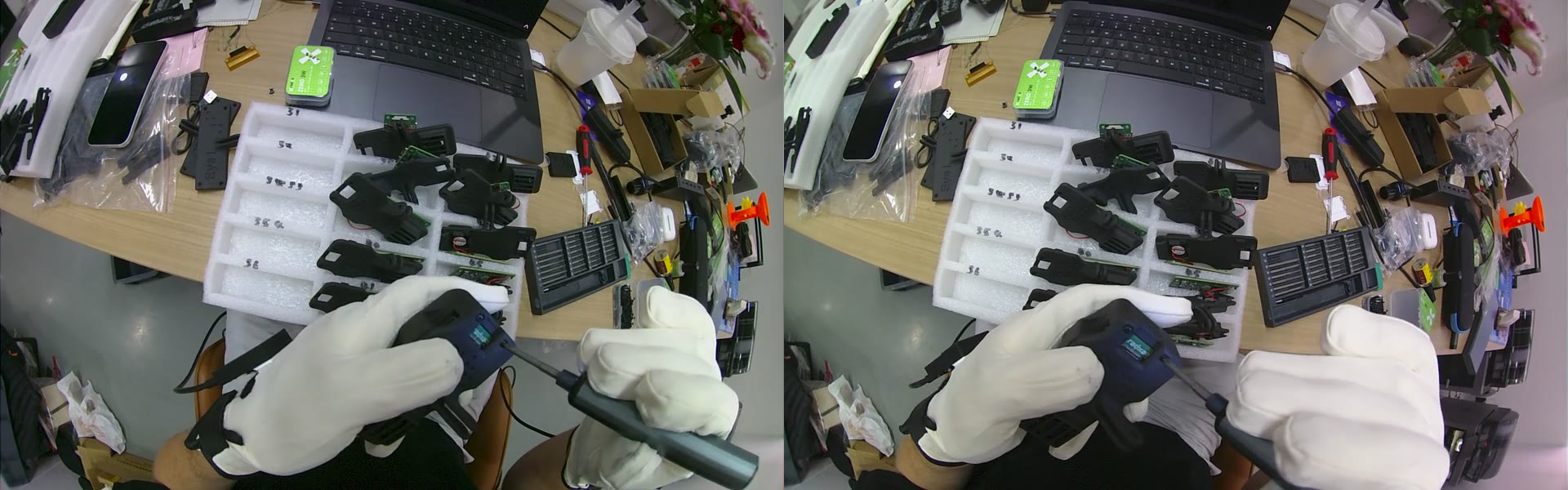
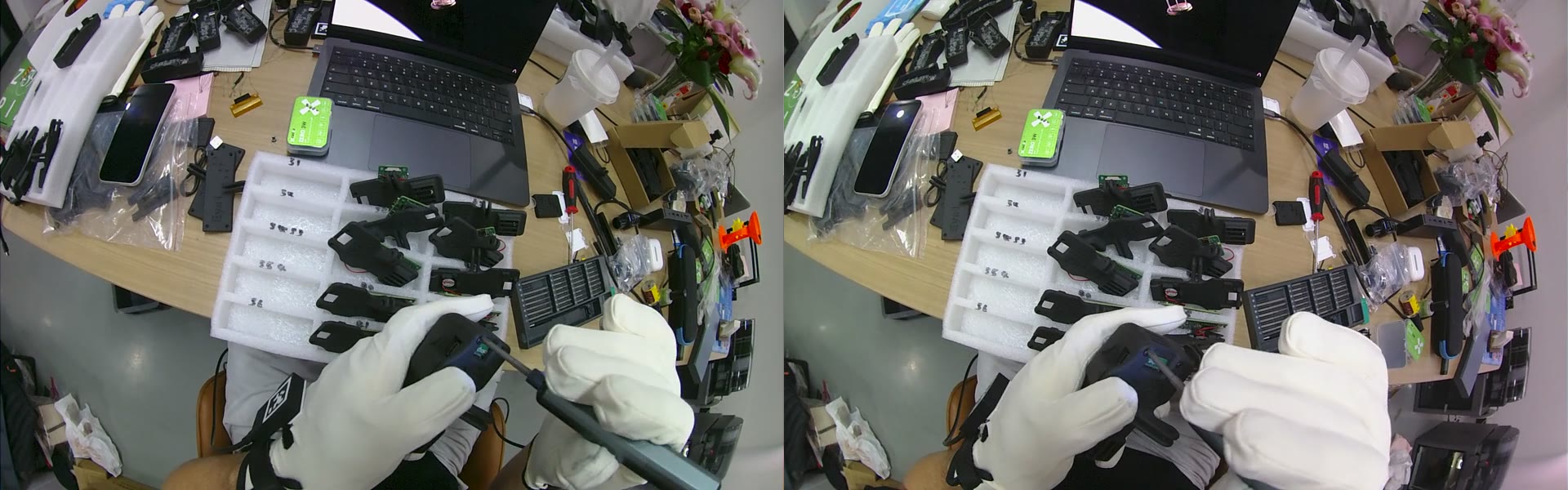
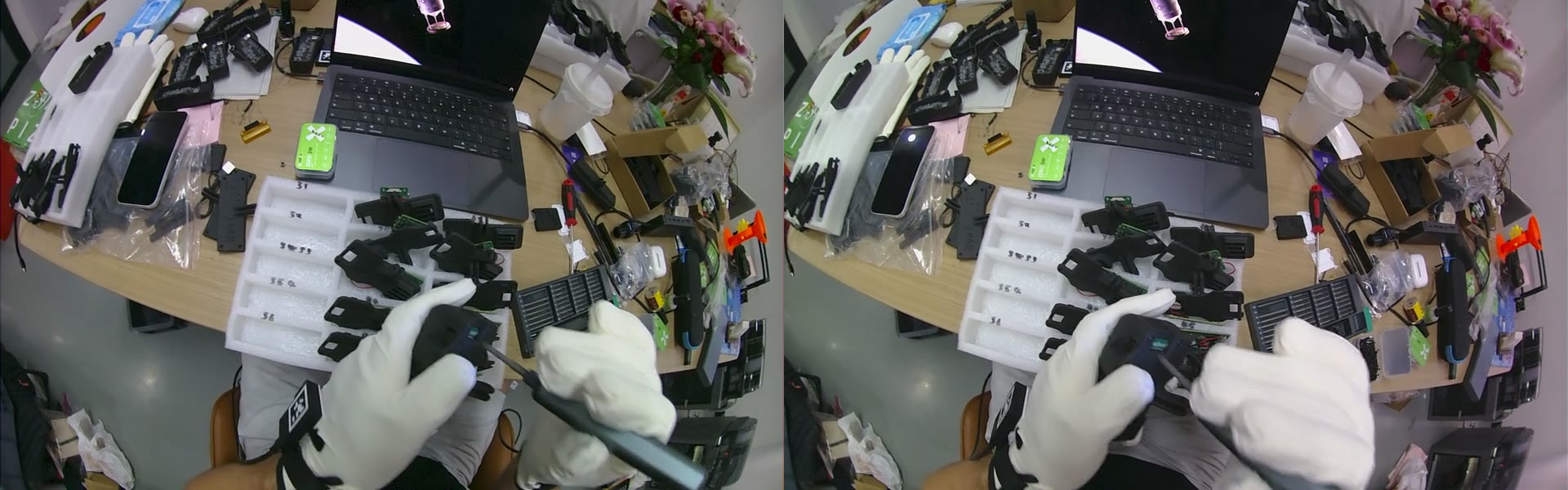
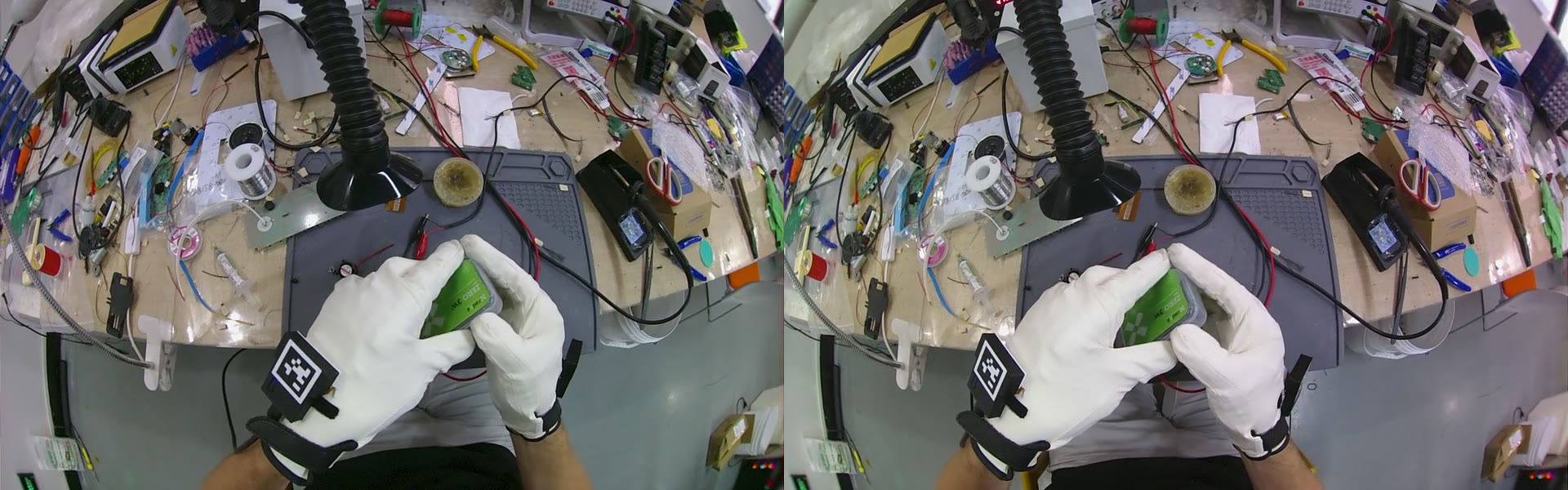
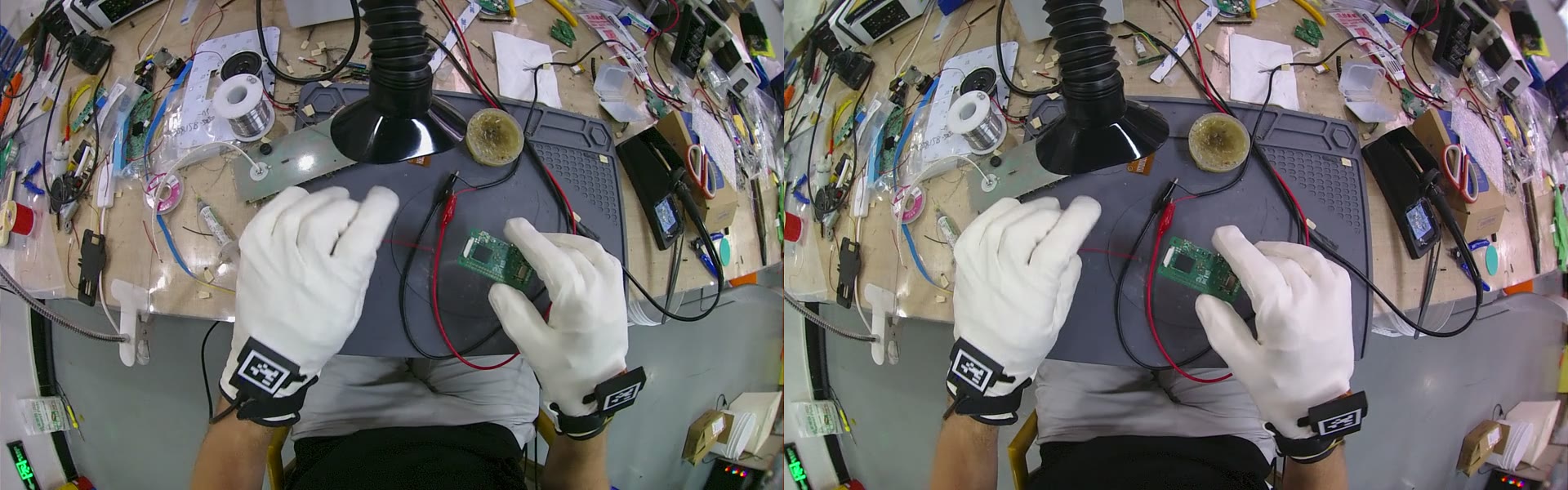
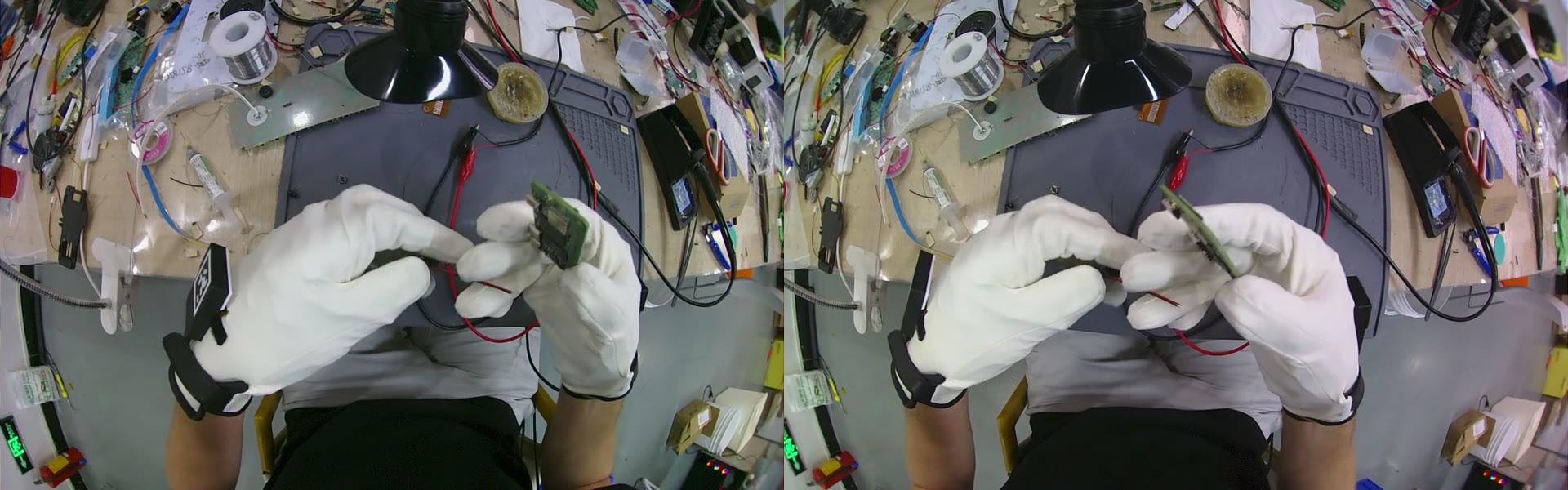
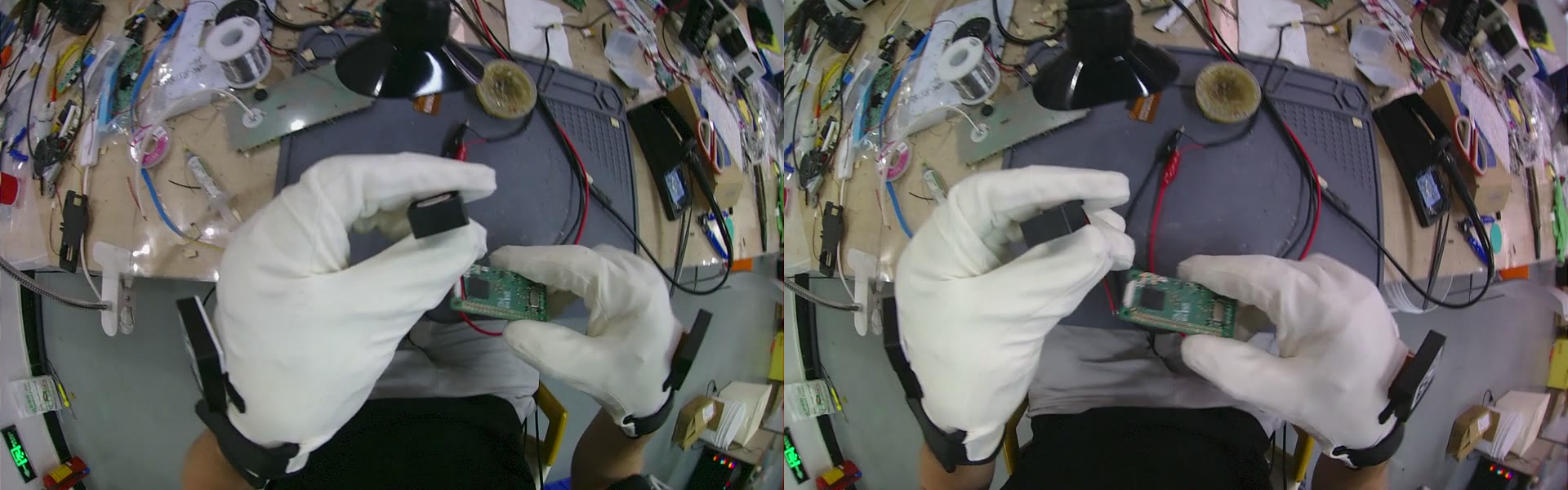
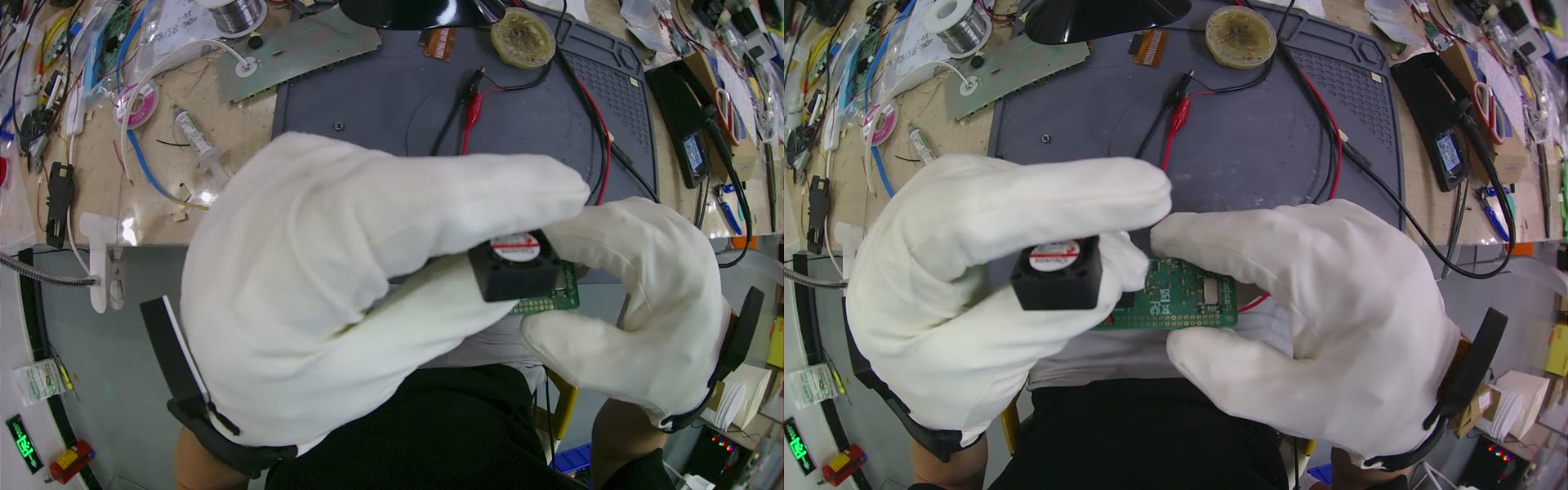
Position a green electronic assembly in a black housing, press the housing together, manipulate a small fitting, and apply a handheld driver.
Visible outcome: The handled enclosure is moved to the left work area; the driver remains in the right hand.
Original paired views. Contact sheets below use the left view. Duration 63.598s.
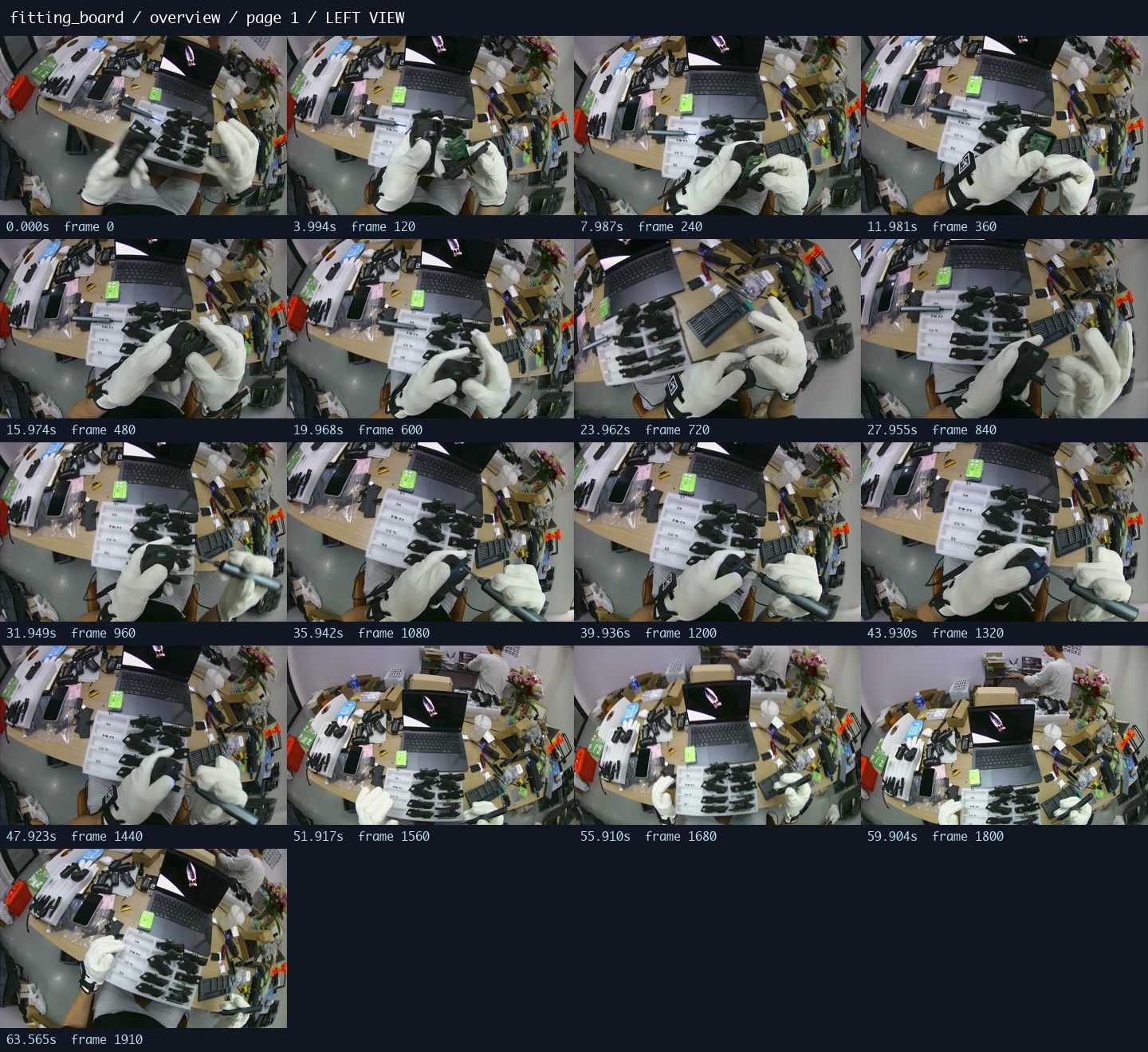
| Seconds | Step | Evidence |
|---|---|---|
| 0.00–3.00 | Bring enclosure parts together | Left hand already holds one part; right hand retrieves a matching dark component. |
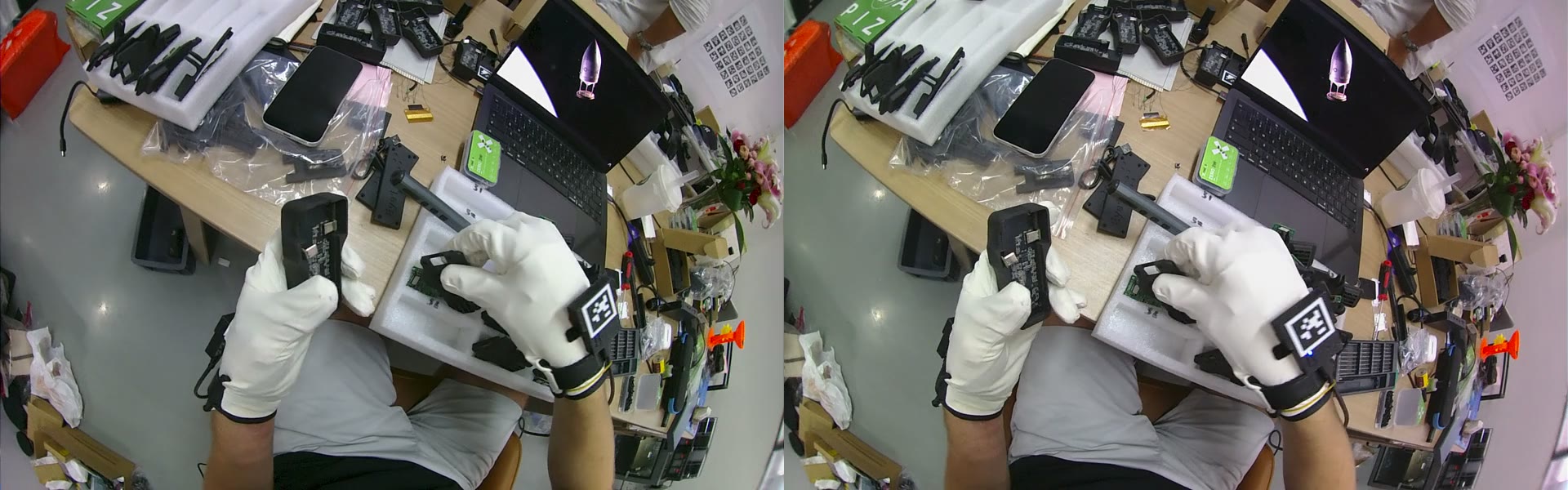
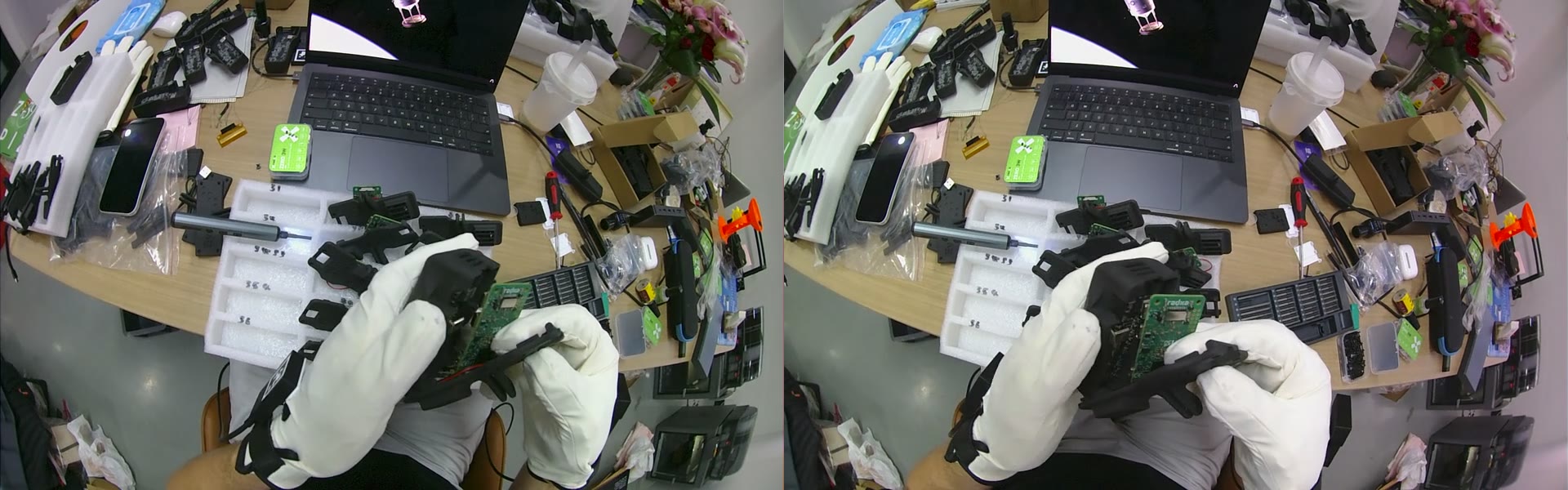
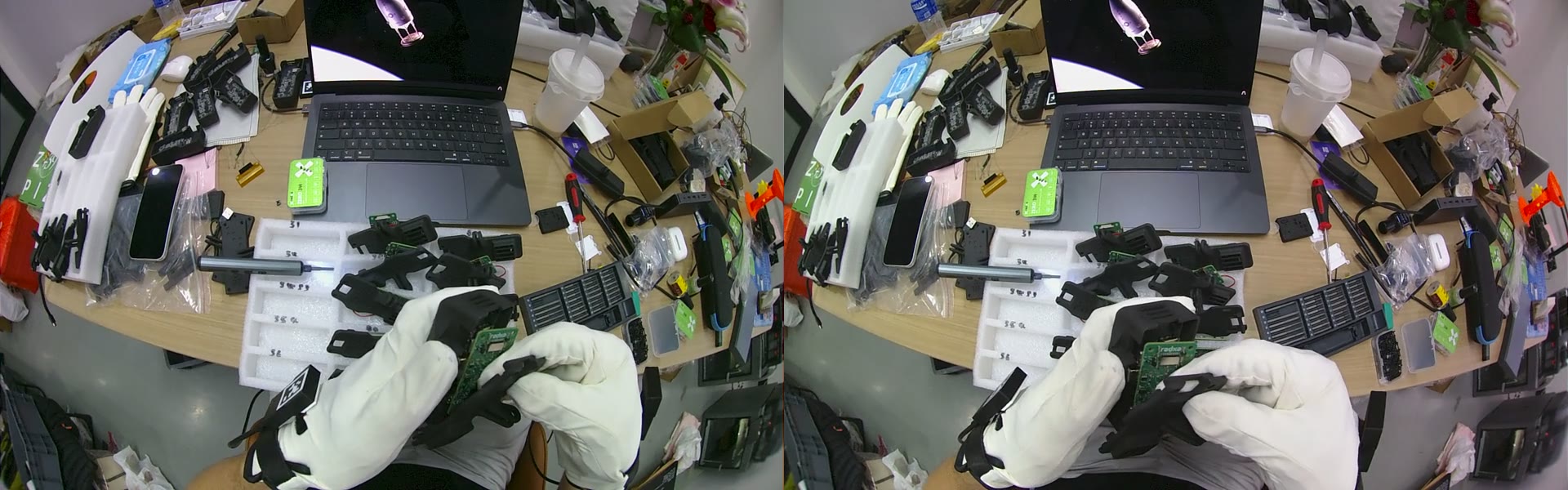
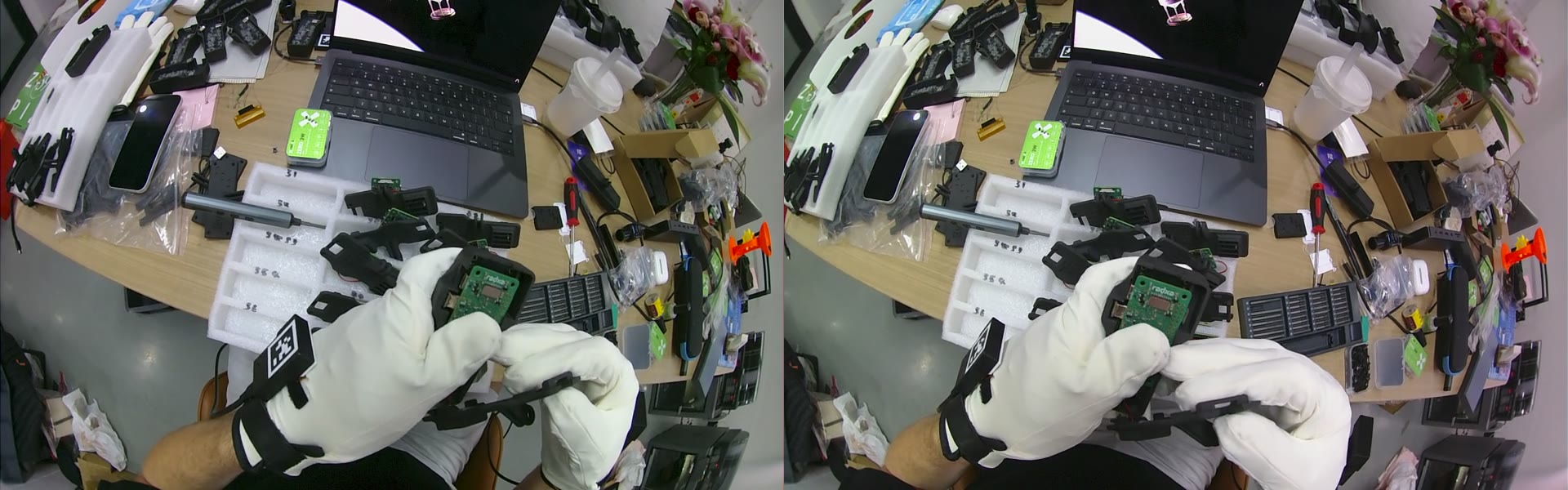
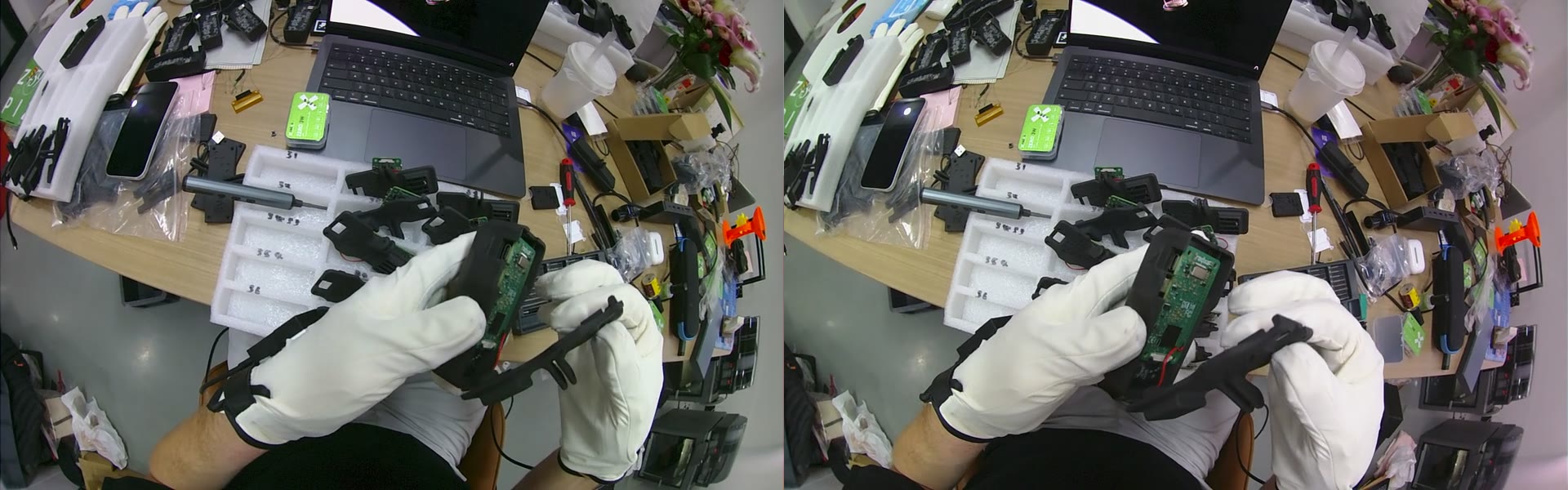
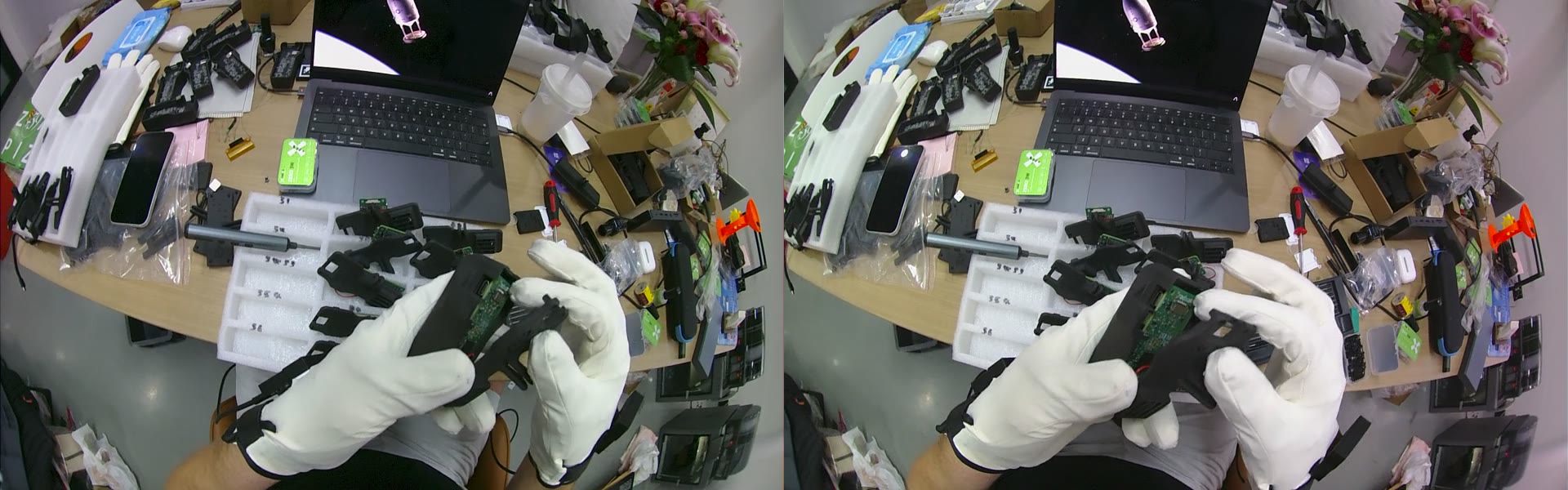
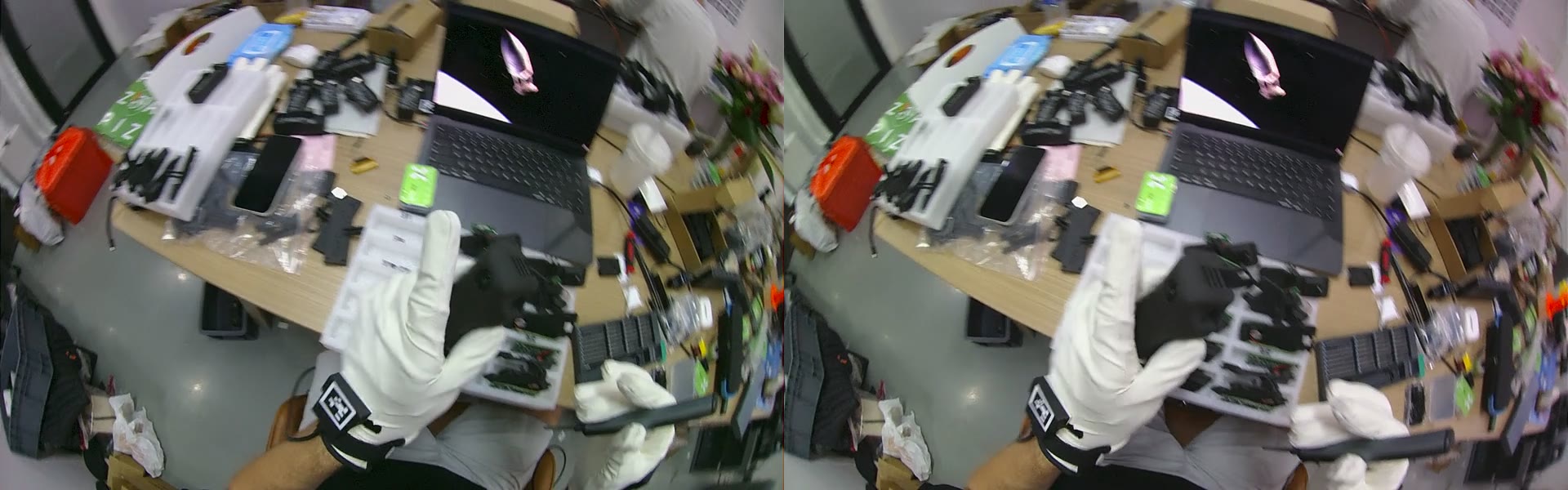
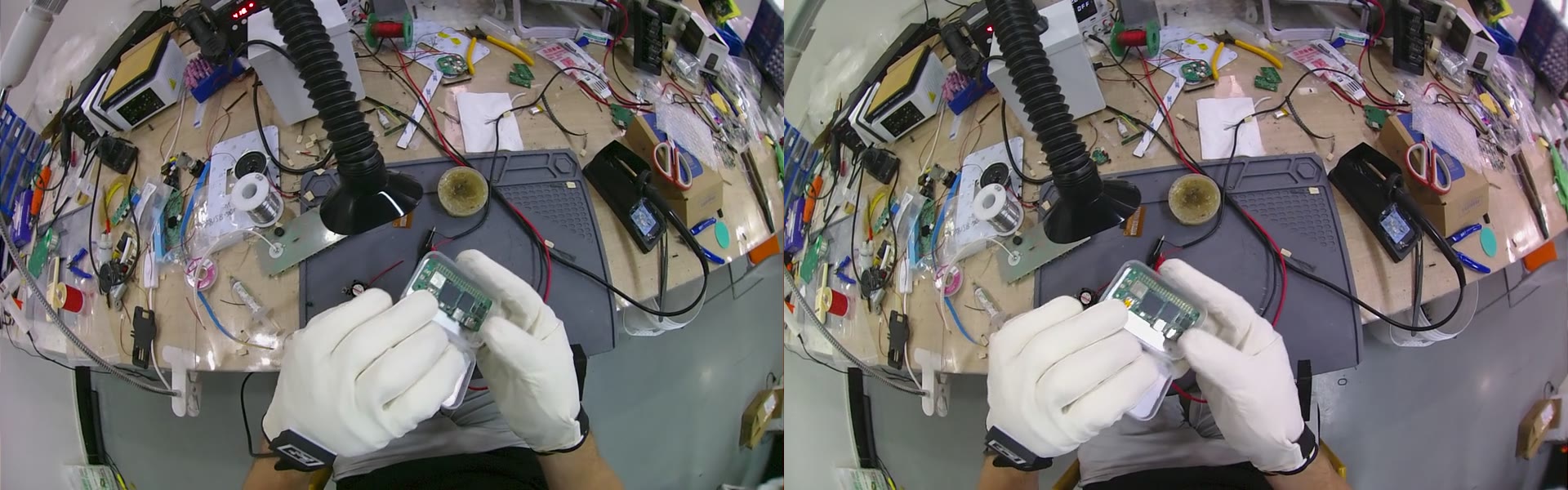
| 3.00–20.00 | Align assembly and press housing | Green board and dark enclosure are aligned, rotated and pressed together. |
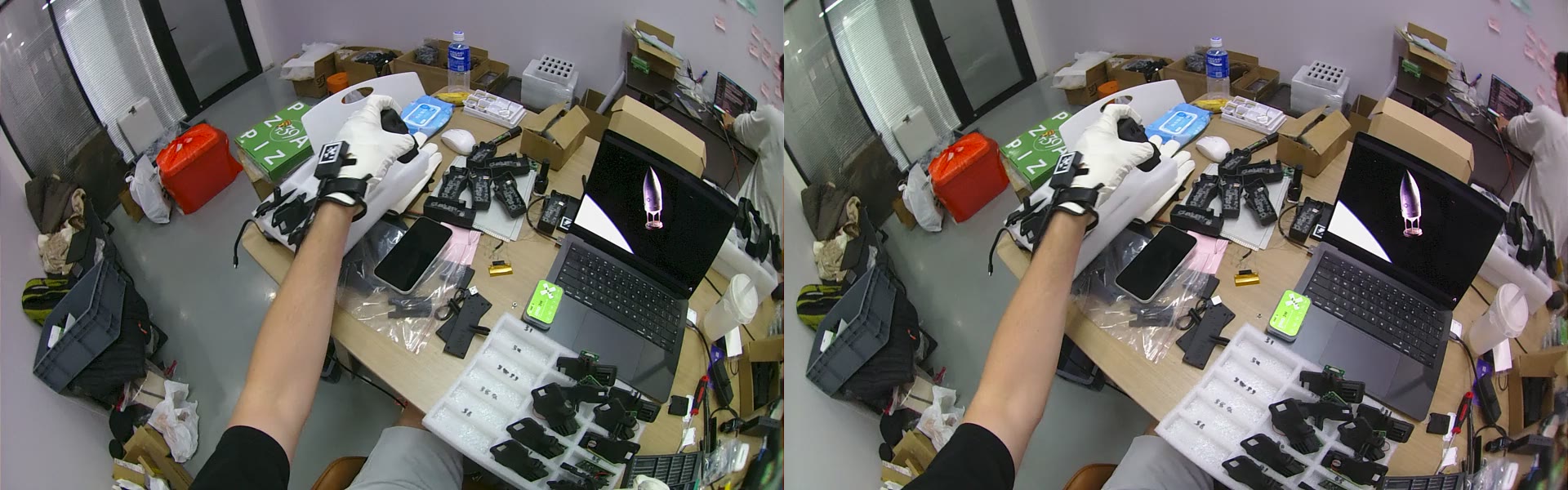
| 20.00–30.00 | Handle small fitting at enclosure | Right hand reaches toward parts area then pinches at the housing edge. |
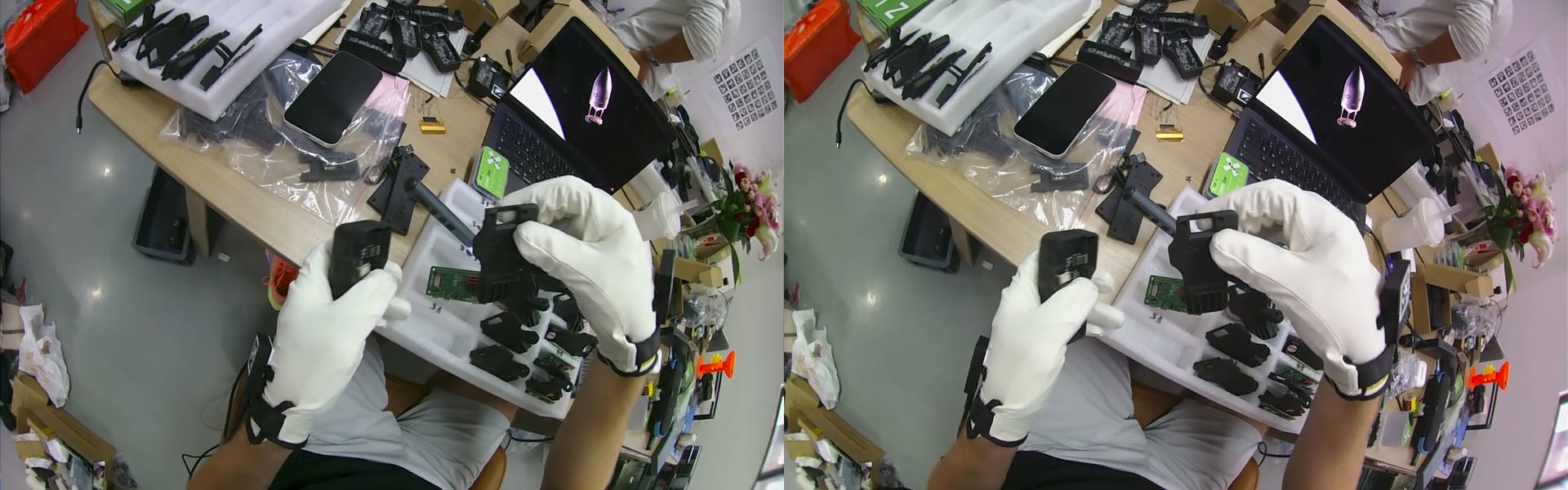
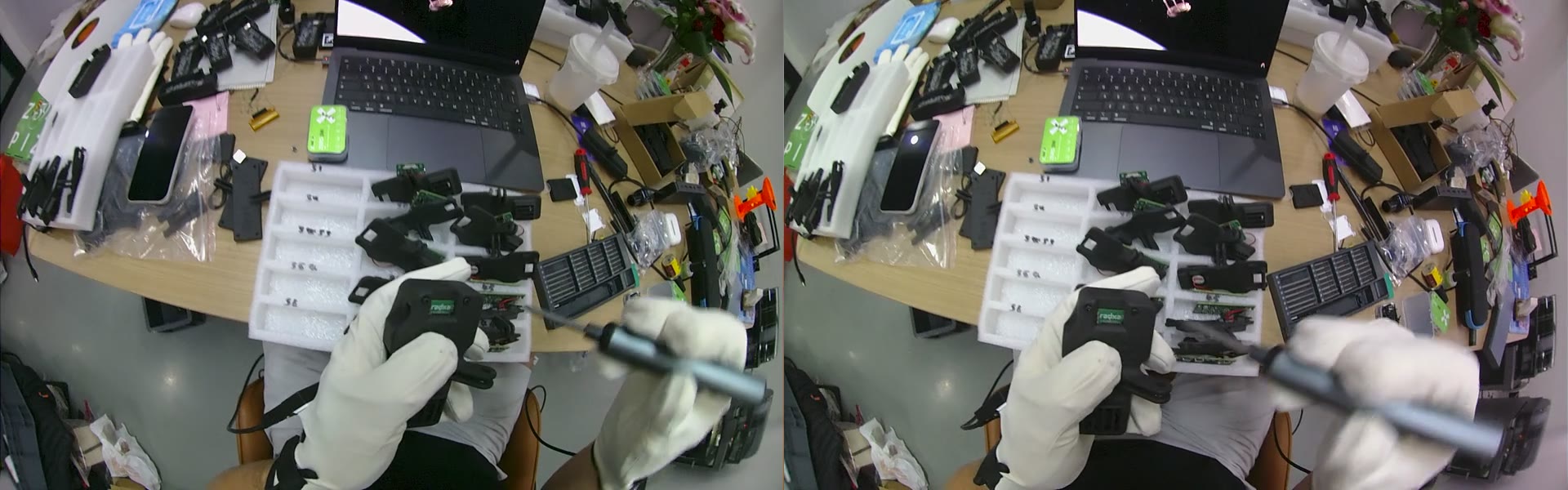
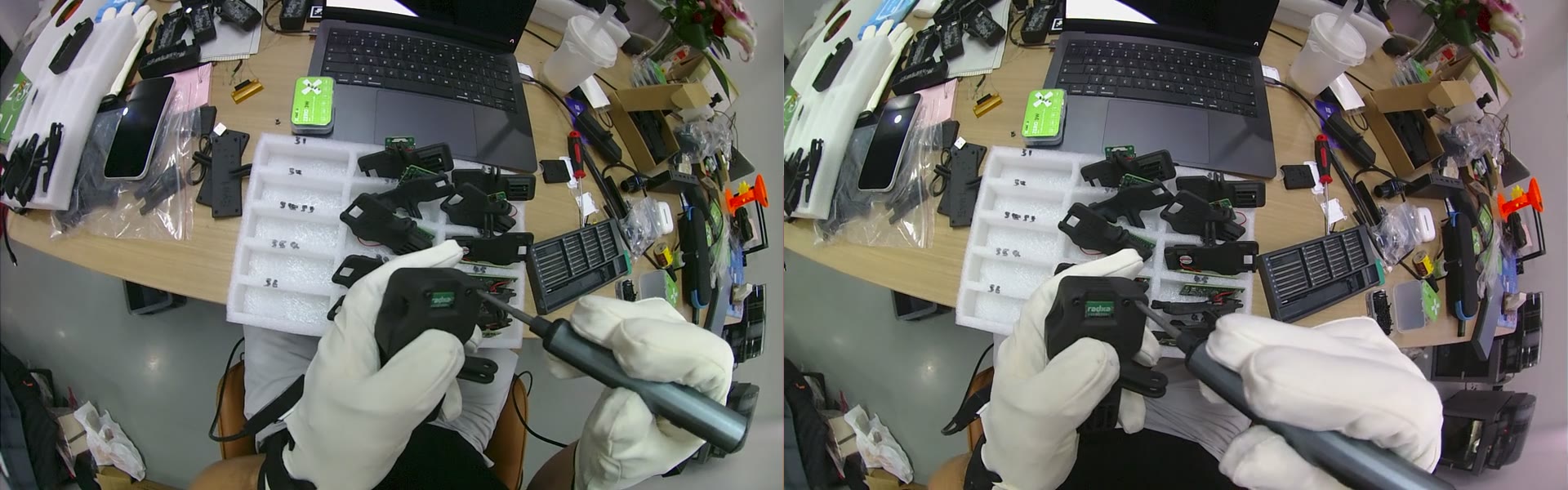
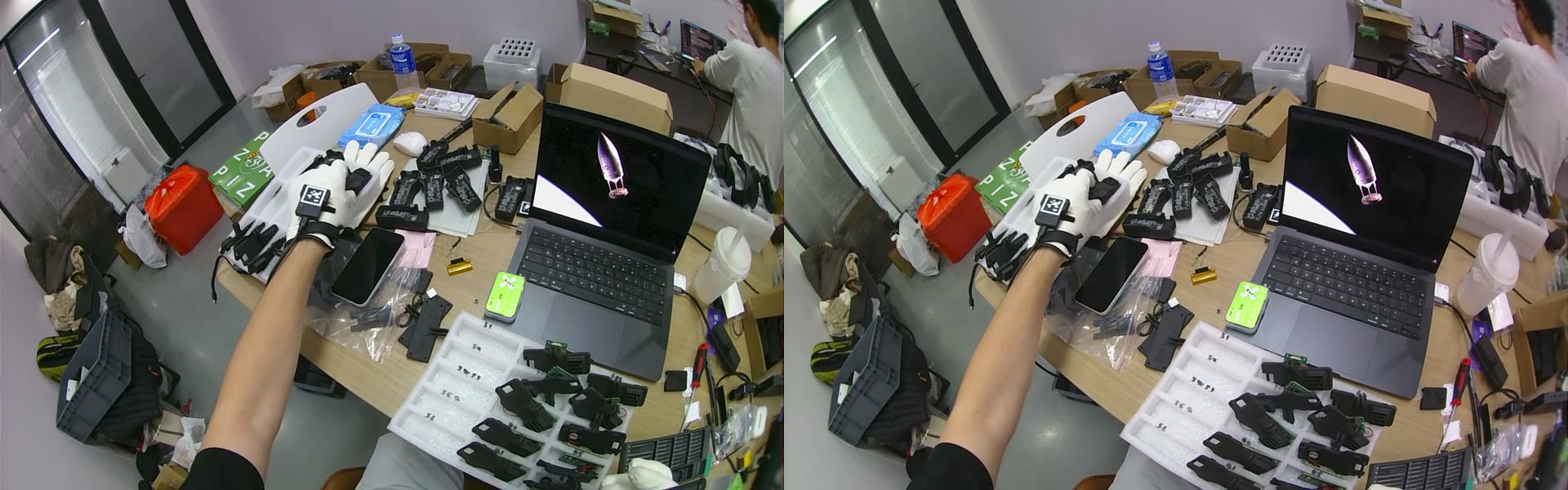
| 30.00–49.00 | Apply handheld driver | Right-hand driver is held at the enclosure while the left supports it. |
| 49.00–63.60 | Set enclosure aside and pause | Left hand places the enclosure away; no further assembly visible. |
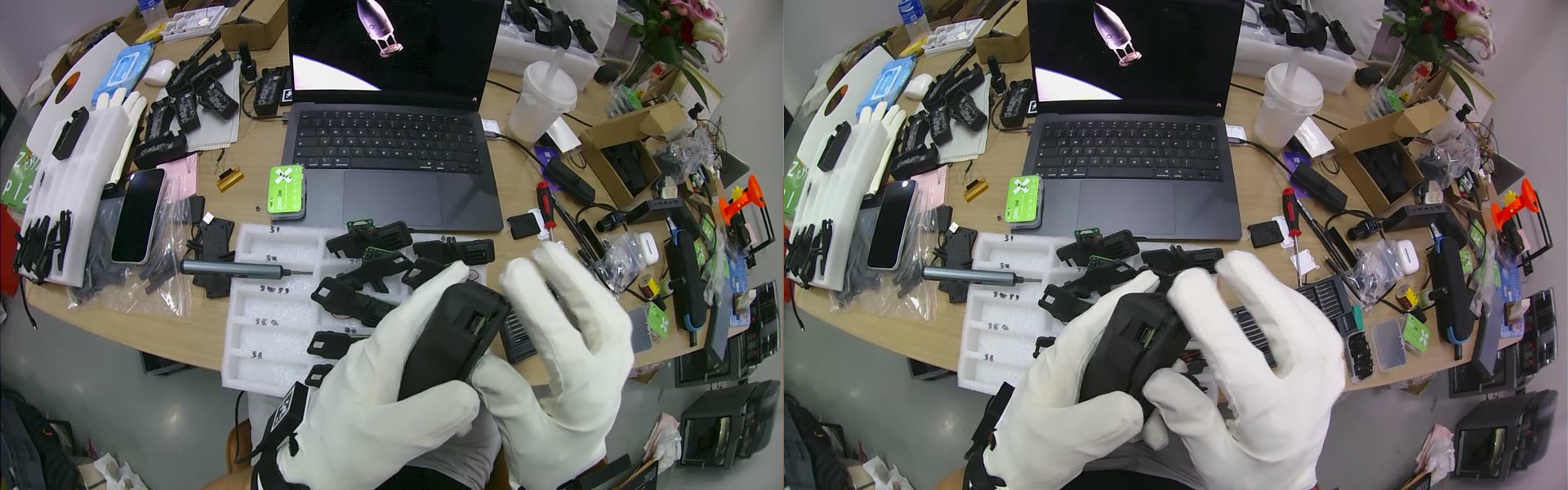
Left hand supports the open housing; right hand reaches into the tray.
Recording begins with housing already held.
Start estimate range: [0, 1]s. End estimate range: [0.5, 2.5]s.
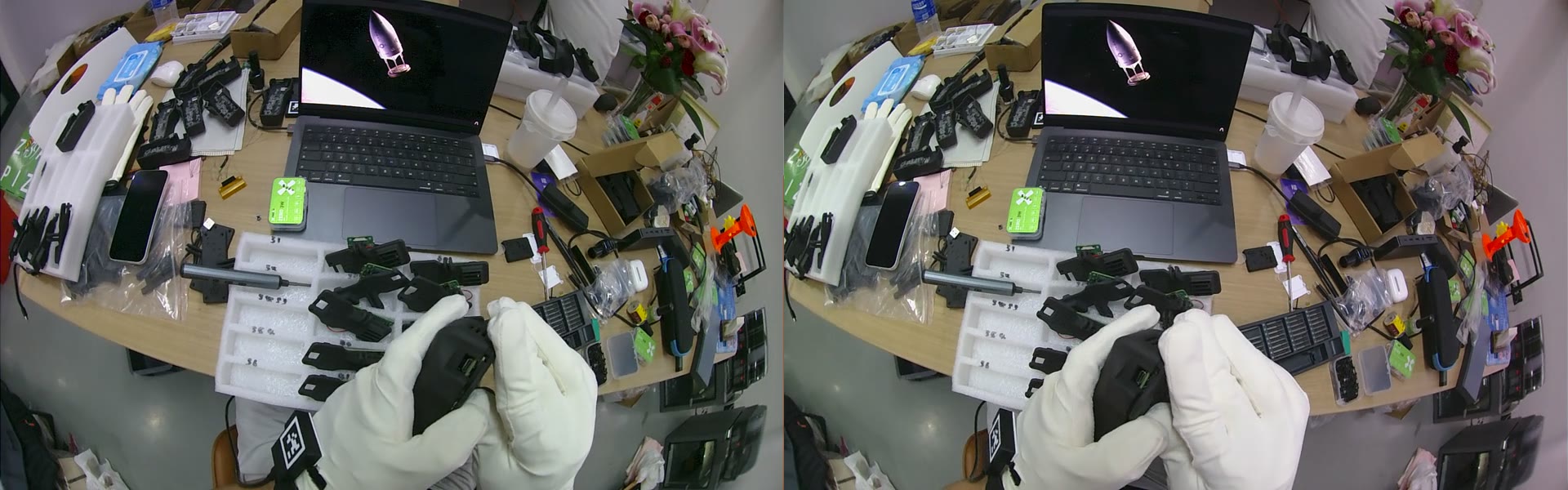
Right hand brings a dark component with green electronics toward the left-hand part.
Start estimate range: [0.5, 2.5]s. End estimate range: [2, 4]s.
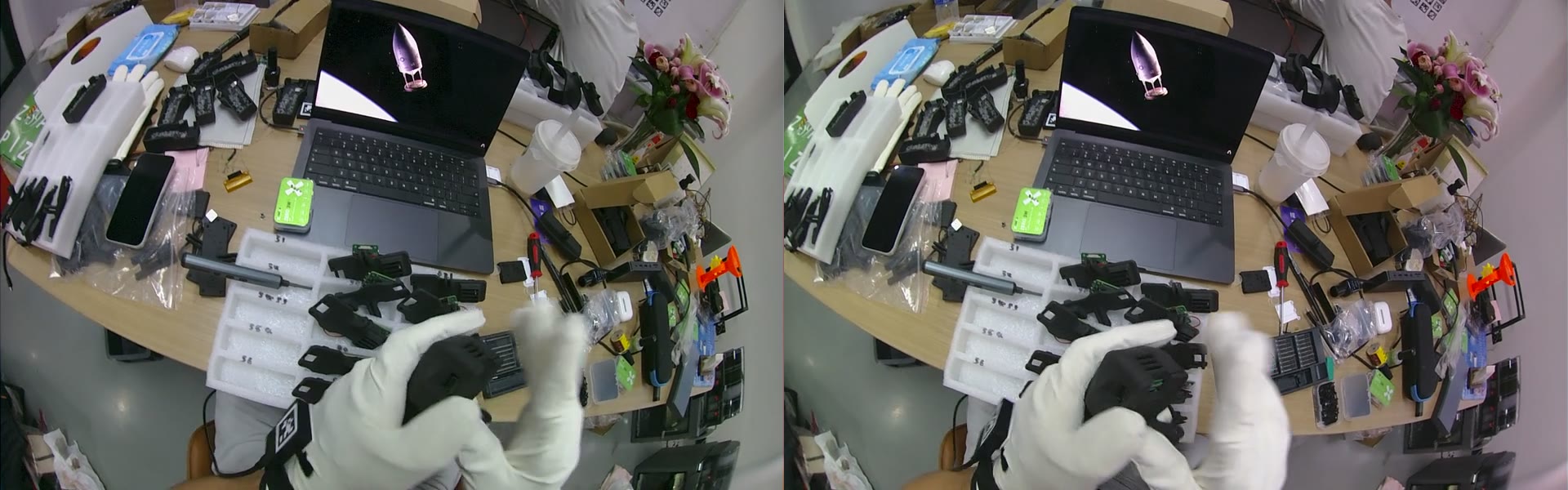
Both hands tilt and bring the green board and black enclosure into alignment.
Start estimate range: [2, 4]s. End estimate range: [7, 9]s.
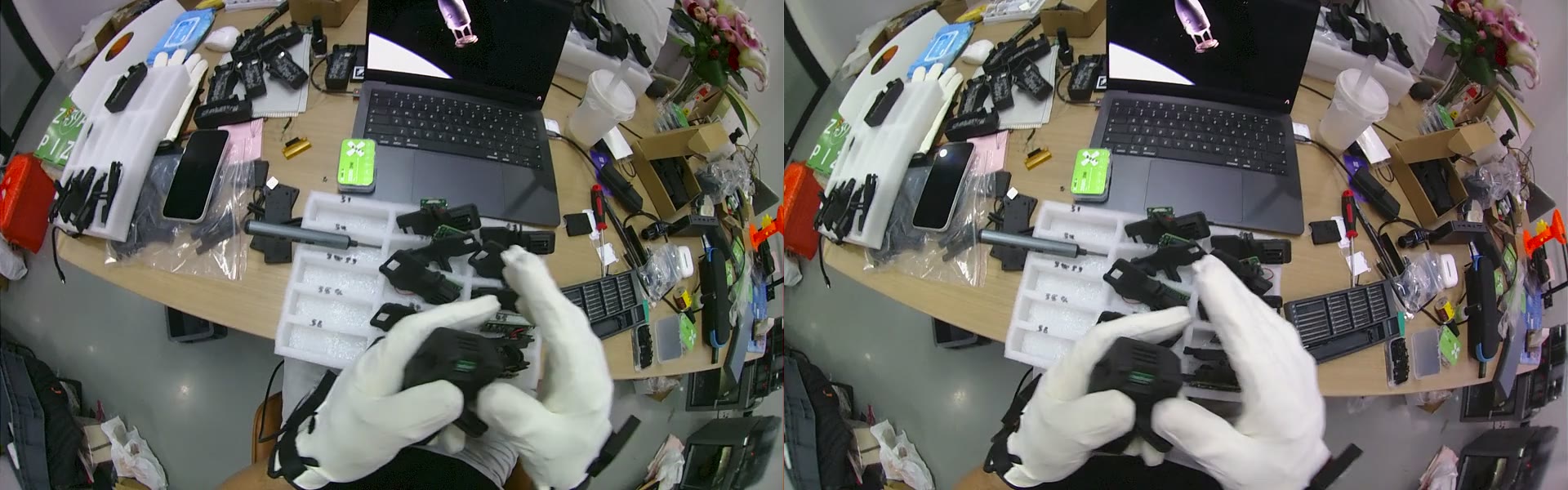
Fingers press and reposition near the visible board and enclosure edge.
Exact connector mating is hidden.
Start estimate range: [7, 9]s. End estimate range: [13.5, 15.5]s.
Hands turn the enclosure and squeeze along its sides.
No verified latch engagement.
Start estimate range: [13.5, 15.5]s. End estimate range: [17.5, 19.5]s.
Enclosure is turned while supported in the left hand.
Start estimate range: [17.5, 19.5]s. End estimate range: [19, 21]s.
Right hand extends toward the narrow parts tray; left retains enclosure.
Start estimate range: [19, 21]s. End estimate range: [21.5, 23.5]s.
Right fingertips repeatedly work at the housing while the left supports it.
Small fitting is partly hidden; insertion and screw identity are provisional.
Start estimate range: [21.5, 23.5]s. End estimate range: [28.5, 30.5]s.
Right hand extends across the tray toward the gray driver.
Start estimate range: [28.5, 30.5]s. End estimate range: [29, 31]s.
Right hand raises the cylindrical tool and aims the narrow tip at the housing.
Start estimate range: [29, 31]s. End estimate range: [31.9488, 32.21504]s.
Tool tip remains at the enclosure as the left hand holds it steady.
Rotation and torque are not measured.
Start estimate range: [31.9488, 32.21504]s. End estimate range: [42, 44]s.
The enclosure and driver angle change, followed by further tip application.
Do not count distinct screws from this span alone.
Start estimate range: [42, 44]s. End estimate range: [47.5, 49.5]s.
Driver separates as left hand raises the enclosure.
Start estimate range: [47.5, 49.5]s. End estimate range: [48, 50]s.
Left hand carries the enclosure toward the upper-left bench and returns without it.
Exact final contact is partly covered.
Start estimate range: [48, 50]s. End estimate range: [50, 52]s.
Right hand retains tool while left hand rests or gestures.
Start estimate range: [50, 52]s. End estimate range: [62.598, 63.598]s.
Exact product and component identity unknown. · Fastener count, torque and electrical function are not verified. · A successful snap fit cannot be established from the covered contact.
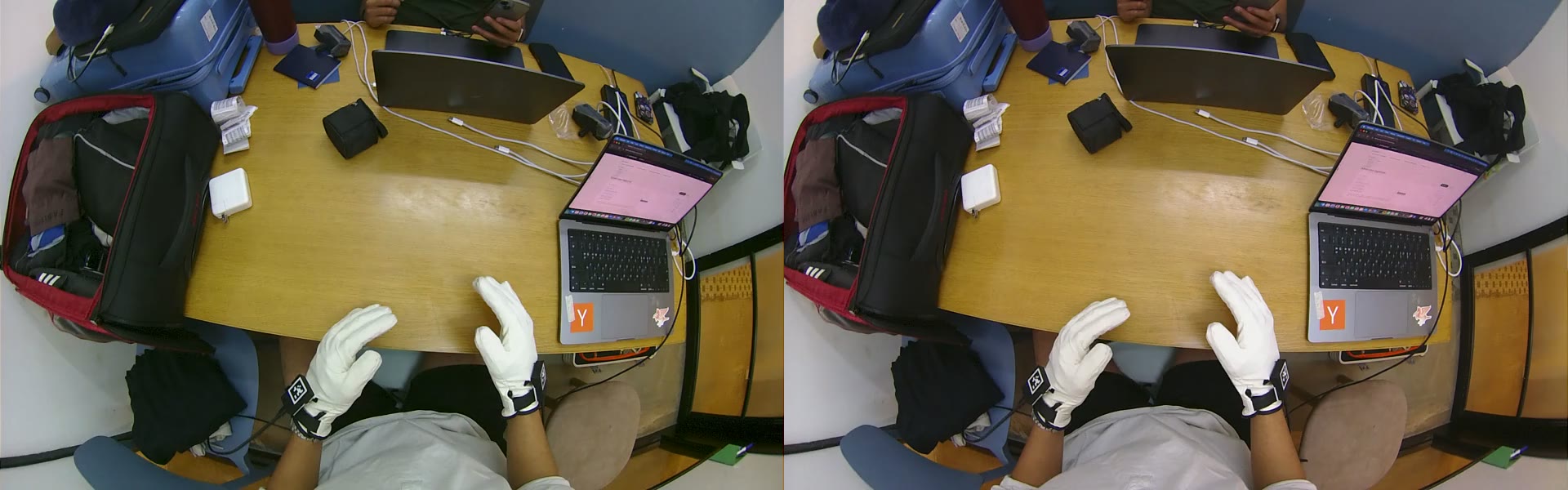
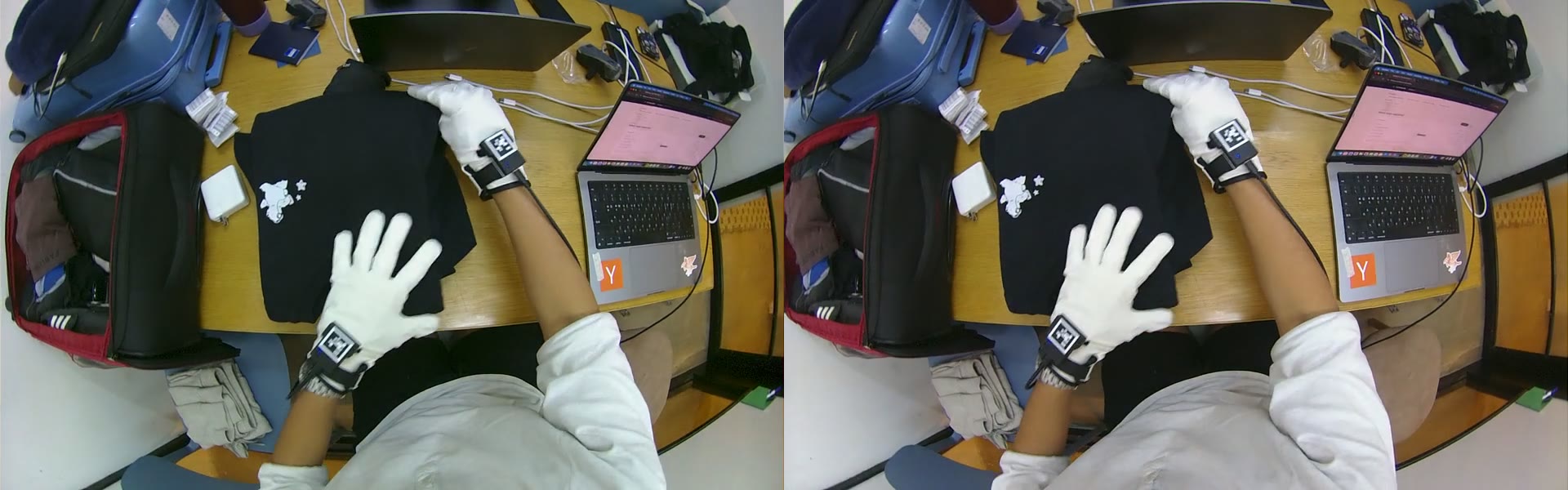
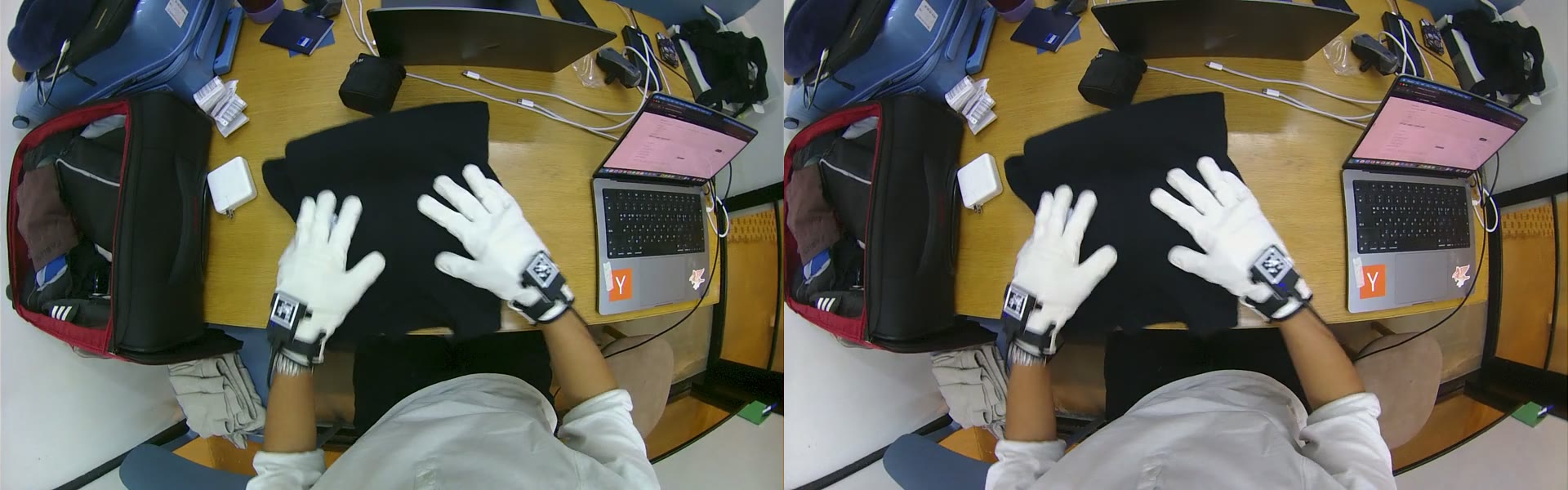
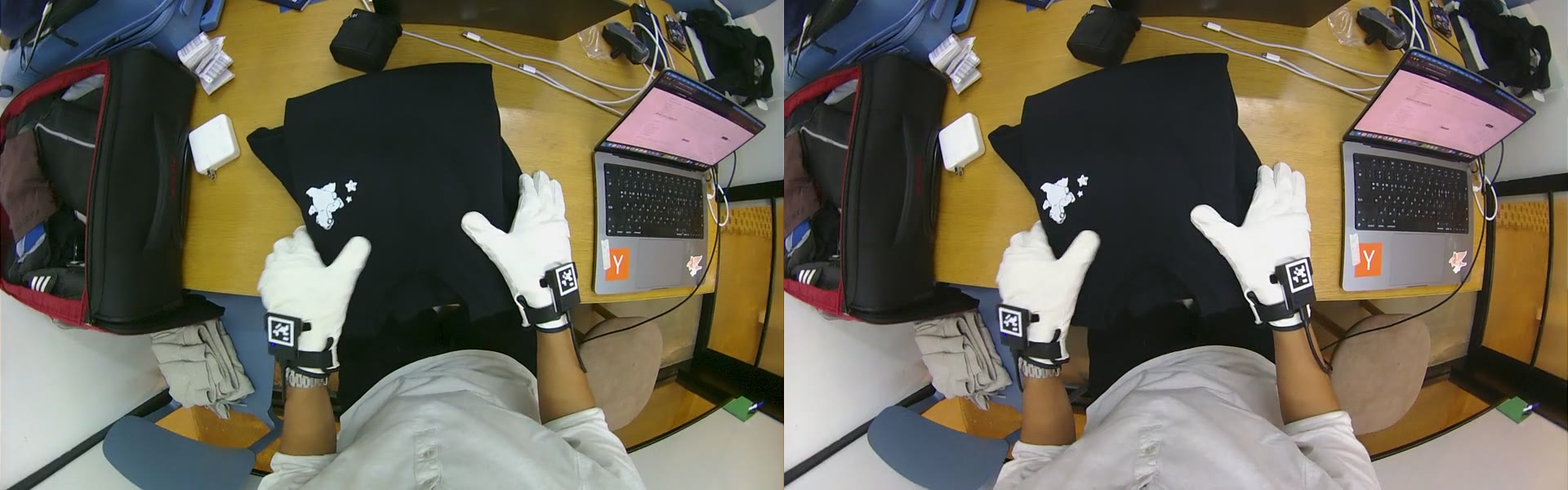
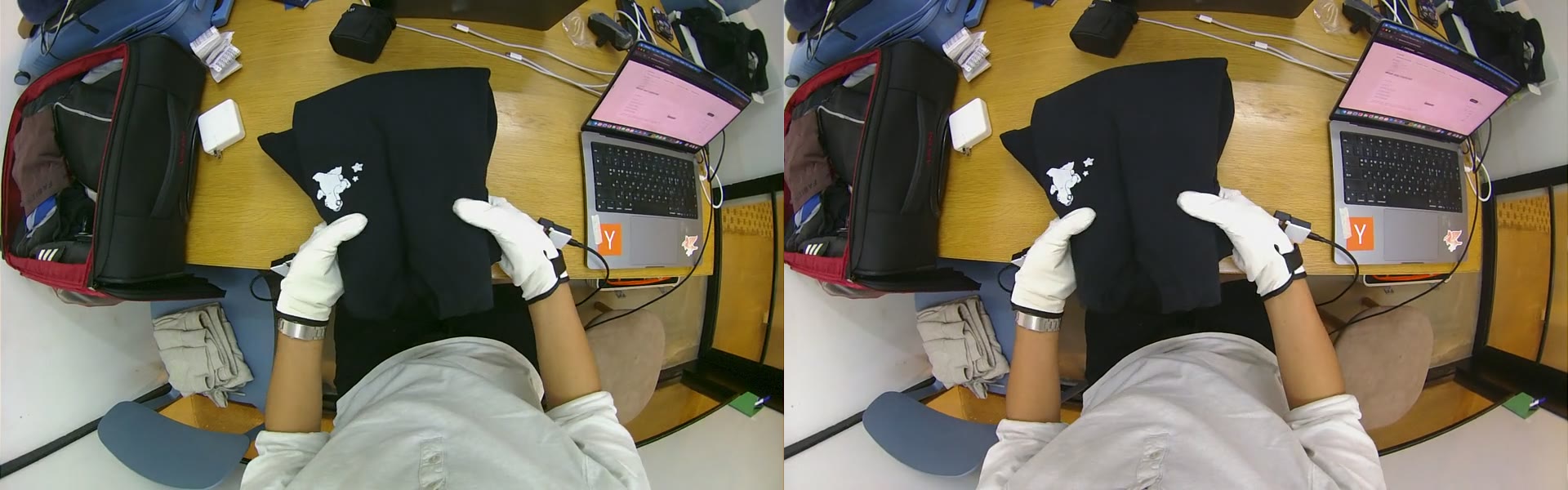
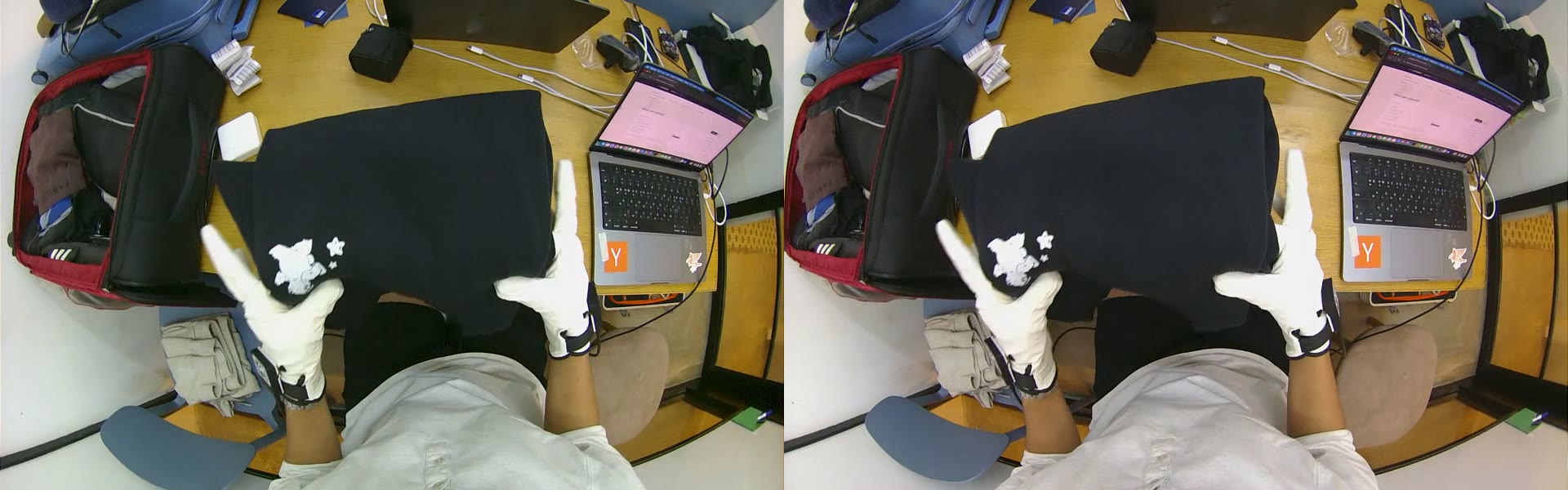
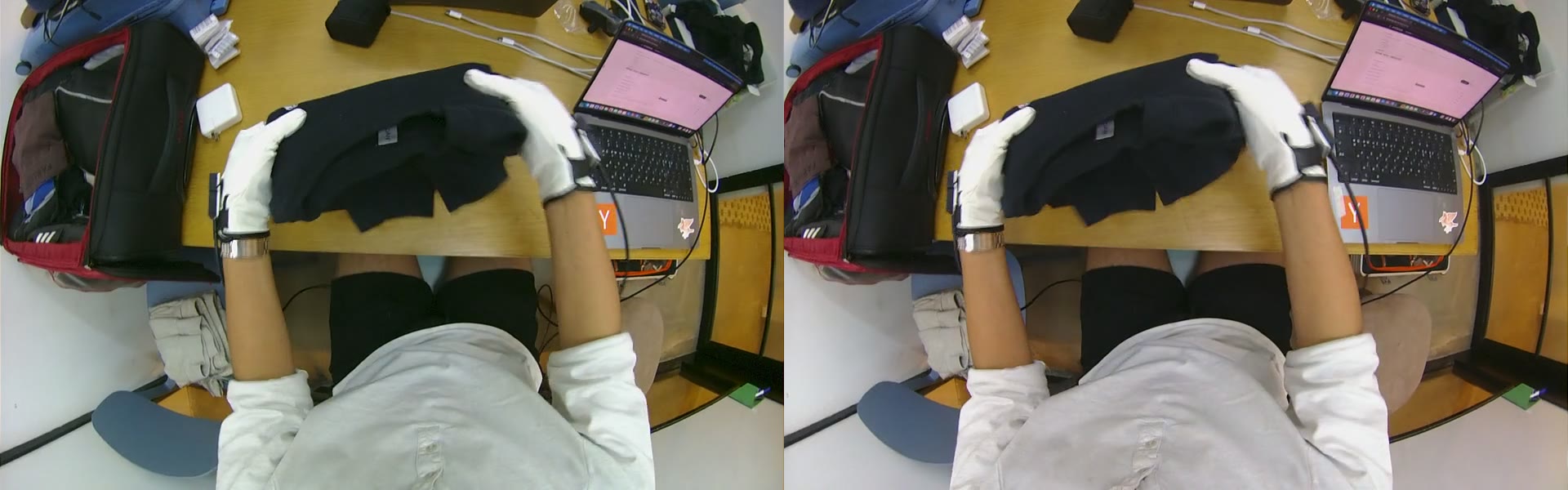
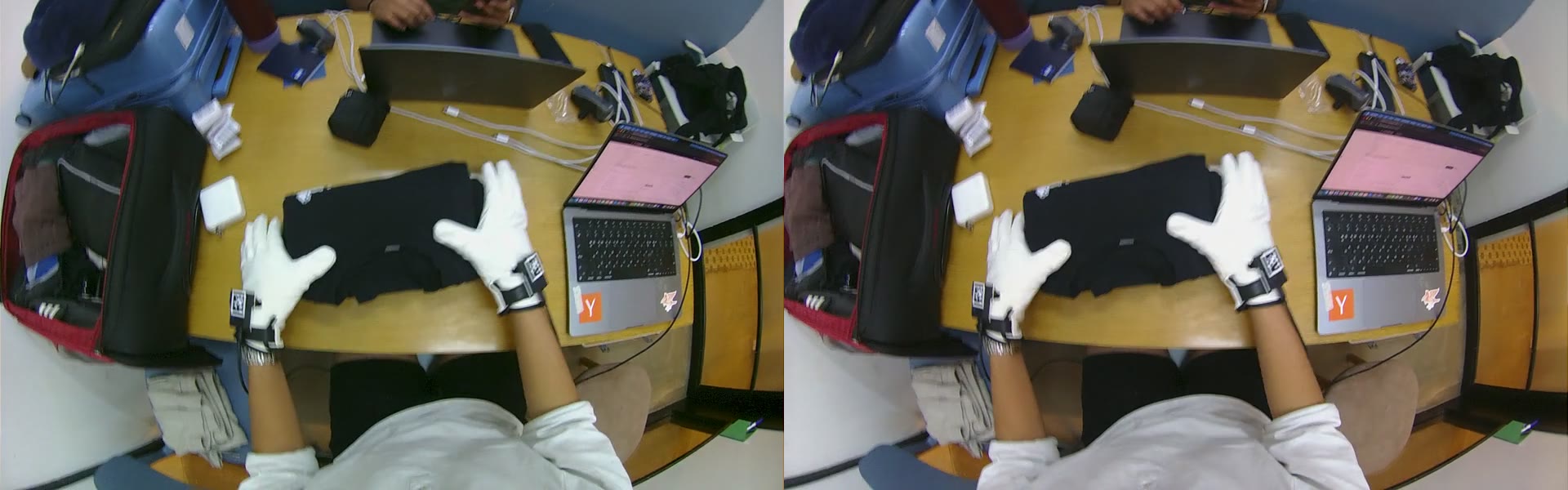
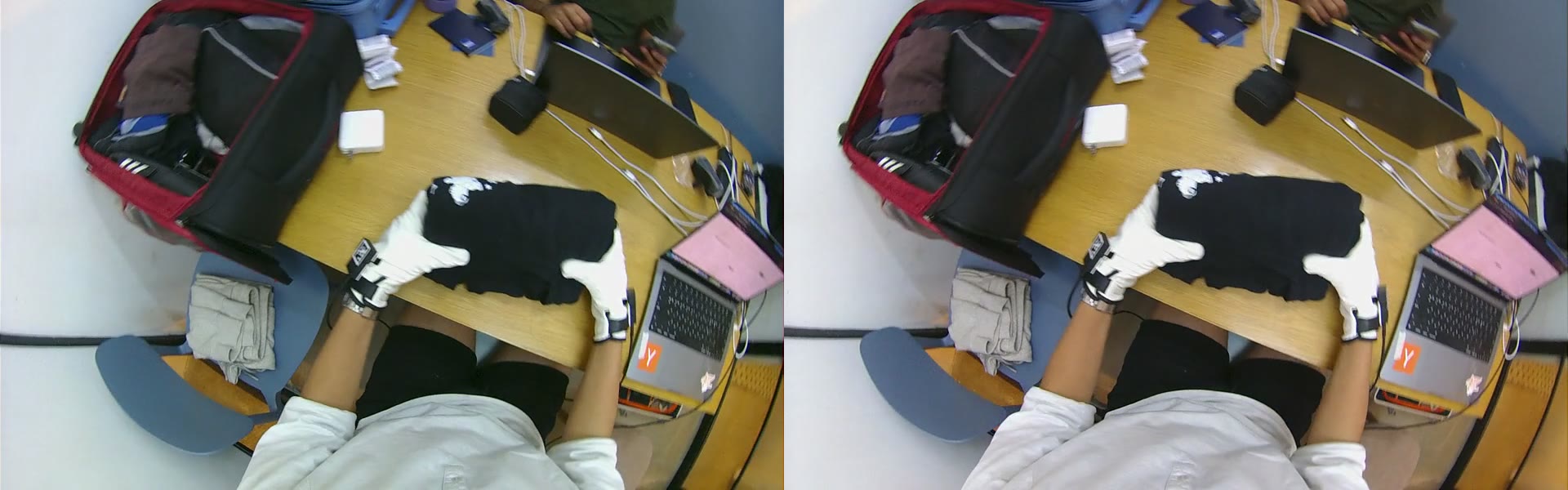
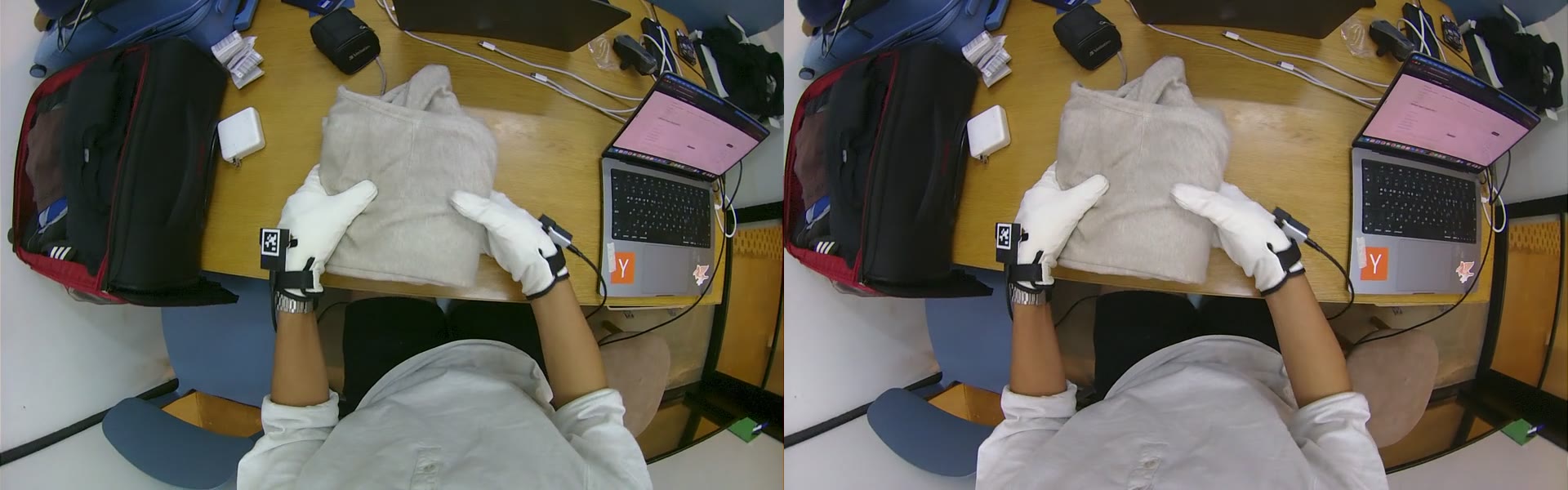
Retrieve, arrange and fold a black upper-body garment and light-colored trousers, placing both into an open suitcase.
Visible outcome: Both garments are placed in the open suitcase; the suitcase remains open.
Original paired views. Contact sheets below use the left view. Duration 64.364s.
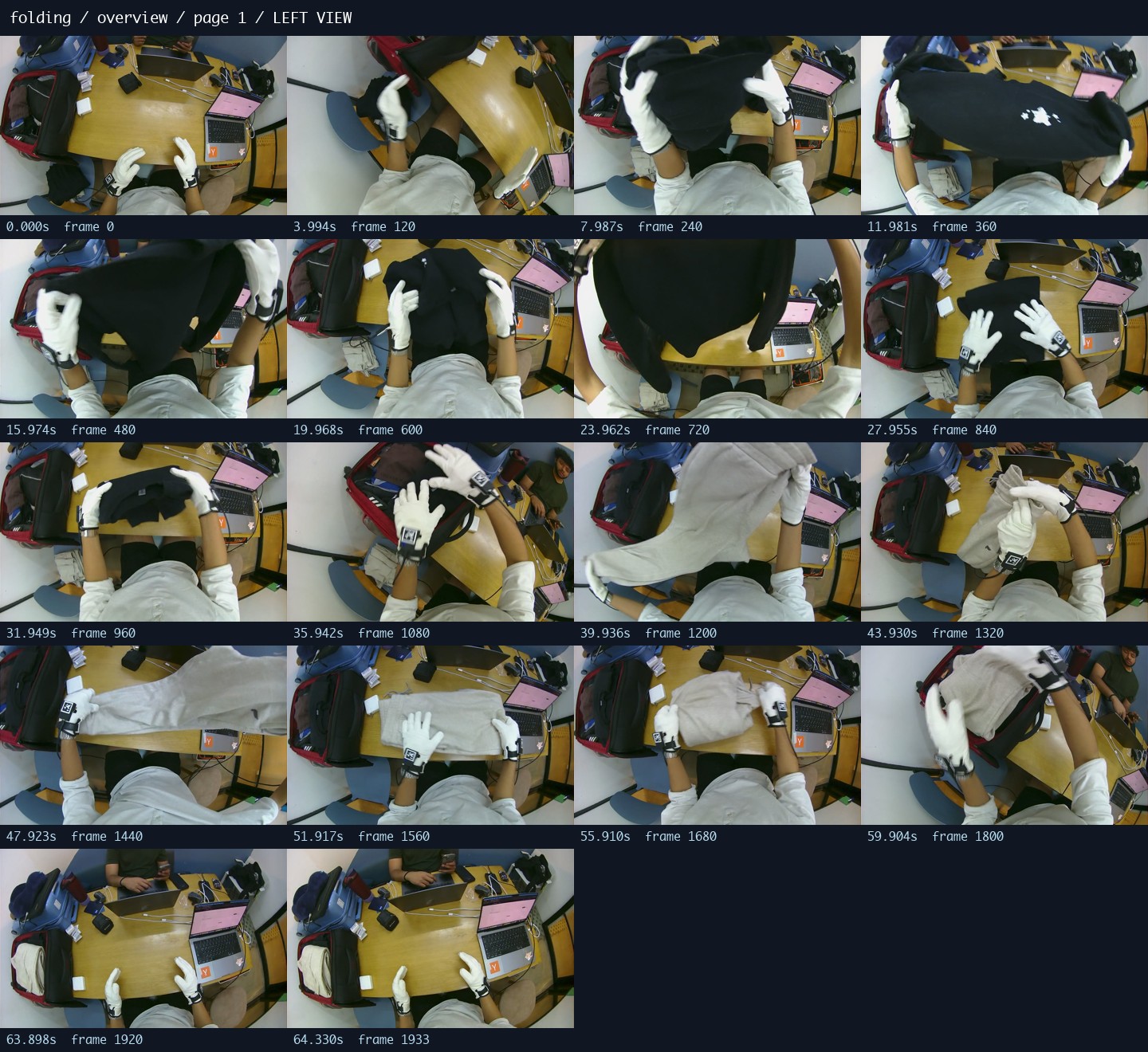
| Seconds | Step | Evidence |
|---|---|---|
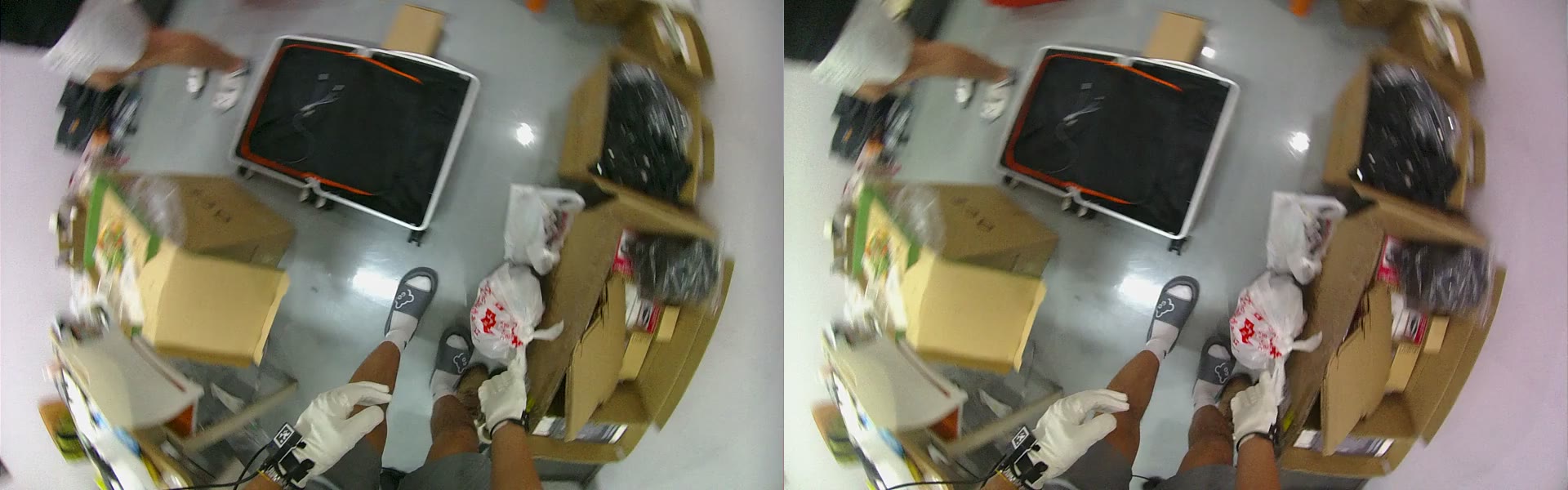
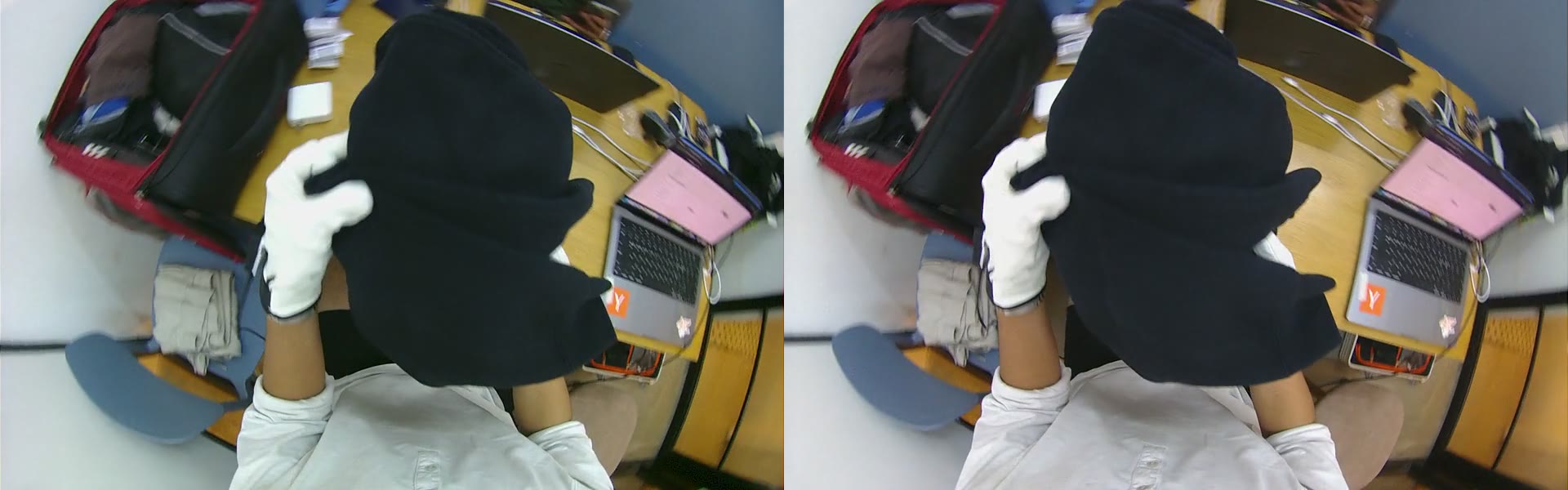
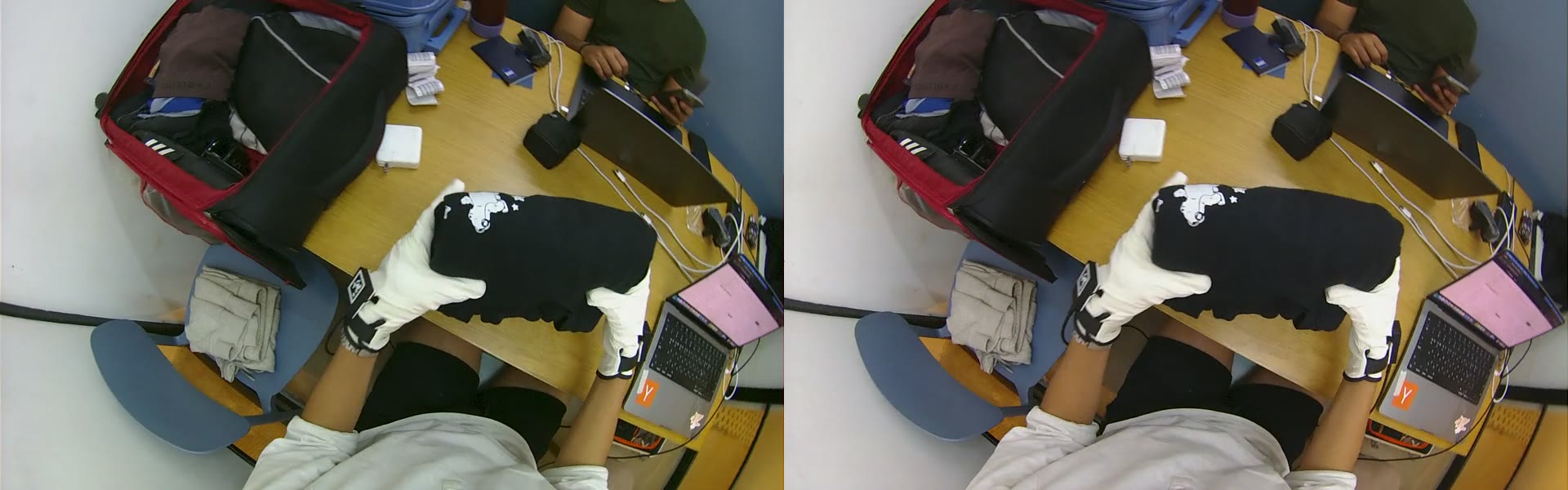
| 0.00–4.50 | Prepare at table | Hands gesture above table before reaching to chair. |
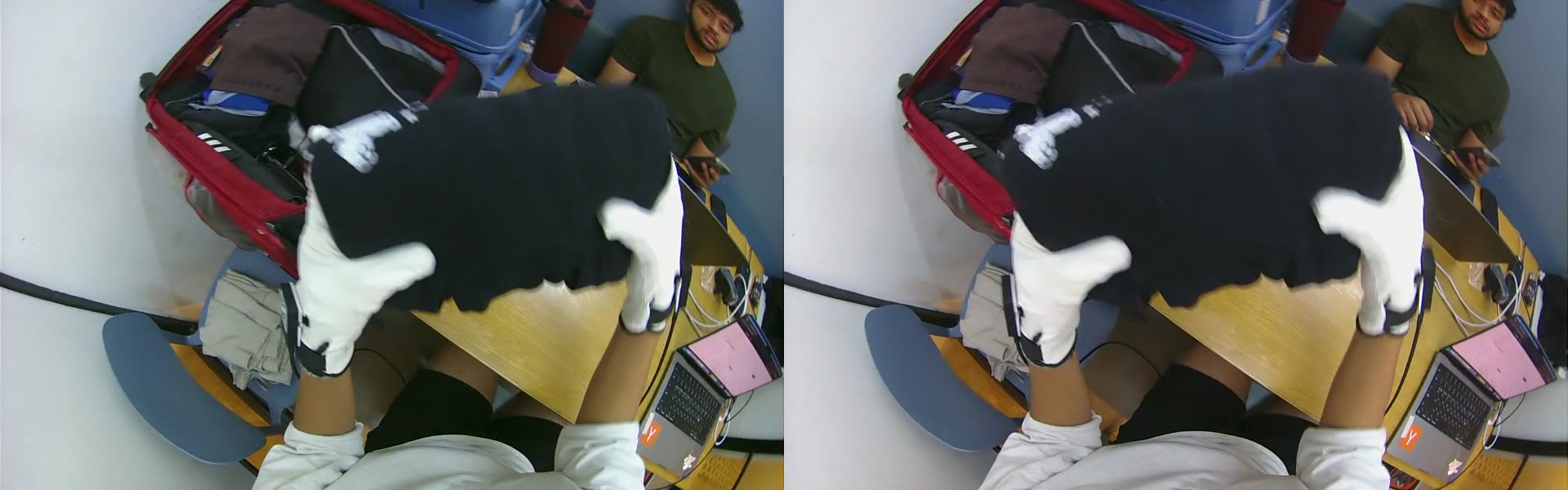
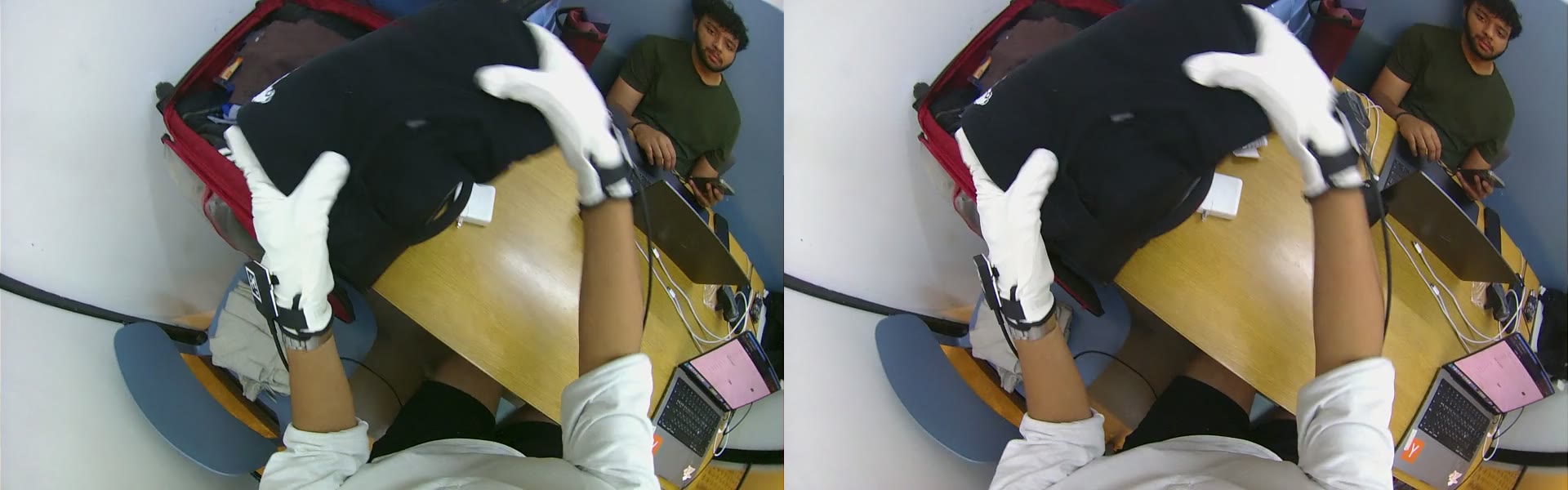
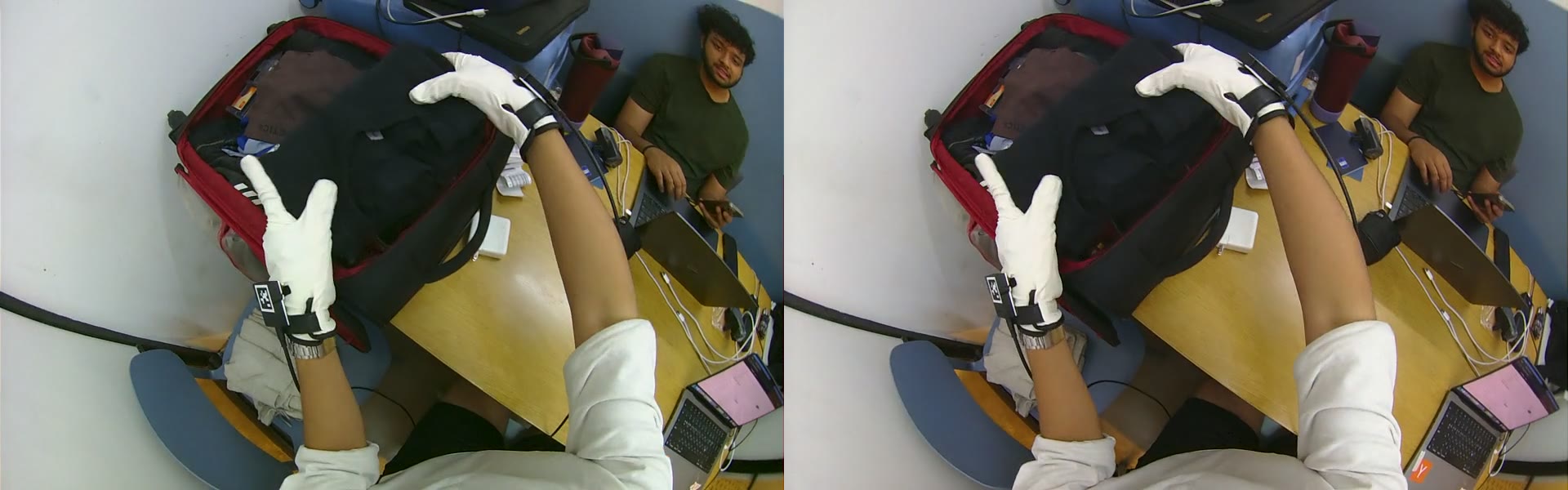
| 4.50–26.50 | Retrieve and arrange black garment | Garment is lifted from chair, spread, rotated and repositioned on table. |
| 26.50–34.50 | Fold black garment | Sides and body are folded inward and smoothed into a compact bundle. |
| 34.50–37.50 | Place black garment into suitcase | Bundle moves from table into open suitcase. |
| 37.50–48.50 | Retrieve and align trousers | Light garment is lifted, shaken/opened and laid lengthwise on table. |
| 48.50–58.50 | Fold trousers | Long garment is repeatedly folded and smoothed into a shorter bundle. |
| 58.50–61.00 | Place trousers into suitcase | Light bundle is lowered onto previously packed clothing. |
| 61.00–64.36 | Finish with hands clear | Hands come together and withdraw; table is clear of the handled clothes. |
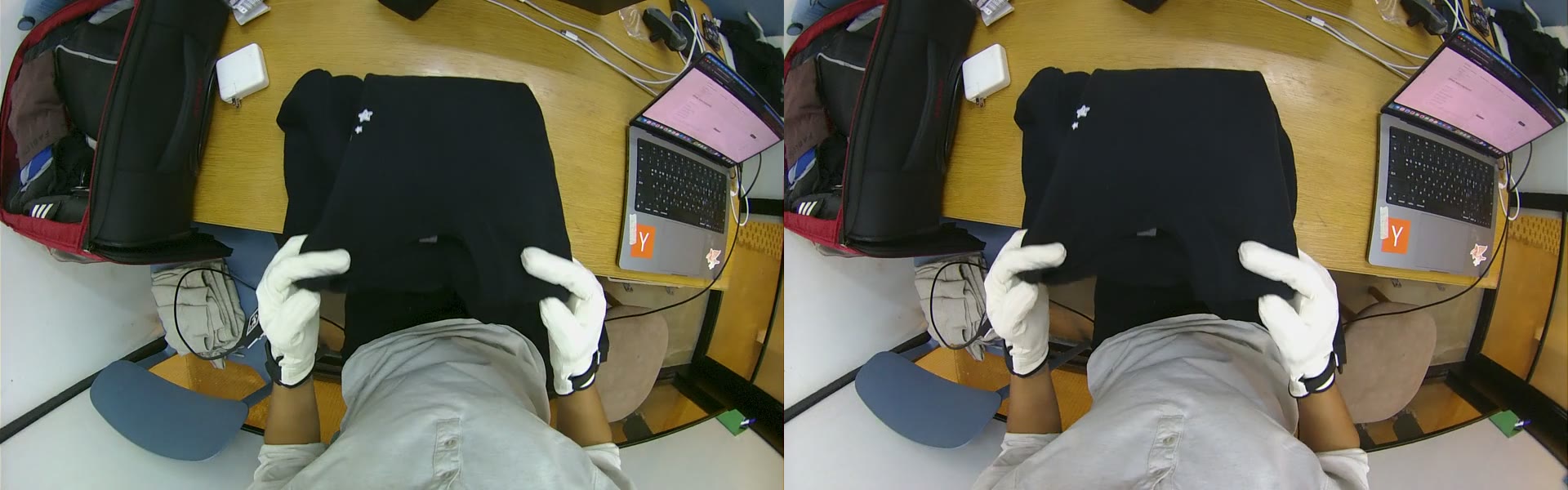
Empty hands lift and briefly come together; no garment manipulation yet.
Start estimate range: [0, 1]s. End estimate range: [3.5, 5.5]s.
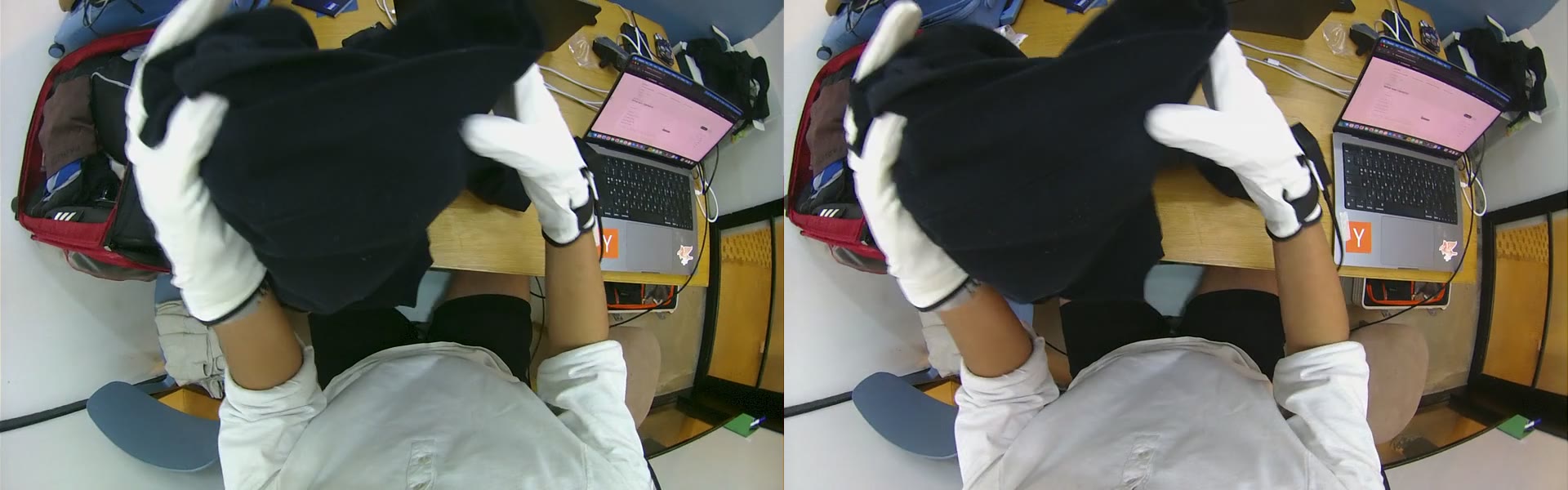
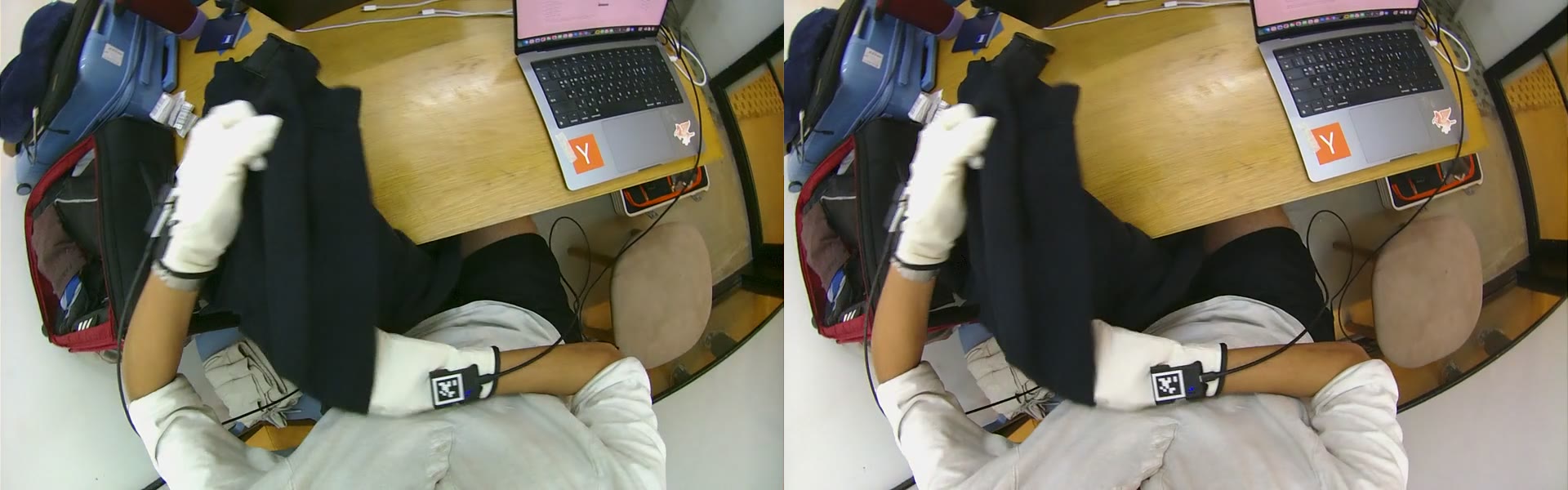
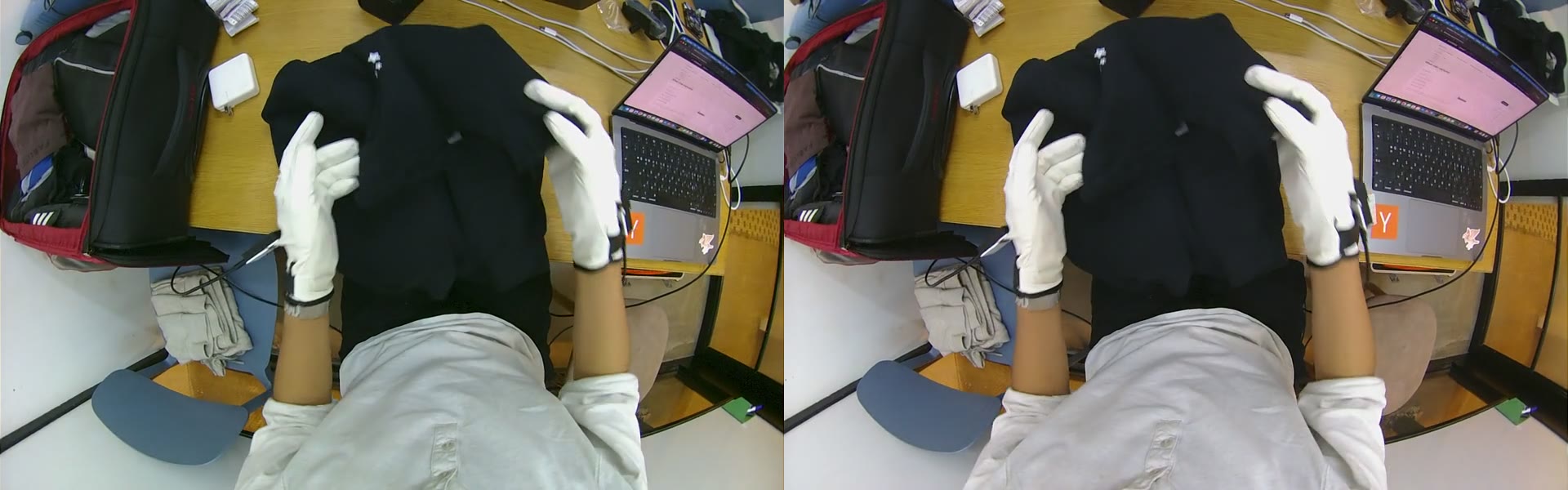
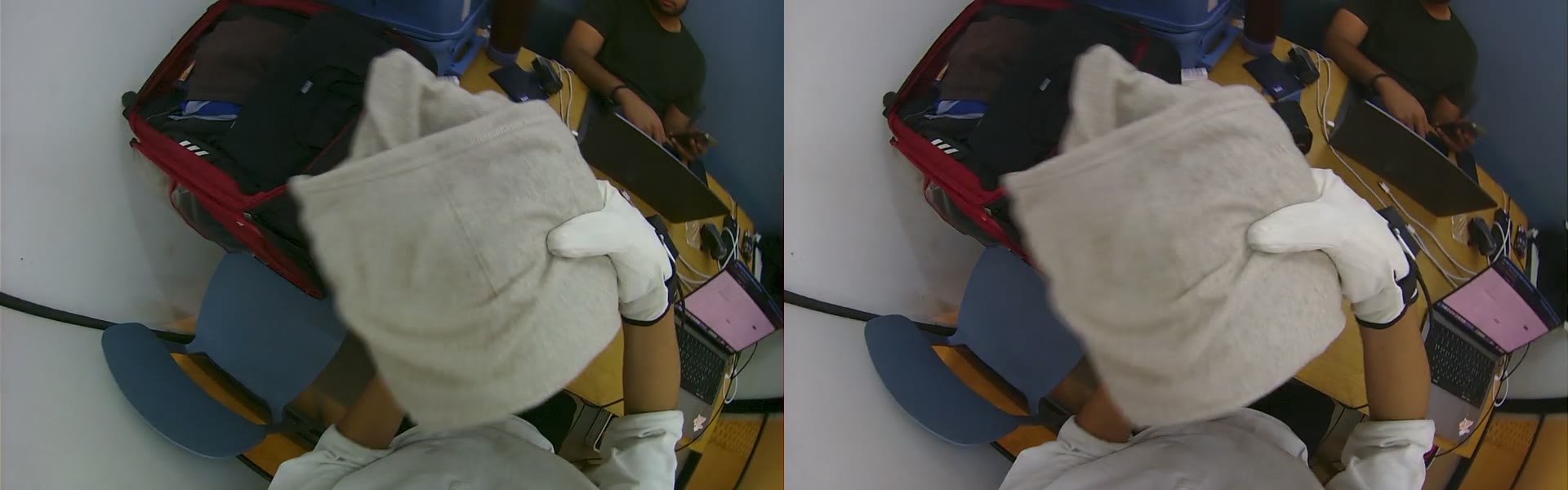
Left hand retrieves dark fabric from the chair to the left.
Start estimate range: [3.5, 5.5]s. End estimate range: [6, 8]s.
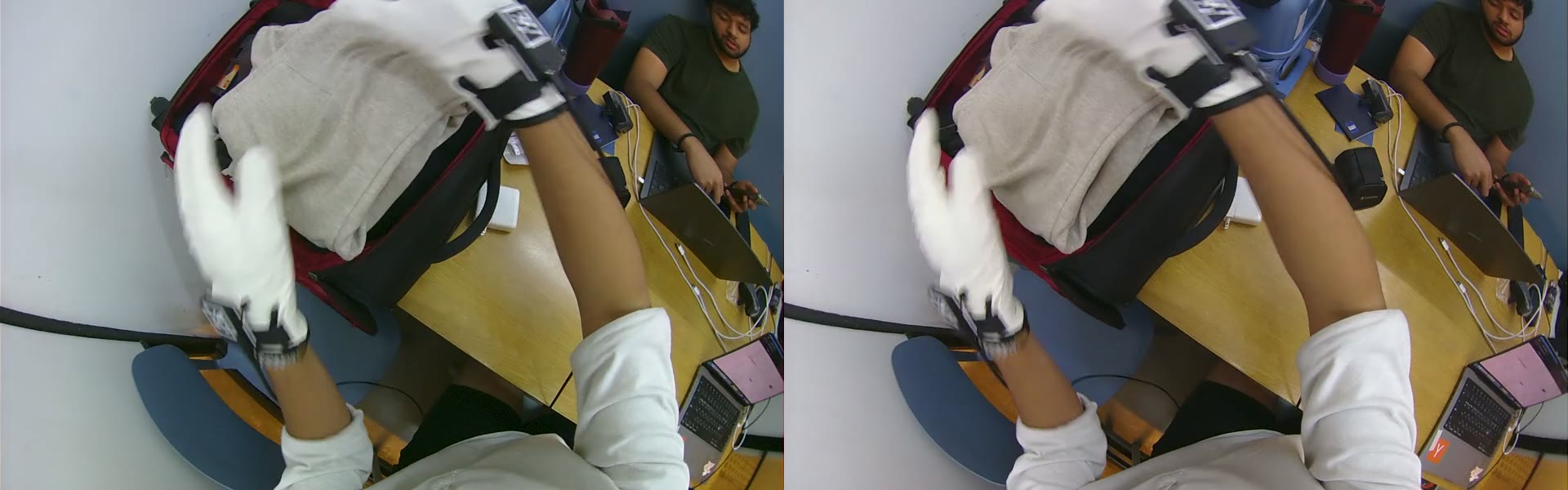
Both hands spread dark fabric over the tabletop.
Start estimate range: [6, 8]s. End estimate range: [8, 10]s.
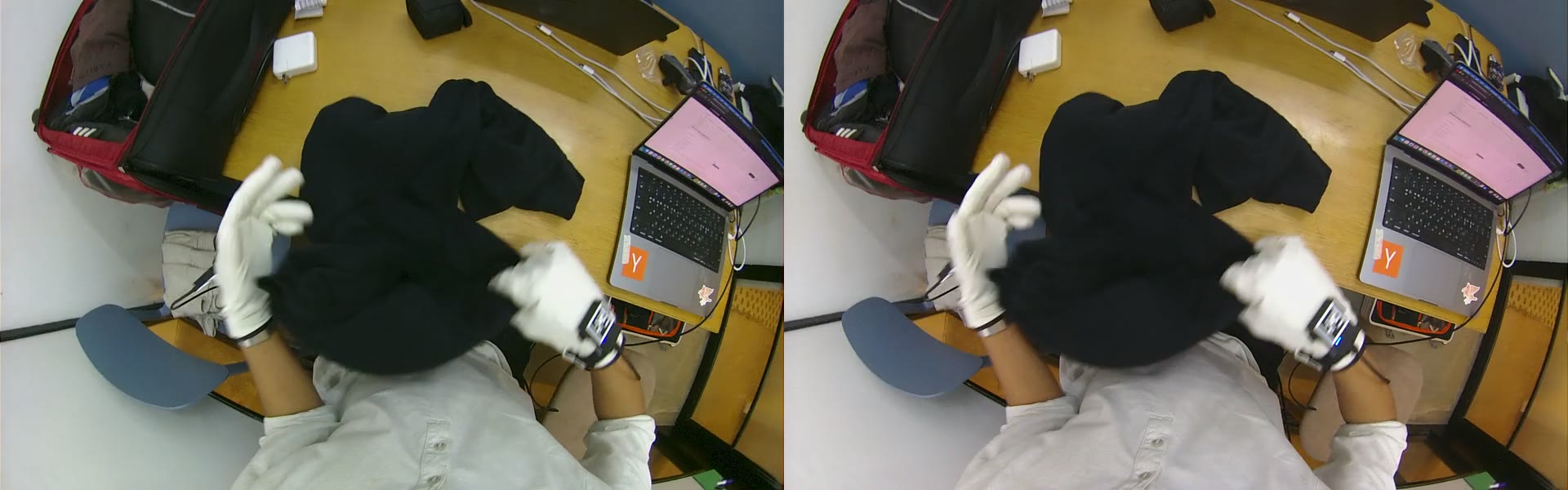
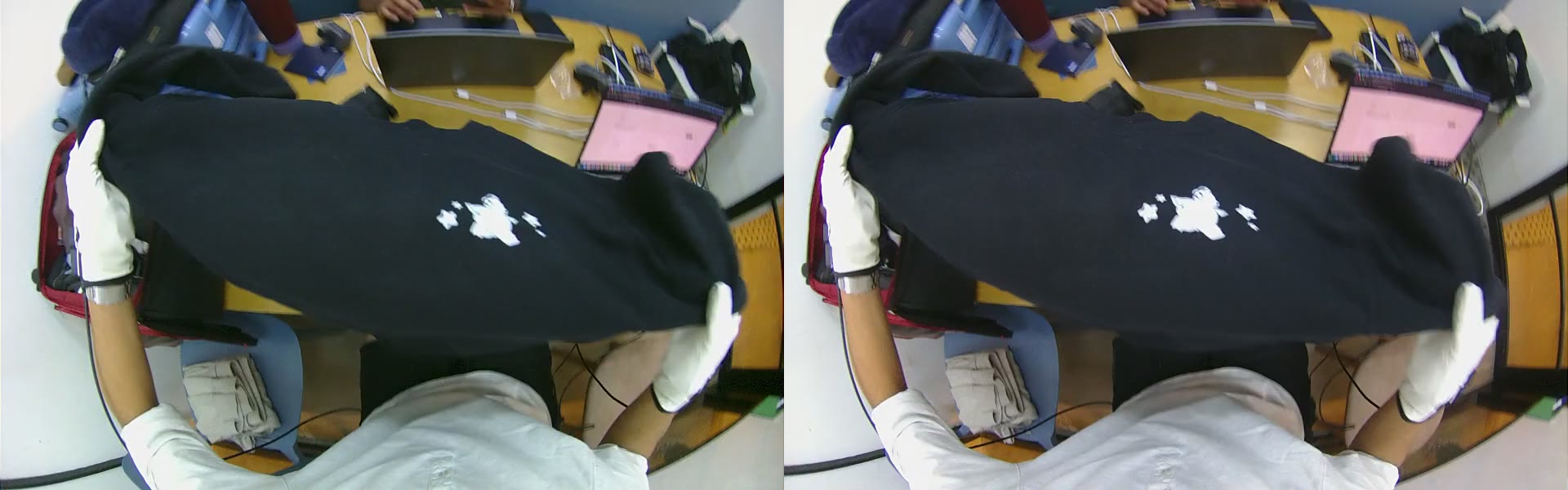
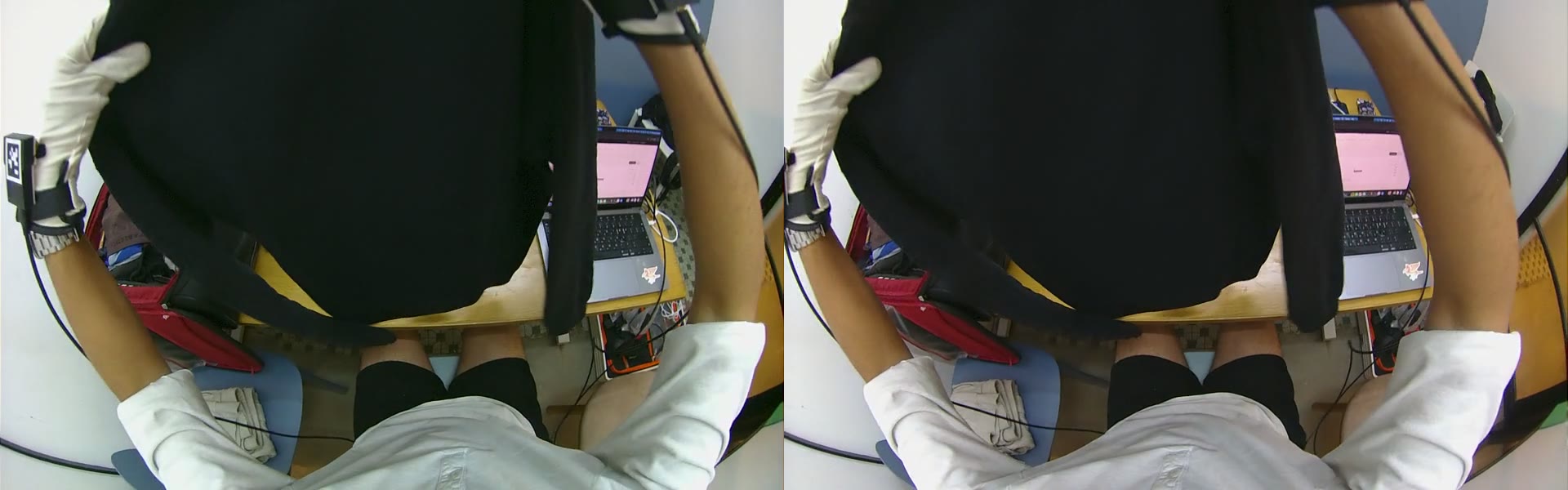
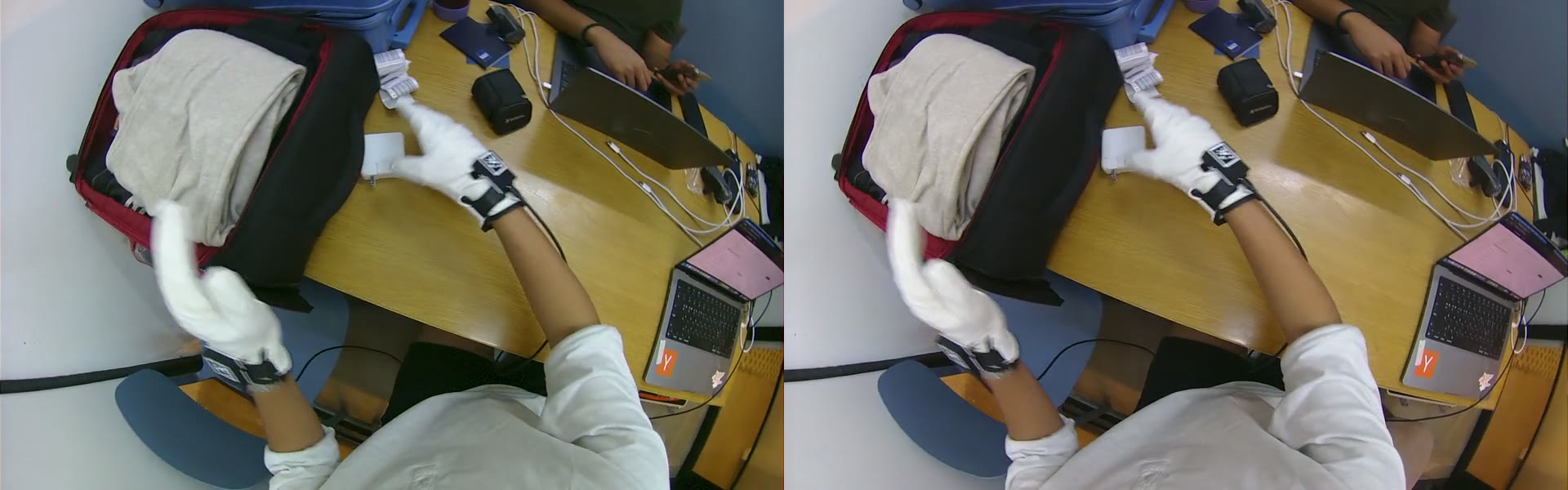
Garment is lifted and stretched between both hands; white motif appears.
Start estimate range: [8, 10]s. End estimate range: [12.5, 14.5]s.
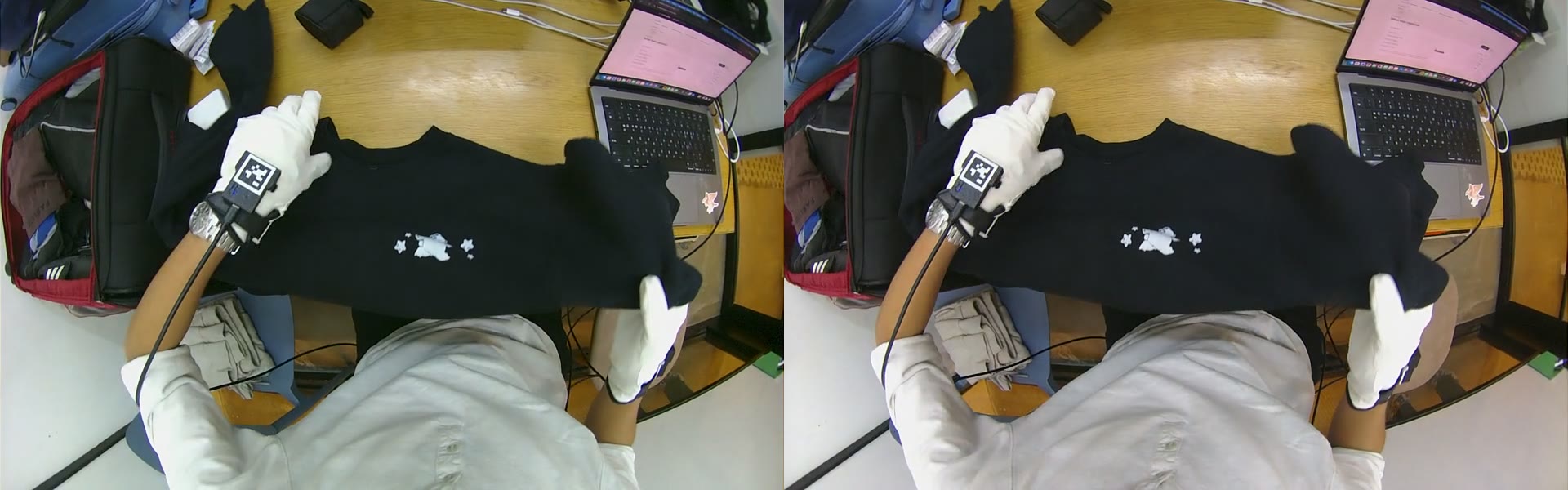
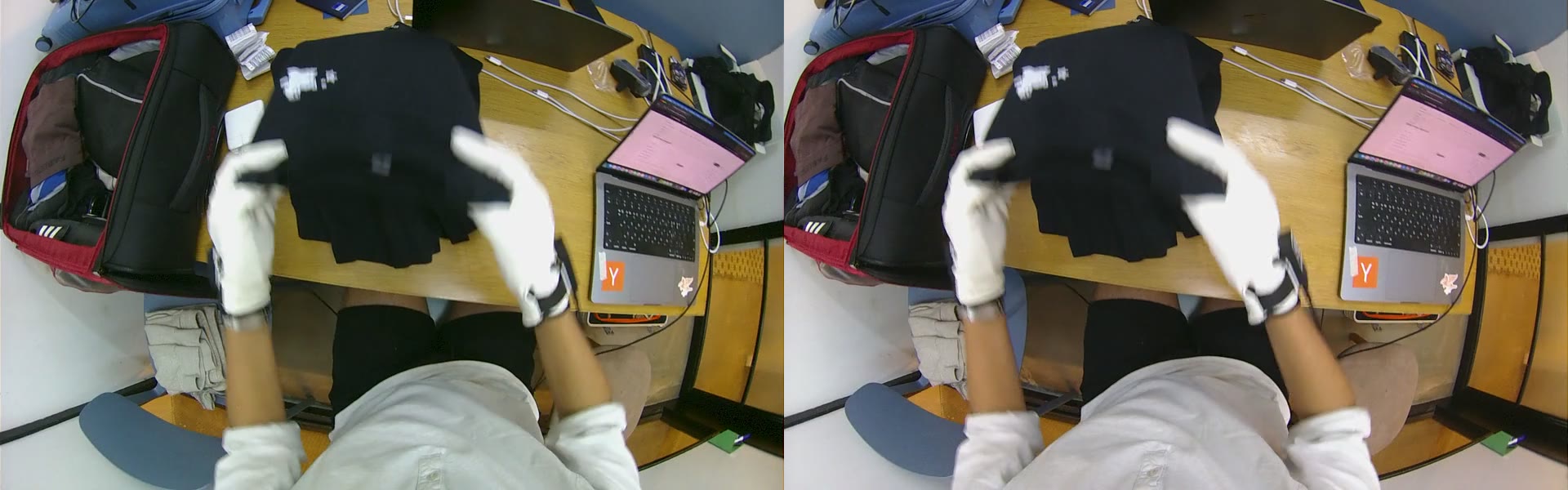
Hands lift and turn the garment; it then rests lengthwise on the table.
Start estimate range: [12.5, 14.5]s. End estimate range: [18.5, 20.5]s.
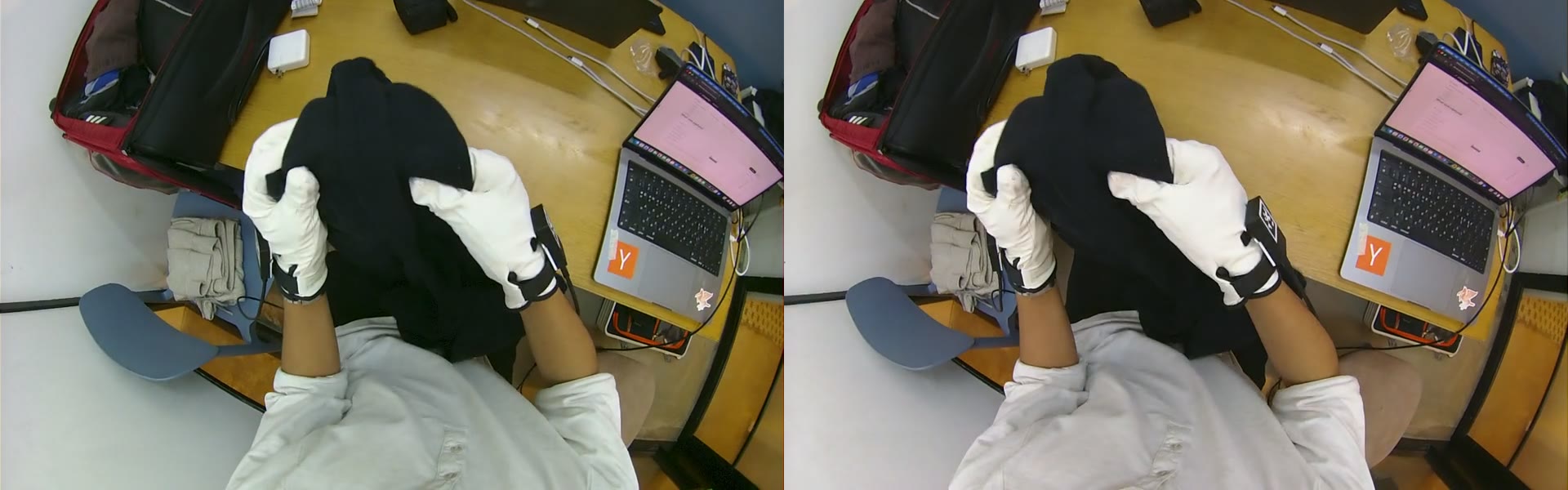
Garment is repeatedly raised and repositioned before being spread flat.
These adjustments are not labeled as failures.
Start estimate range: [18.5, 20.5]s. End estimate range: [25.5, 27.5]s.
Hands bring outer fabric inward, leaving a narrower rectangular shape.
Start estimate range: [25.5, 27.5]s. End estimate range: [27.5, 29.5]s.
Lower section is brought upward; the visible footprint shortens.
Start estimate range: [27.5, 29.5]s. End estimate range: [30.5, 32.5]s.
Both hands adjust the compact bundle and press its top.
Start estimate range: [30.5, 32.5]s. End estimate range: [33.5, 35.5]s.
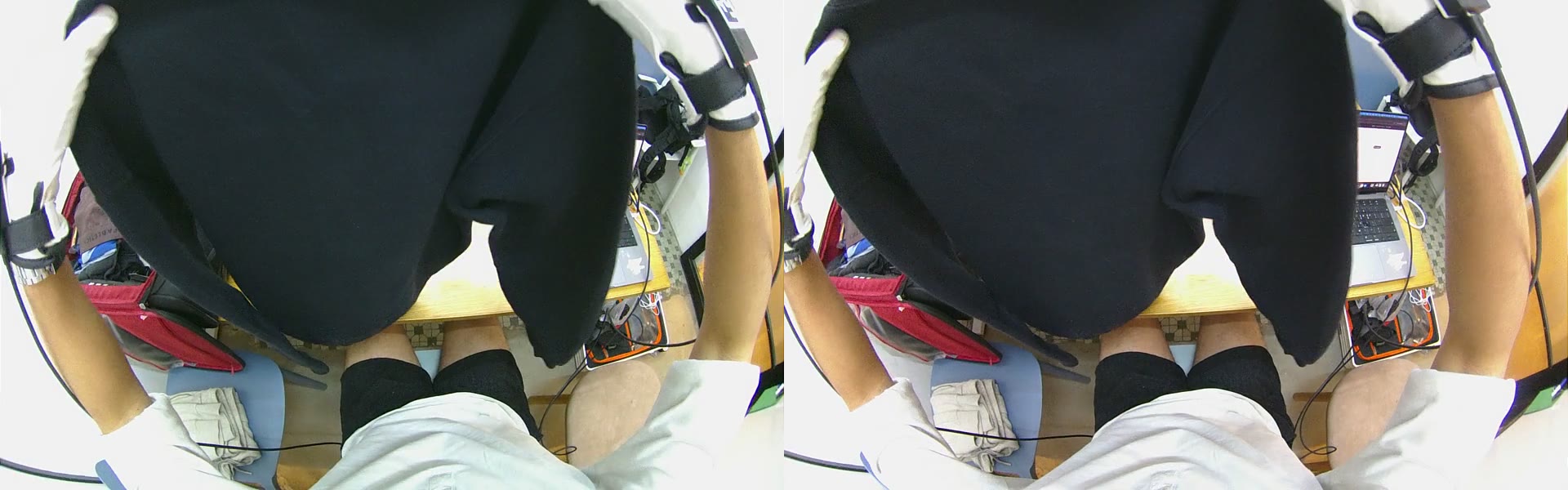
Bundle is held in both hands and carried left over the suitcase.
Start estimate range: [33.5, 35.5]s. End estimate range: [35.14368, 35.40992]s.
Hands press the dark bundle inside the case and then withdraw.
Start estimate range: [35.14368, 35.40992]s. End estimate range: [36.5, 38.5]s.
Long light-colored garment is raised from the left-side chair area.
Start estimate range: [36.5, 38.5]s. End estimate range: [39.5, 41.5]s.
Hands pinch the upper edge and separate/reposition the hanging fabric.
Start estimate range: [39.5, 41.5]s. End estimate range: [43.5, 45.5]s.
Both hands stretch and lower the light garment across the table.
Start estimate range: [43.5, 45.5]s. End estimate range: [47.5, 49.5]s.
One extended section is brought over another, shortening the layout.
Start estimate range: [47.5, 49.5]s. End estimate range: [50.5, 52.5]s.
Hands fold the light fabric again and adjust the edges.
Start estimate range: [50.5, 52.5]s. End estimate range: [53.5, 55.5]s.
Compact light bundle is rotated slightly and smoothed on the table.
Start estimate range: [53.5, 55.5]s. End estimate range: [55.5, 57.5]s.
Hands bring the final fabric section over and grip the compact garment.
Start estimate range: [55.5, 57.5]s. End estimate range: [57.5, 59.5]s.
Bundle moves left from tabletop to the open suitcase.
Start estimate range: [57.5, 59.5]s. End estimate range: [59, 61]s.
Light garment rests in suitcase as both hands move away.
Start estimate range: [59, 61]s. End estimate range: [60, 62]s.
Gloved hands touch and separate; no further packing is visible.
Start estimate range: [60, 62]s. End estimate range: [63.363519999999994, 64.36352]s.
Assigned packing standard unknown. · Exact garment material unknown. · No suitcase closure or completed packing beyond these items is observed.
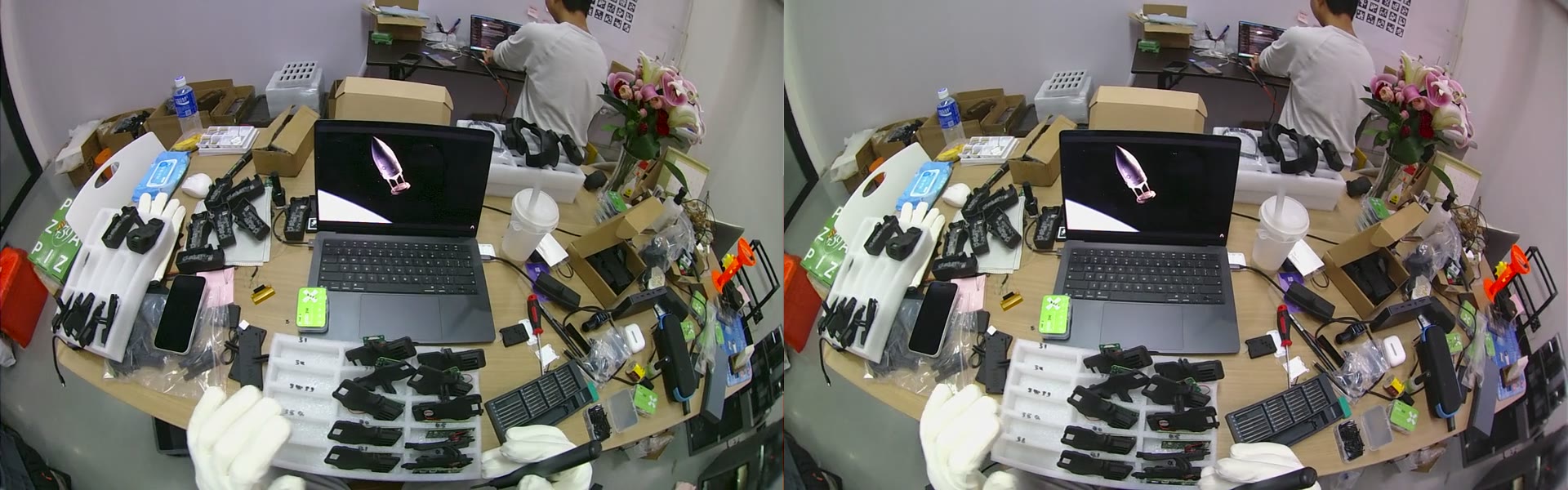
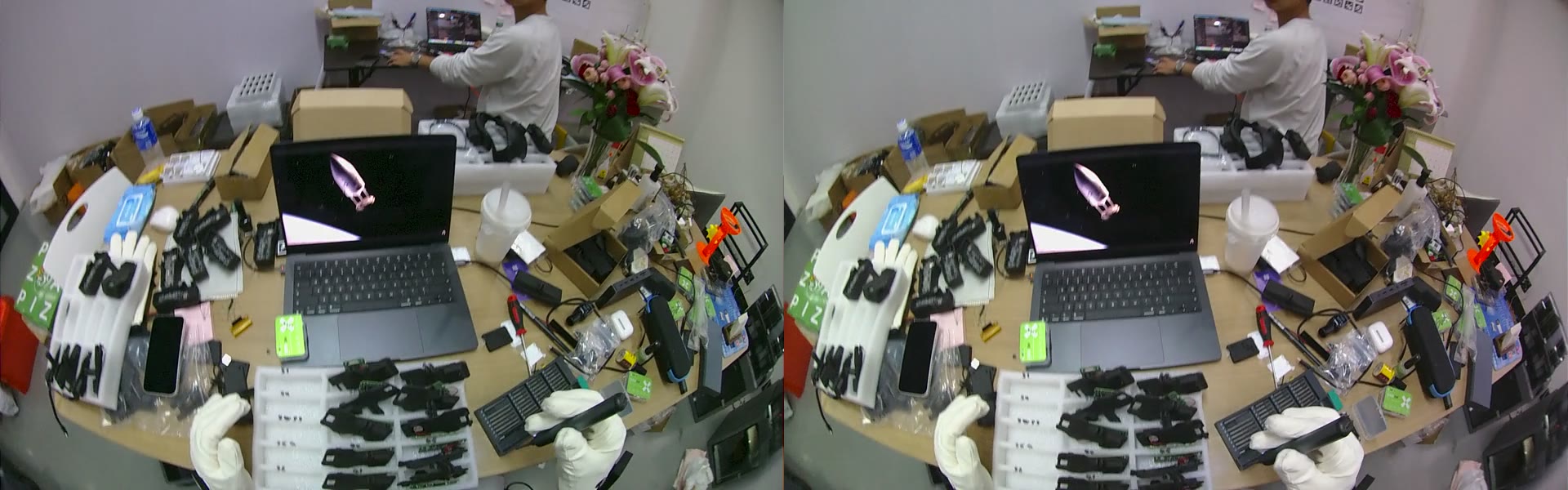
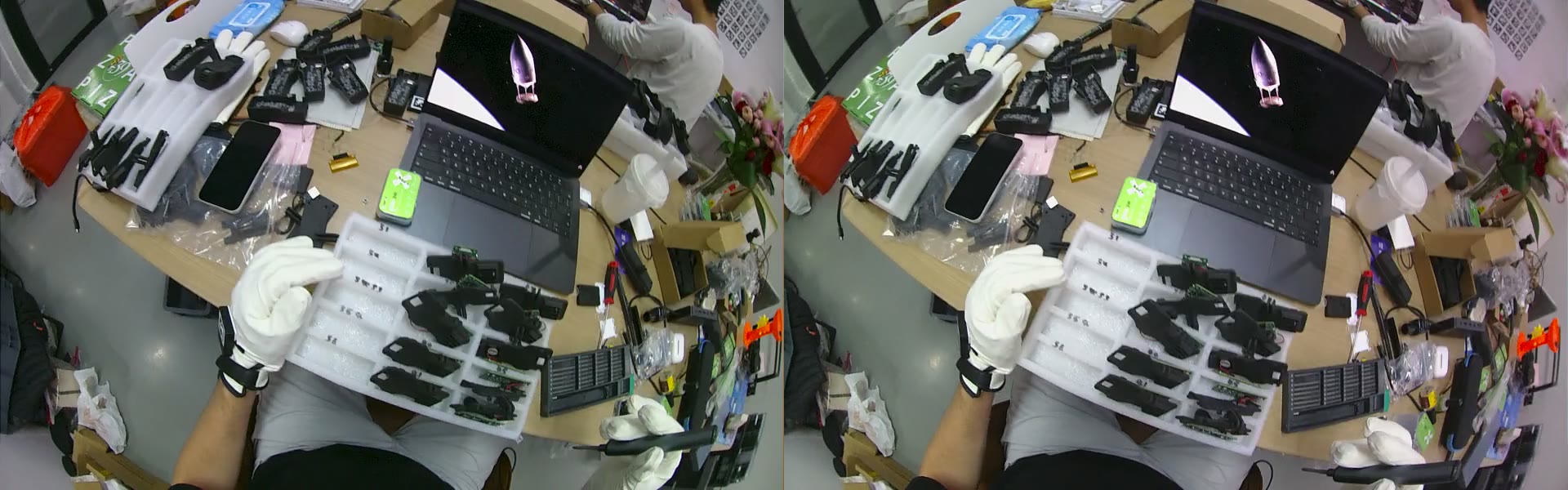
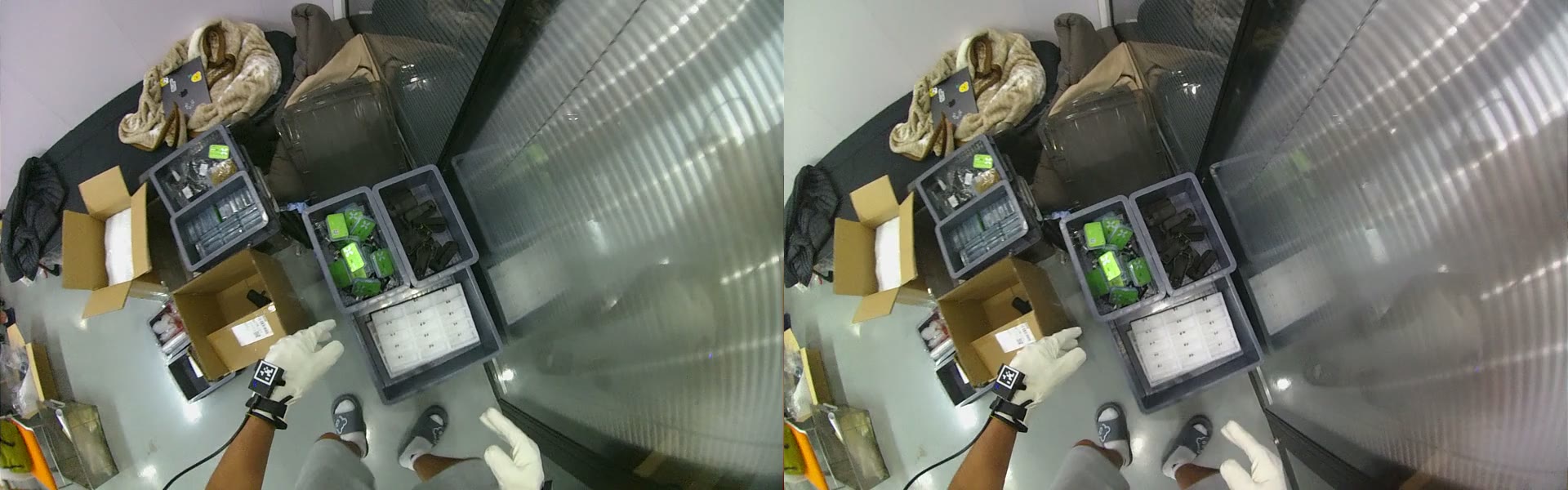
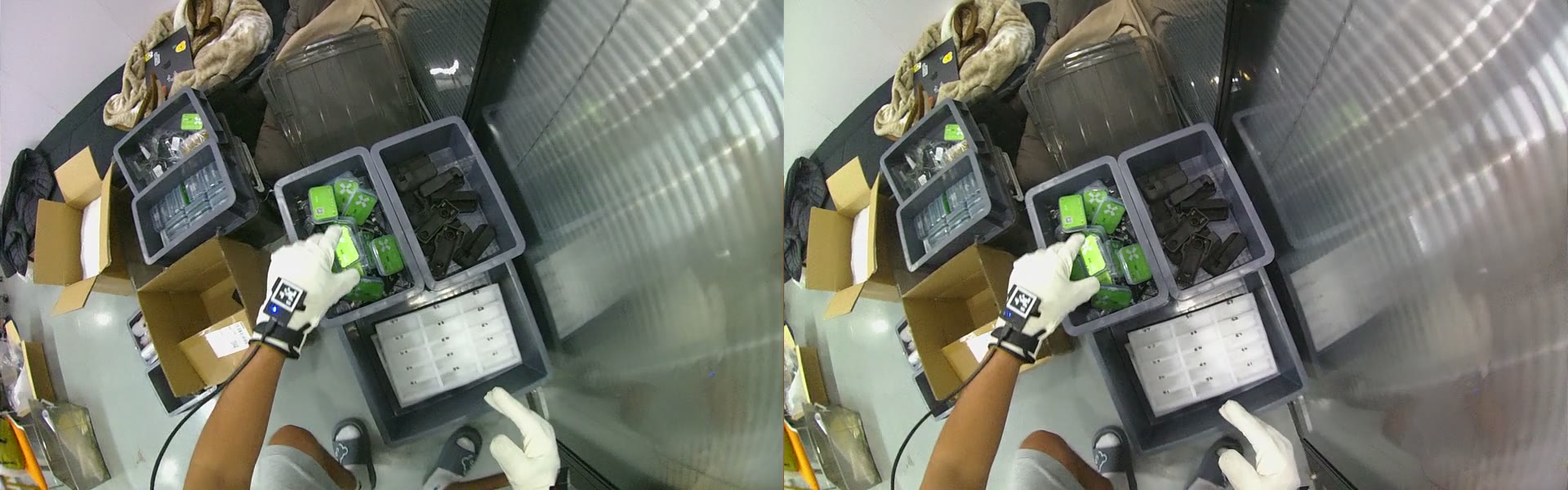
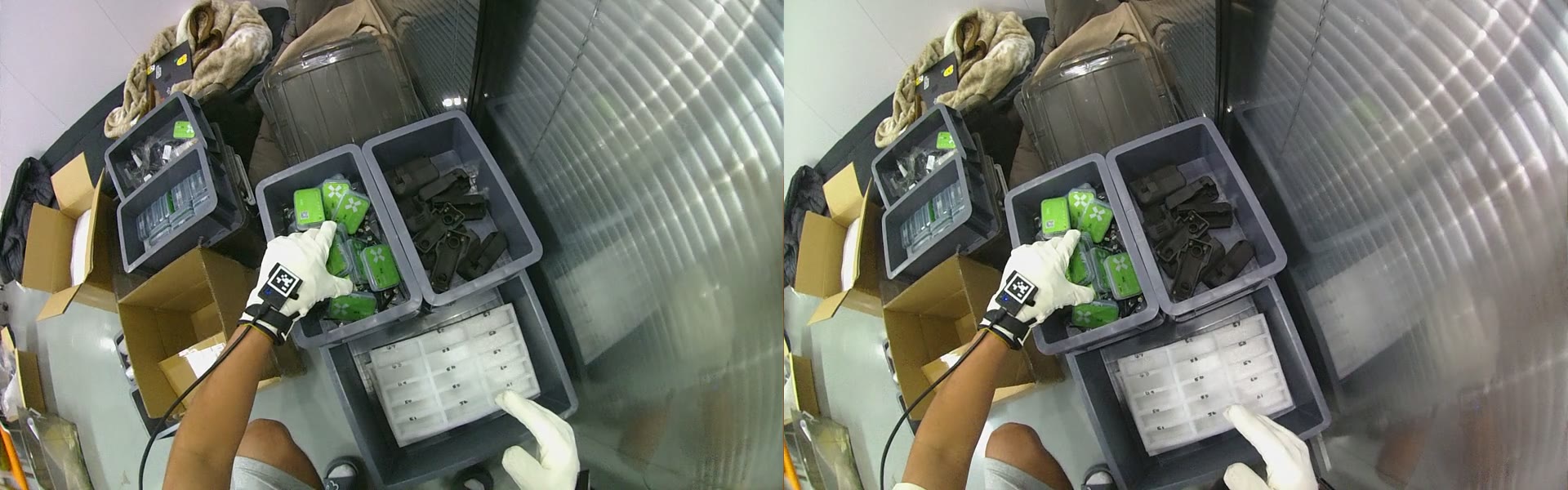
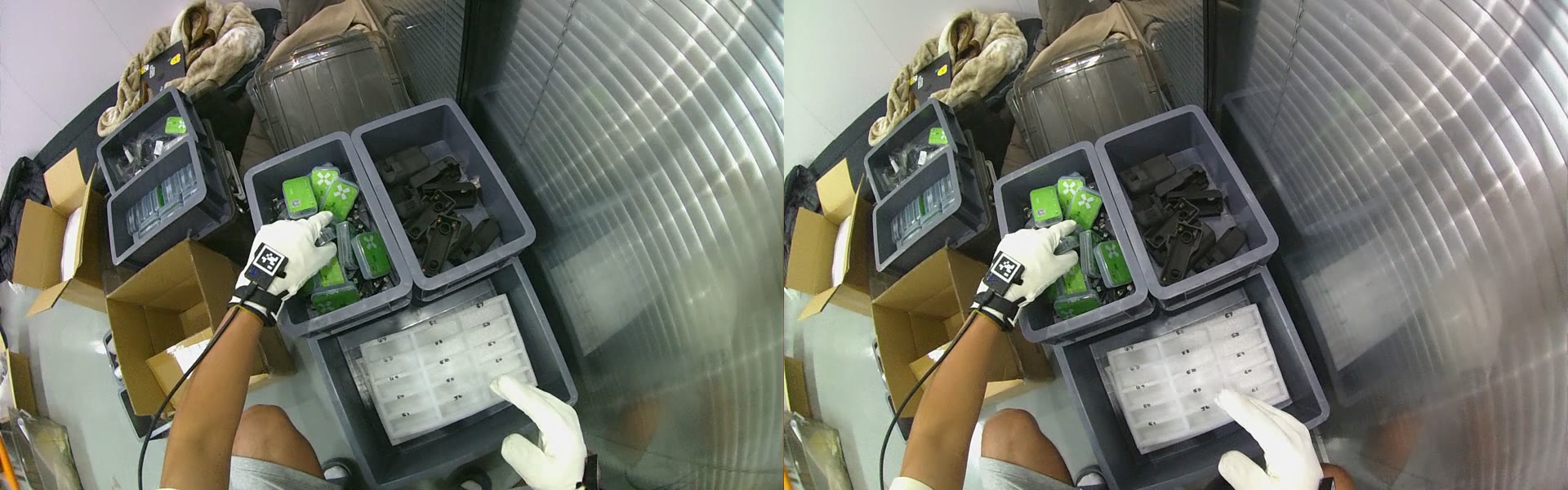
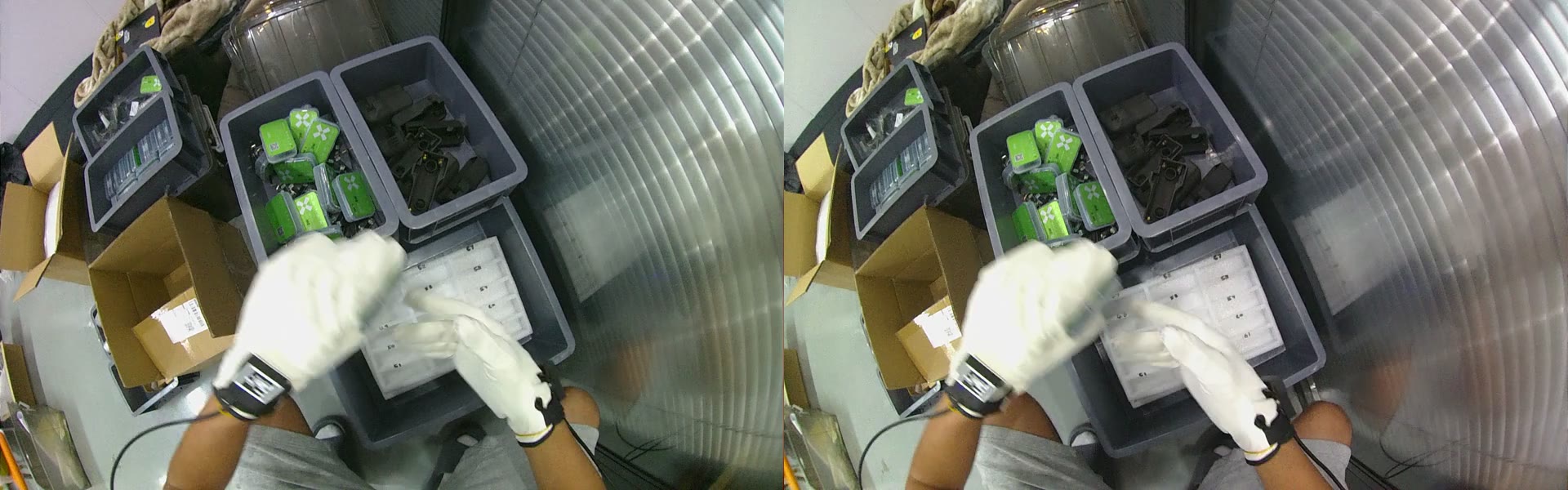
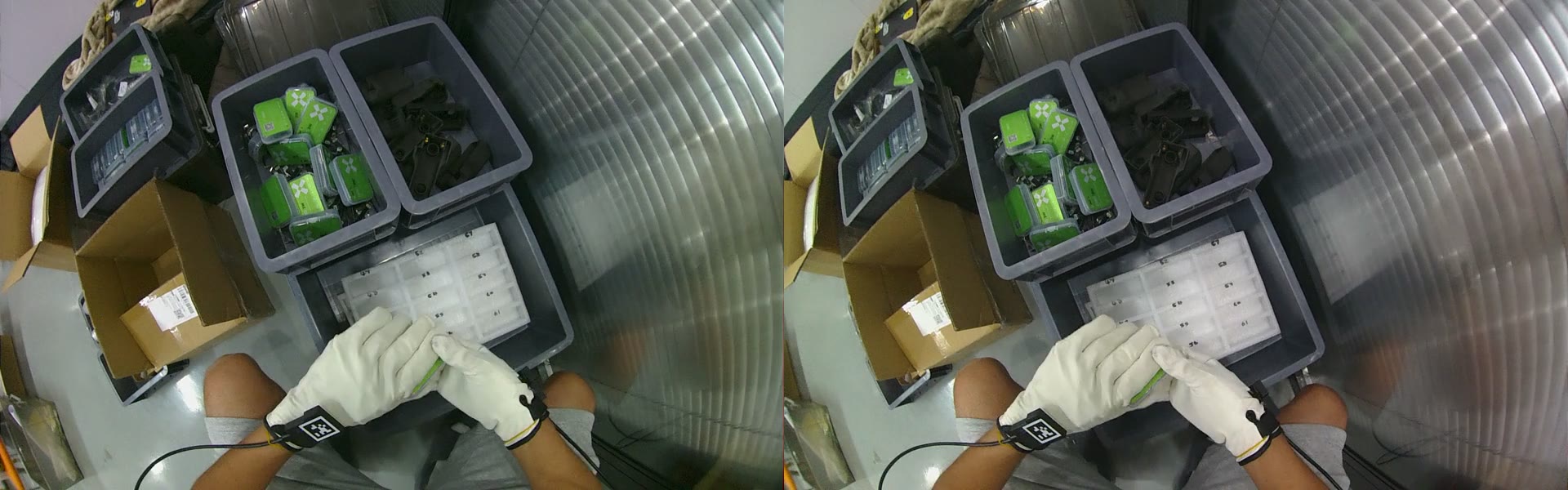
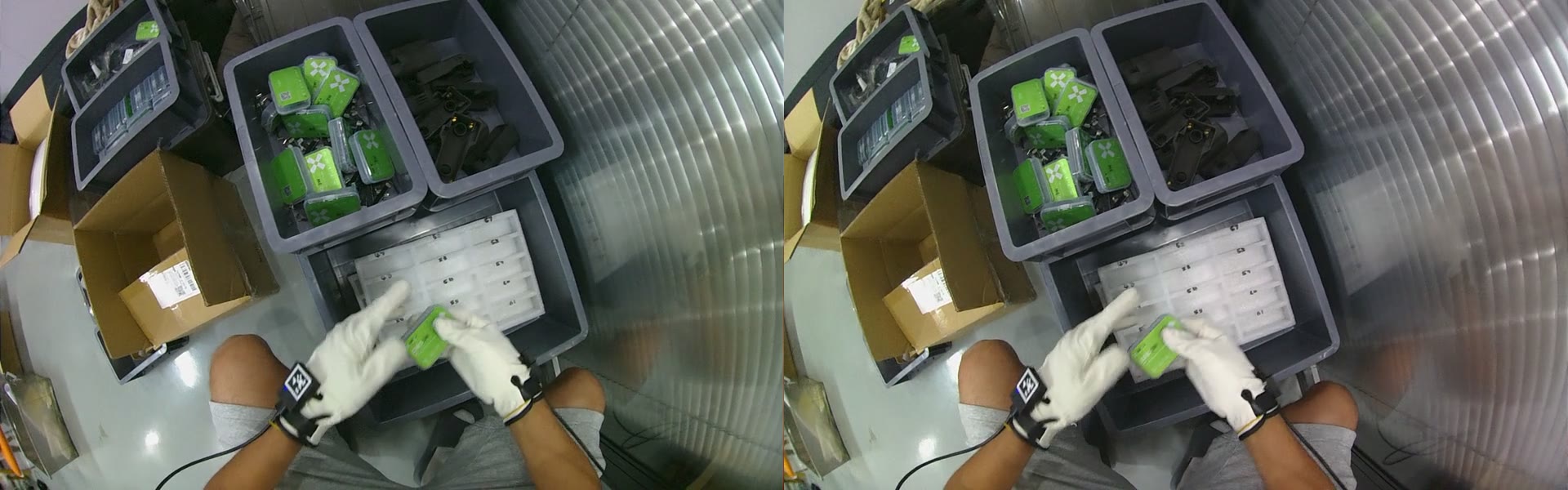
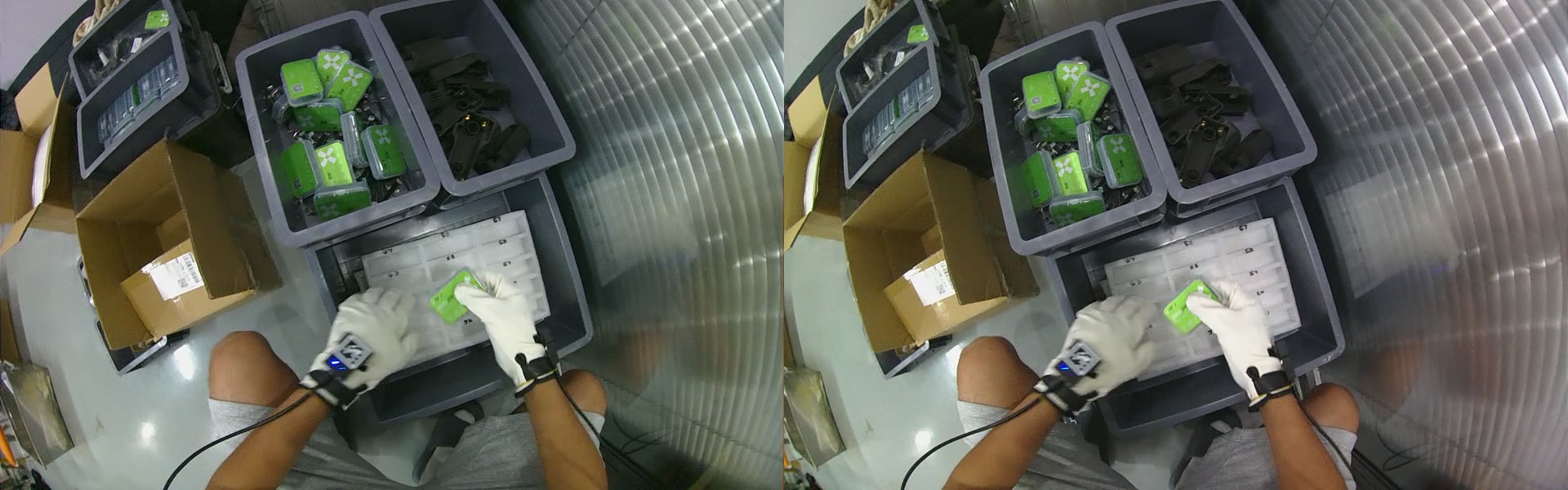
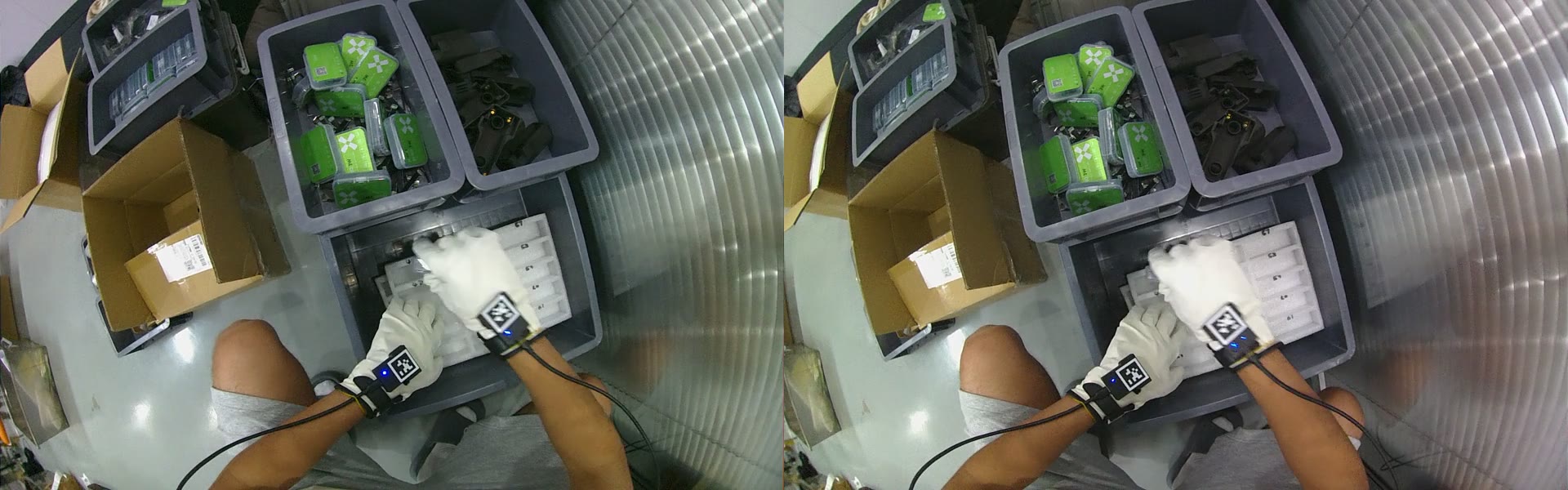
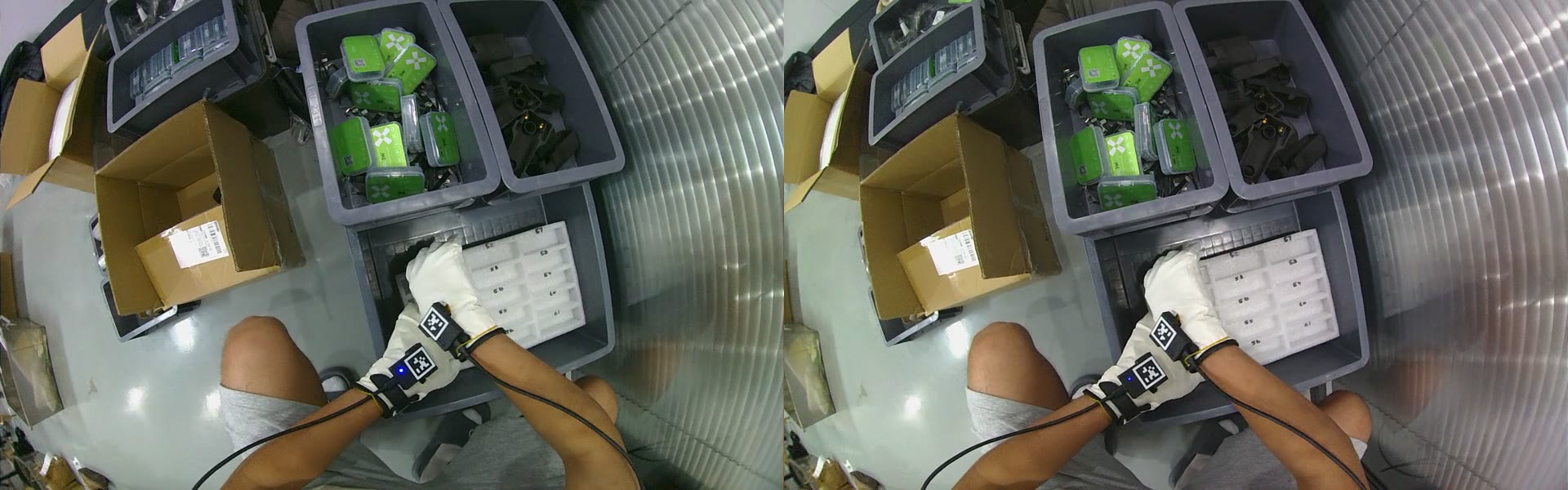
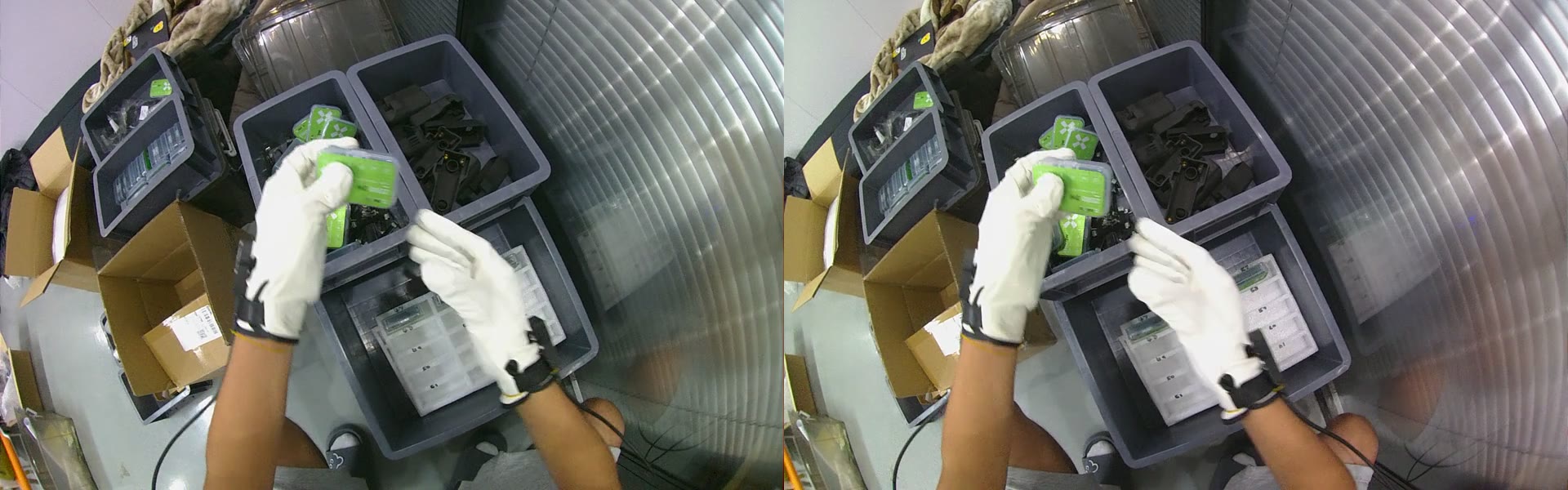
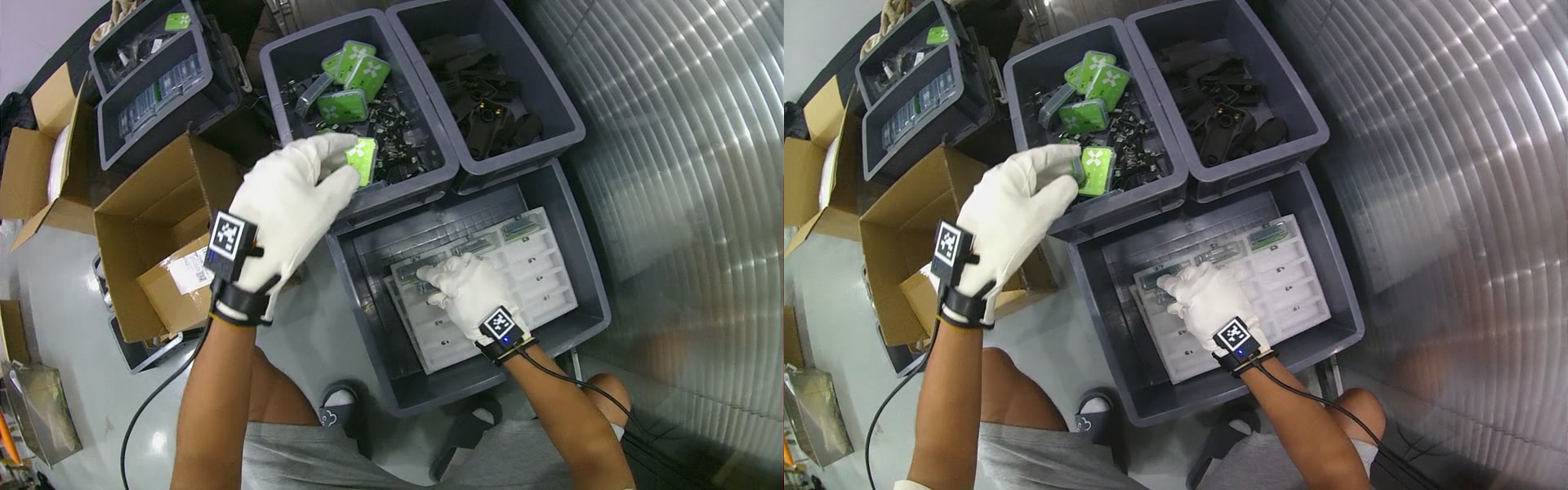
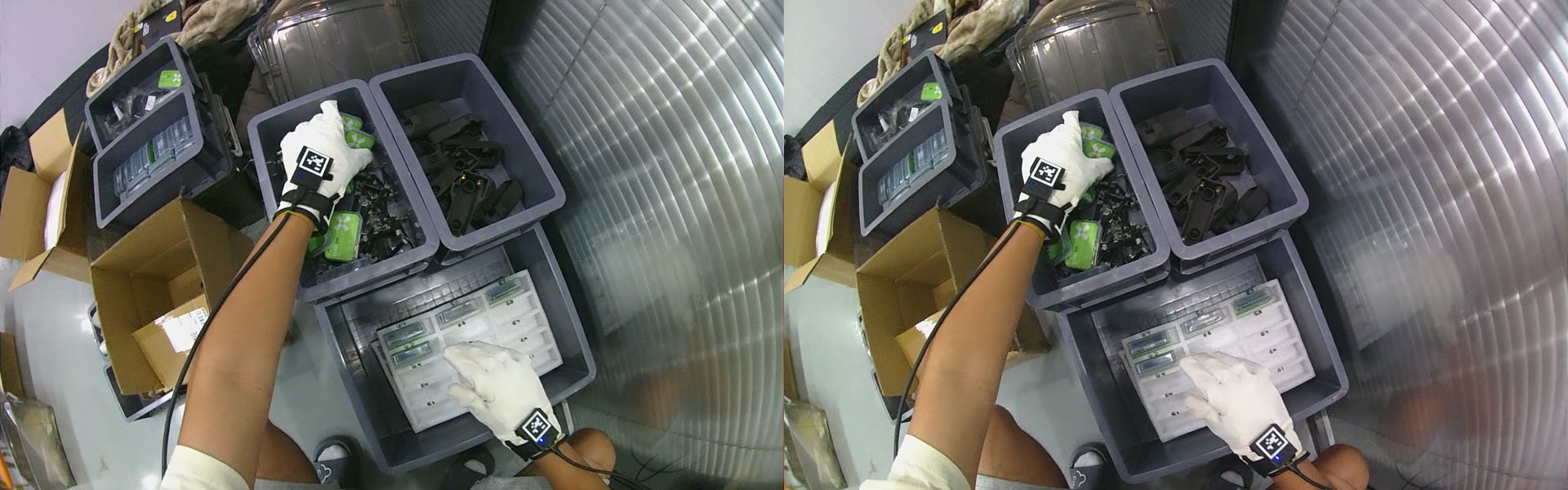
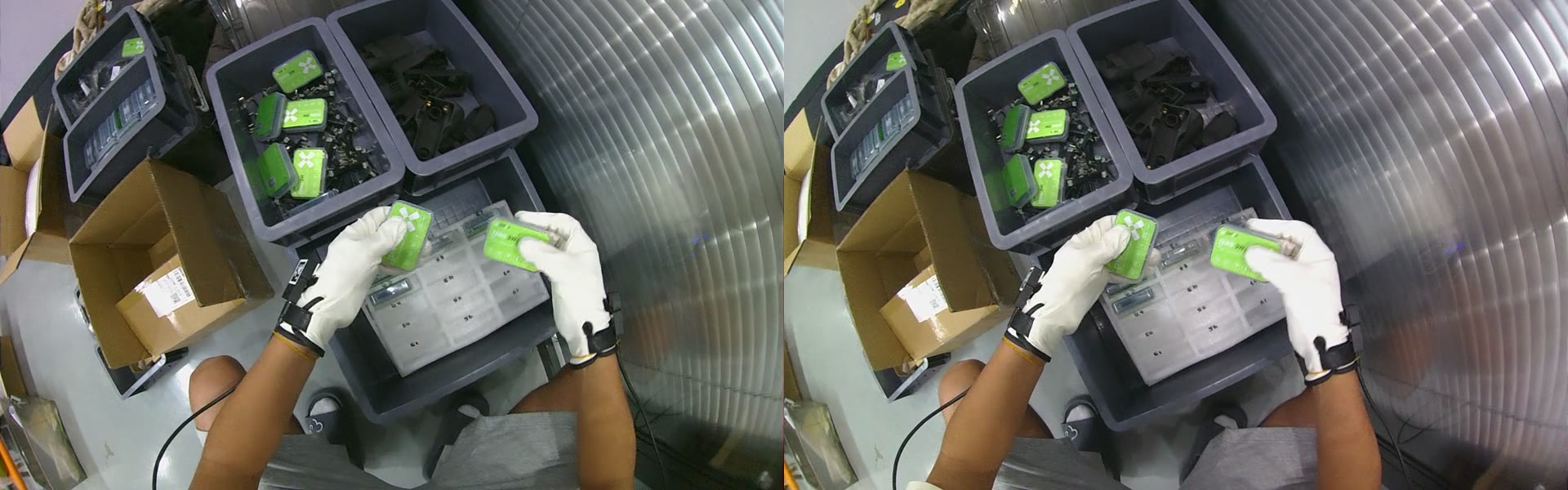
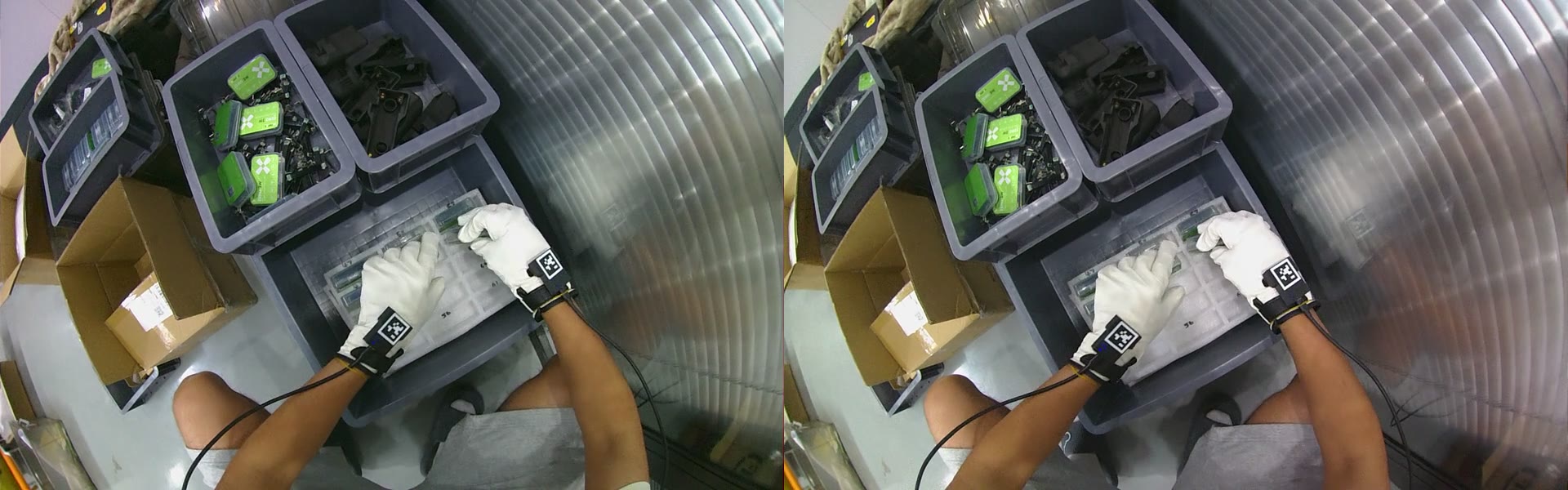
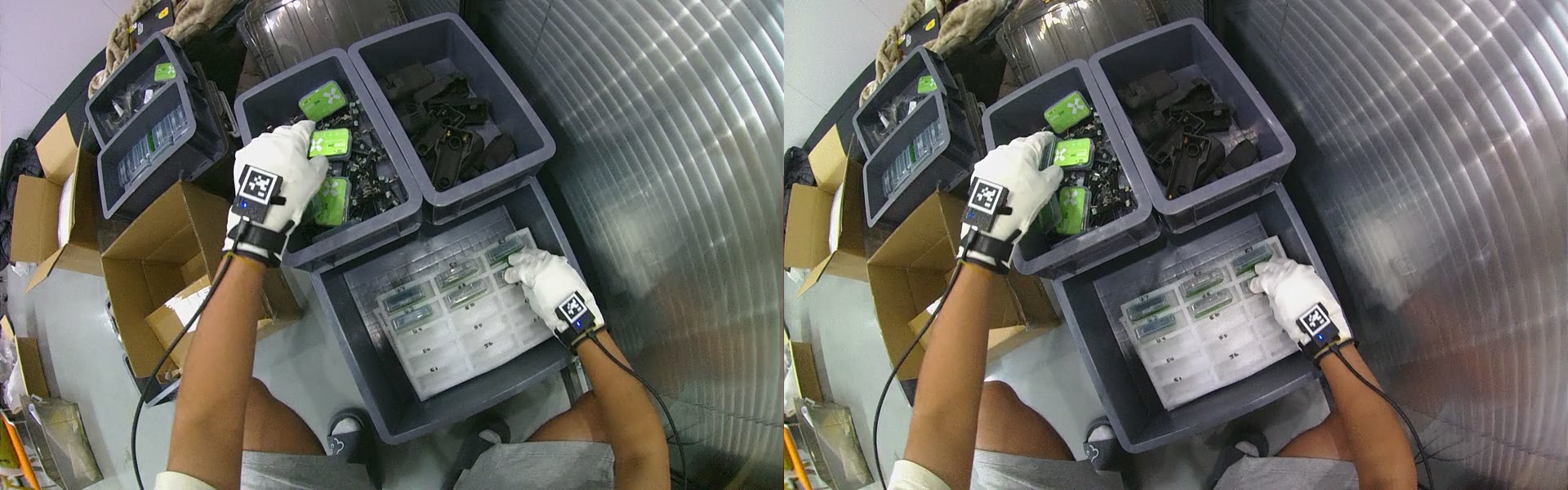
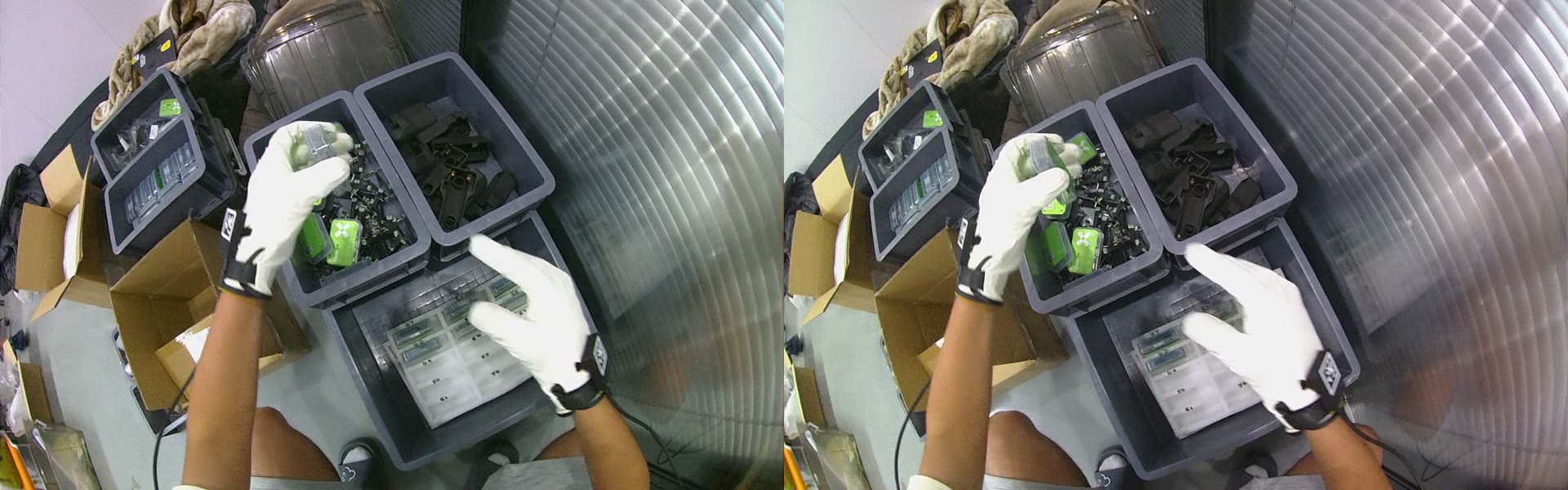
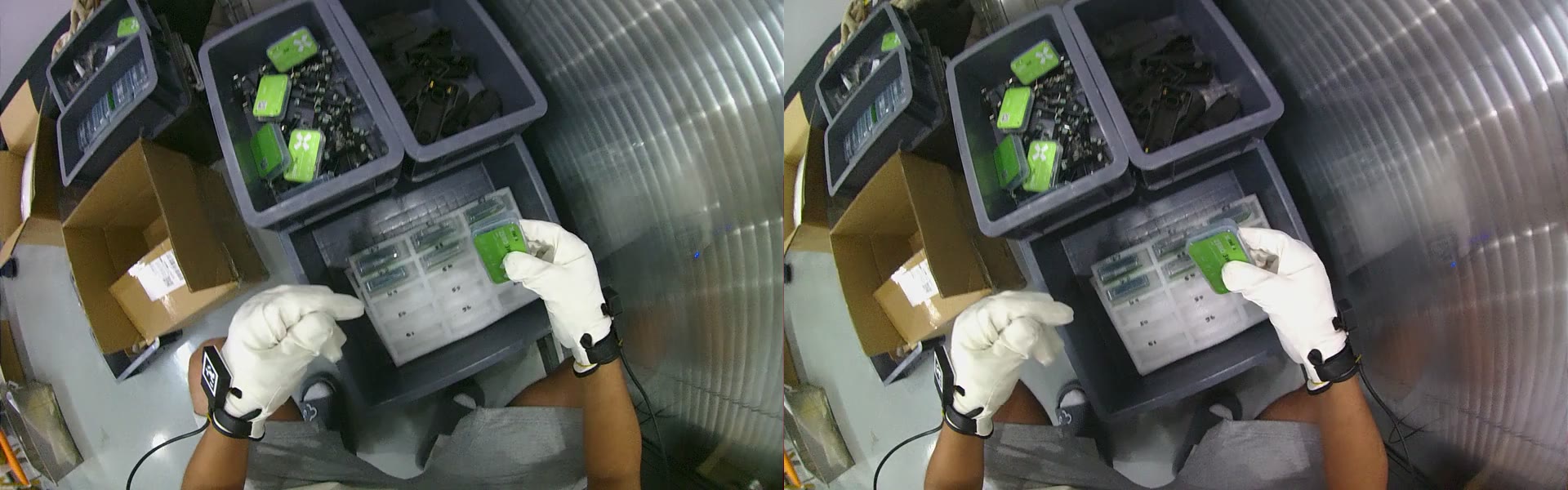
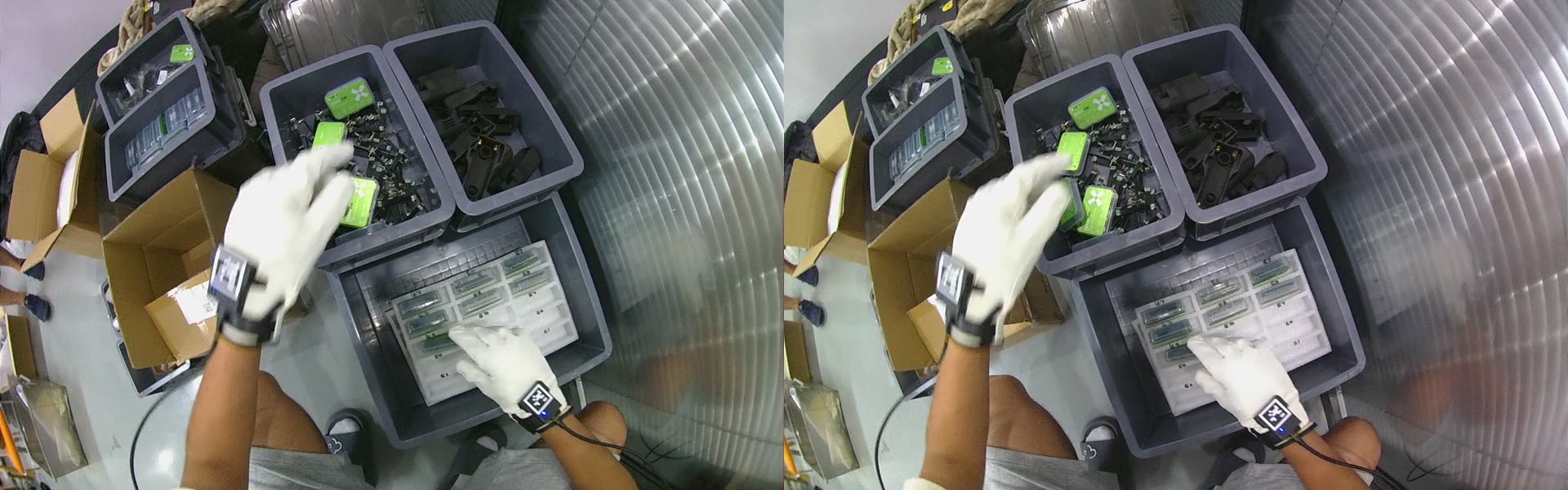
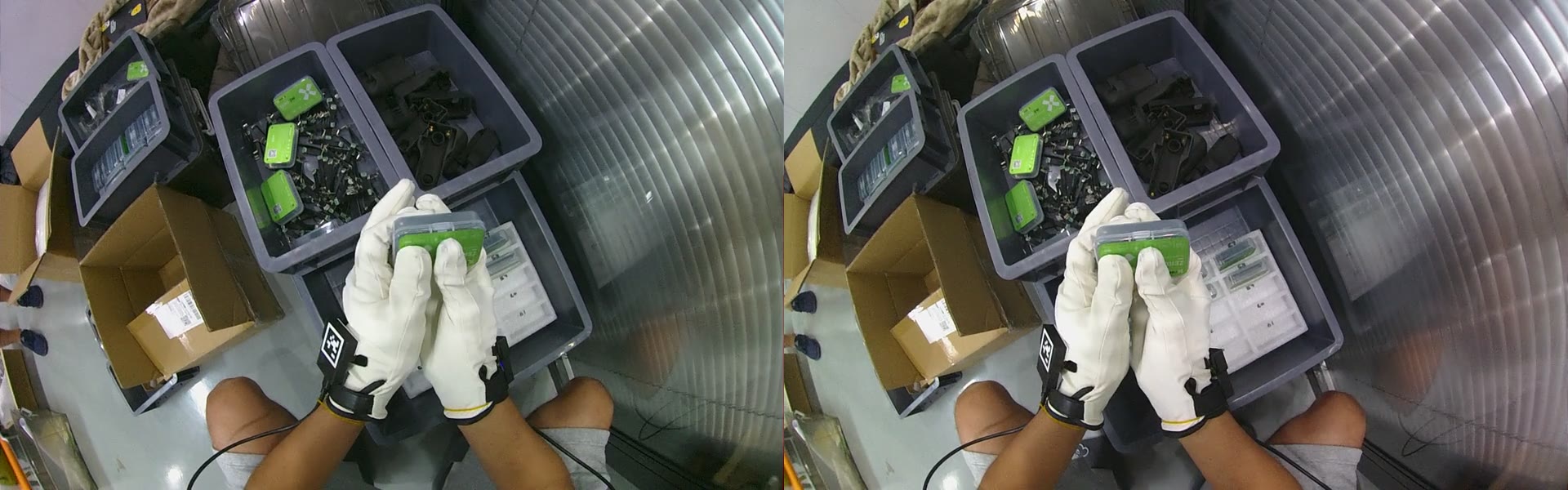
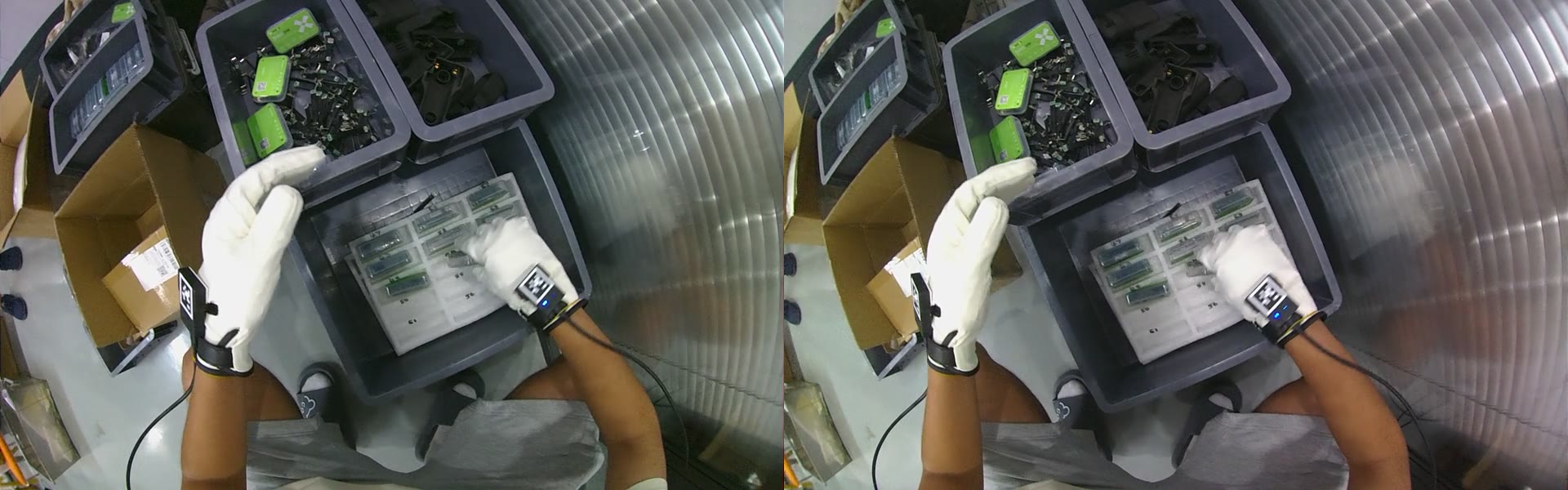
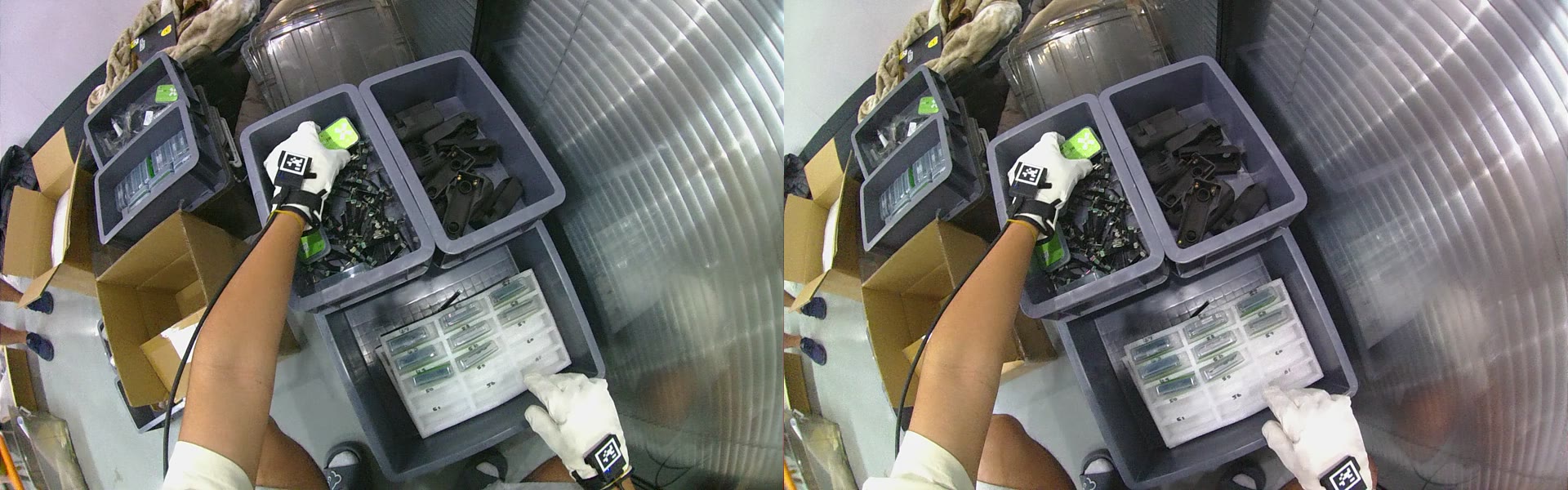
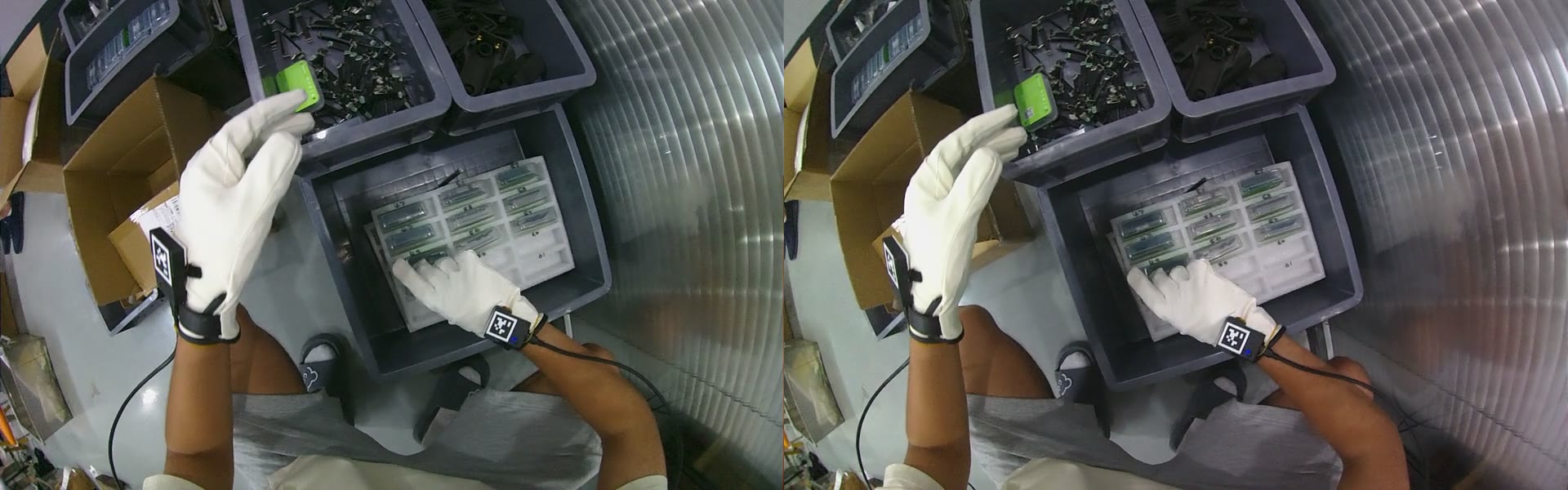
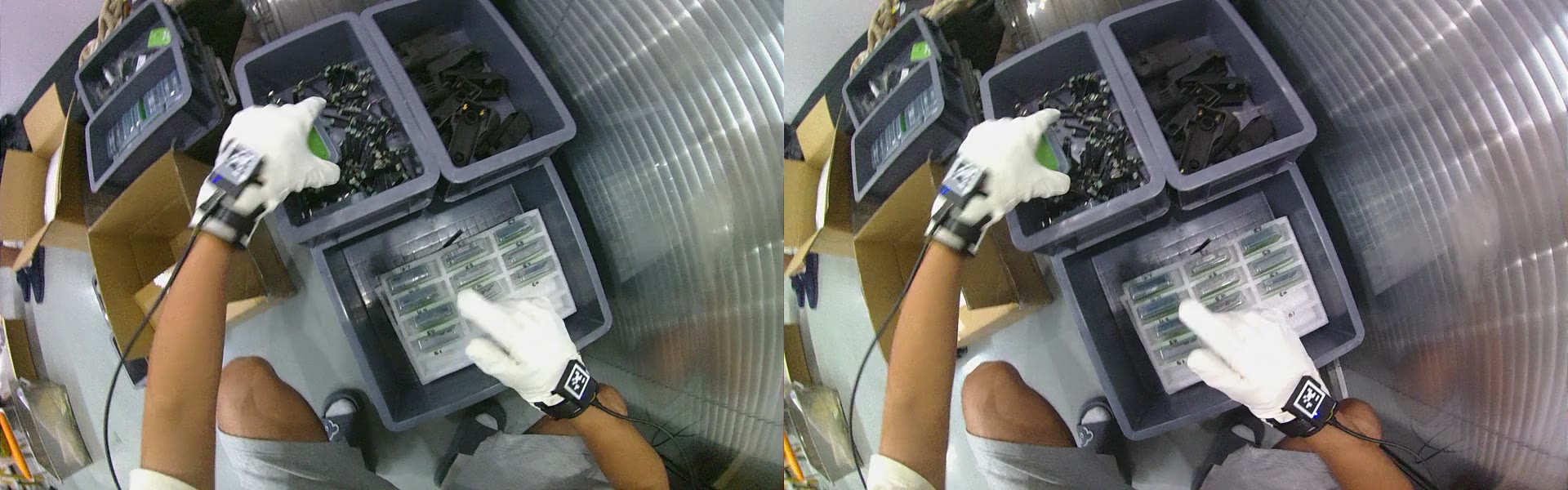
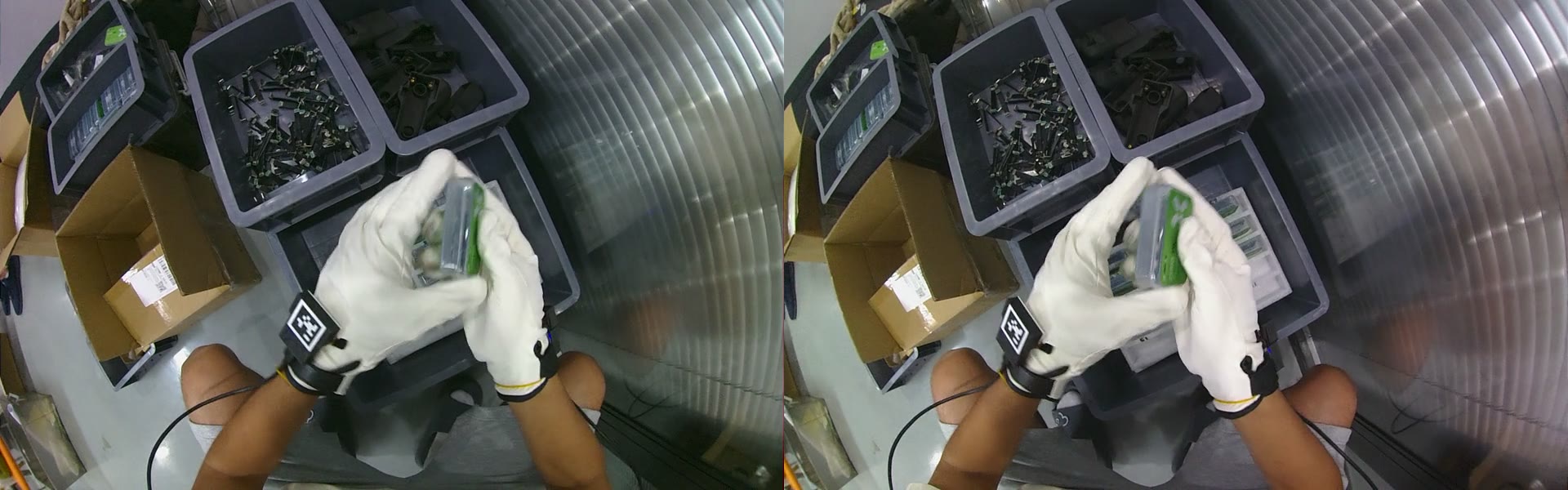
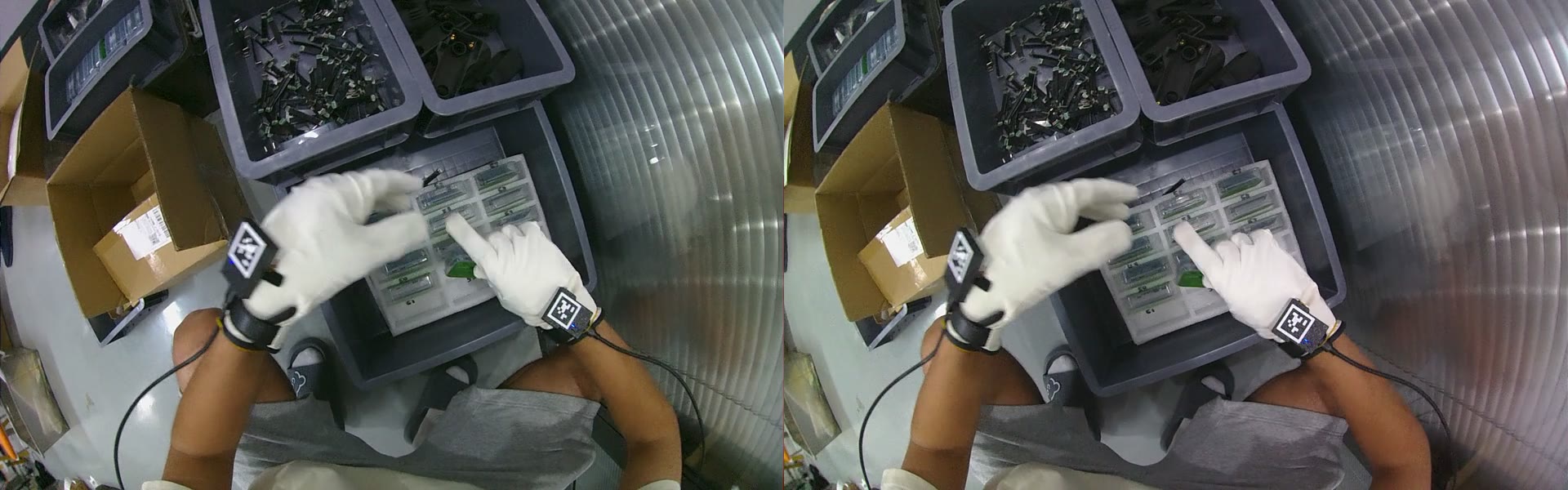
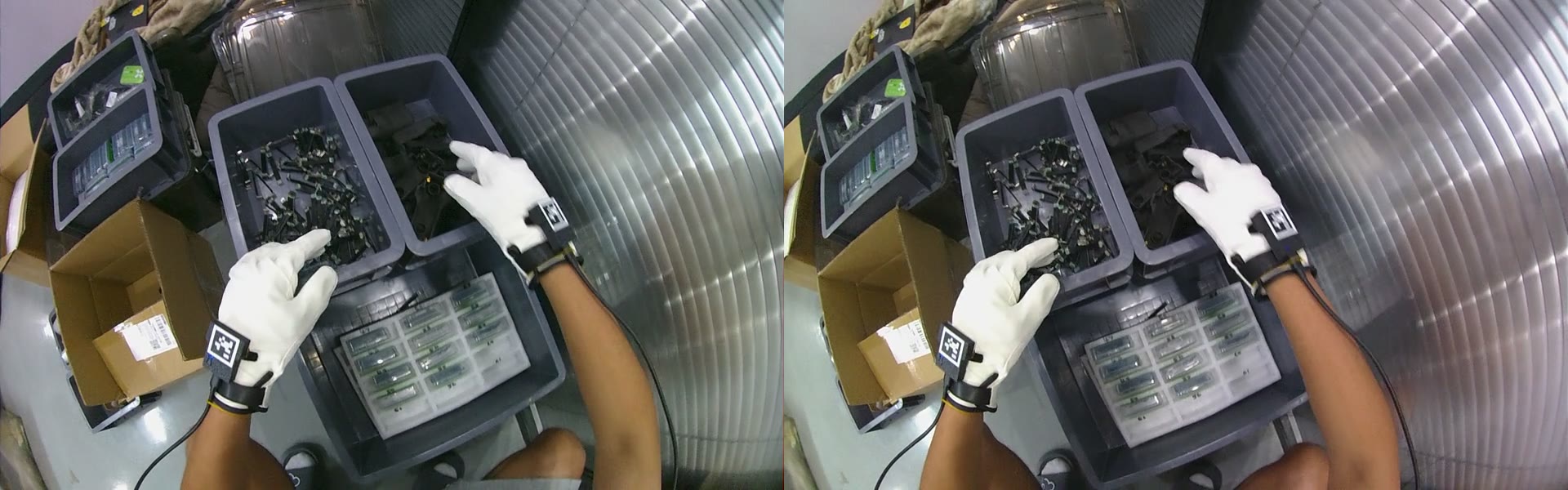
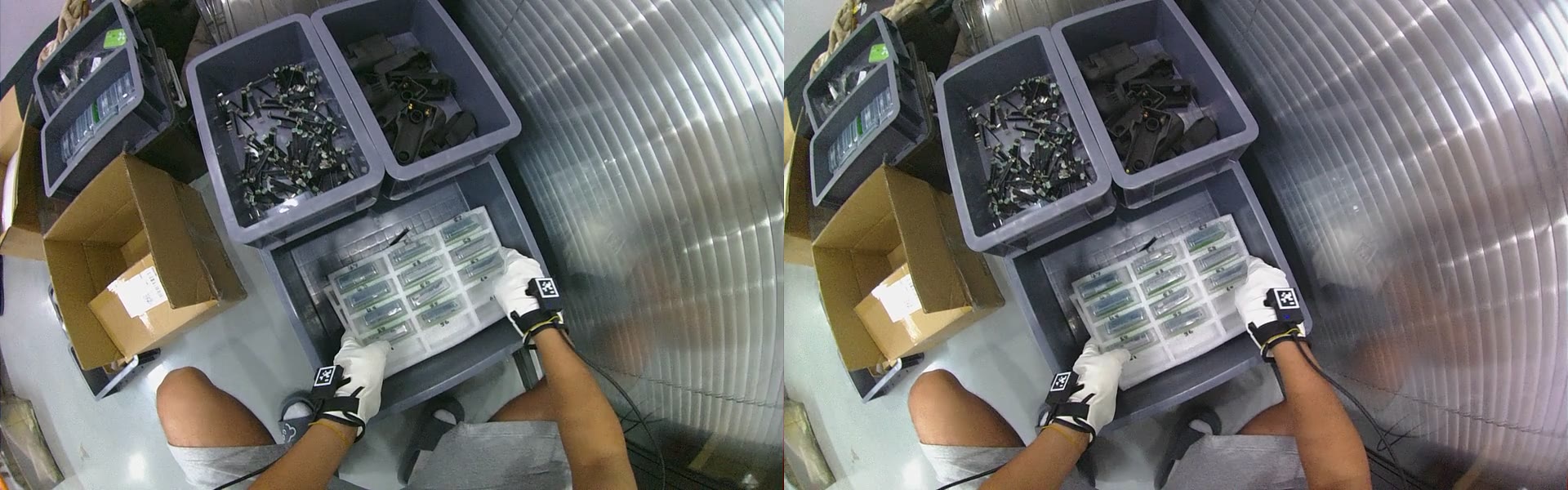
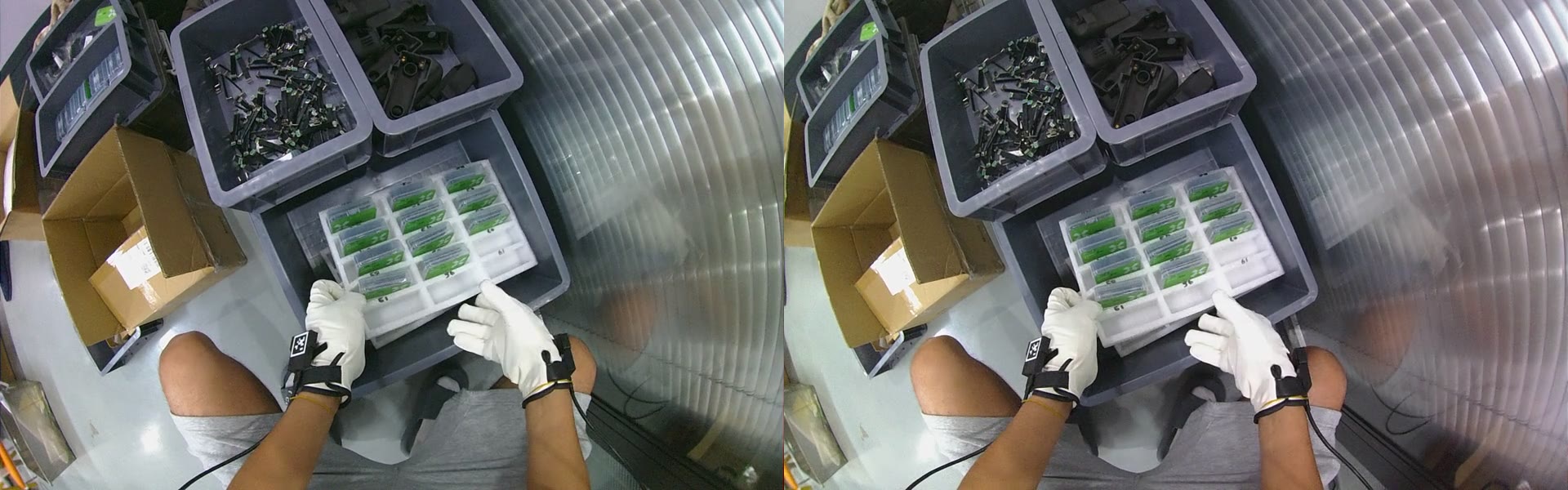
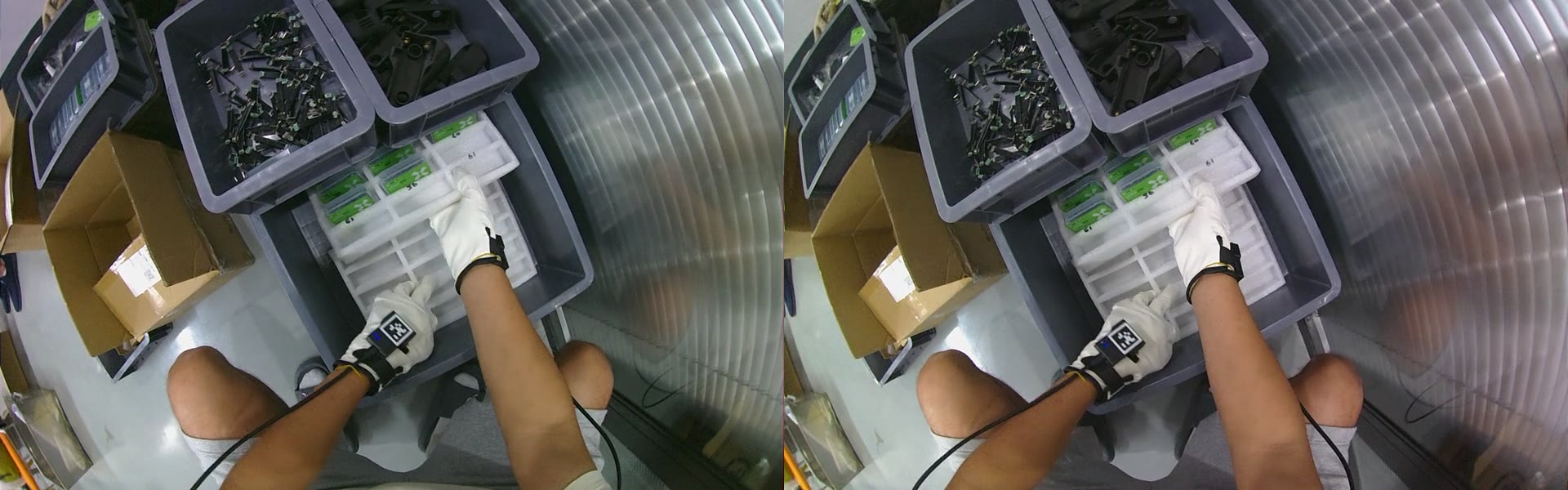
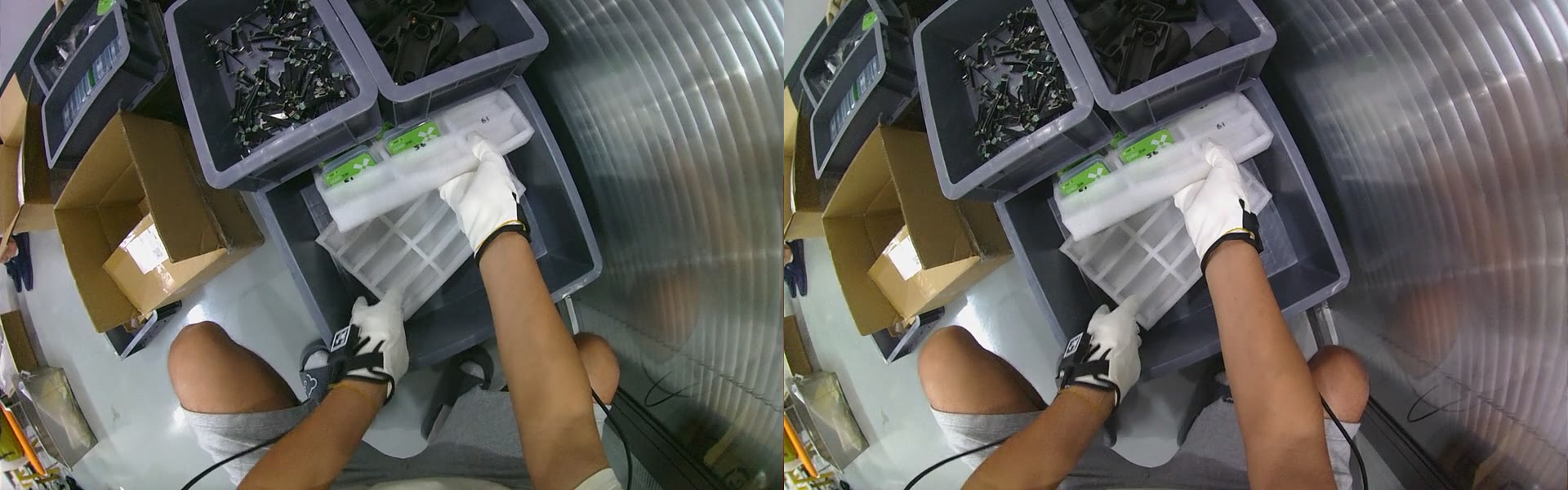
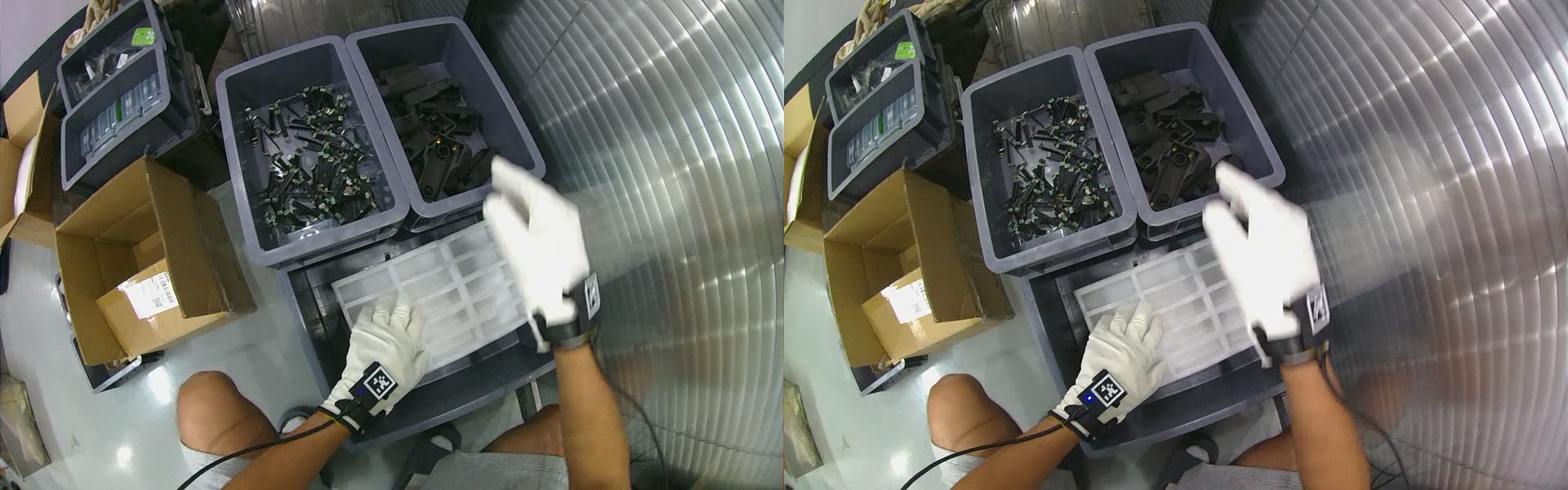
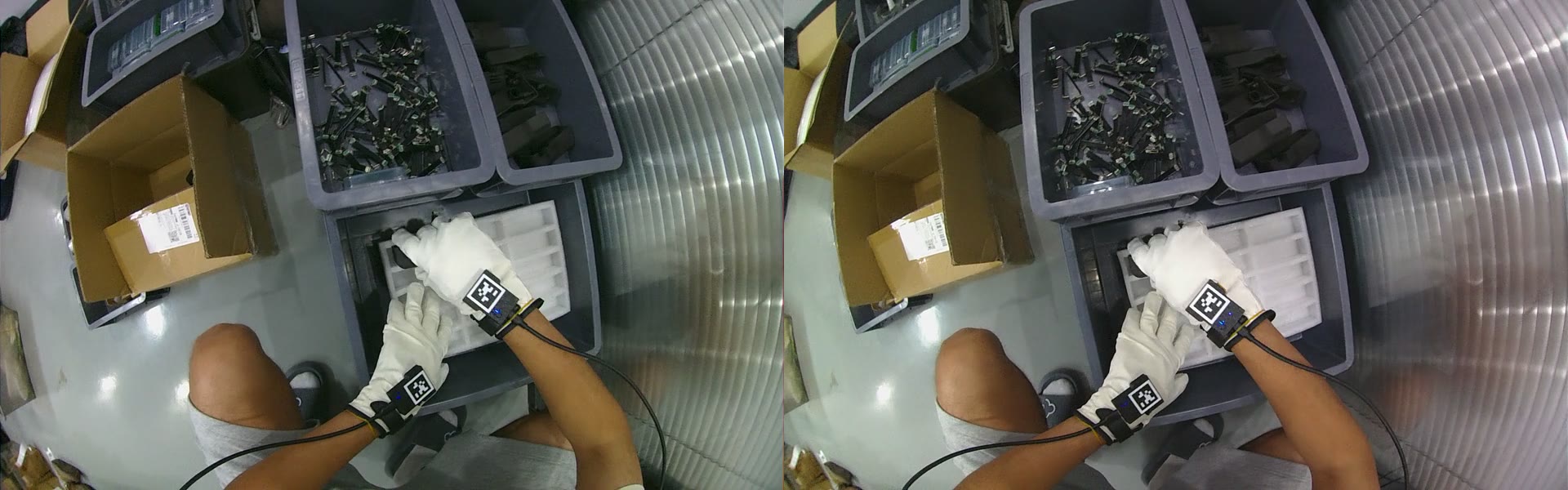
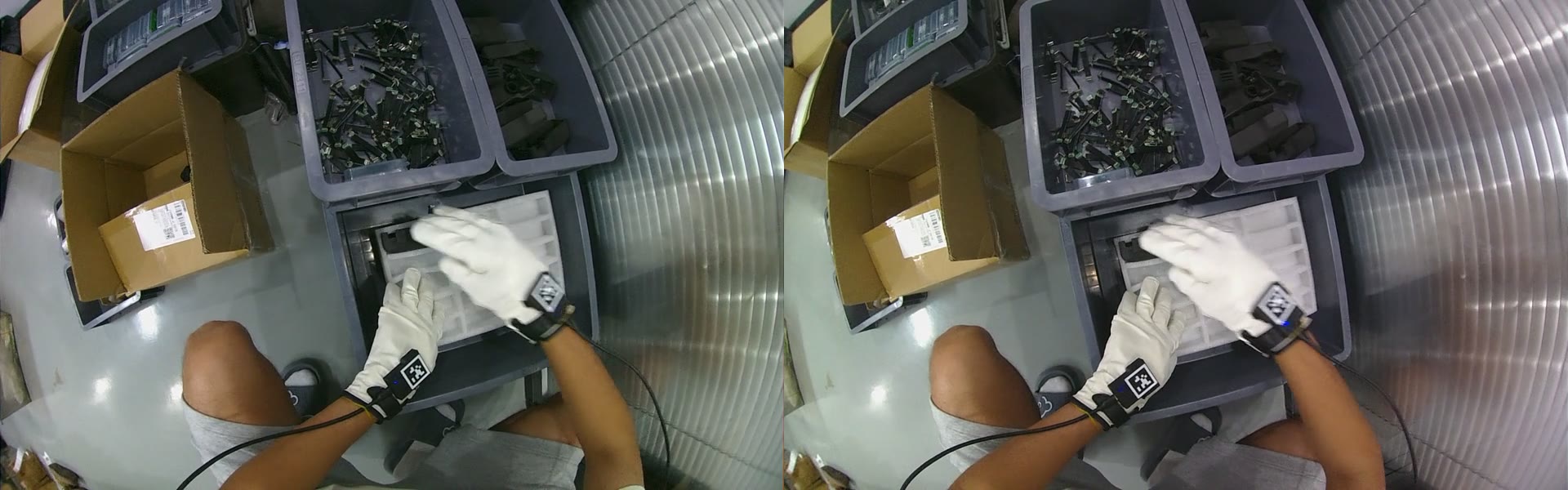
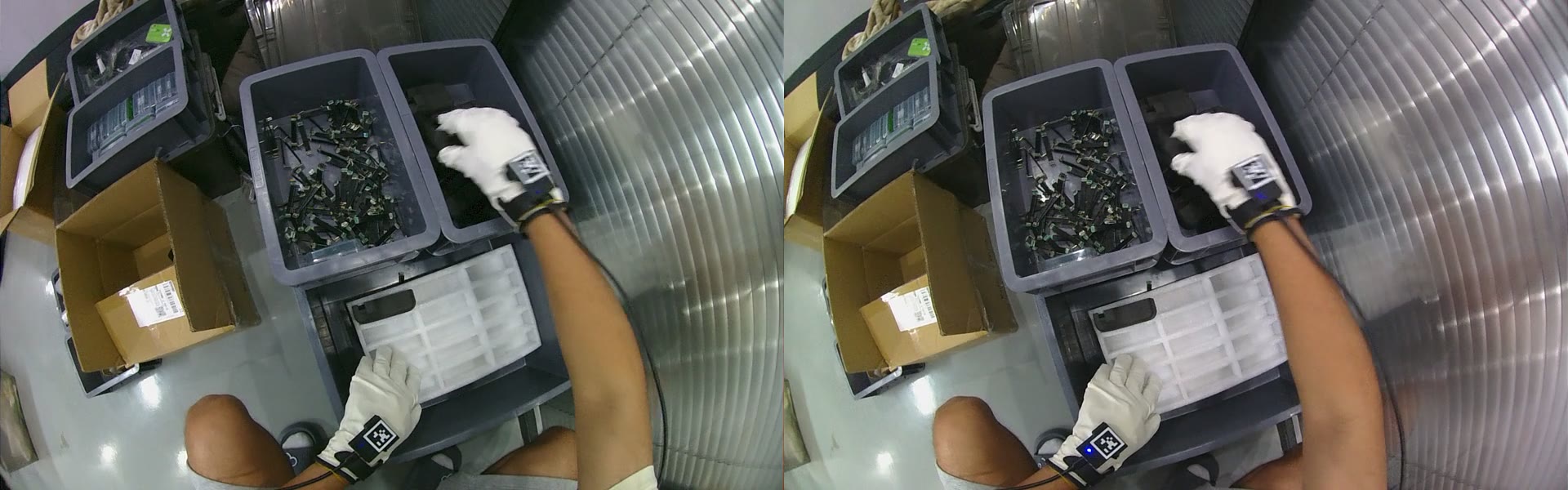
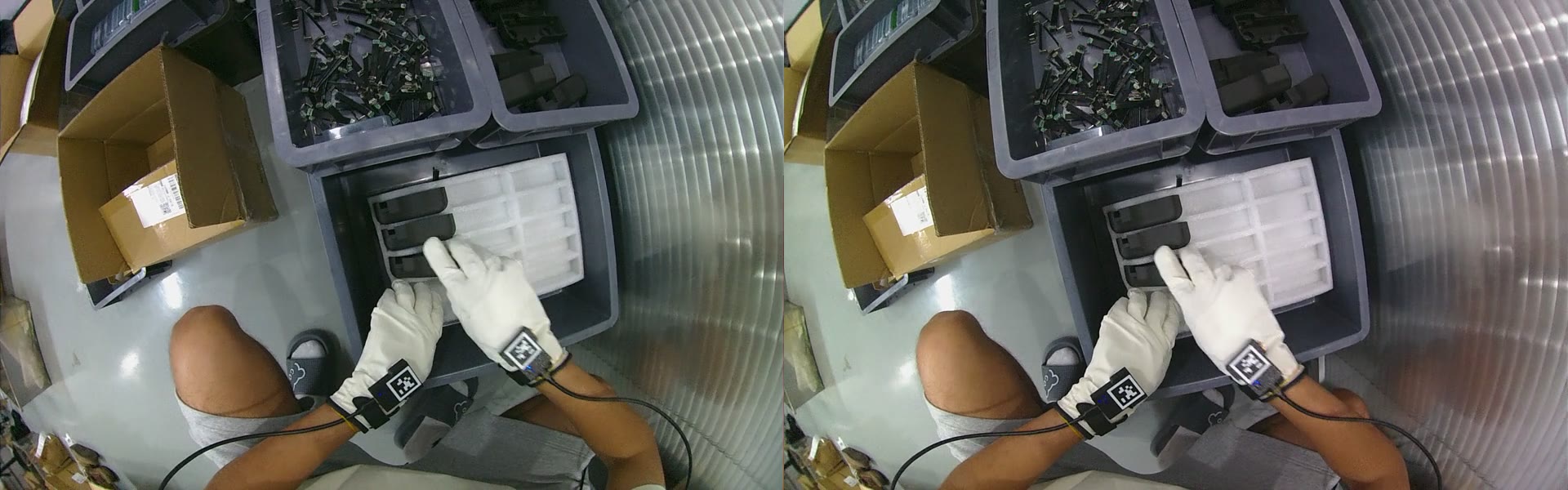
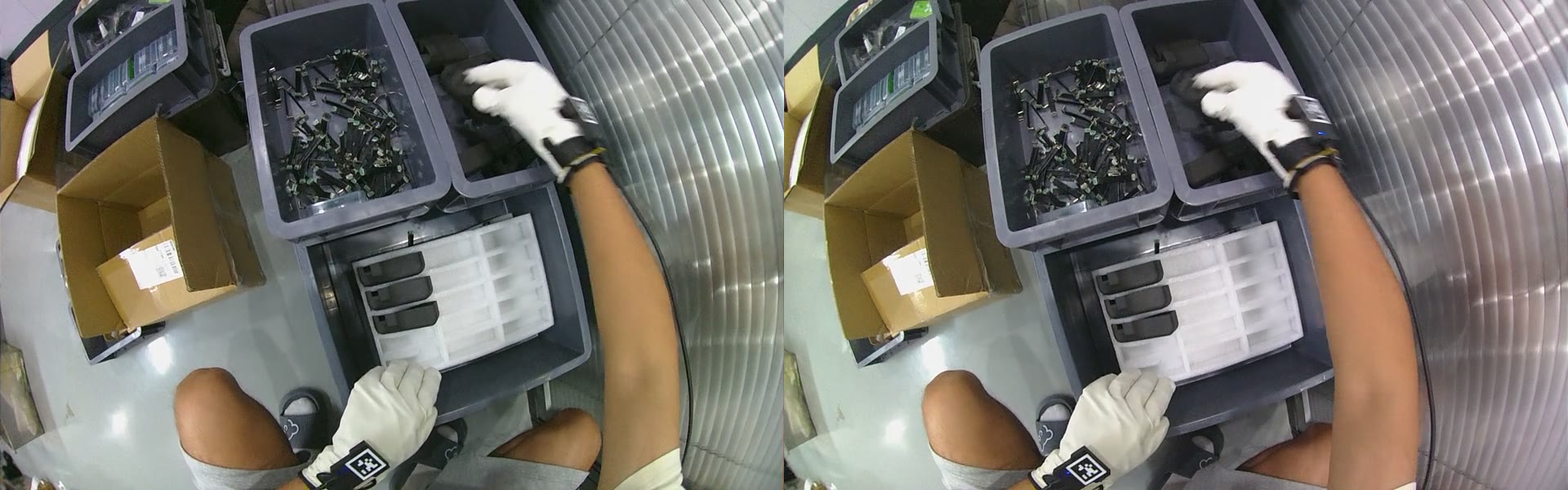
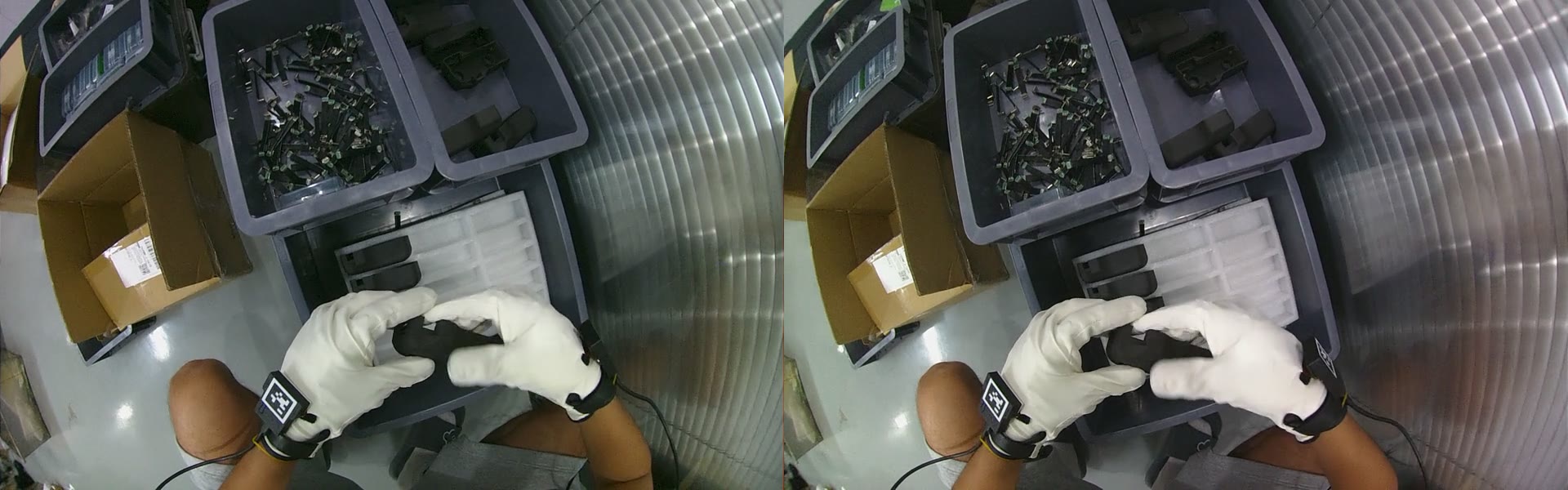
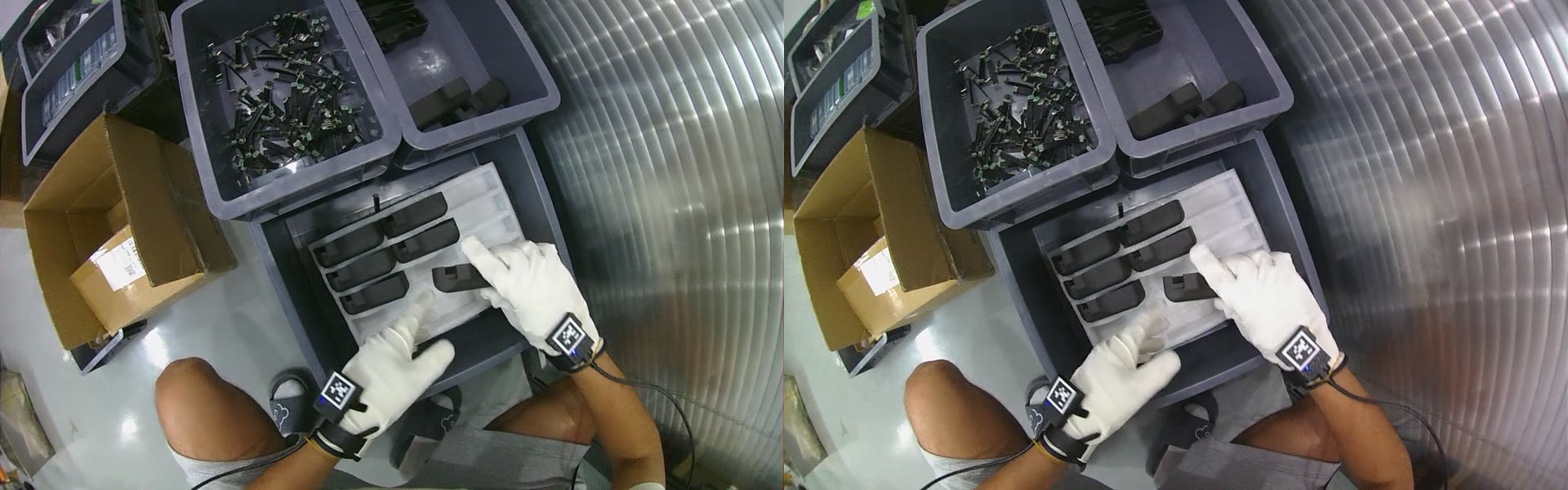
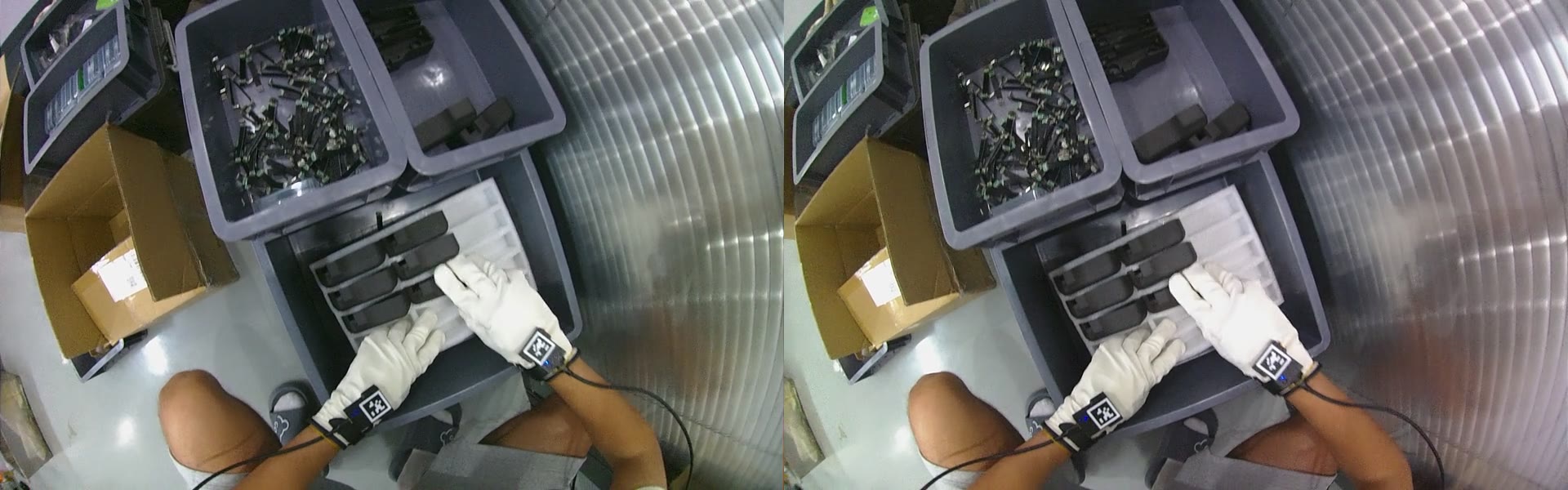
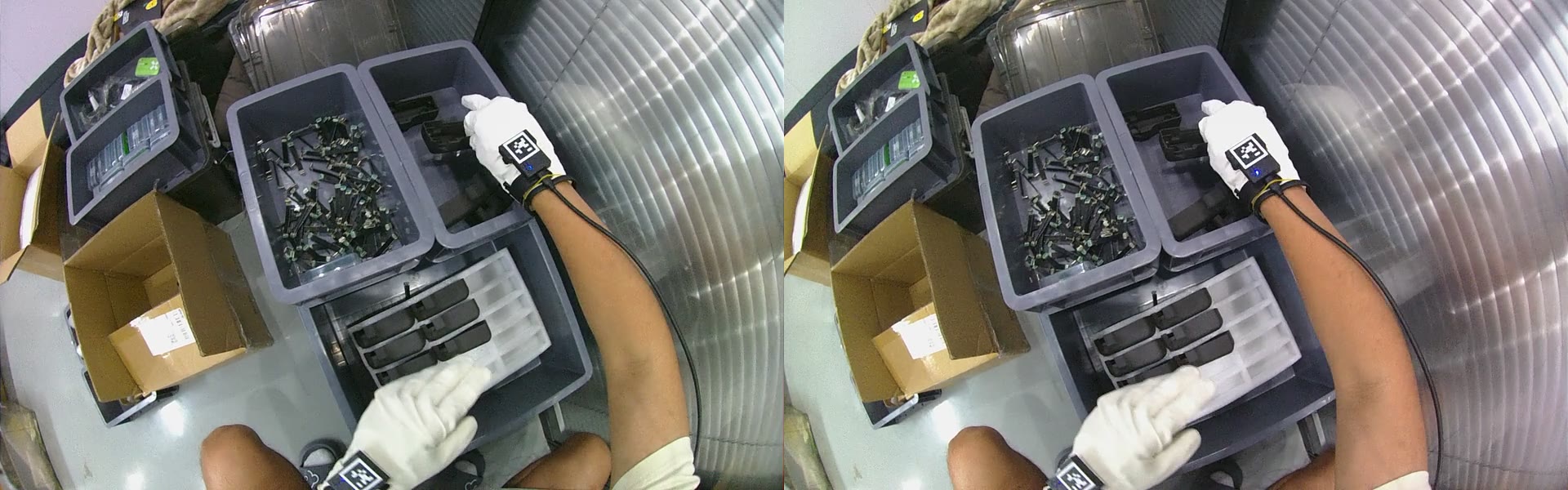
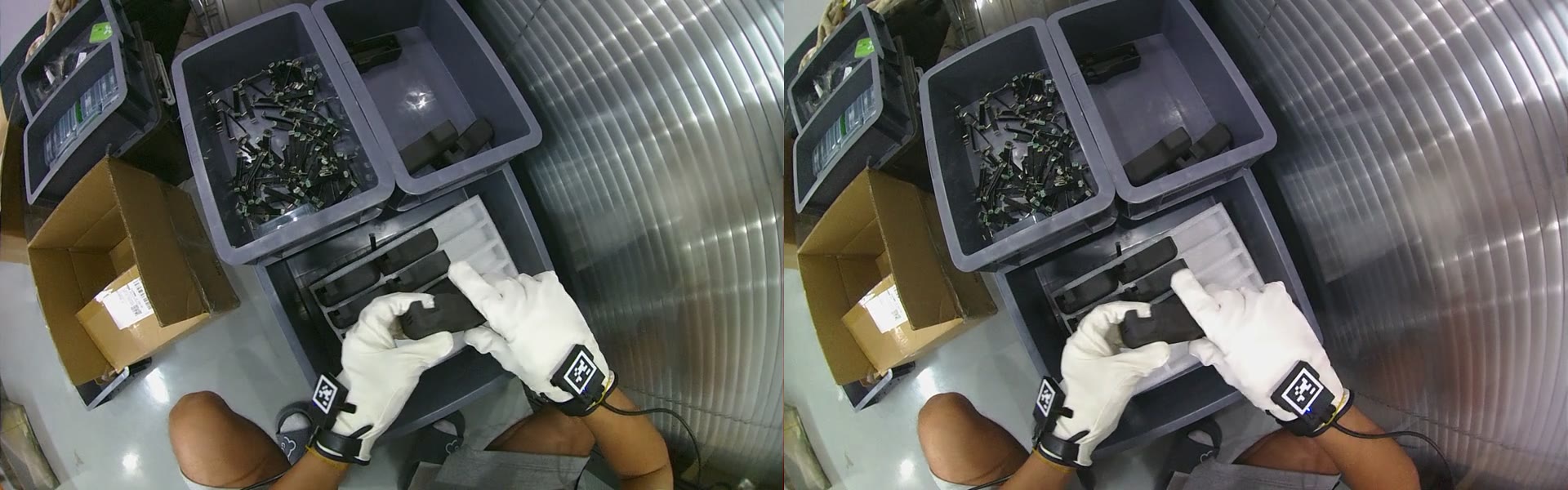
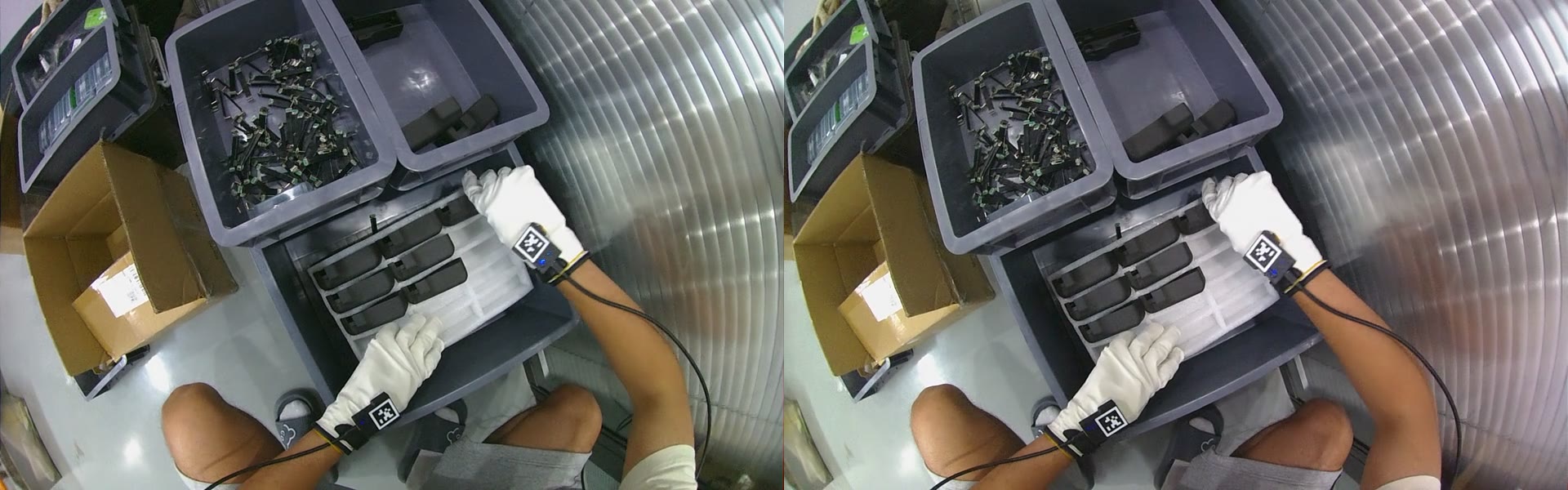
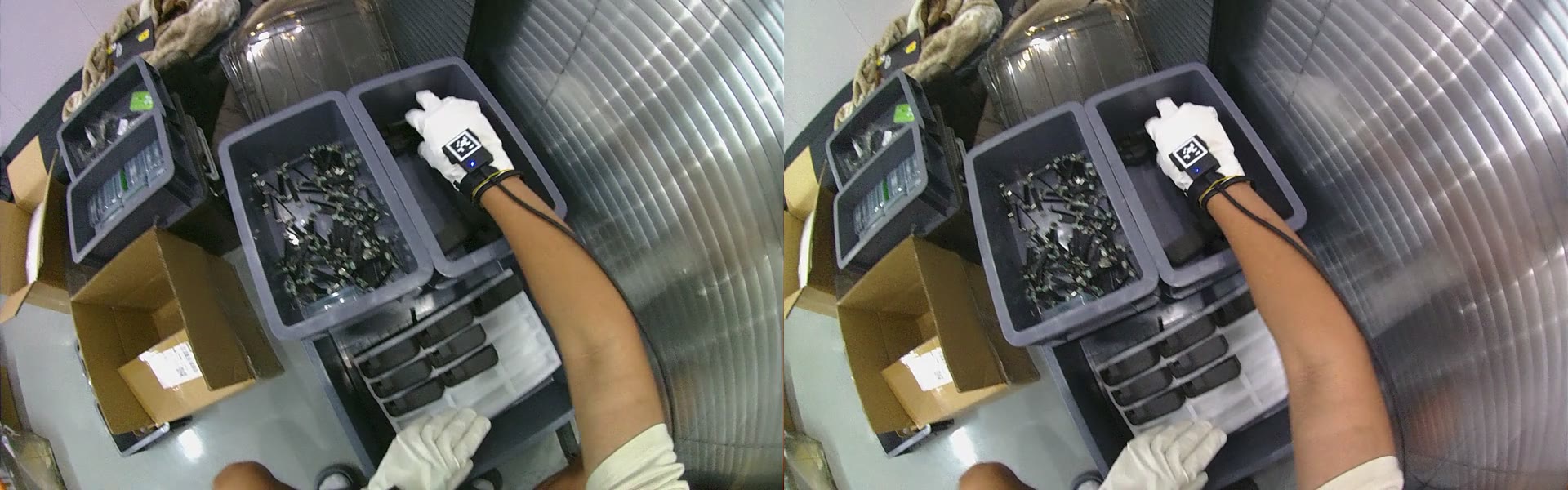
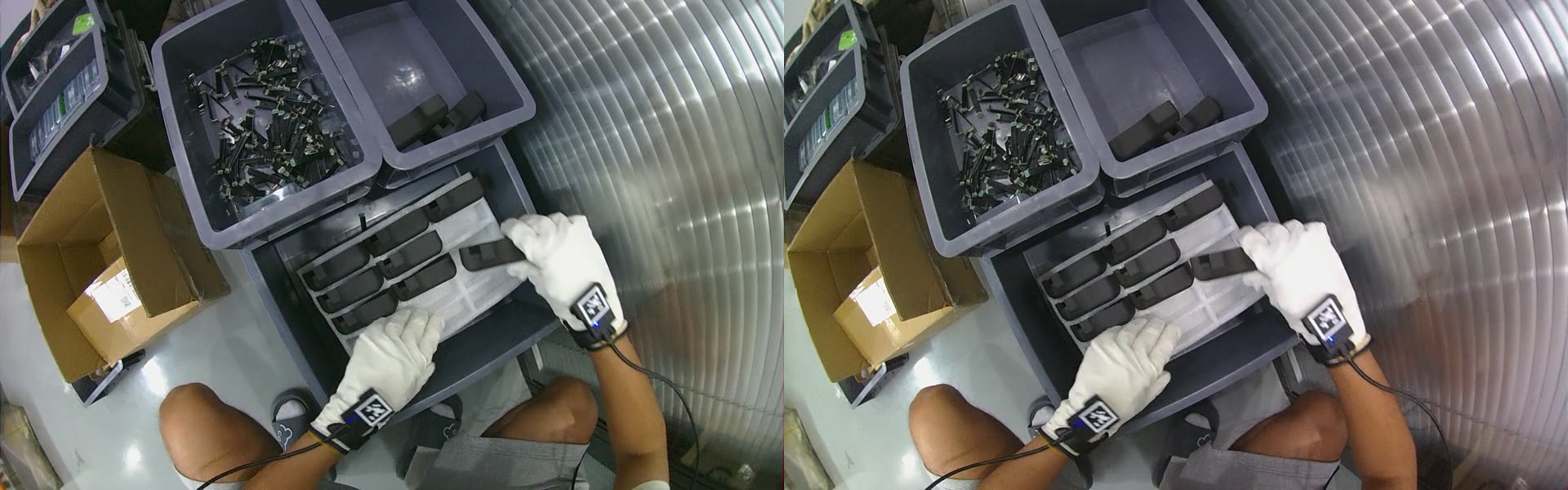
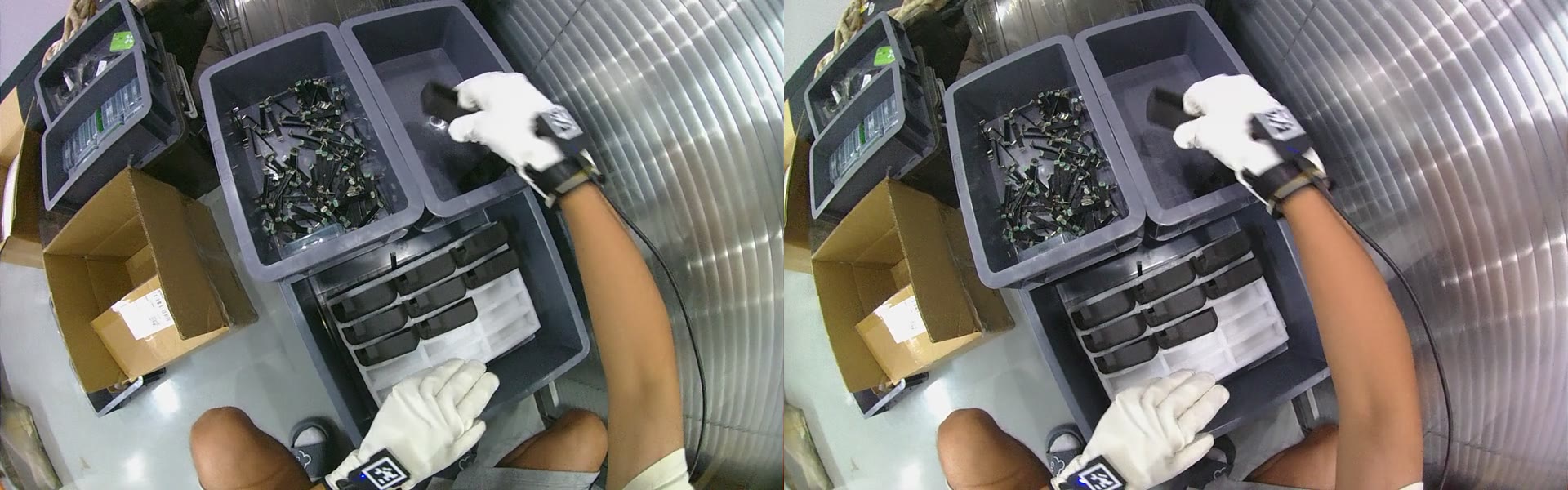
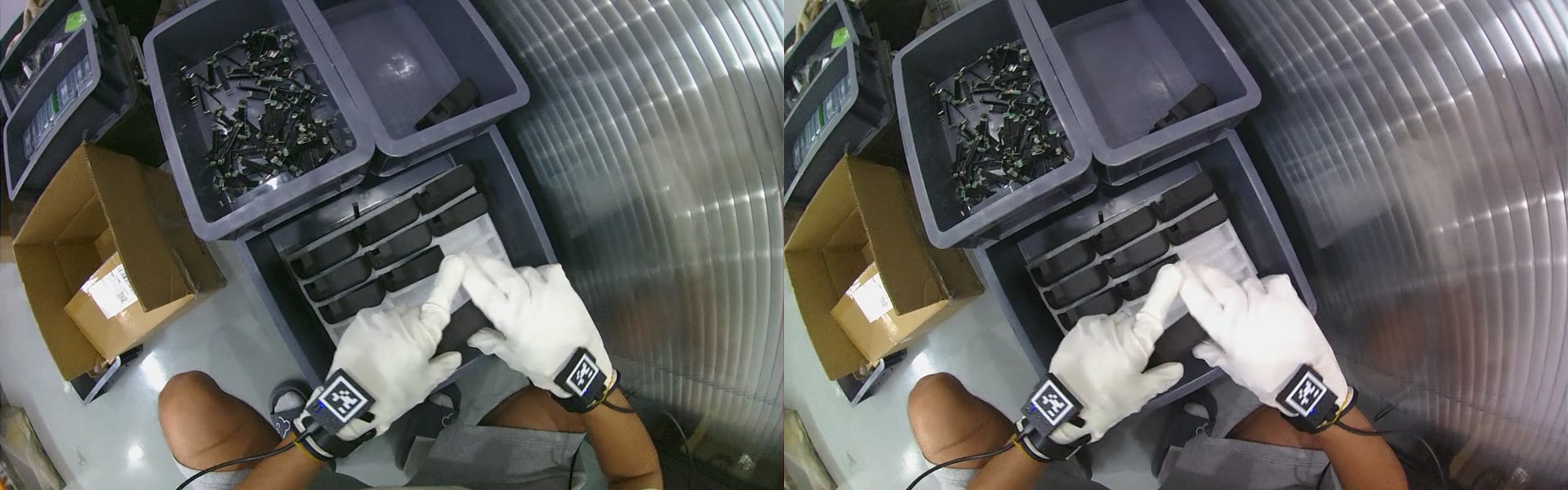
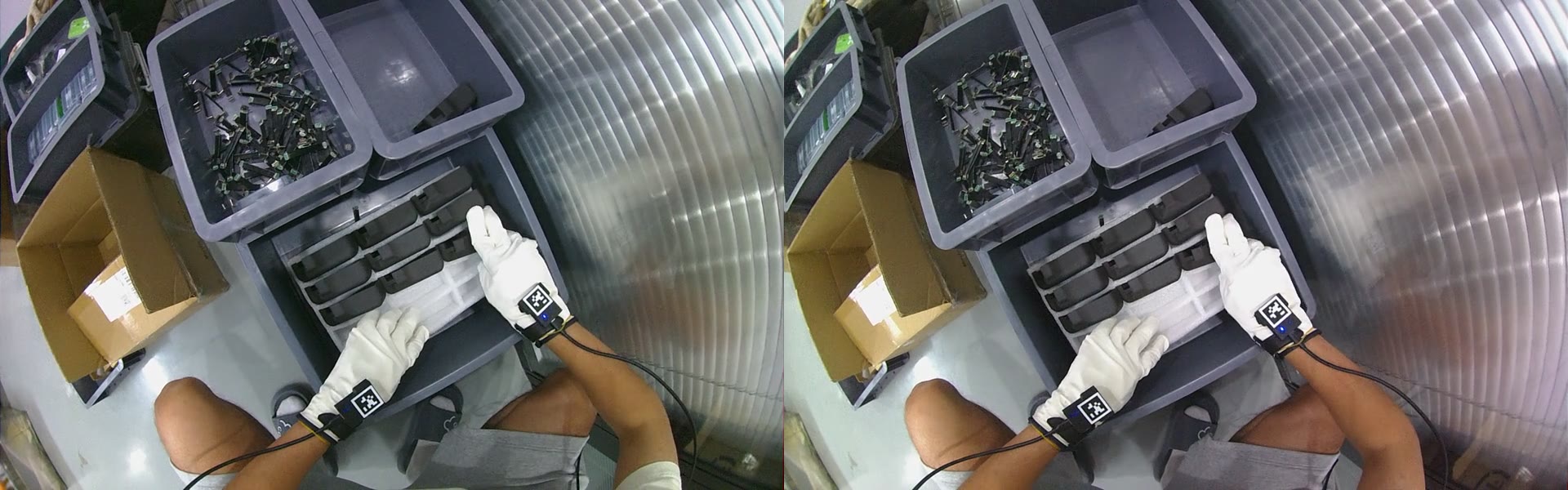
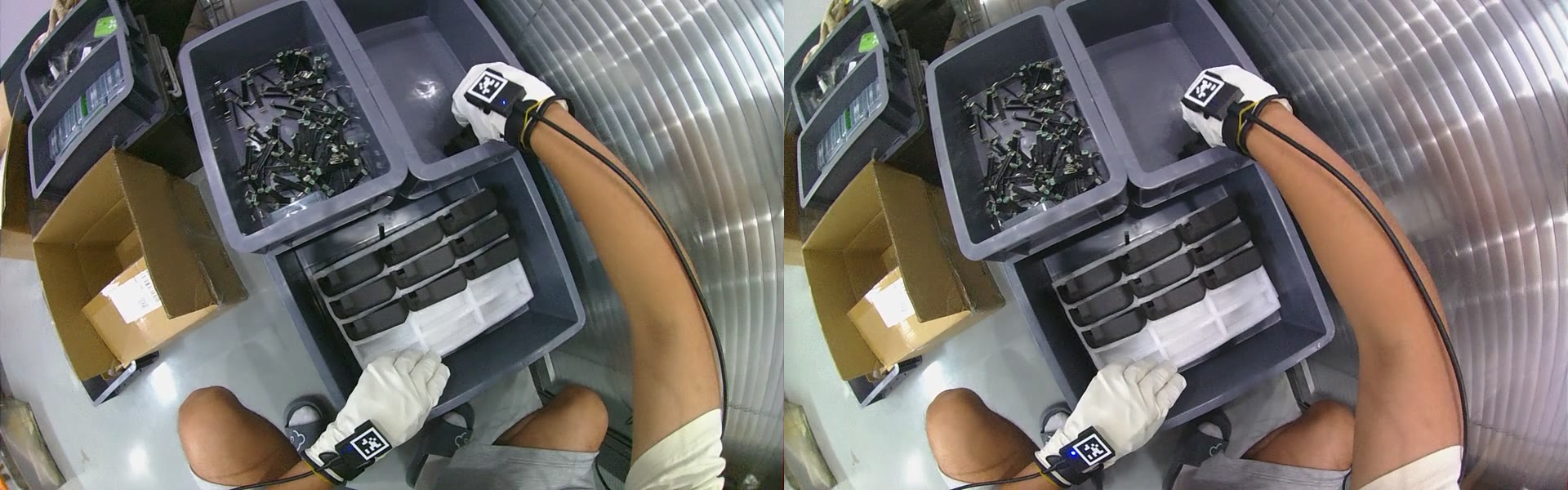
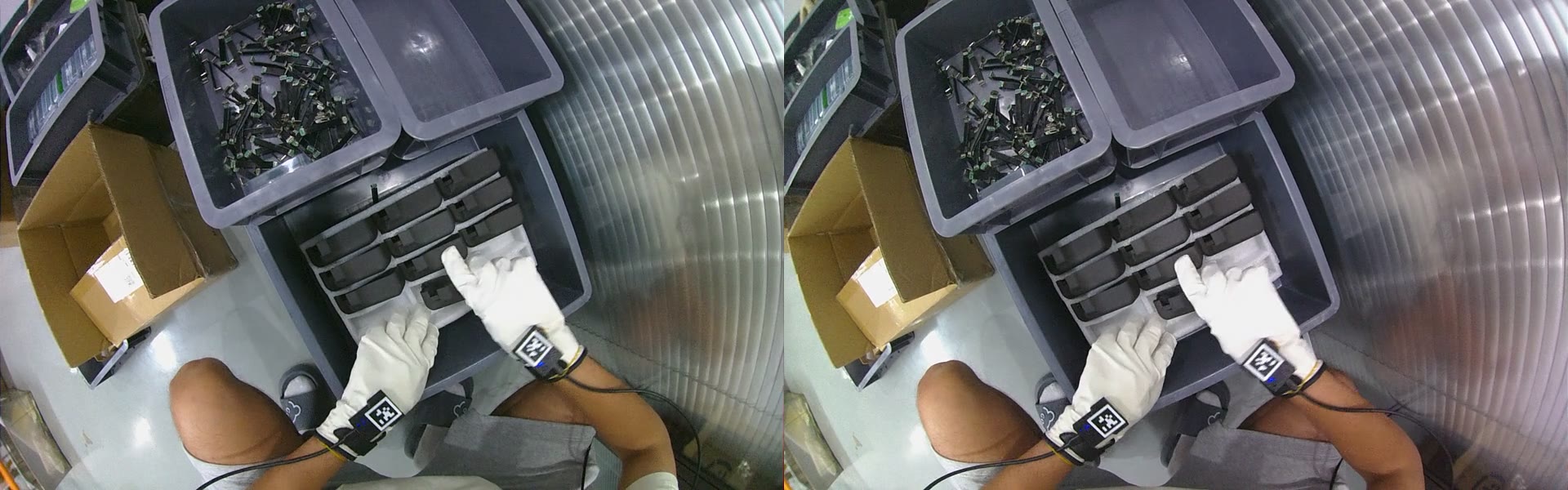
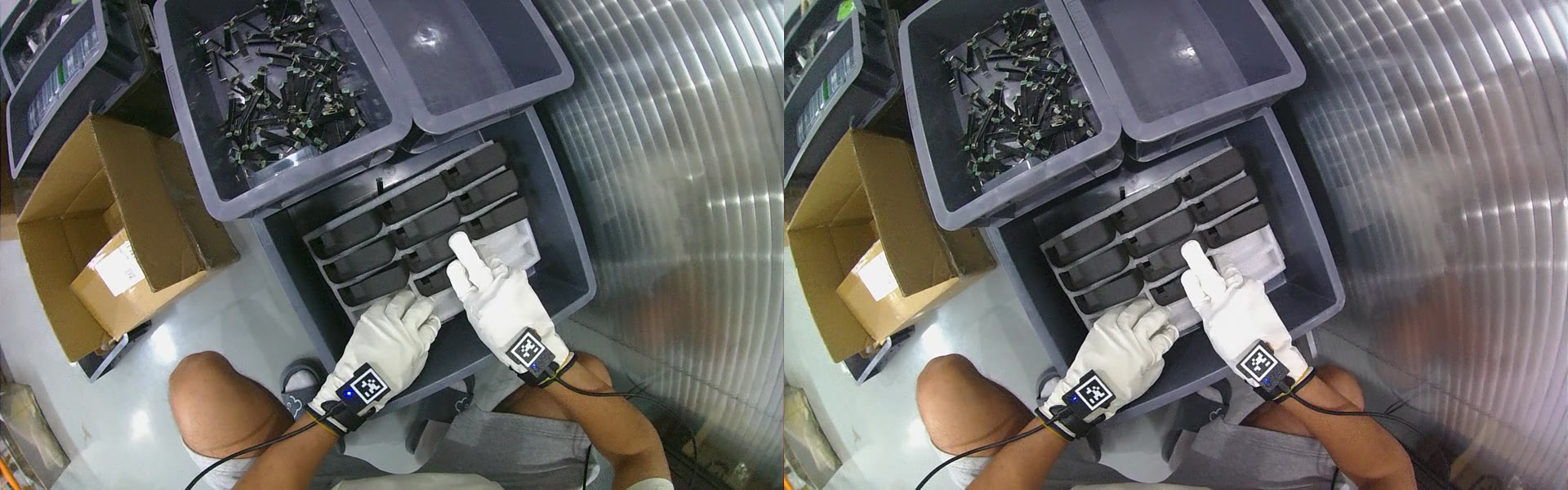
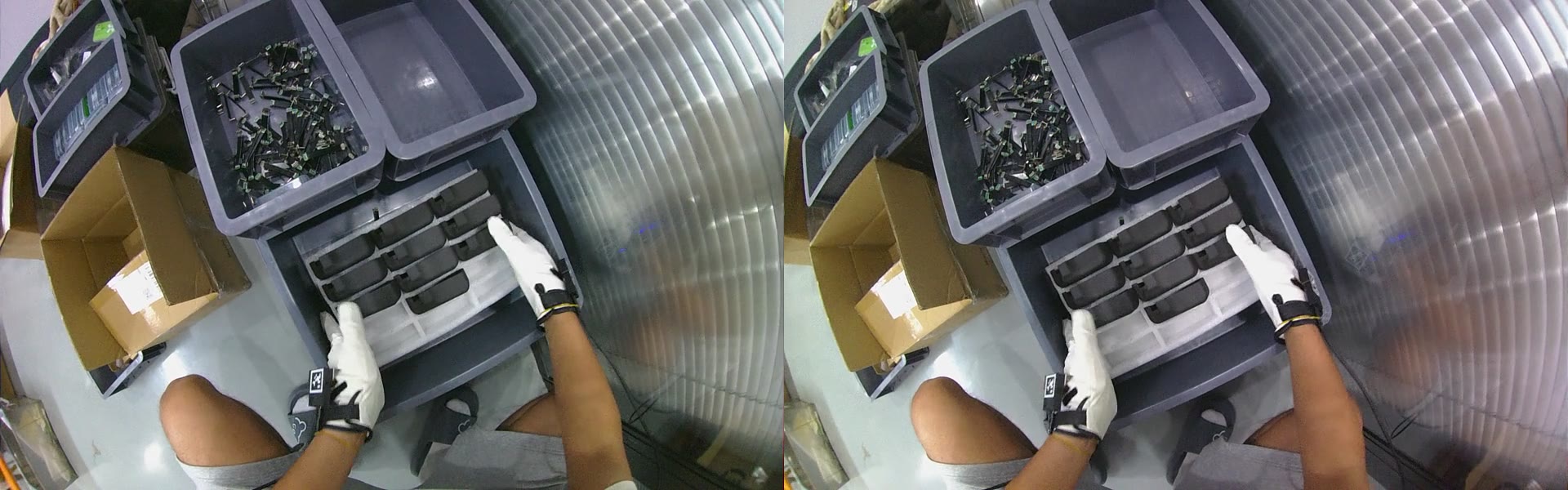
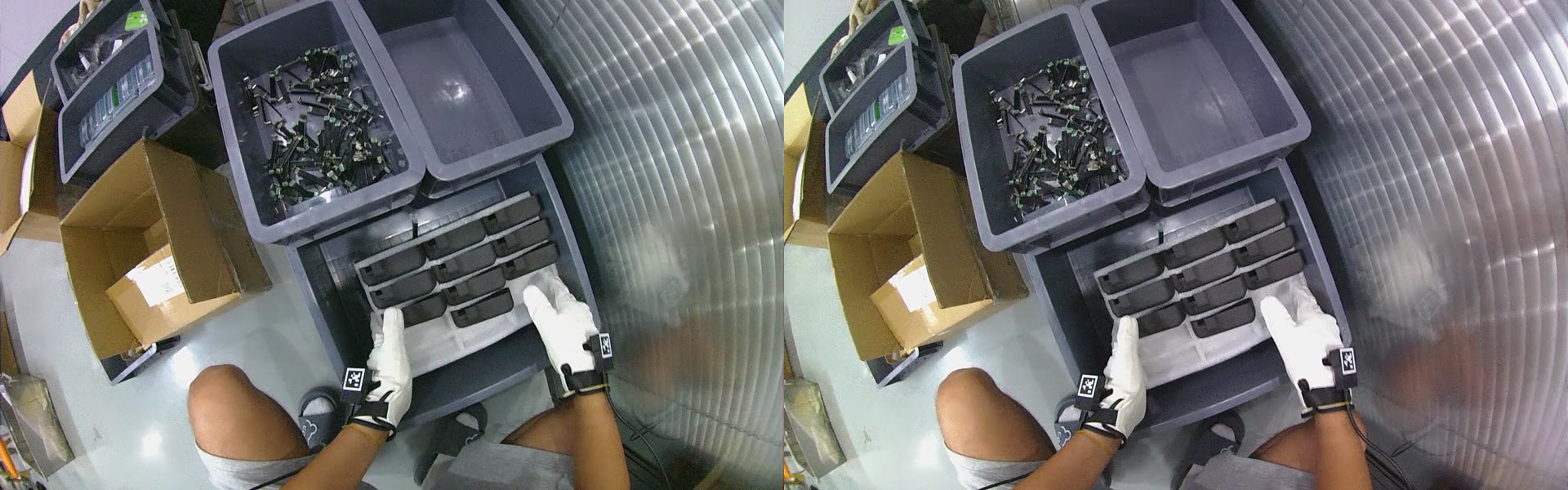
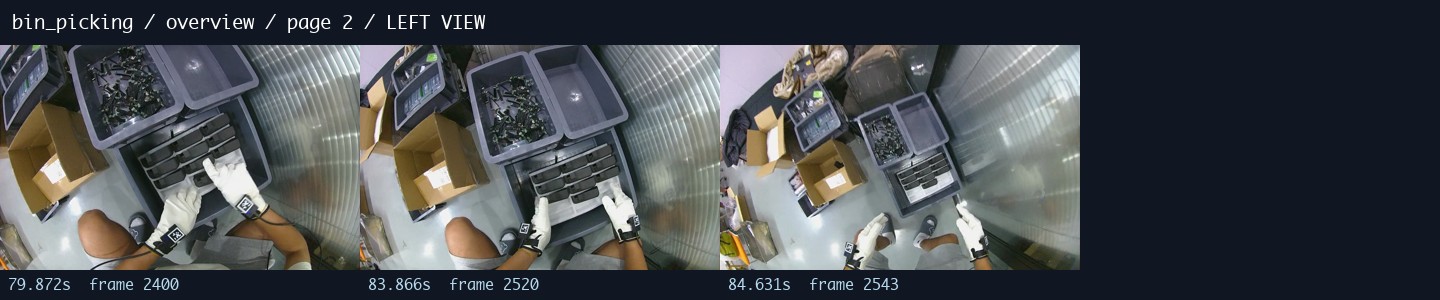
Transfer green rectangular modules from a loose-parts bin into a divided tray, move the loaded tray, then fill another tray with black housings.
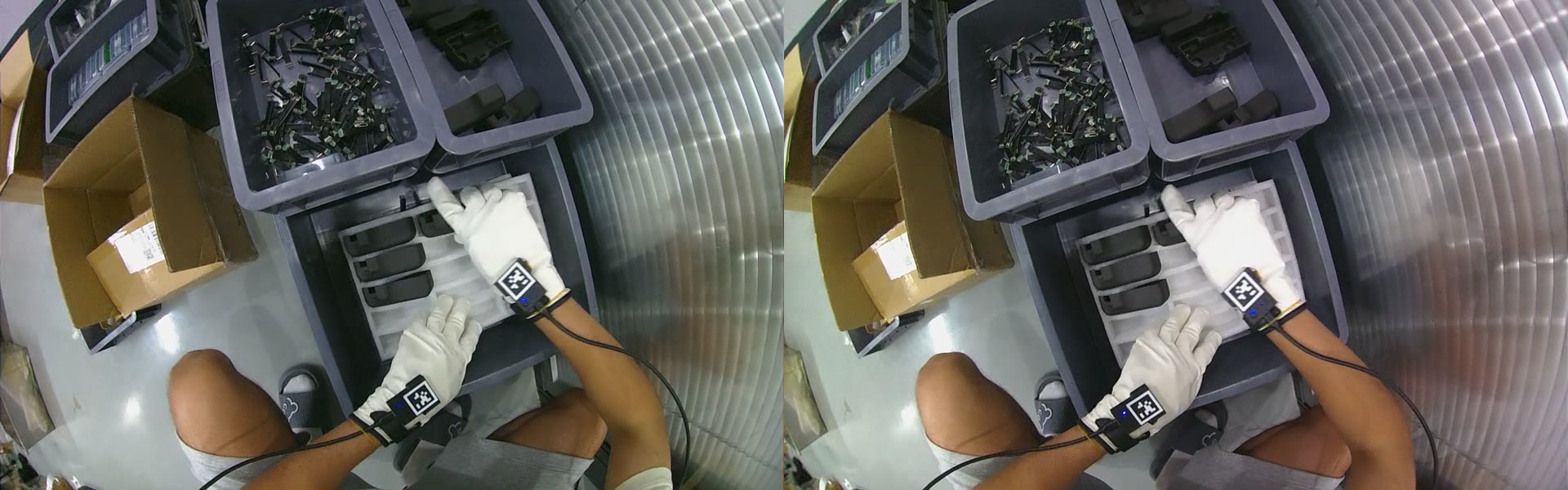
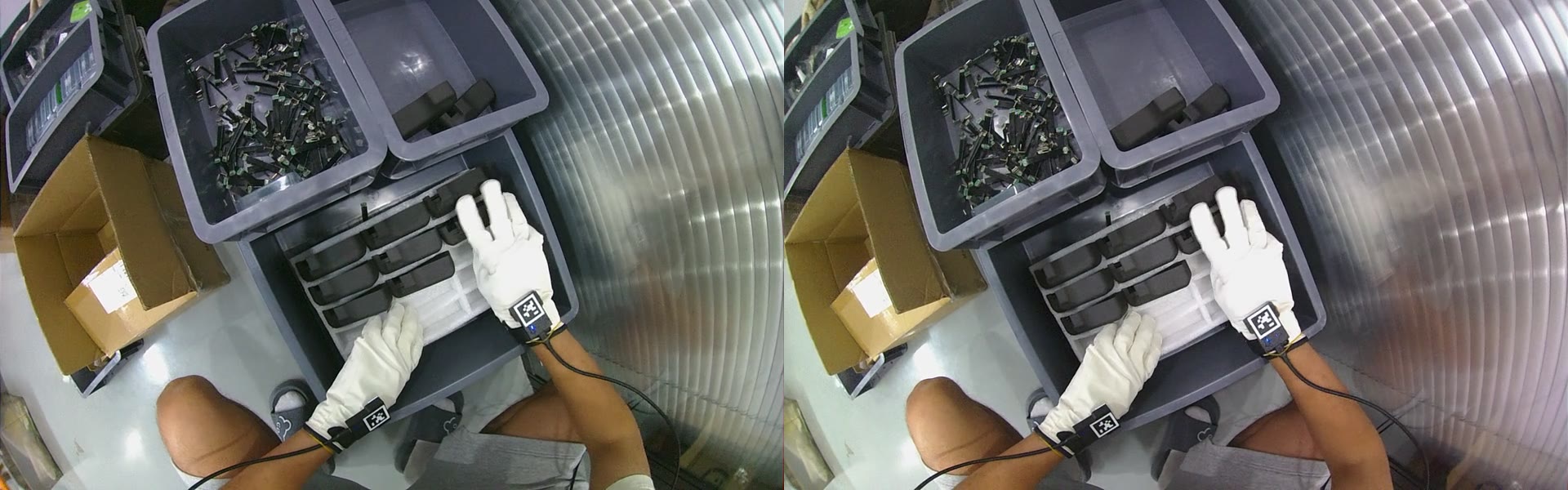
Visible outcome: A tray holds rows of black housings; the source housing bin appears empty at the end. Green modules were arranged in an earlier tray.
Original paired views. Contact sheets below use the left view. Duration 84.664s.
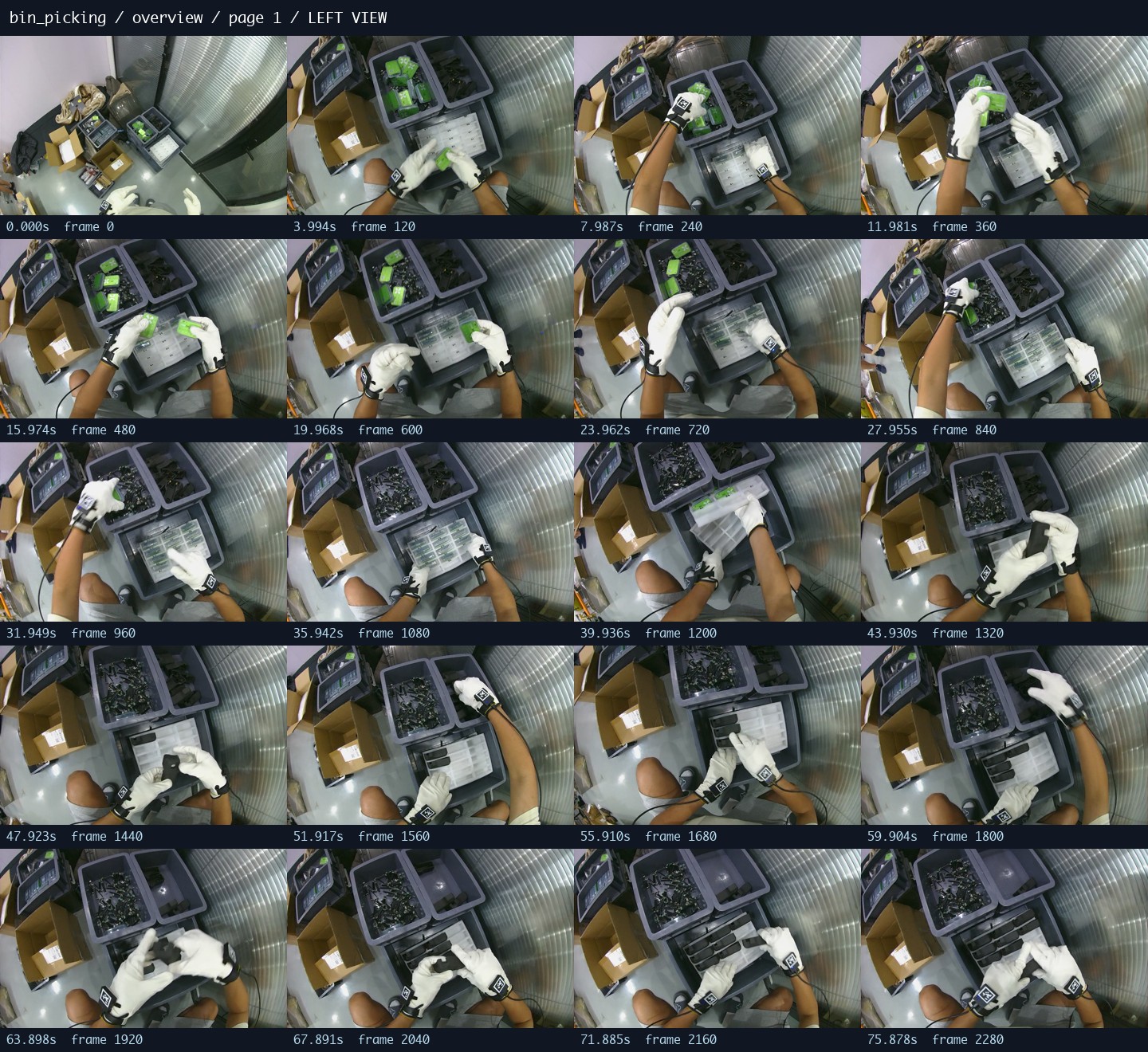
| Seconds | Step | Evidence |
|---|---|---|
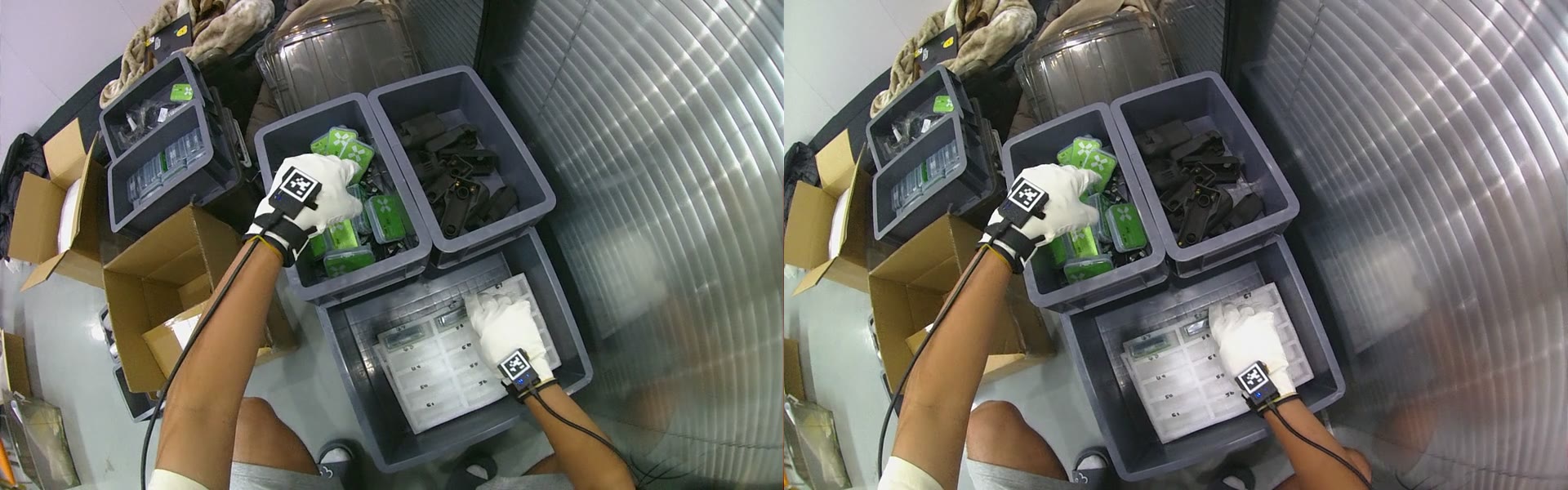
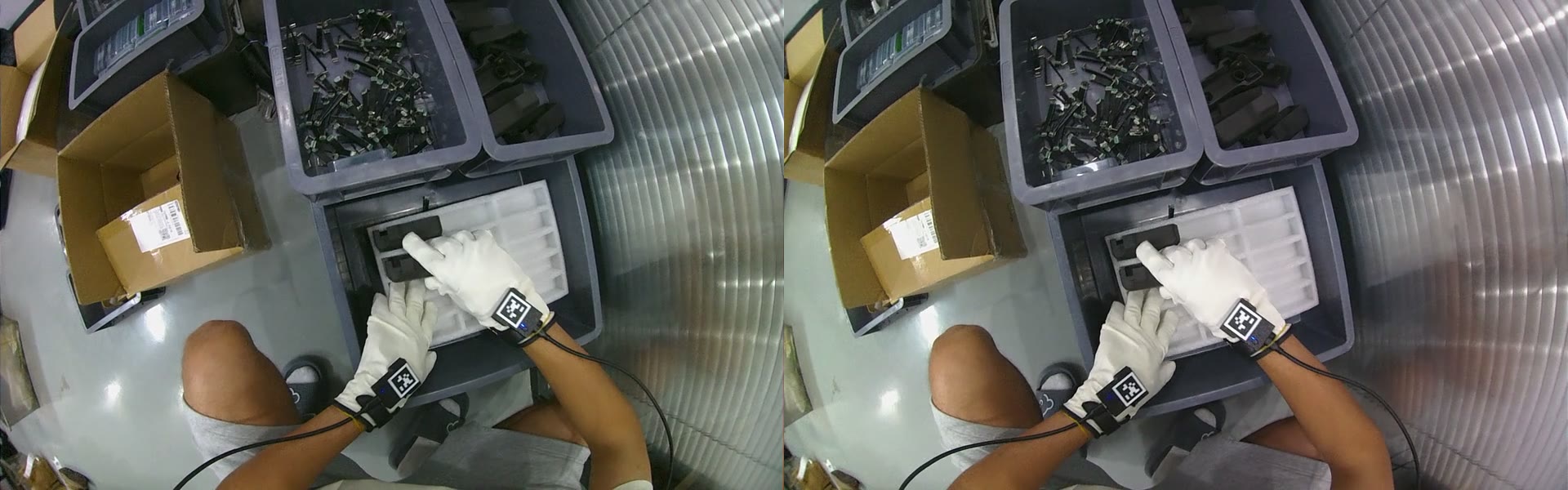
| 0.00–2.50 | Approach stacked bins | View moves closer and tilts down to the parts bins. |
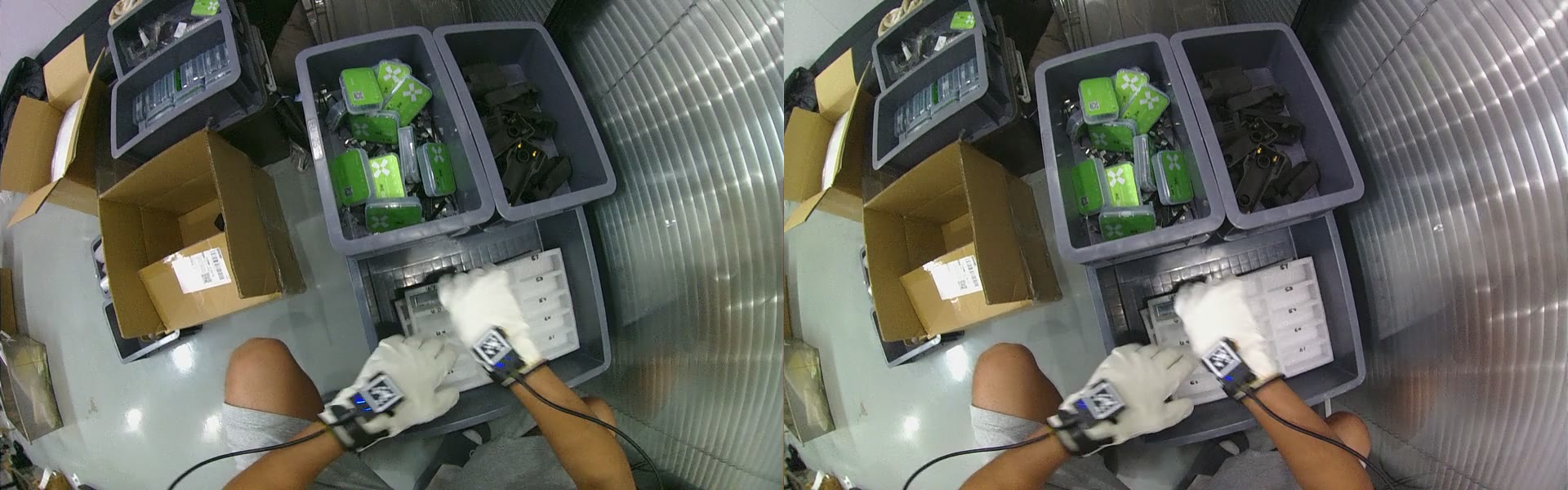
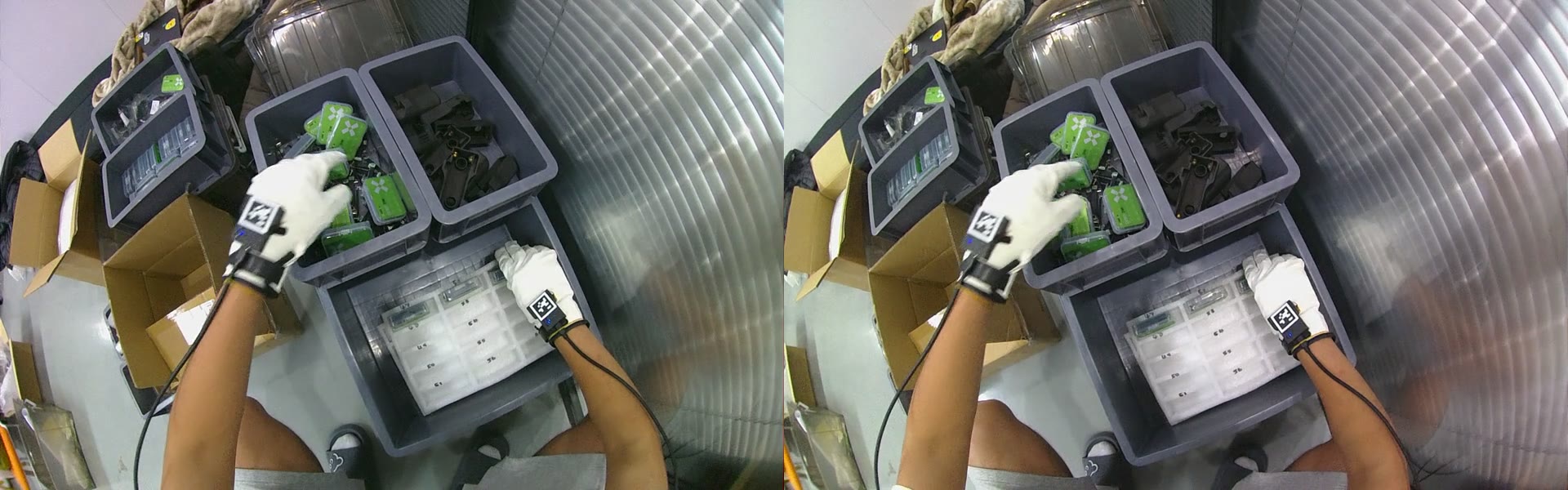
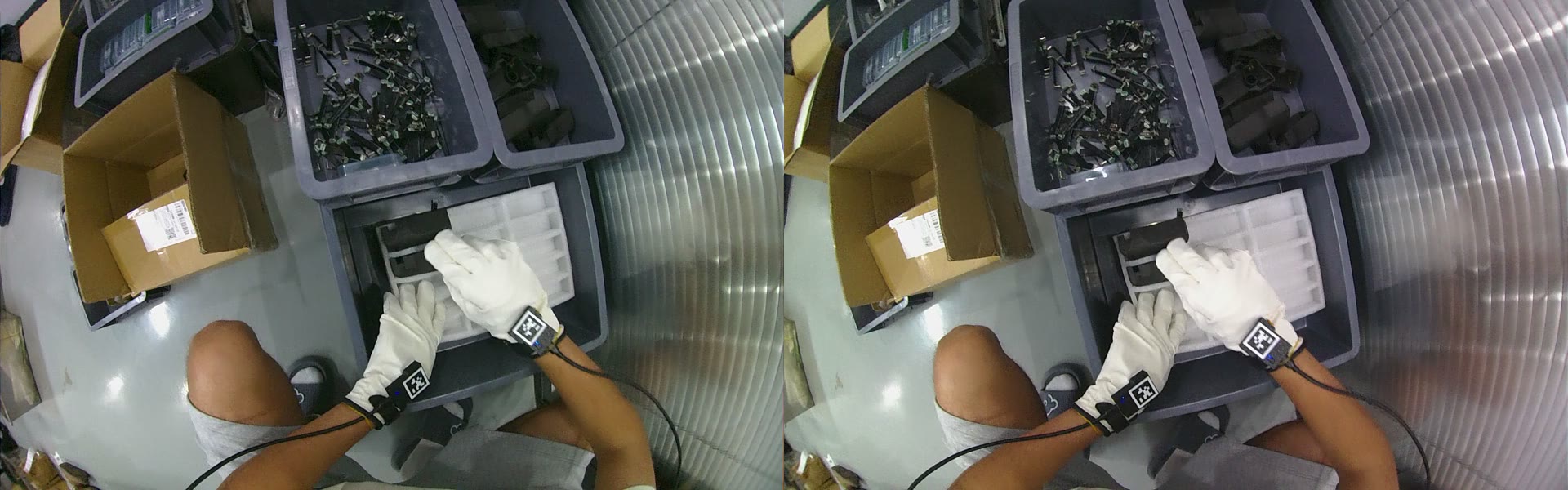
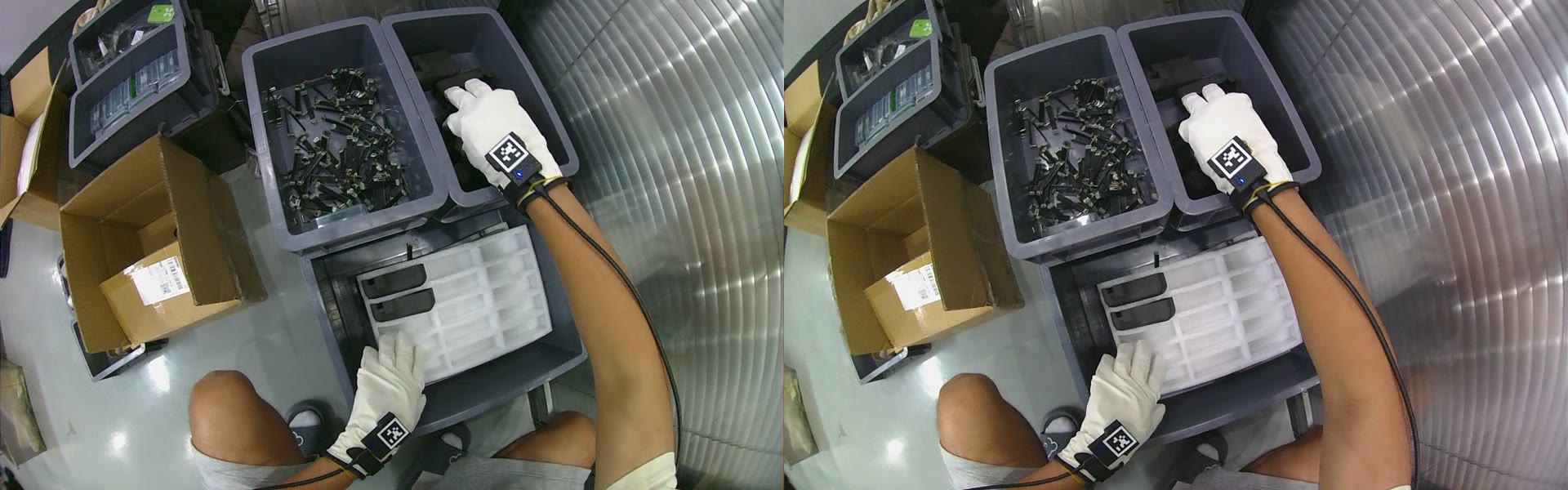
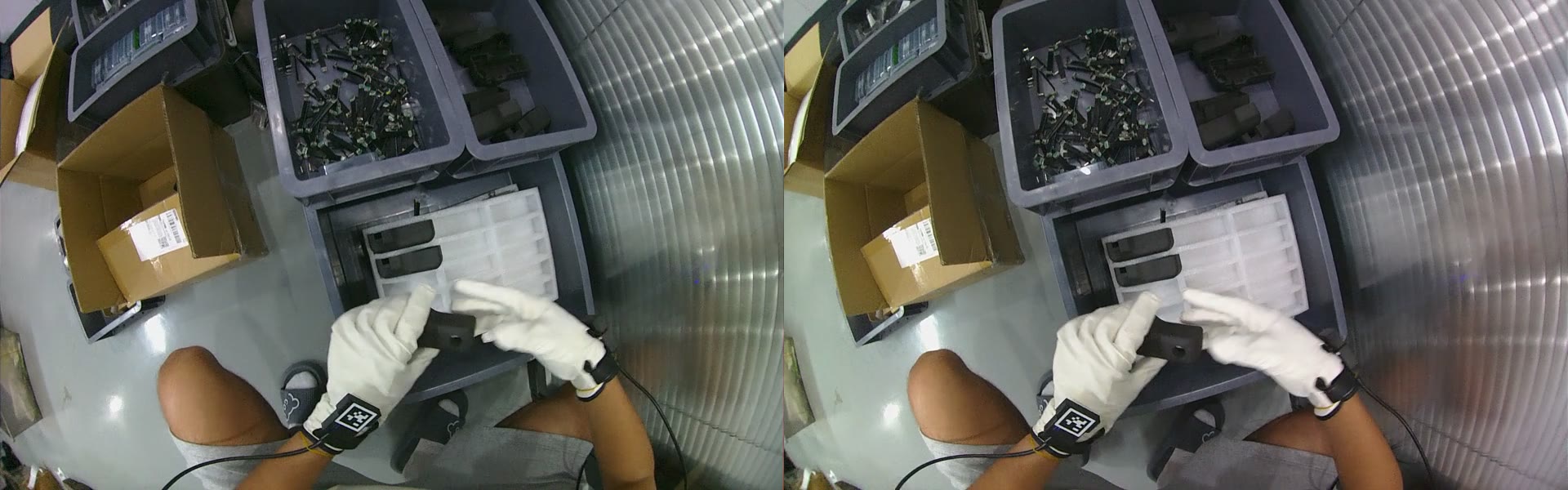
| 2.50–34.50 | Transfer green modules into divided tray | Left repeatedly retrieves green parts; both hands orient them and right places them in the lower tray. |
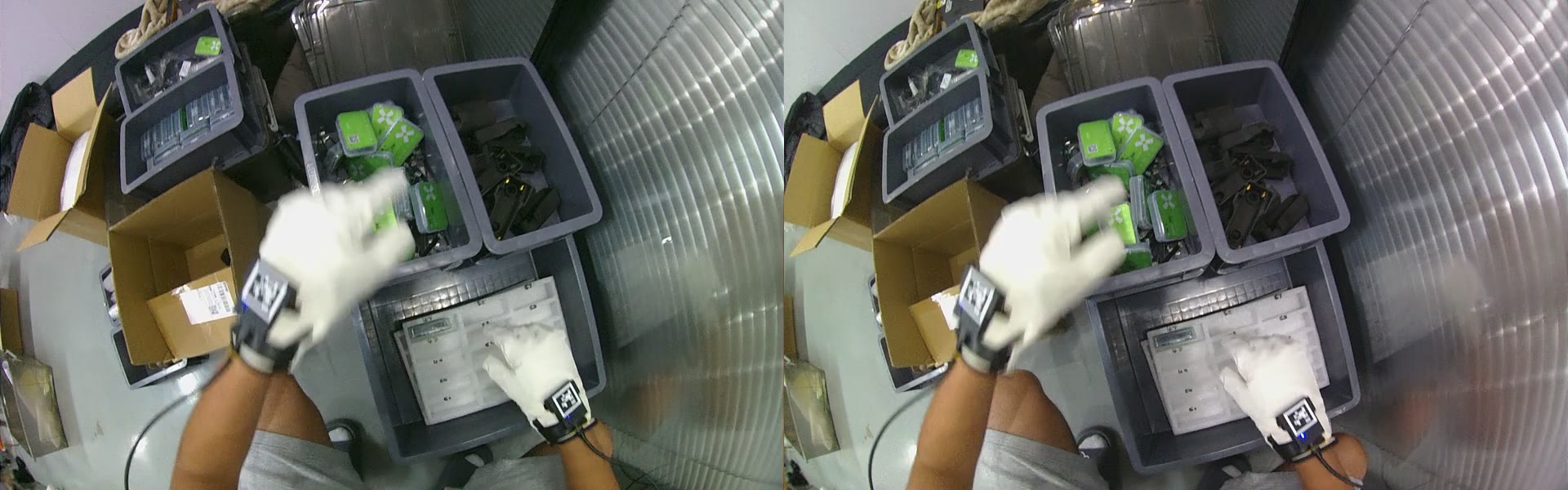
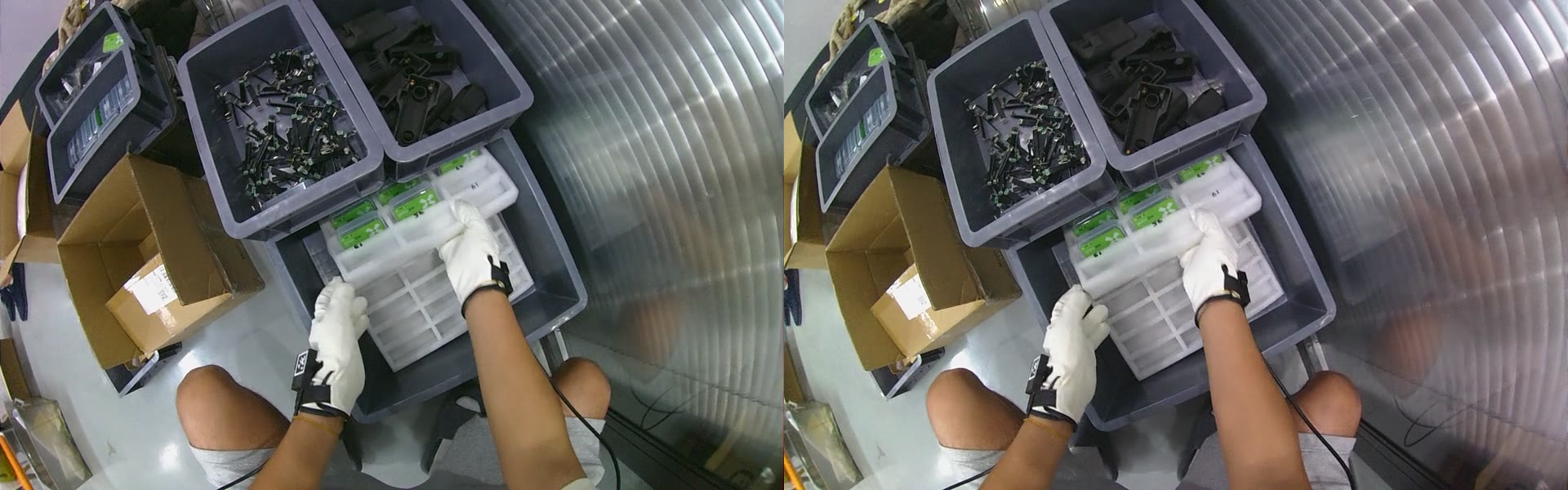
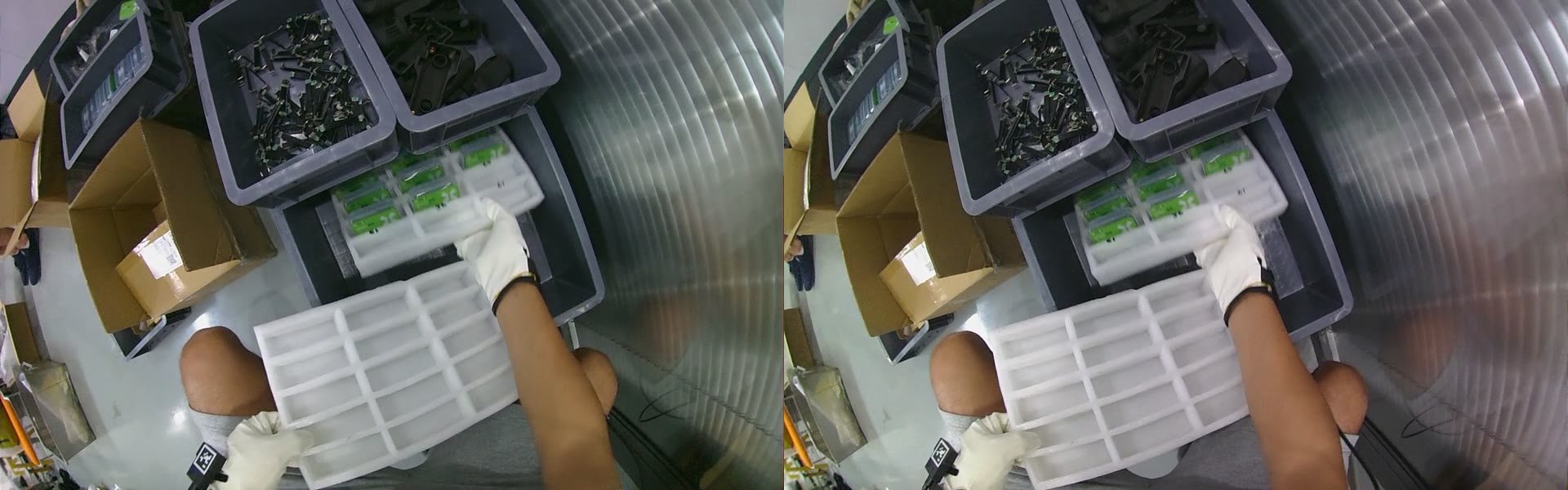
| 34.50–42.50 | Rearrange trays | Loaded green tray is lifted/moved; an empty divided tray is positioned below. |
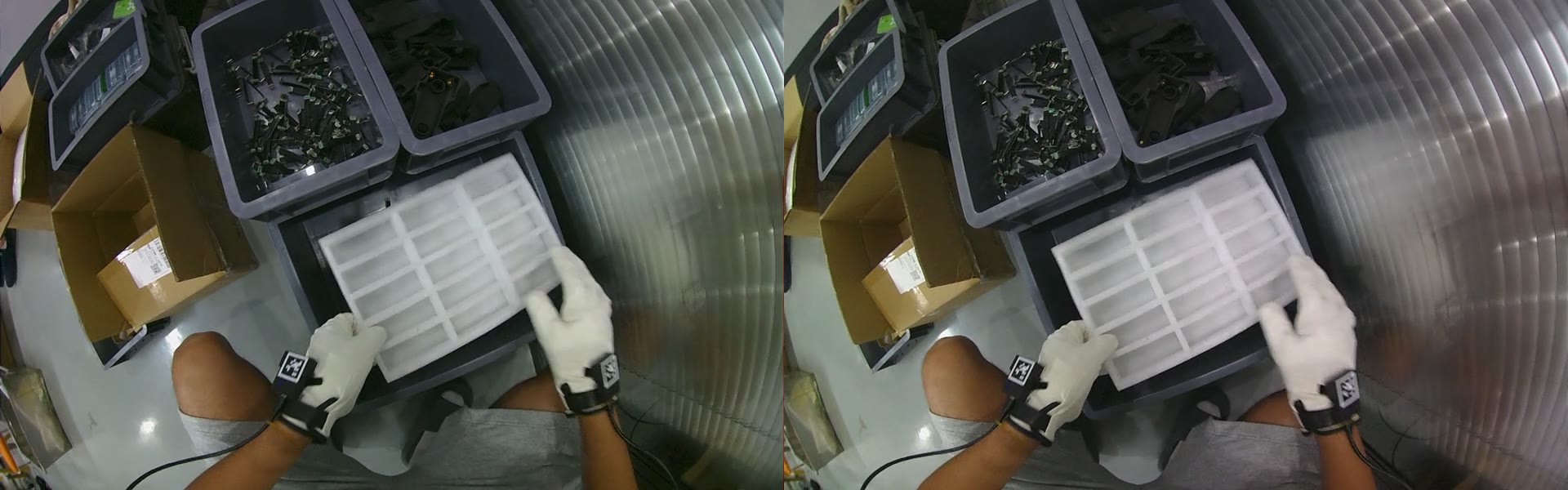
| 42.50–81.50 | Transfer black housings into divided tray | Right retrieves housings, hands orient them, and rows of black parts accumulate below. |
| 81.50–84.66 | Align loaded tray and step back | Hands adjust tray edges and the wearer moves away from bins. |
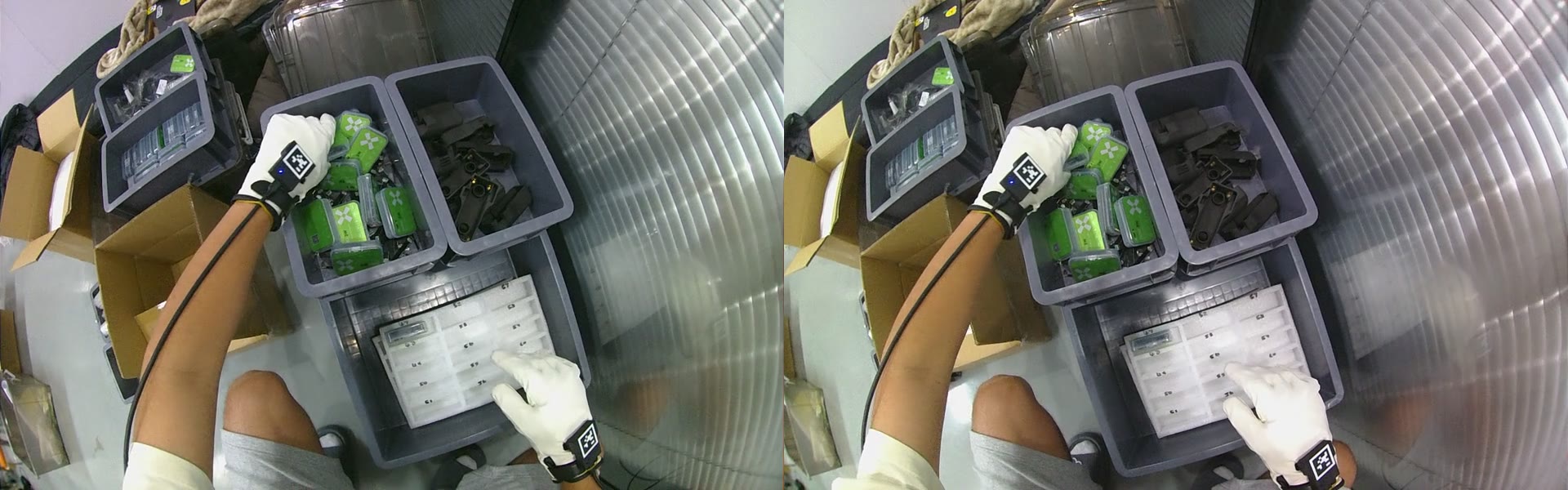
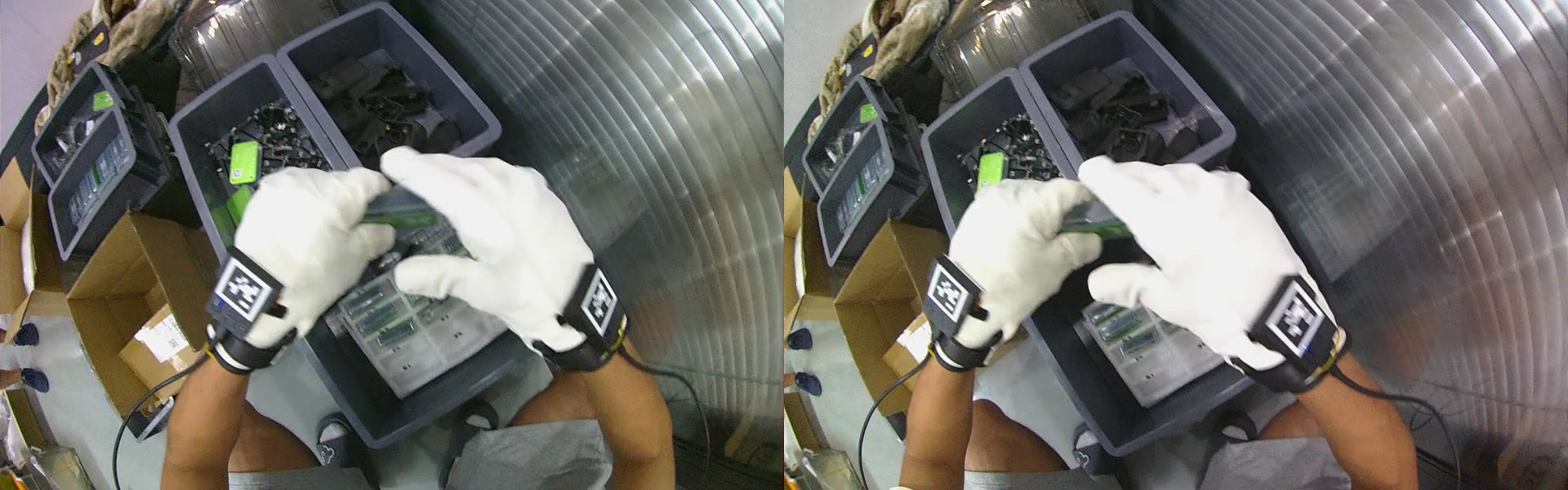
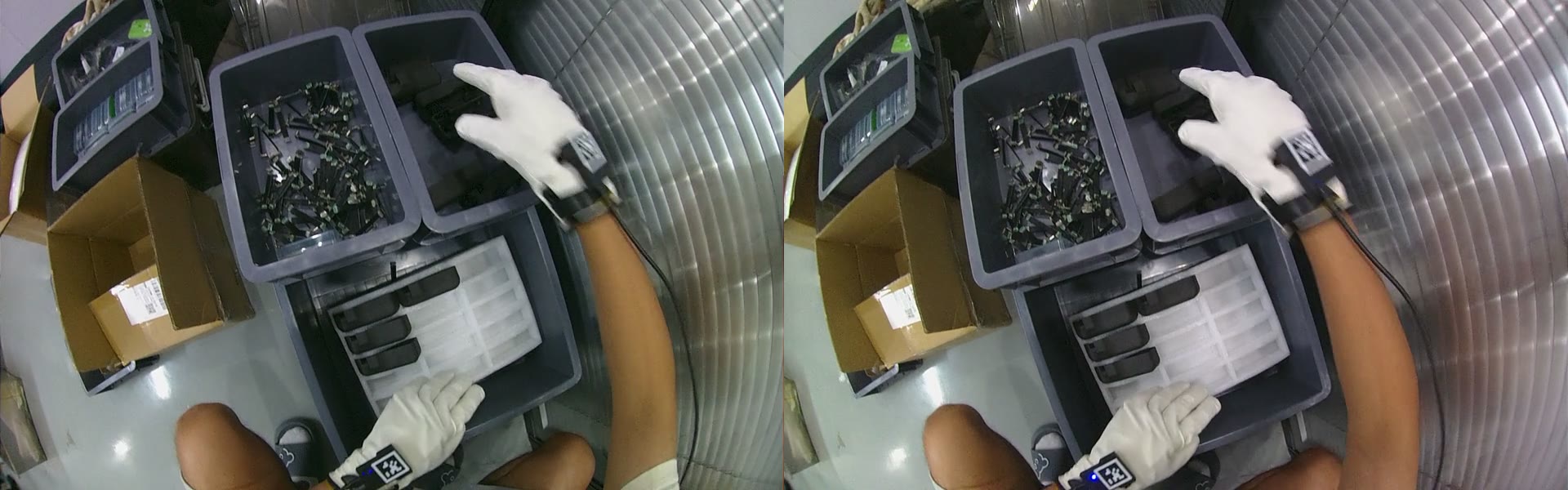
Wearer approaches bins; left hand extends toward green pieces.
Start estimate range: [0, 1]s. End estimate range: [1.5, 3.5]s.
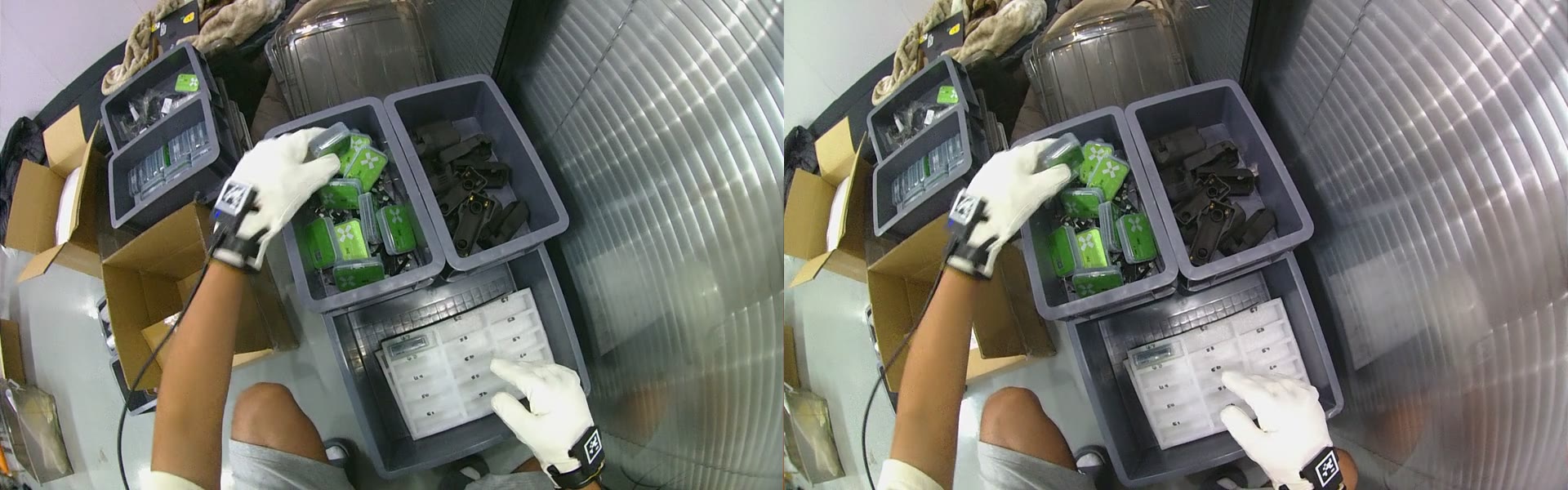
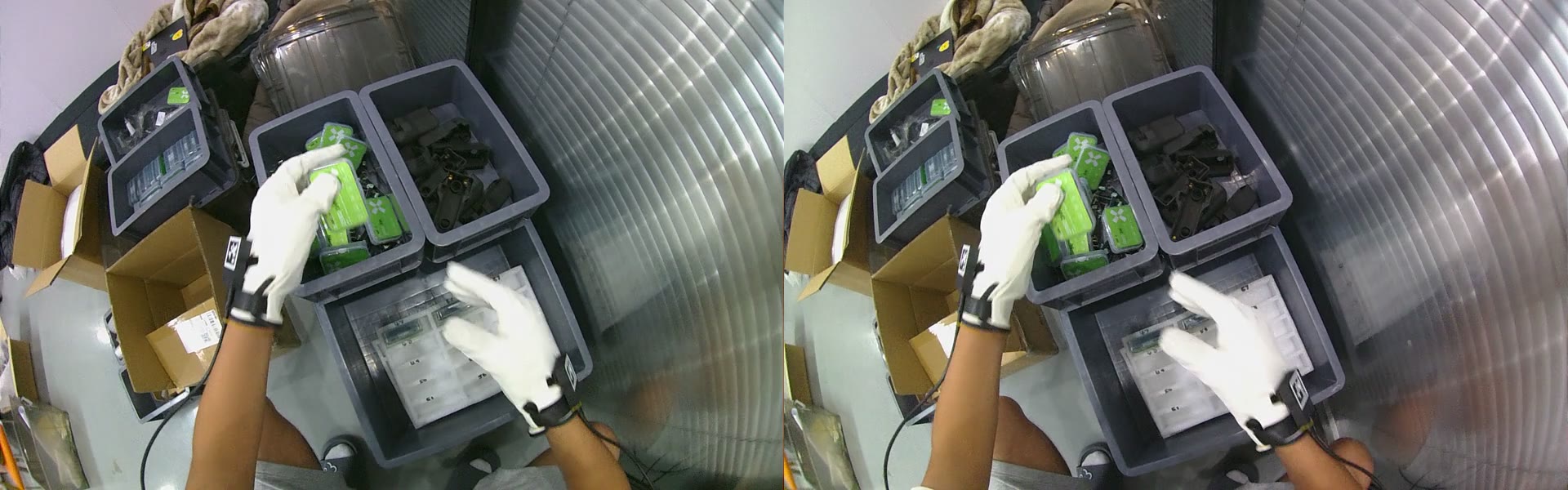
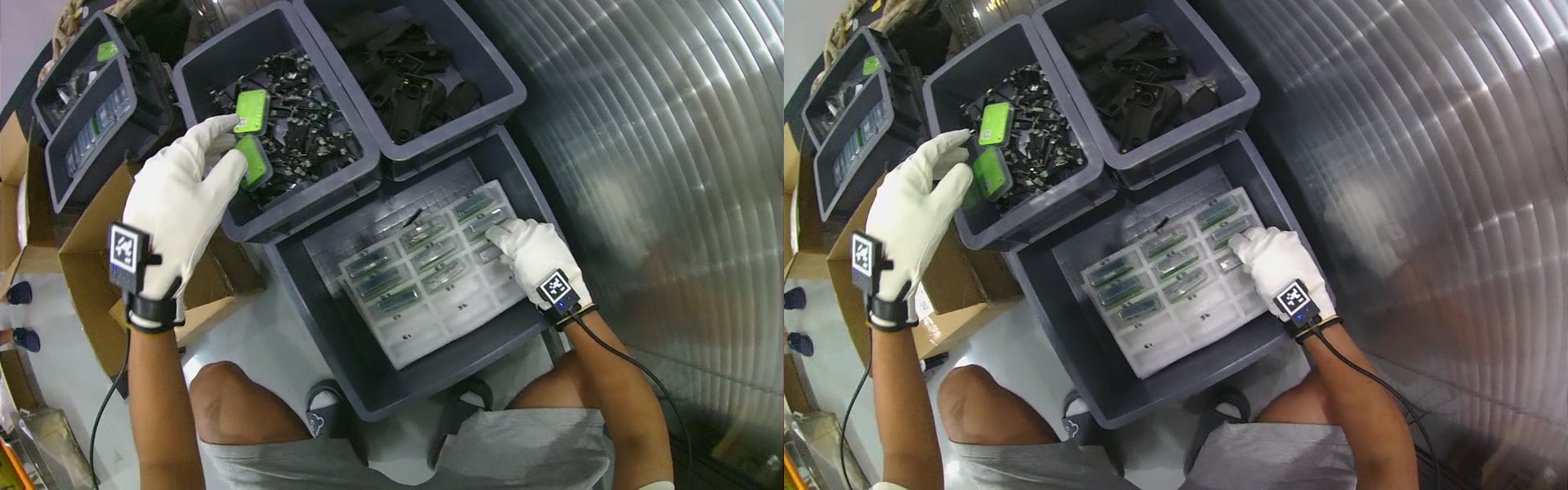
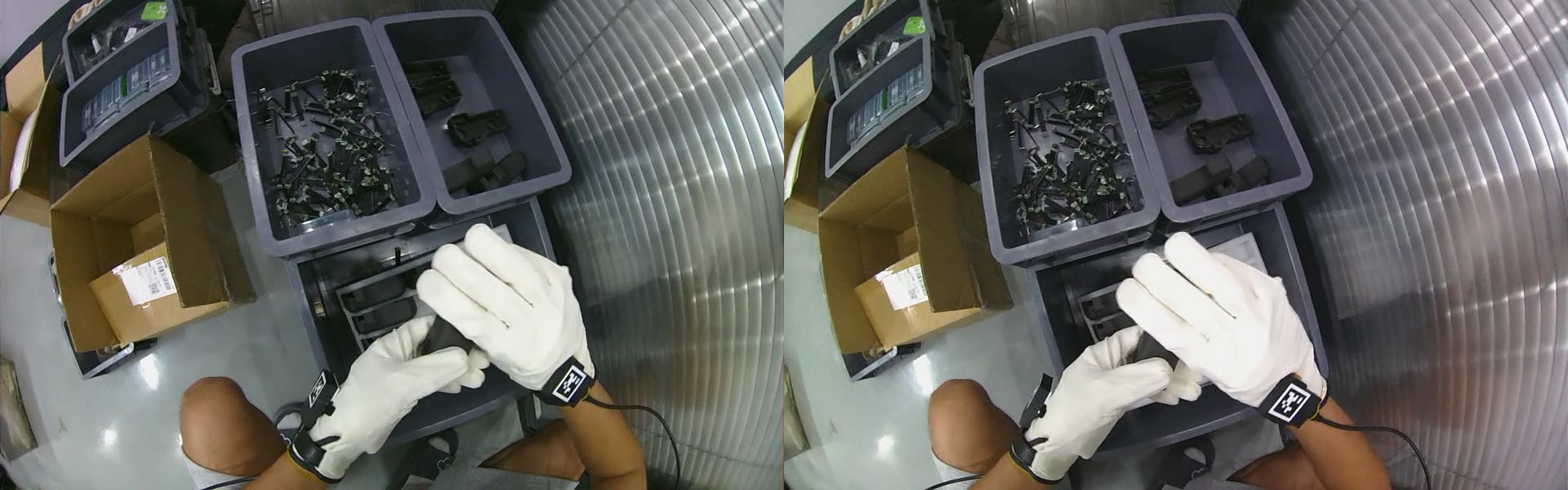
Left hand closes around a green module and draws it toward the tray.
Start estimate range: [1.5, 3.5]s. End estimate range: [3.36128, 3.62752]s.
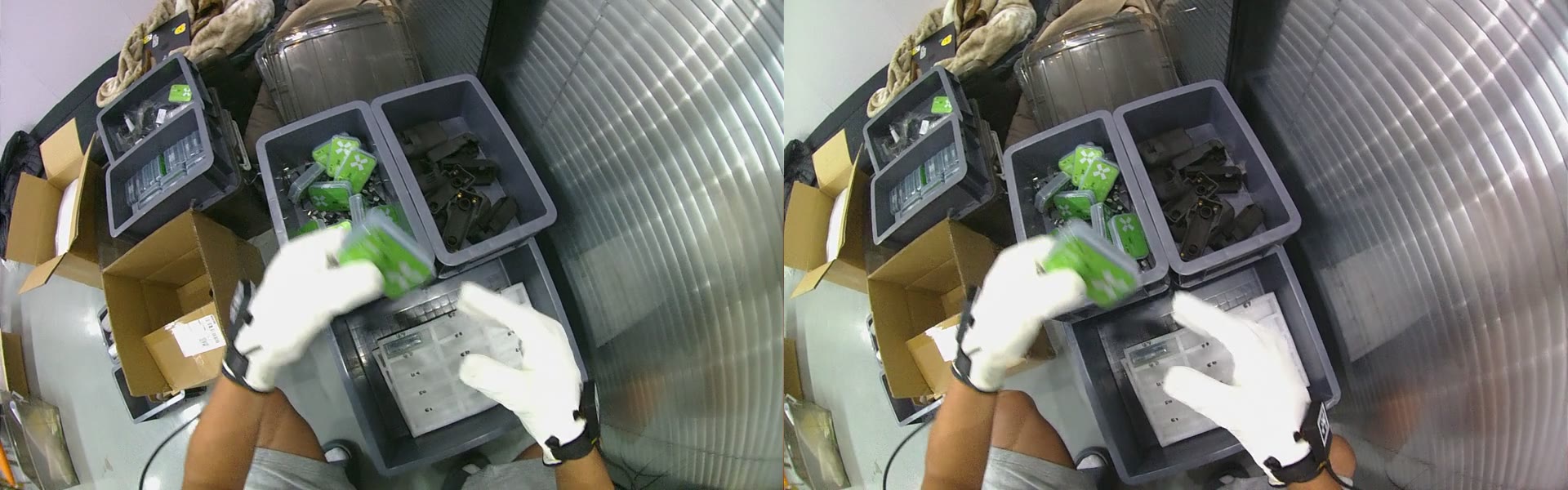
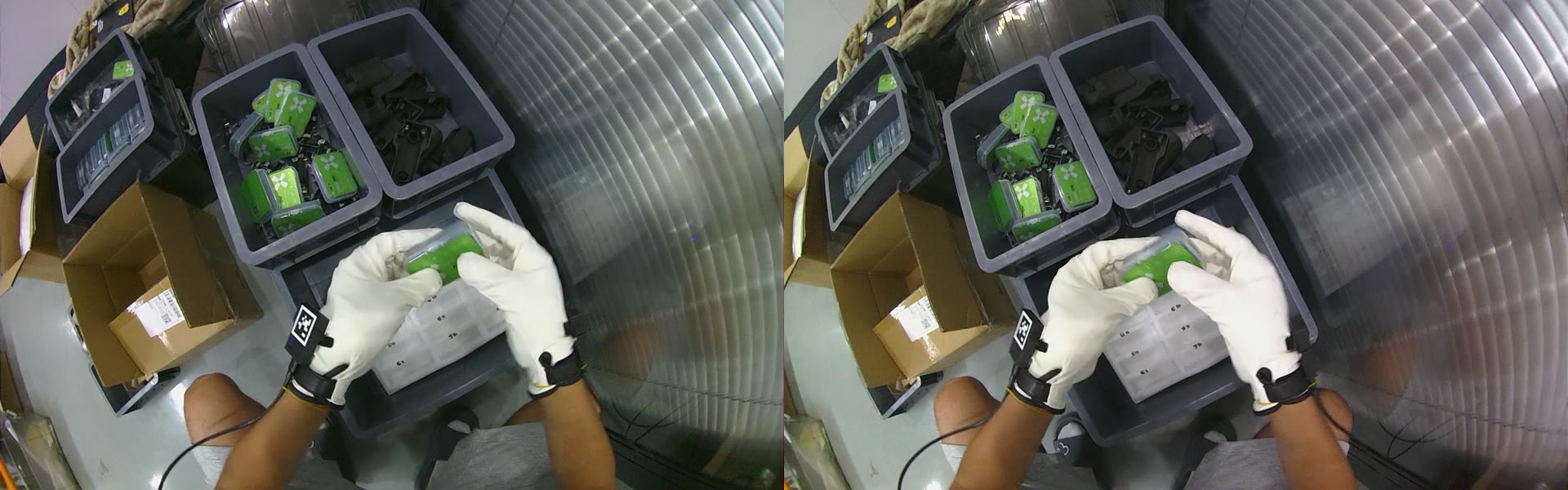
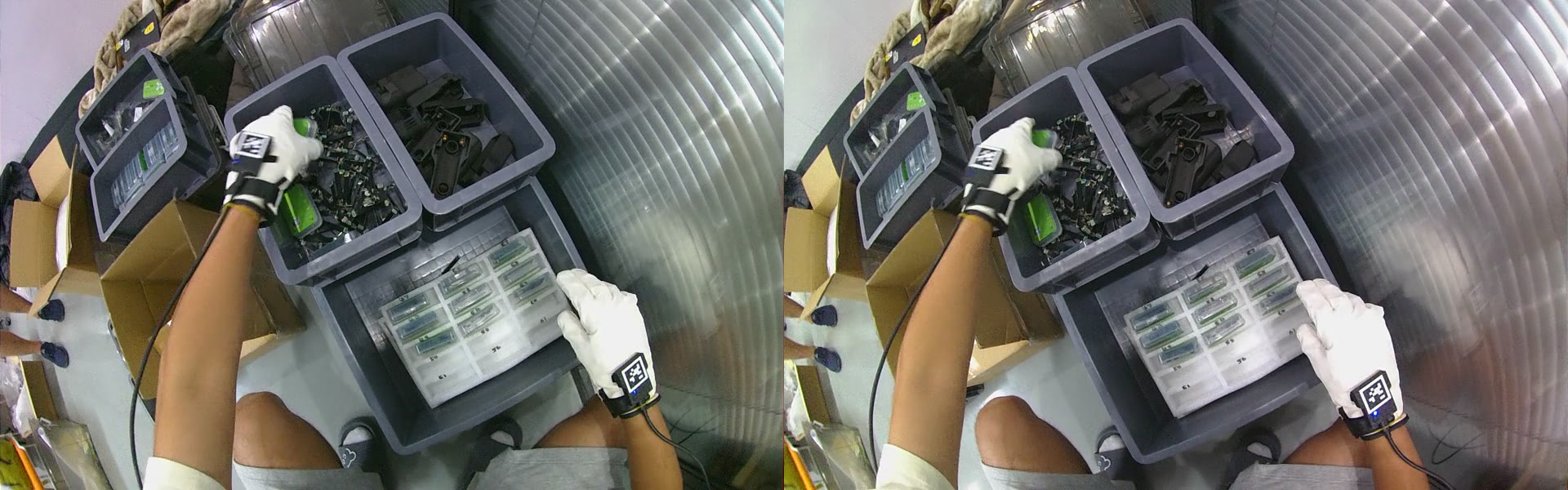
Green part is held between both hands above the divided tray.
Start estimate range: [3.36128, 3.62752]s. End estimate range: [4.16, 4.42624]s.
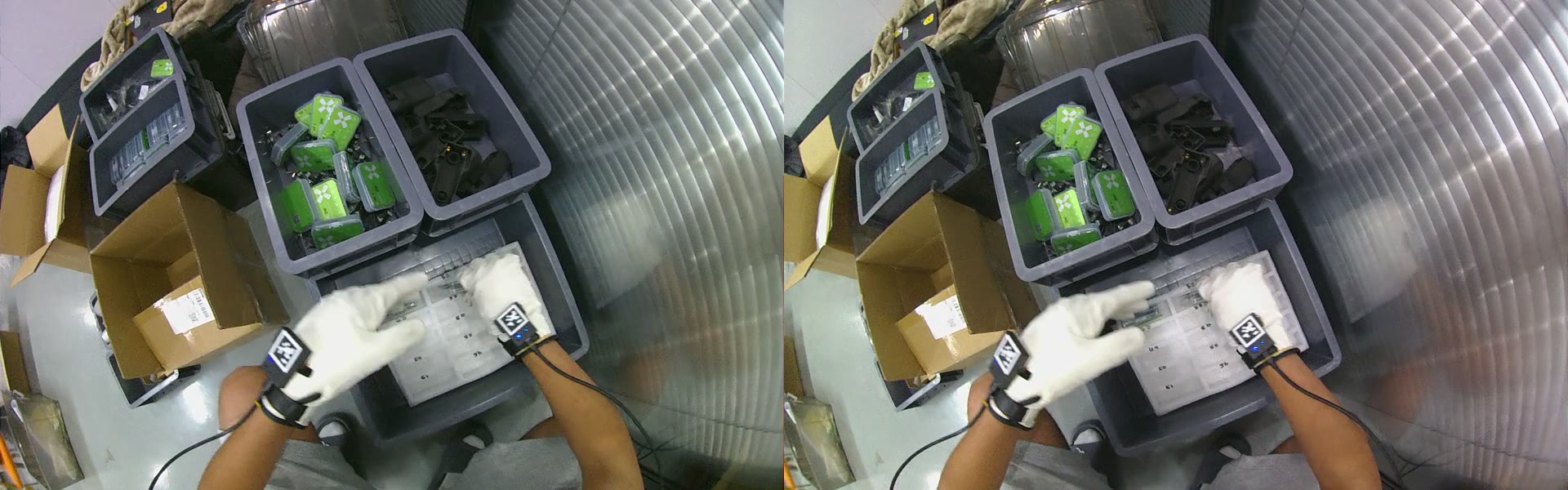
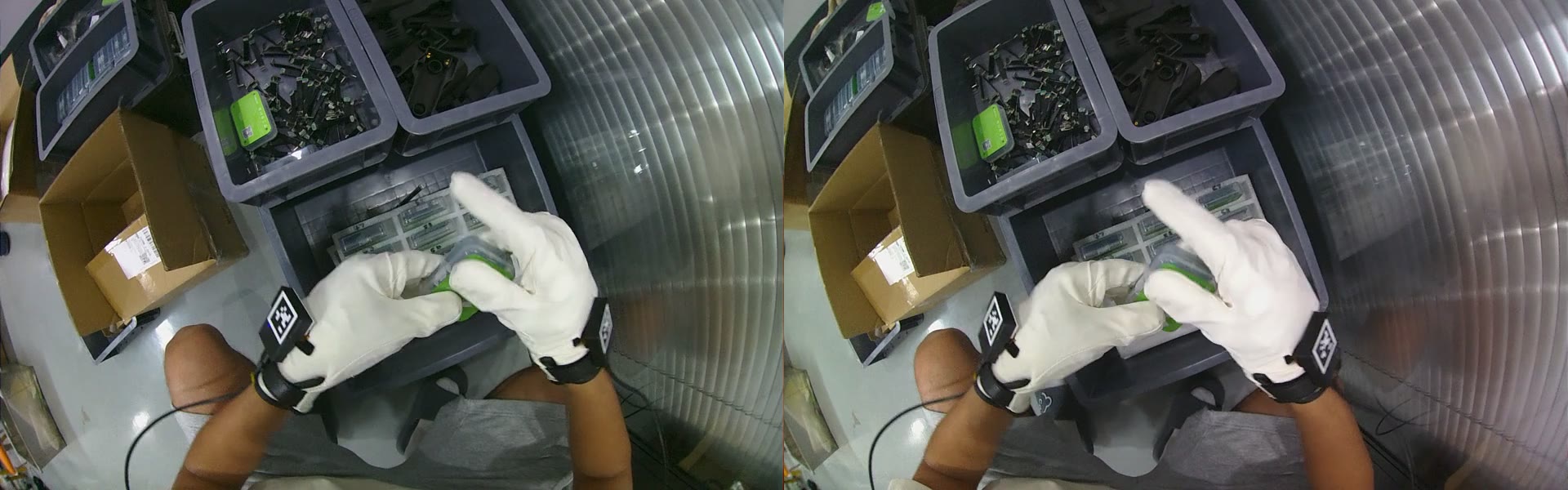
Right hand lowers the part toward an empty compartment.
Final finger release may be covered.
Start estimate range: [4.16, 4.42624]s. End estimate range: [5.22496, 5.4912]s.
Left hand returns to the upper-left bin and lifts a green module.
Start estimate range: [5.22496, 5.4912]s. End estimate range: [5.5, 7.5]s.
Both hands orient the next module; right lowers it into the tray.
Start estimate range: [5.5, 7.5]s. End estimate range: [7, 9]s.
Sampled sequence shows left-hand retrieval, bimanual orientation and placement toward the divided tray.
Cycle grouping is approximate; no exact count or unique part identity is claimed.
Start estimate range: [7, 9]s. End estimate range: [9.7, 11.7]s.
Sampled sequence shows left-hand retrieval, bimanual orientation and placement toward the divided tray.
Cycle grouping is approximate; no exact count or unique part identity is claimed.
Start estimate range: [9.7, 11.7]s. End estimate range: [12.5, 14.5]s.
Sampled sequence shows left-hand retrieval, bimanual orientation and placement toward the divided tray.
Cycle grouping is approximate; no exact count or unique part identity is claimed.
Start estimate range: [12.5, 14.5]s. End estimate range: [16.2, 18.2]s.
Sampled sequence shows left-hand retrieval, bimanual orientation and placement toward the divided tray.
Cycle grouping is approximate; no exact count or unique part identity is claimed.
Start estimate range: [16.2, 18.2]s. End estimate range: [19.6, 21.6]s.
Sampled sequence shows left-hand retrieval, bimanual orientation and placement toward the divided tray.
Cycle grouping is approximate; no exact count or unique part identity is claimed.
Start estimate range: [19.6, 21.6]s. End estimate range: [23, 25]s.
Sampled sequence shows left-hand retrieval, bimanual orientation and placement toward the divided tray.
Cycle grouping is approximate; no exact count or unique part identity is claimed.
Start estimate range: [23, 25]s. End estimate range: [26.3, 28.3]s.
Sampled sequence shows left-hand retrieval, bimanual orientation and placement toward the divided tray.
Cycle grouping is approximate; no exact count or unique part identity is claimed.
Start estimate range: [26.3, 28.3]s. End estimate range: [30, 32]s.
Sampled sequence shows left-hand retrieval, bimanual orientation and placement toward the divided tray.
Cycle grouping is approximate; no exact count or unique part identity is claimed.
Start estimate range: [30, 32]s. End estimate range: [33.5, 35.5]s.
Both hands move to the tray edges and alter its position.
Start estimate range: [33.5, 35.5]s. End estimate range: [35.5, 37.5]s.
Tray carrying green parts is raised and shifted toward the rear.
Start estimate range: [35.5, 37.5]s. End estimate range: [38, 40]s.
Hands move an empty white divided tray into the front working position.
Start estimate range: [38, 40]s. End estimate range: [41.5, 43.5]s.
Right hand retrieves from the upper-right bin; hands rotate the housing and lower it into the divided tray.
Approximate cycle span; fine release time and exact part count require denser review.
Start estimate range: [41.5, 43.5]s. End estimate range: [45.3, 47.3]s.
Right hand retrieves from the upper-right bin; hands rotate the housing and lower it into the divided tray.
Approximate cycle span; fine release time and exact part count require denser review.
Start estimate range: [45.3, 47.3]s. End estimate range: [49.3, 51.3]s.
Right hand retrieves from the upper-right bin; hands rotate the housing and lower it into the divided tray.
Approximate cycle span; fine release time and exact part count require denser review.
Start estimate range: [49.3, 51.3]s. End estimate range: [55, 57]s.
Right hand retrieves from the upper-right bin; hands rotate the housing and lower it into the divided tray.
Approximate cycle span; fine release time and exact part count require denser review.
Start estimate range: [55, 57]s. End estimate range: [58.2, 60.2]s.
Right hand retrieves from the upper-right bin; hands rotate the housing and lower it into the divided tray.
Approximate cycle span; fine release time and exact part count require denser review.
Start estimate range: [58.2, 60.2]s. End estimate range: [61.6, 63.6]s.
Right hand retrieves from the upper-right bin; hands rotate the housing and lower it into the divided tray.
Approximate cycle span; fine release time and exact part count require denser review.
Start estimate range: [61.6, 63.6]s. End estimate range: [65.4, 67.4]s.
Right hand retrieves from the upper-right bin; hands rotate the housing and lower it into the divided tray.
Approximate cycle span; fine release time and exact part count require denser review.
Start estimate range: [65.4, 67.4]s. End estimate range: [68.5, 70.5]s.
Right hand retrieves from the upper-right bin; hands rotate the housing and lower it into the divided tray.
Approximate cycle span; fine release time and exact part count require denser review.
Start estimate range: [68.5, 70.5]s. End estimate range: [72.3, 74.3]s.
Right hand retrieves from the upper-right bin; hands rotate the housing and lower it into the divided tray.
Approximate cycle span; fine release time and exact part count require denser review.
Start estimate range: [72.3, 74.3]s. End estimate range: [76.4, 78.4]s.
Right hand retrieves from the upper-right bin; hands rotate the housing and lower it into the divided tray.
Approximate cycle span; fine release time and exact part count require denser review.
Start estimate range: [76.4, 78.4]s. End estimate range: [80.5, 82.5]s.
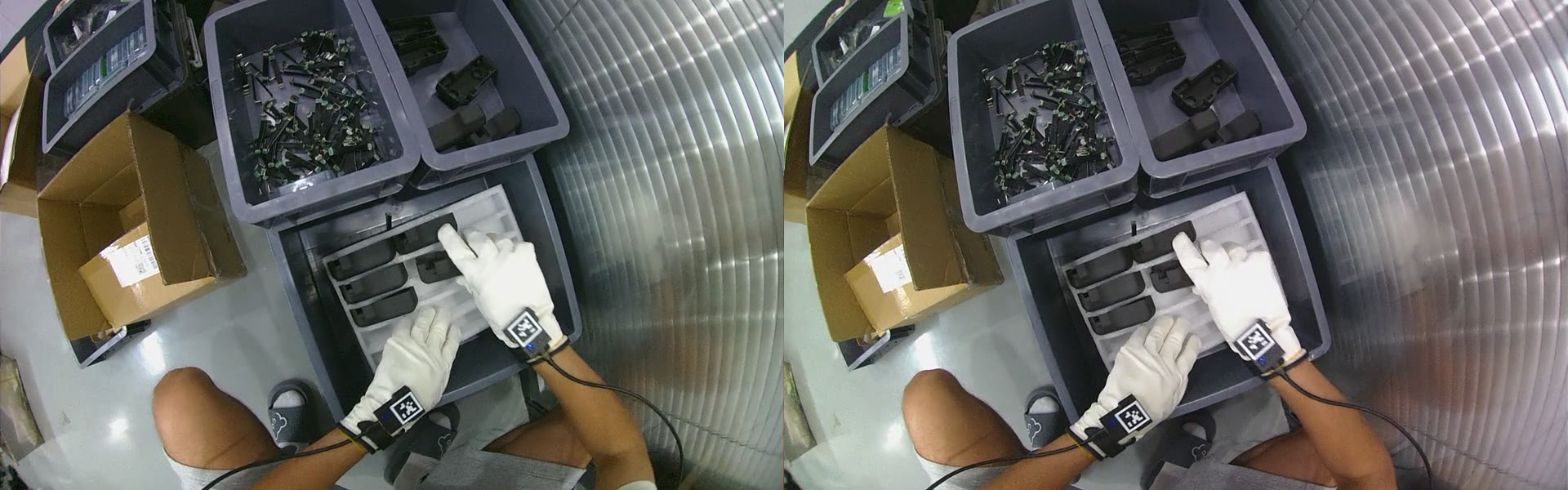
Both hands hold or touch opposite edges of the loaded tray.
Start estimate range: [80.5, 82.5]s. End estimate range: [82.5, 84.5]s.
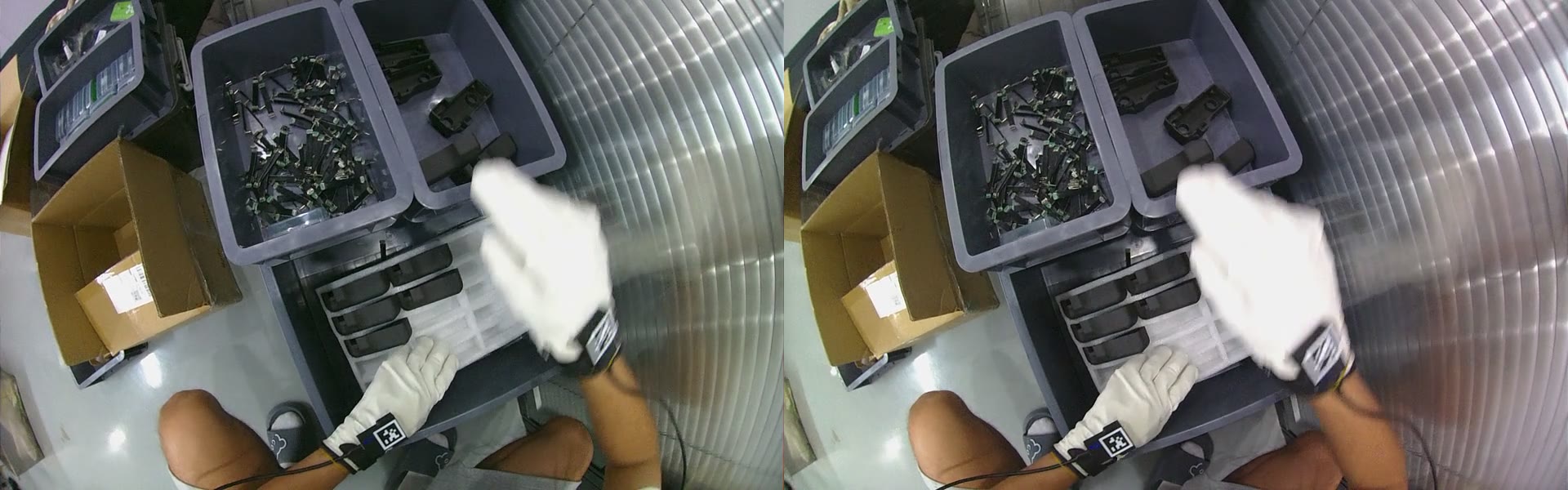
View rises and moves away from the bins.
Start estimate range: [82.5, 84.5]s. End estimate range: [83.66432, 84.66432]s.
No exact inventory reconciliation was performed. · Persistent identities of similar parts are not established. · No quality inspection or complete fulfillment criterion is supplied.
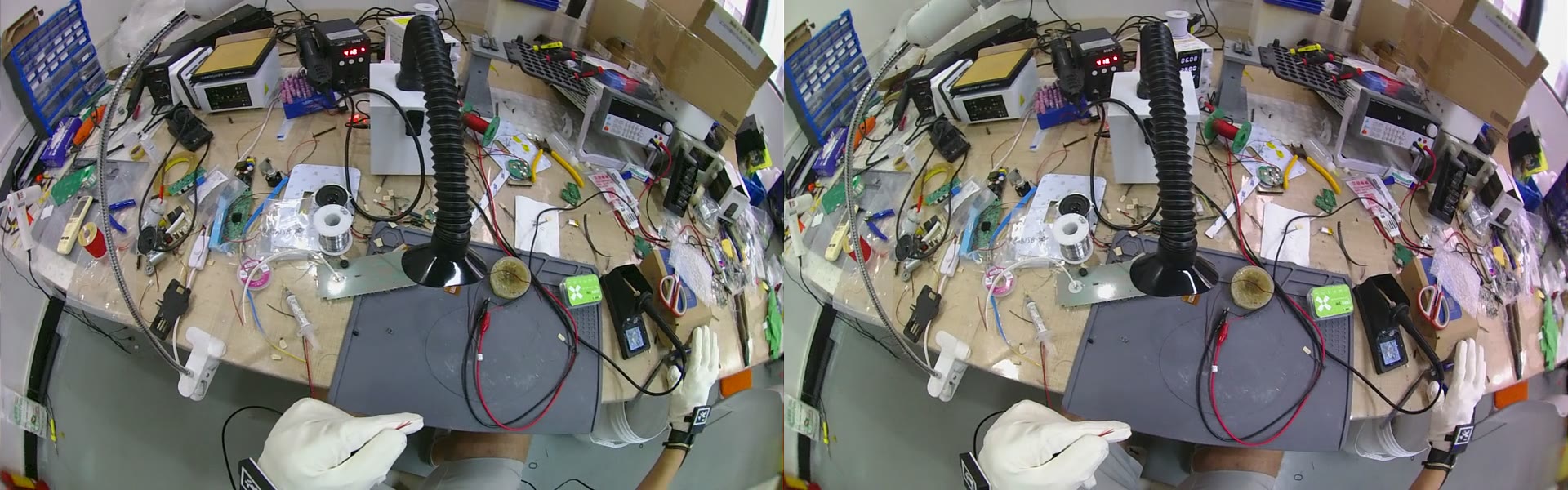
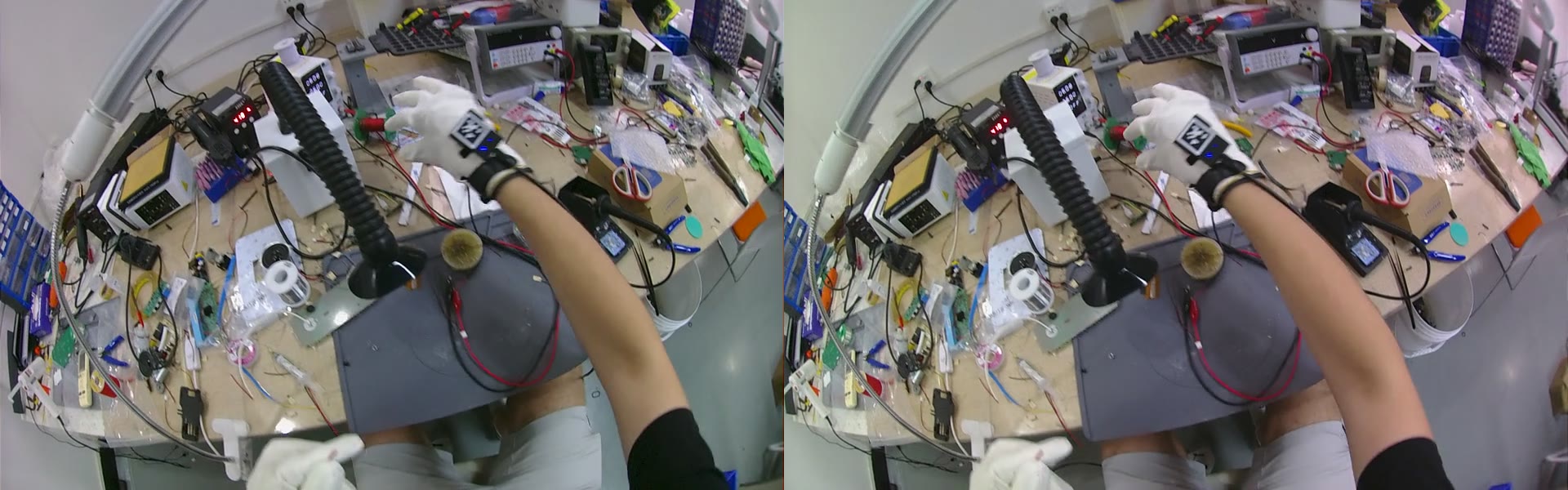
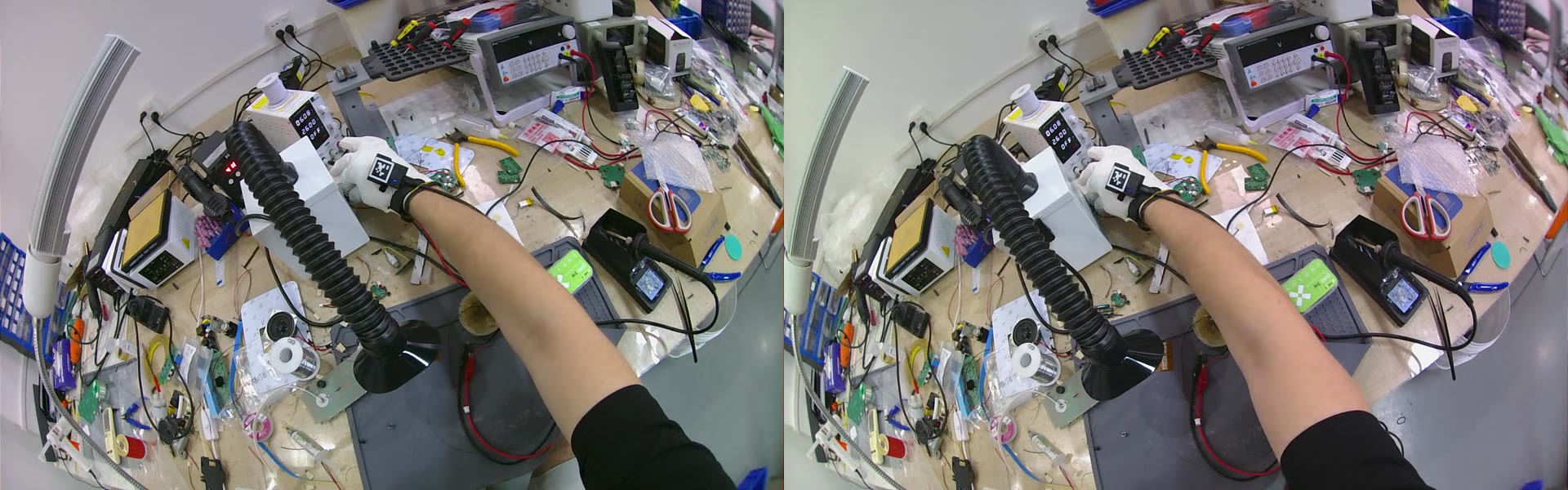
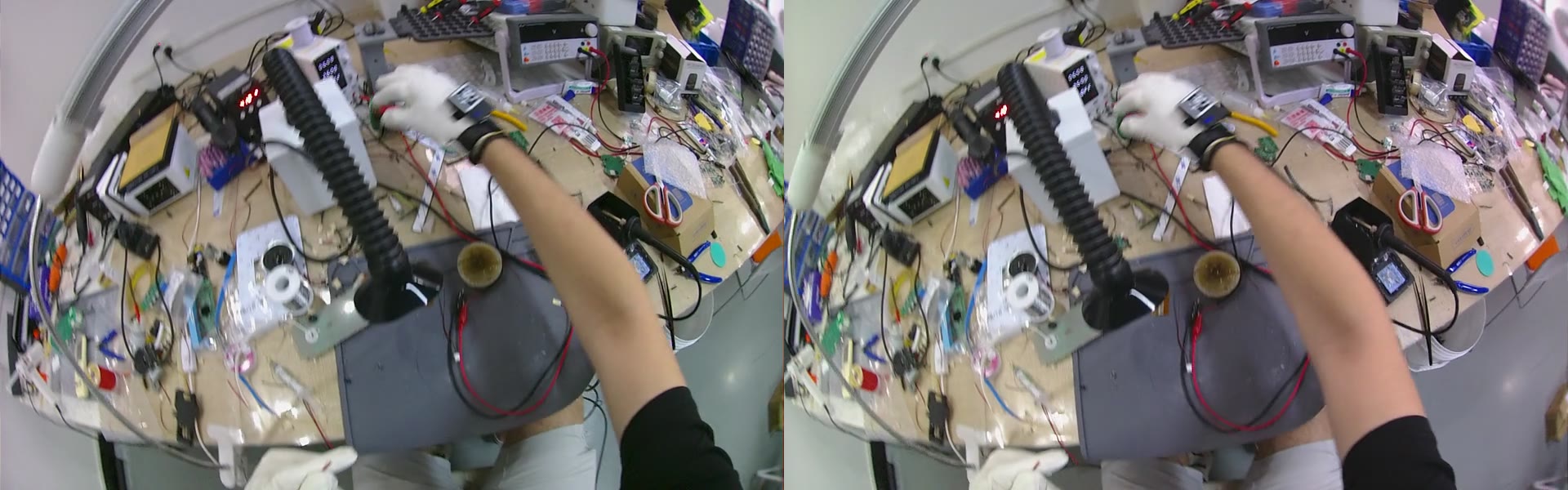
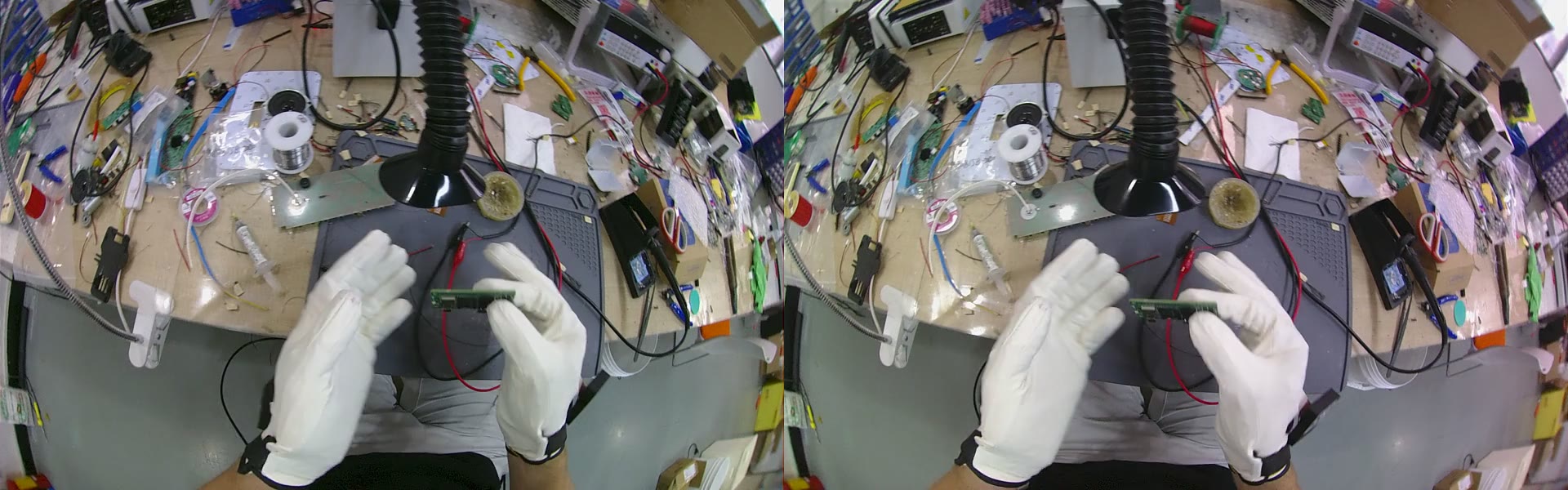
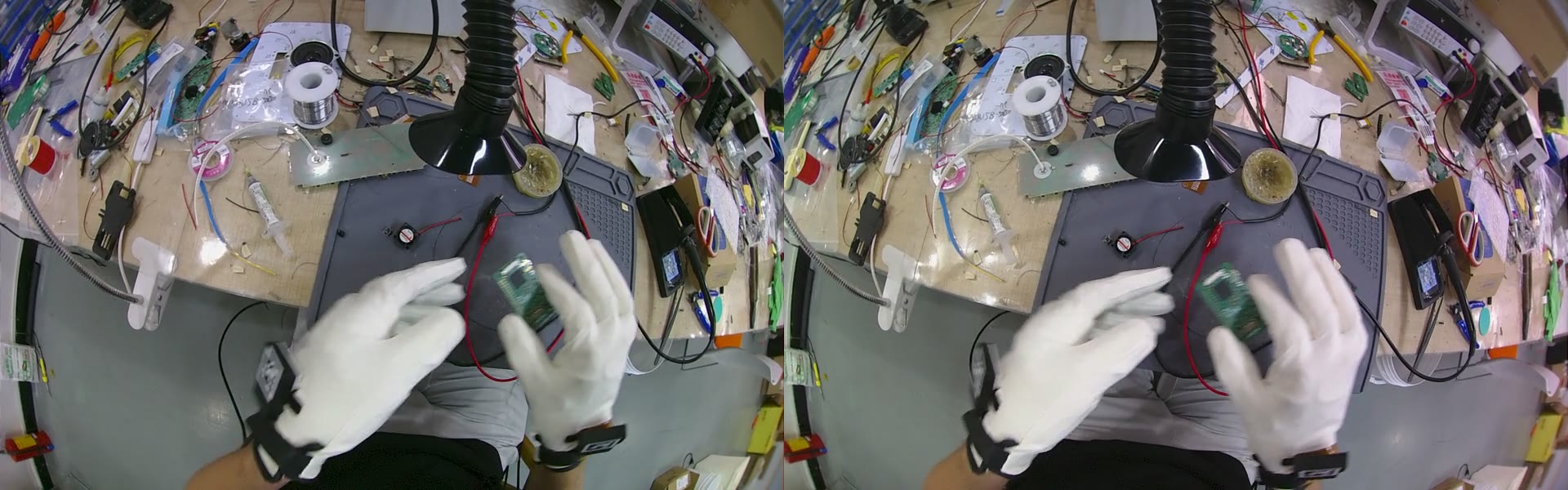
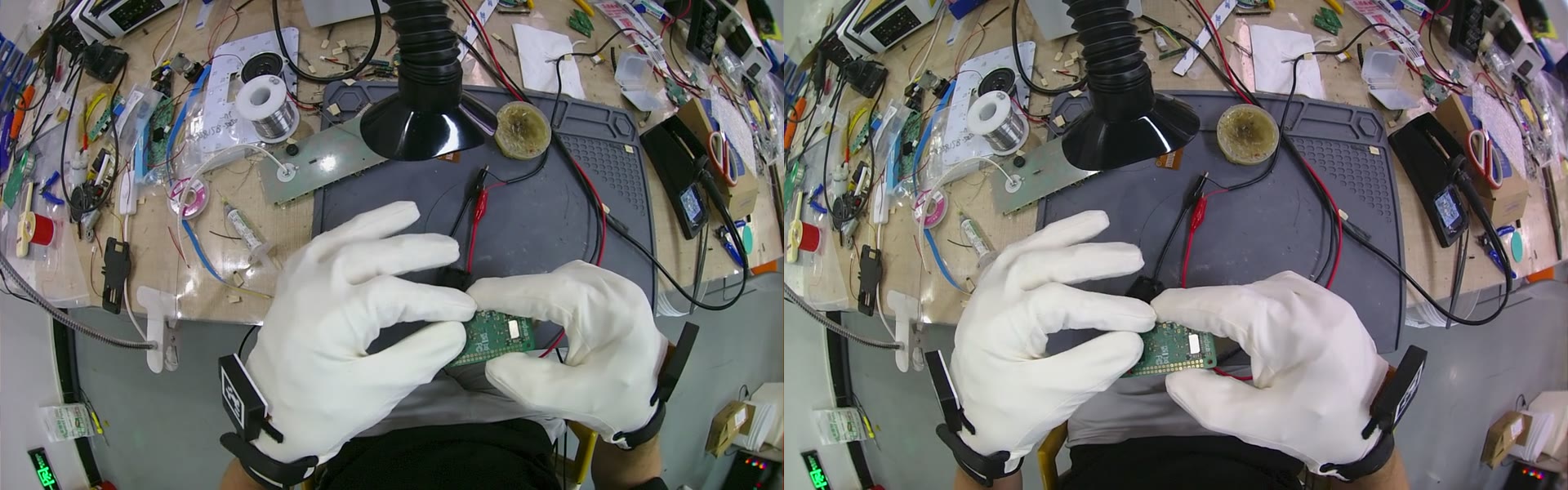
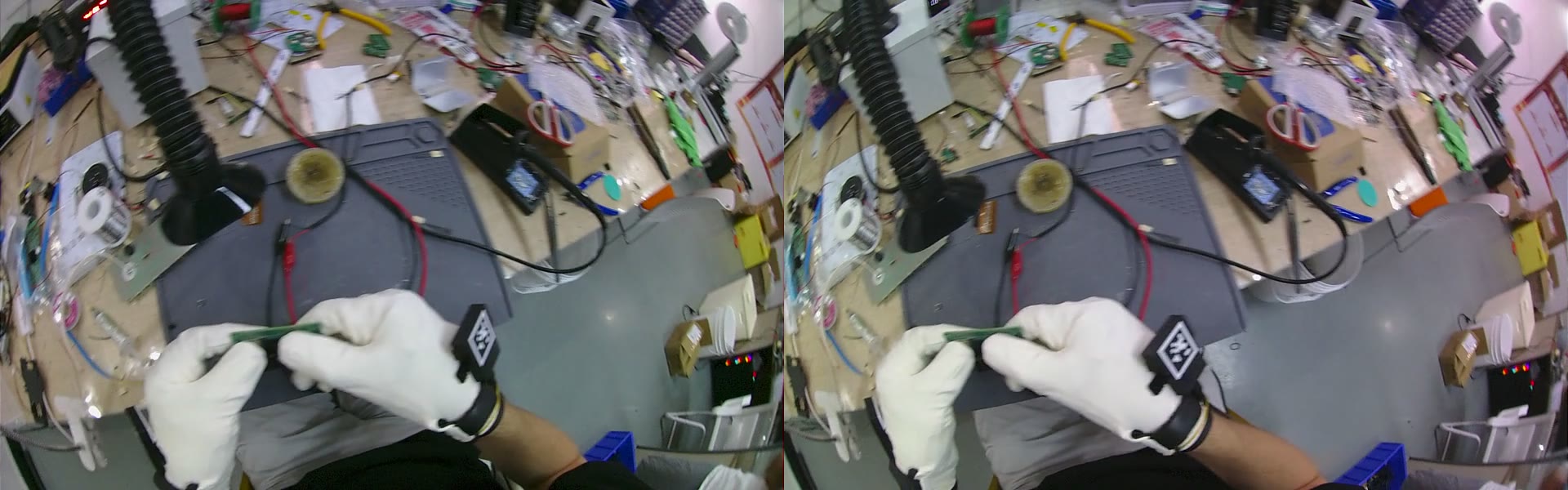
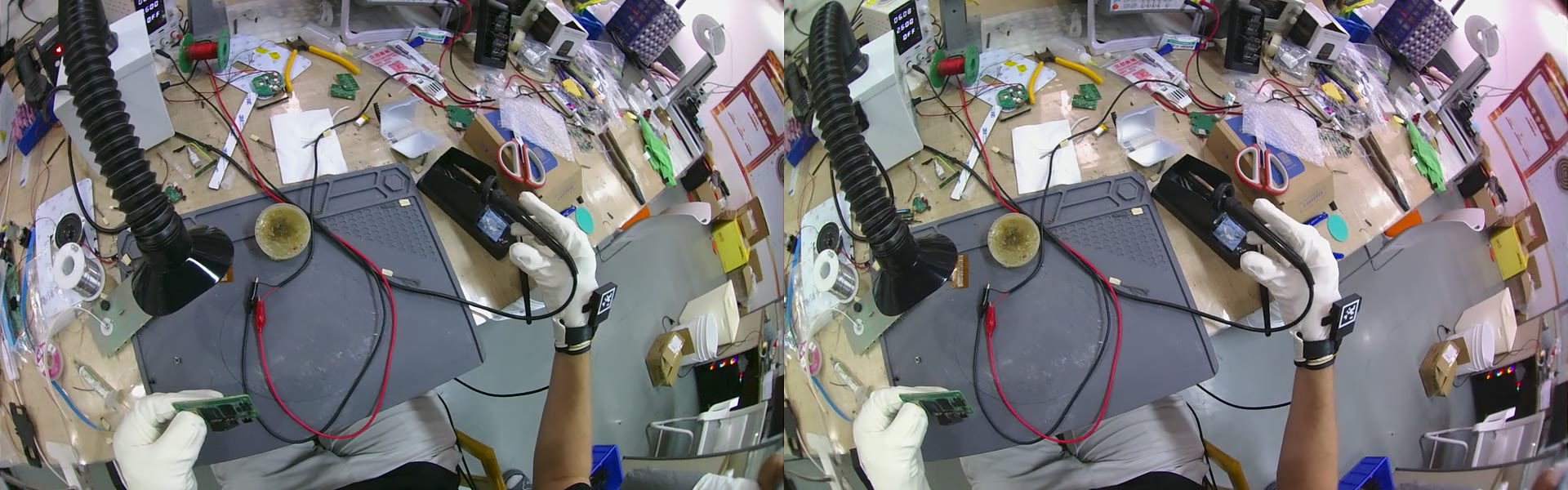
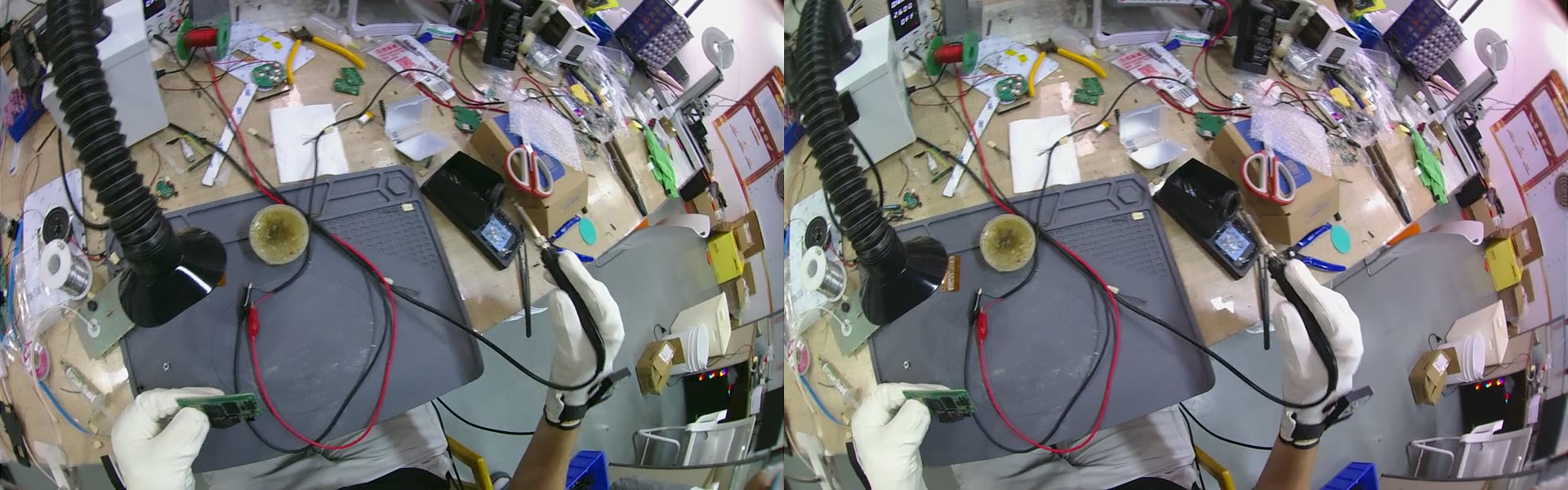
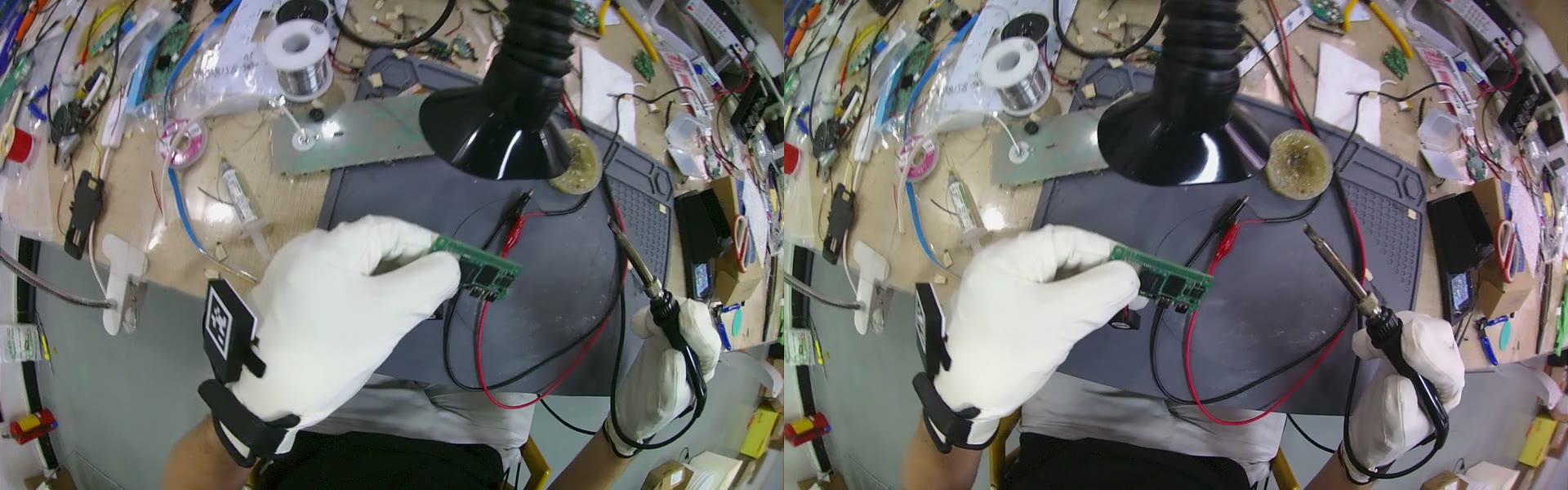
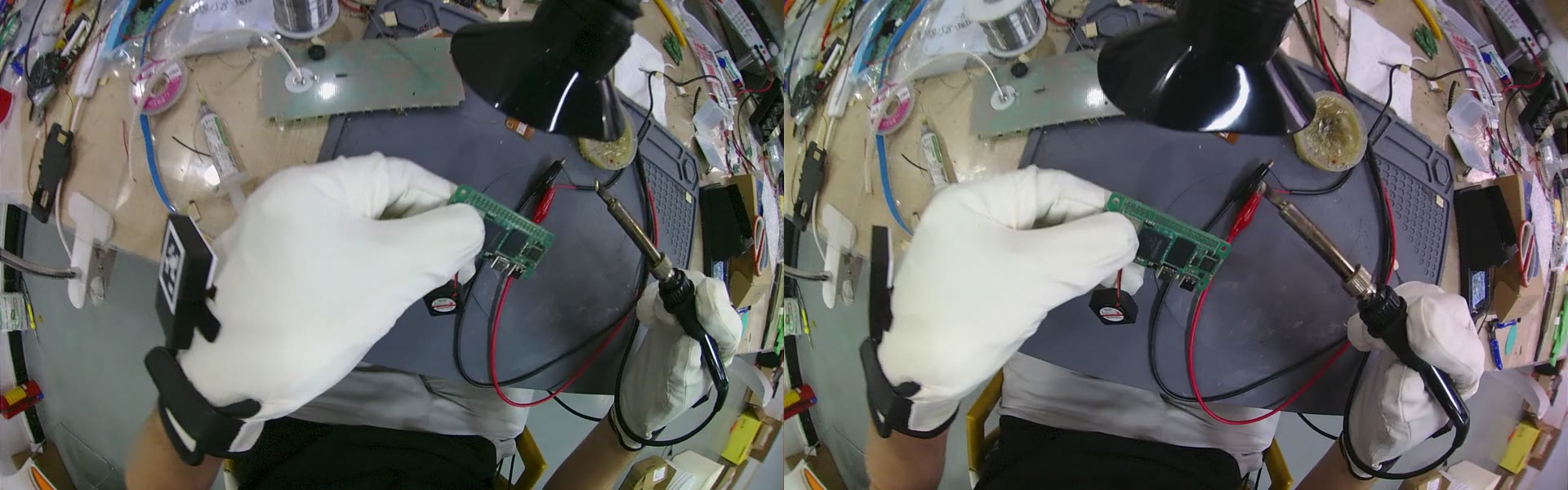
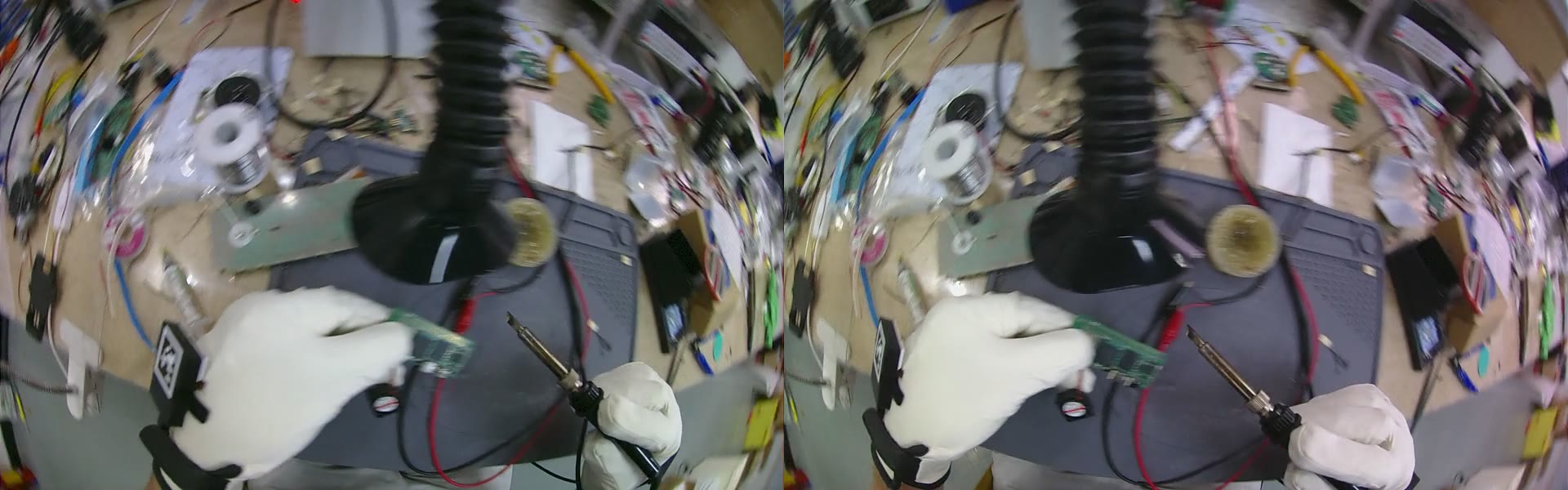
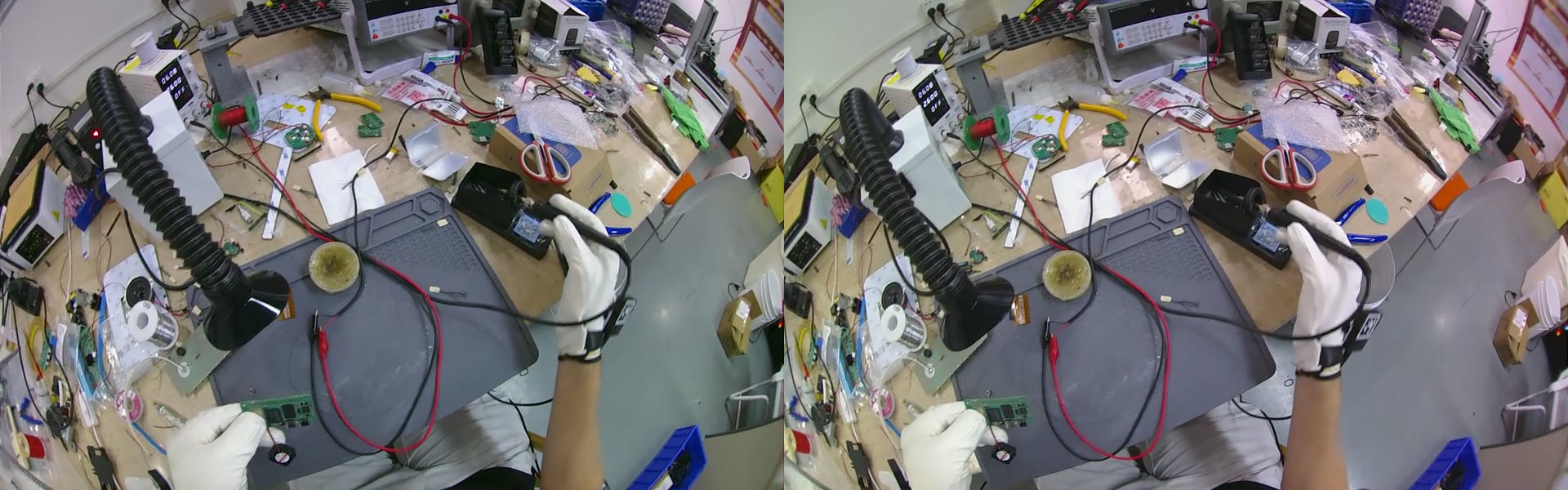
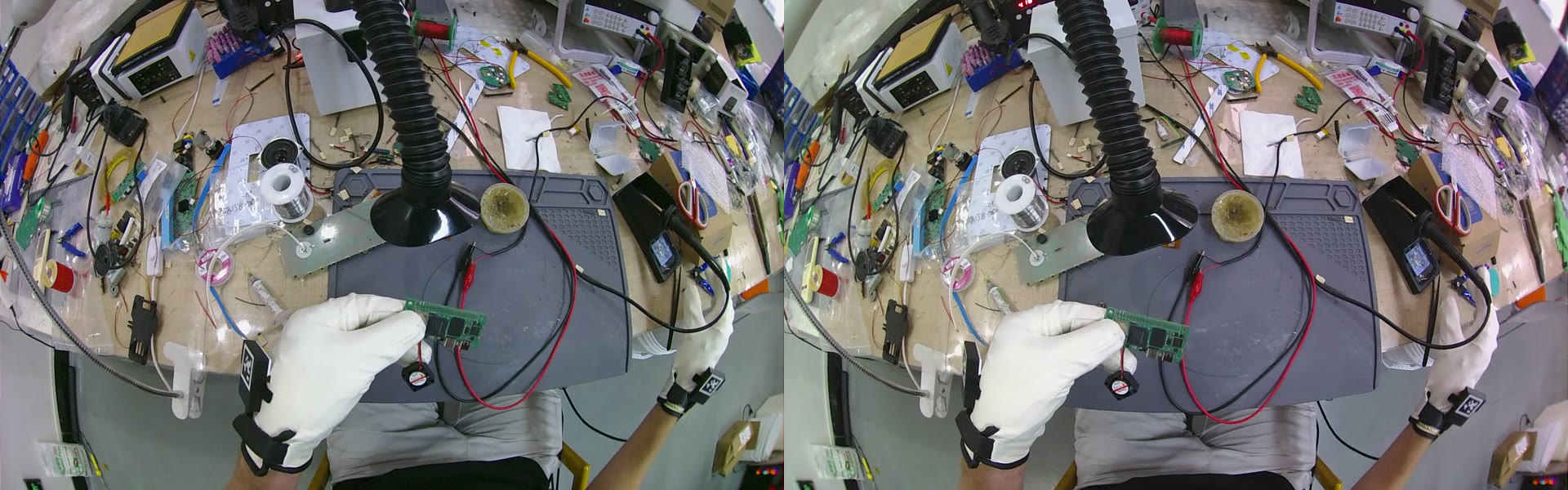
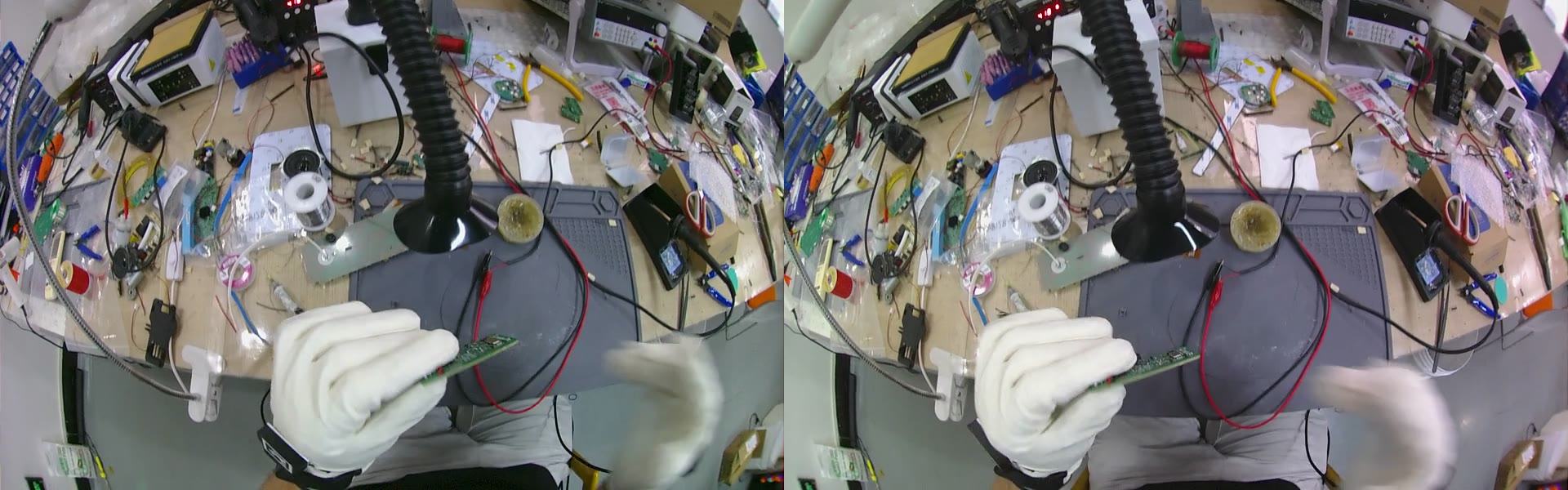
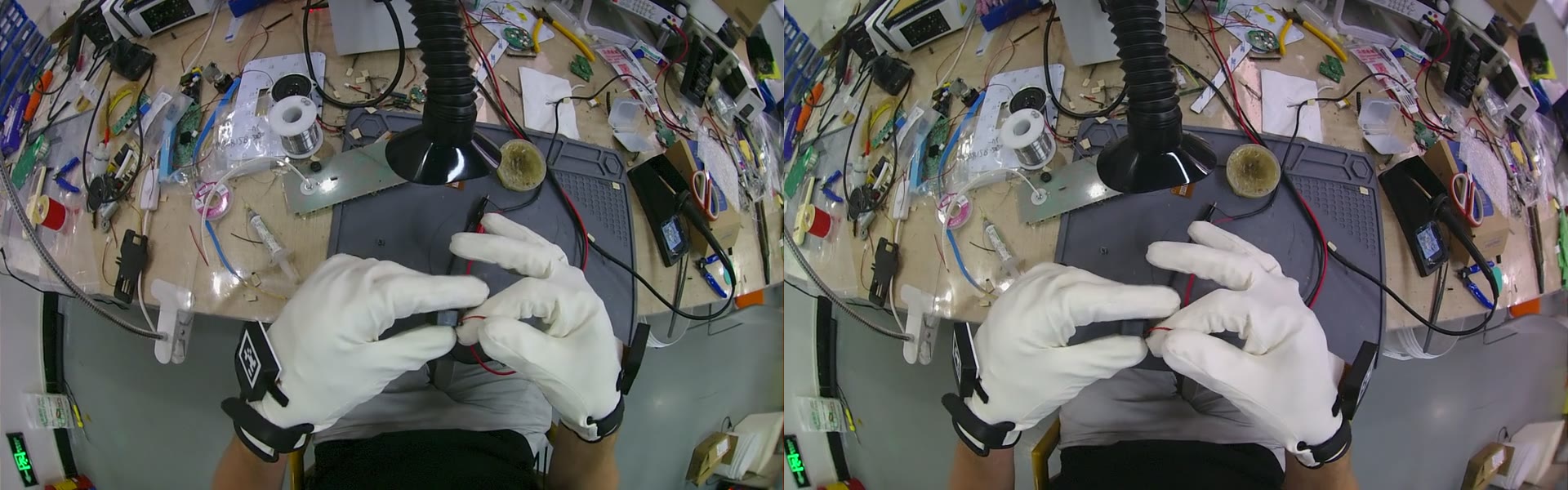
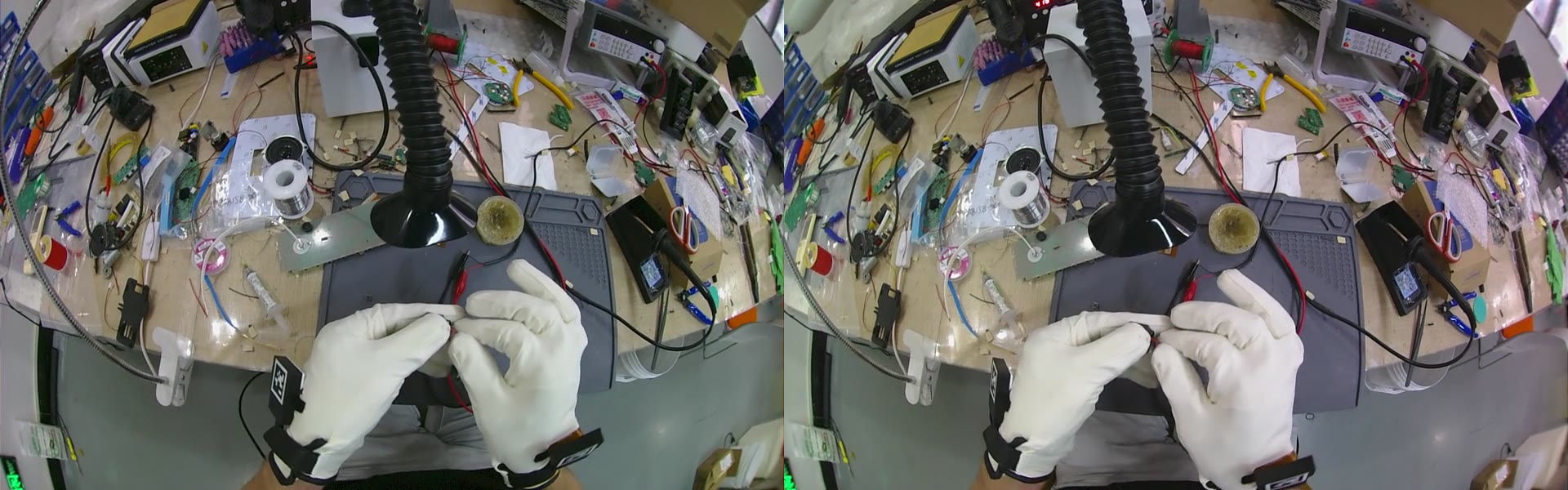
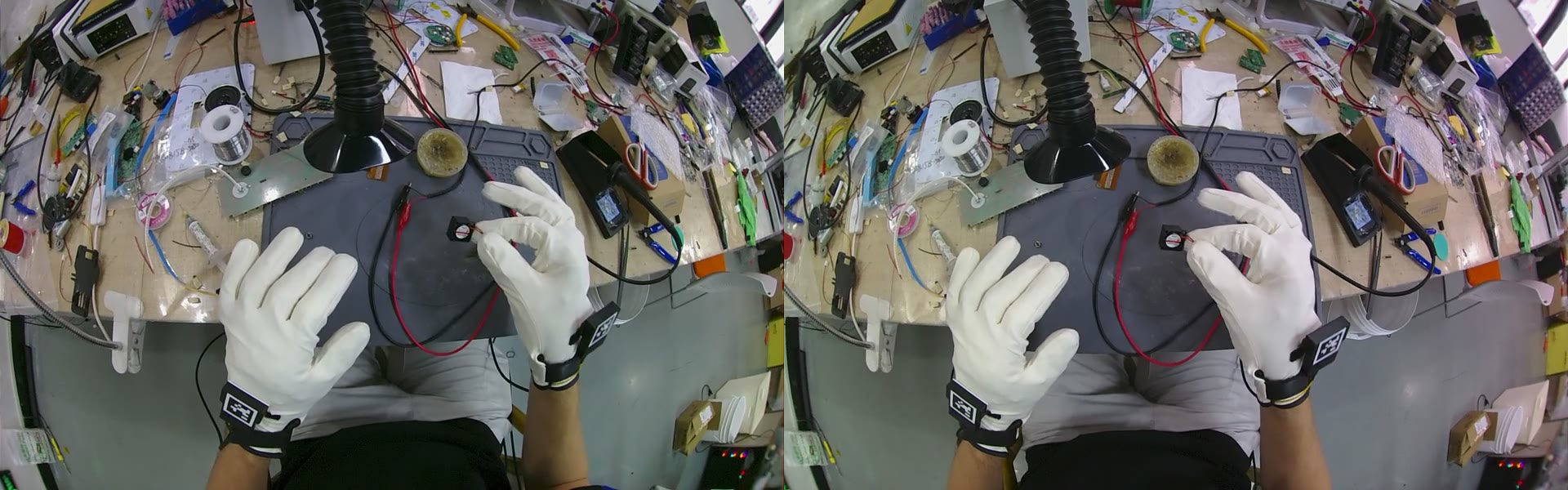
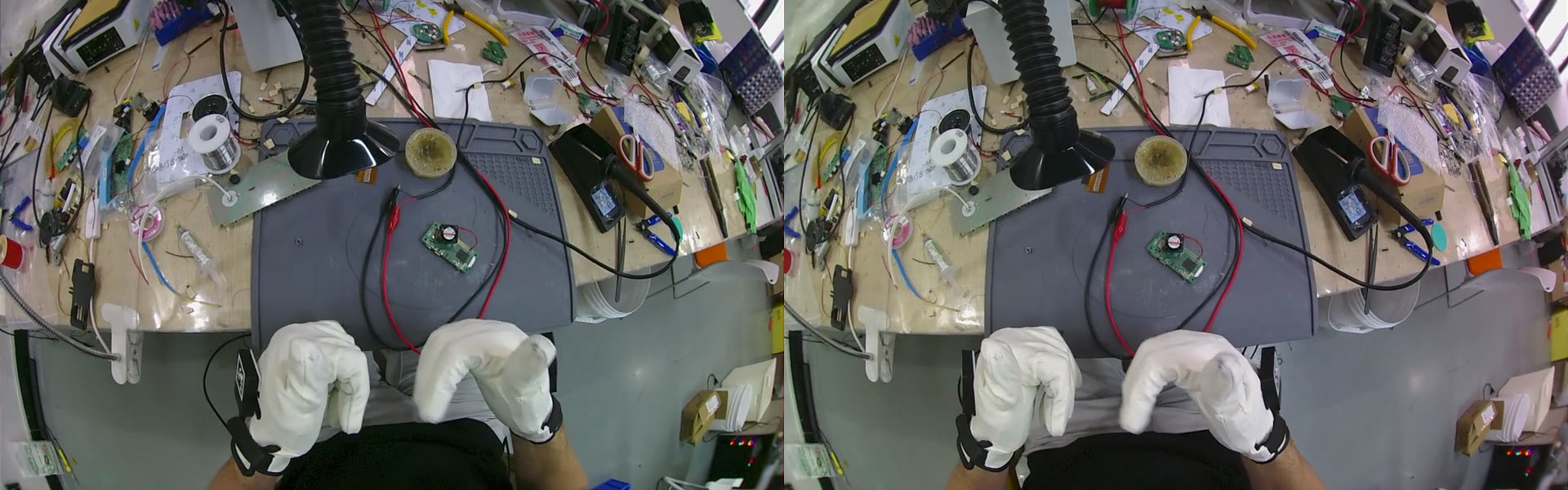
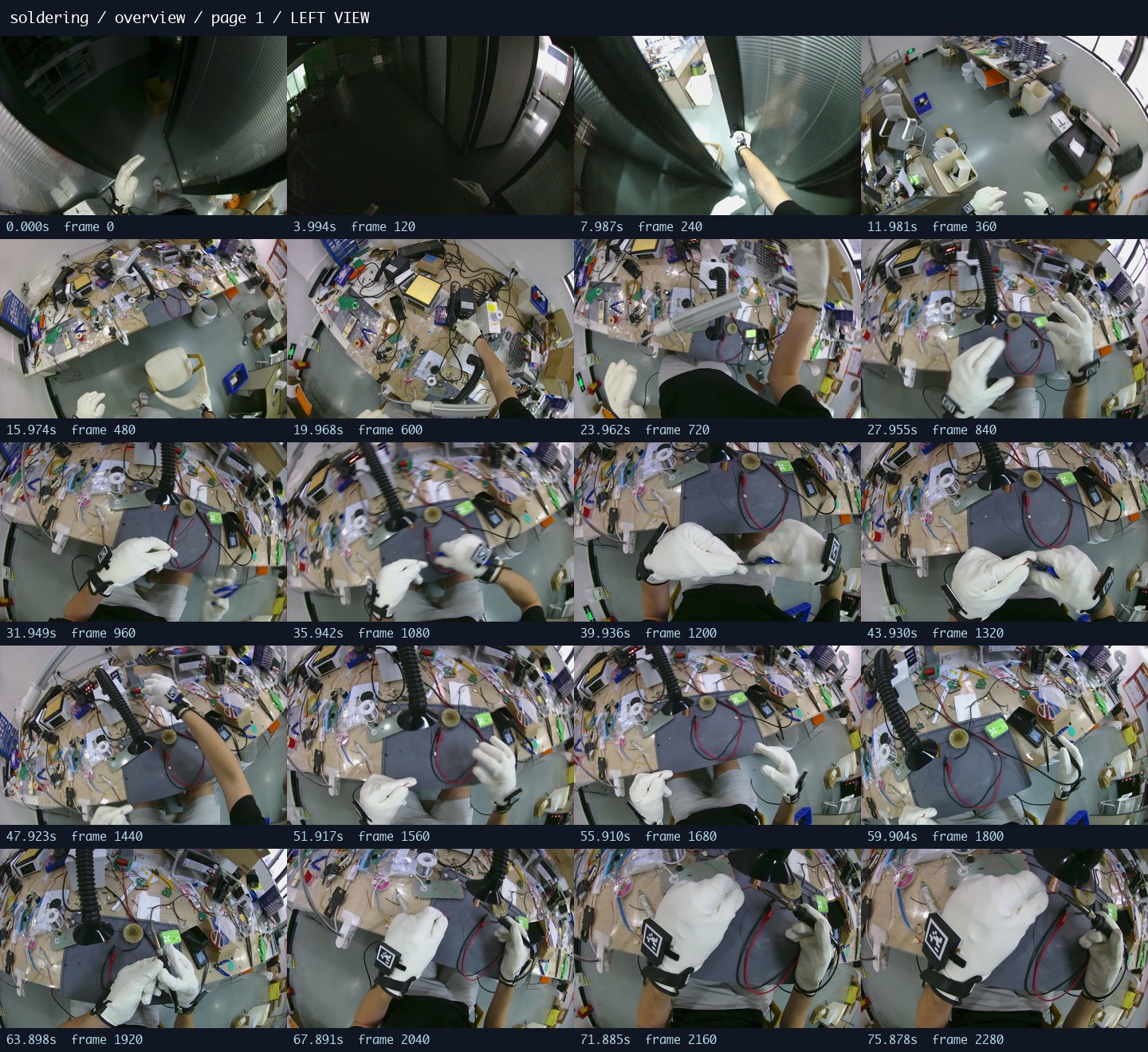
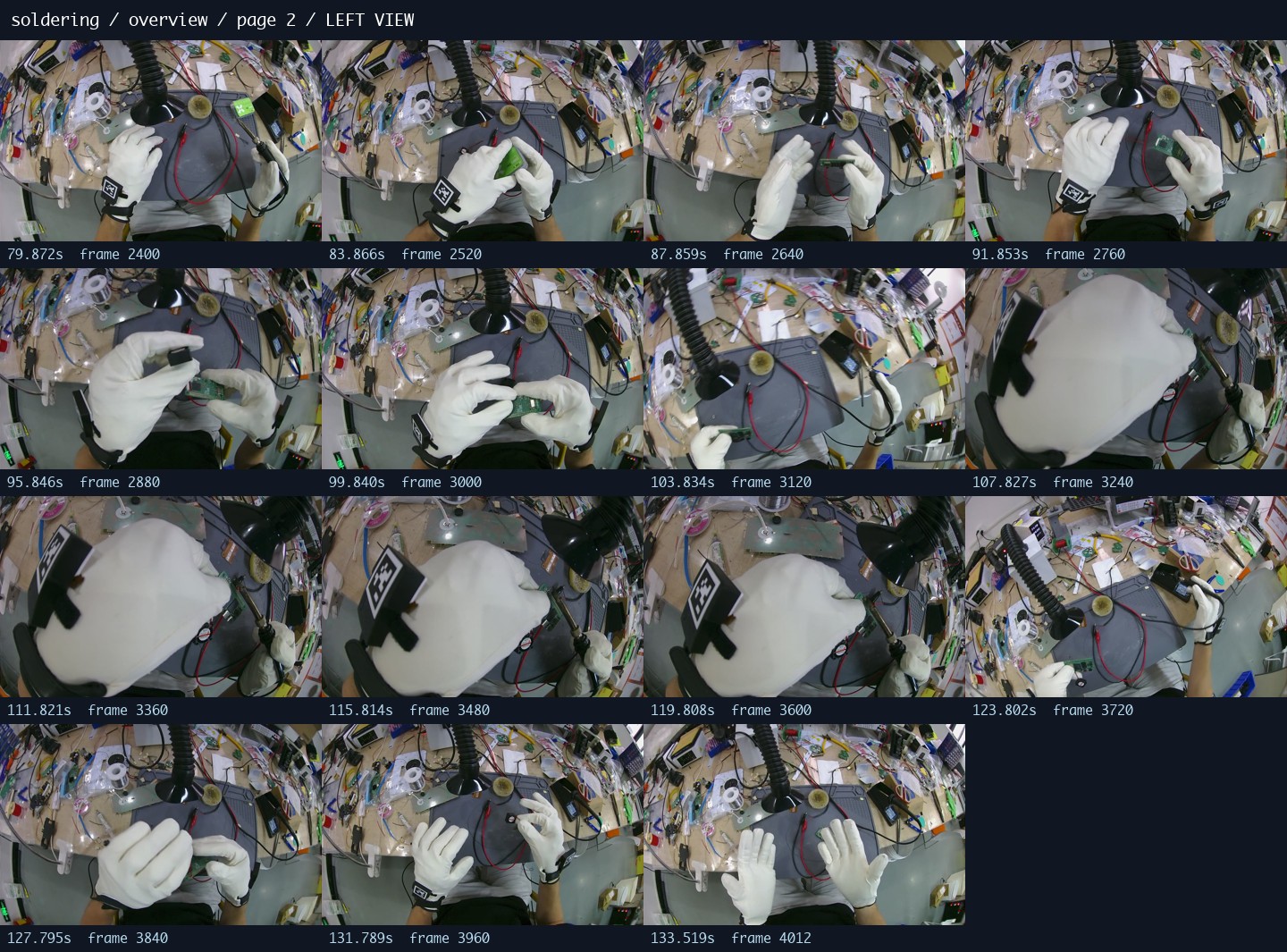
Enter a workroom, prepare at an electronics bench, work a thin lead with a blue-handled tool, apply a soldering iron to a lead, then handle and apparently solder a small circuit board.
Visible outcome: The green board is placed on the work mat after tool application and manual adjustment; no electrical test is visible.
Original paired views. Contact sheets below use the left view. Duration 133.553s.
| Seconds | Step | Evidence |
|---|---|---|
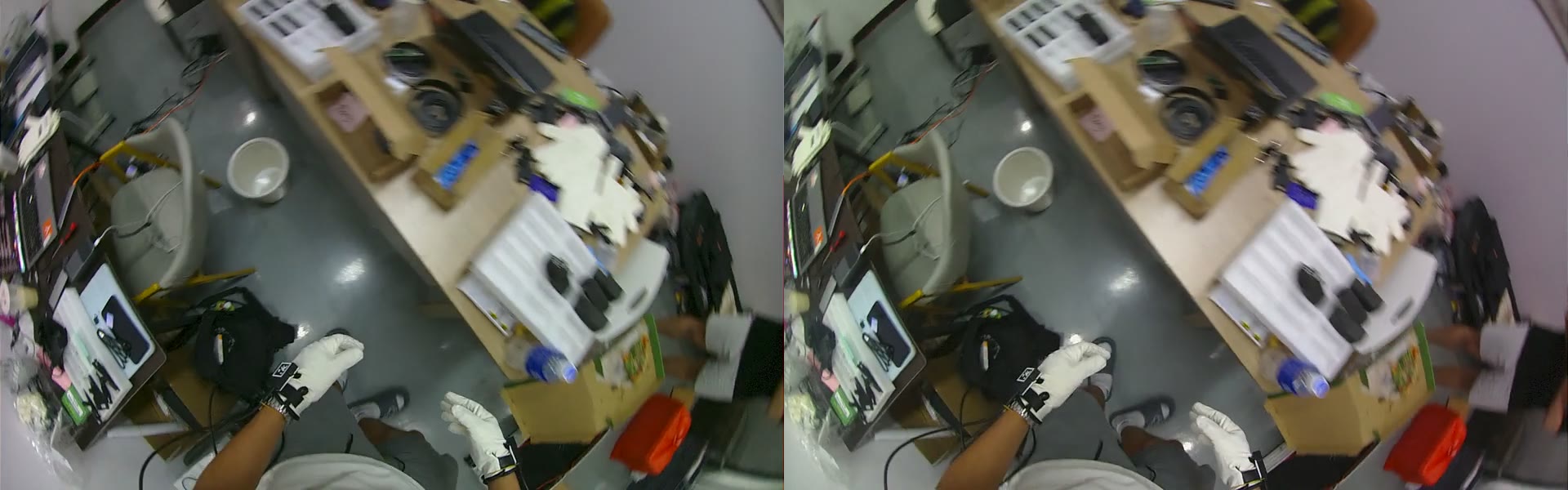
| 0.00–9.00 | Move through doorway | View passes from dark doorway area into the brighter workroom. |
| 9.00–26.00 | Approach bench and prepare station | Wearer walks to bench, moves chair and reaches toward equipment controls. |
| 26.00–47.00 | Prepare thin lead with hand tool | Hands manipulate a thin lead; blue-handled tool repeatedly closes near it. |
| 47.00–59.00 | Adjust station and retrieve iron | Right hand reaches to equipment and then retrieves the corded iron. |
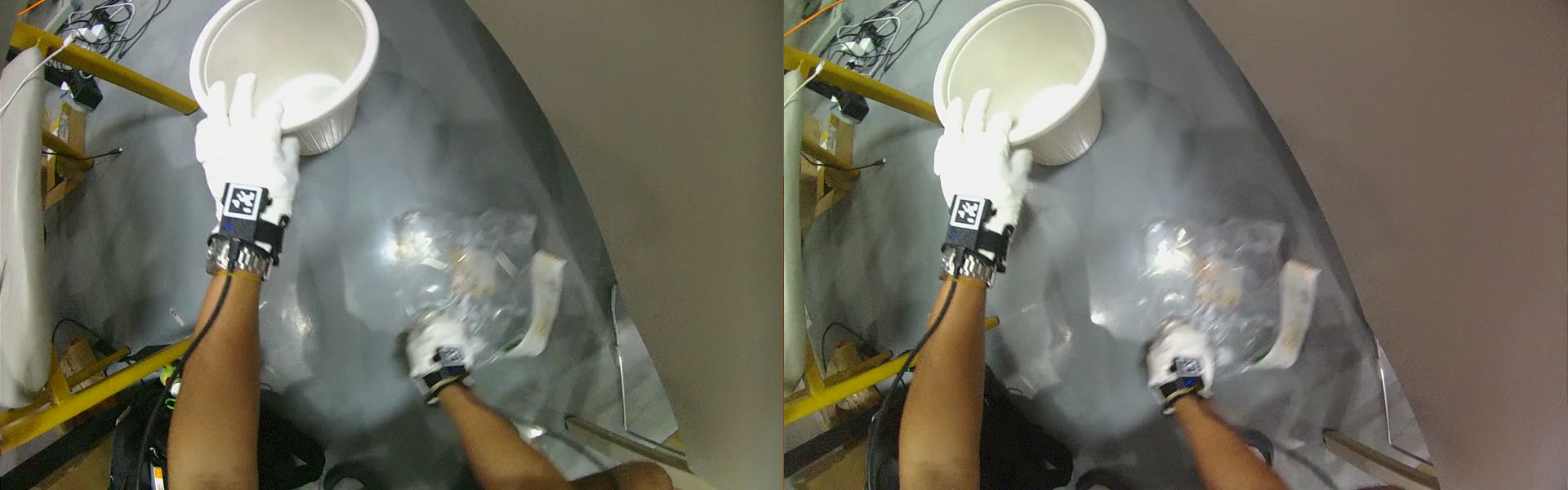
| 59.00–80.00 | Apply iron near thin lead | Left holds the lead while the right brings the iron tip toward it and the cleaning cup. |
| 80.00–102.50 | Handle board and position small component | Board is picked up, turned and manipulated between the hands. |
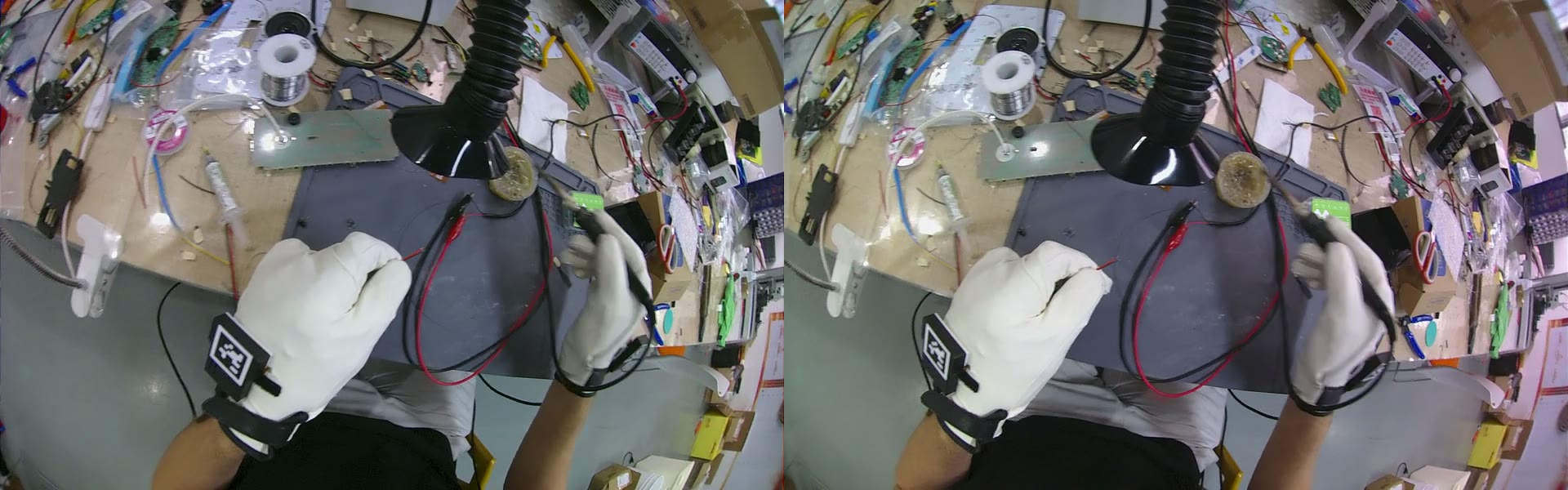
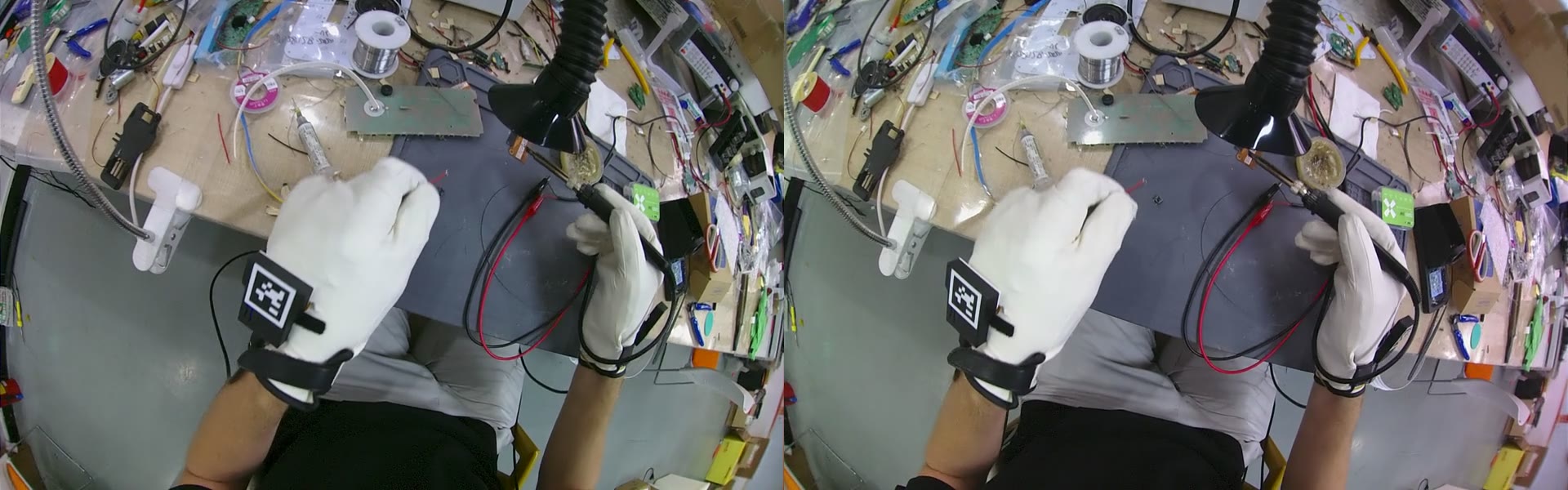
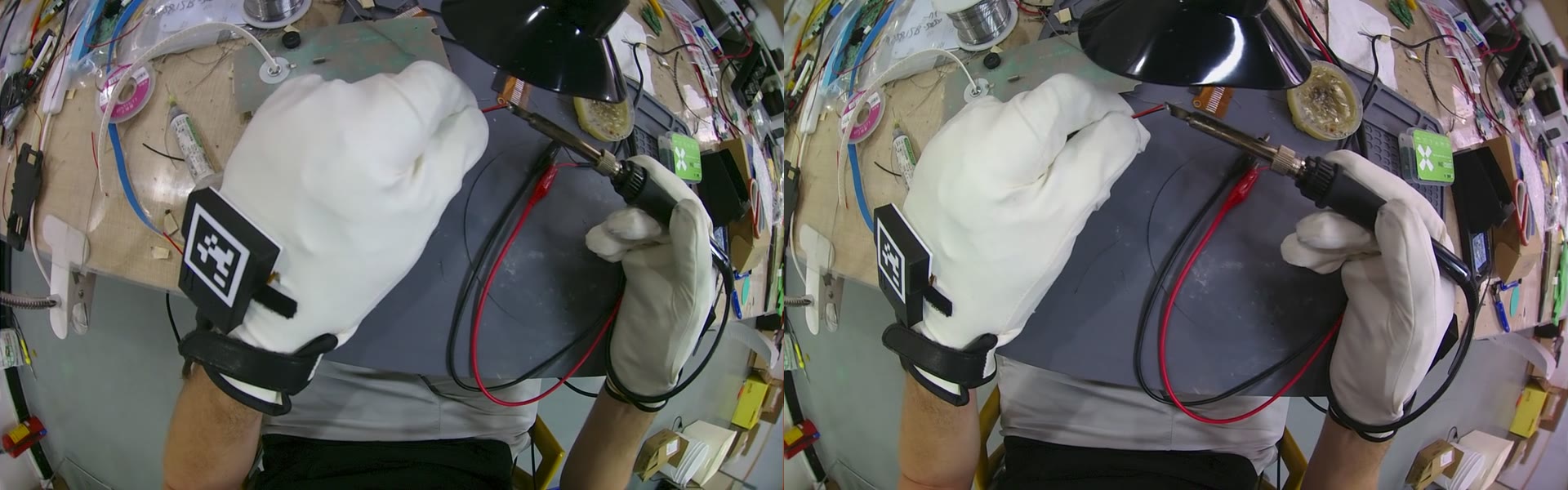
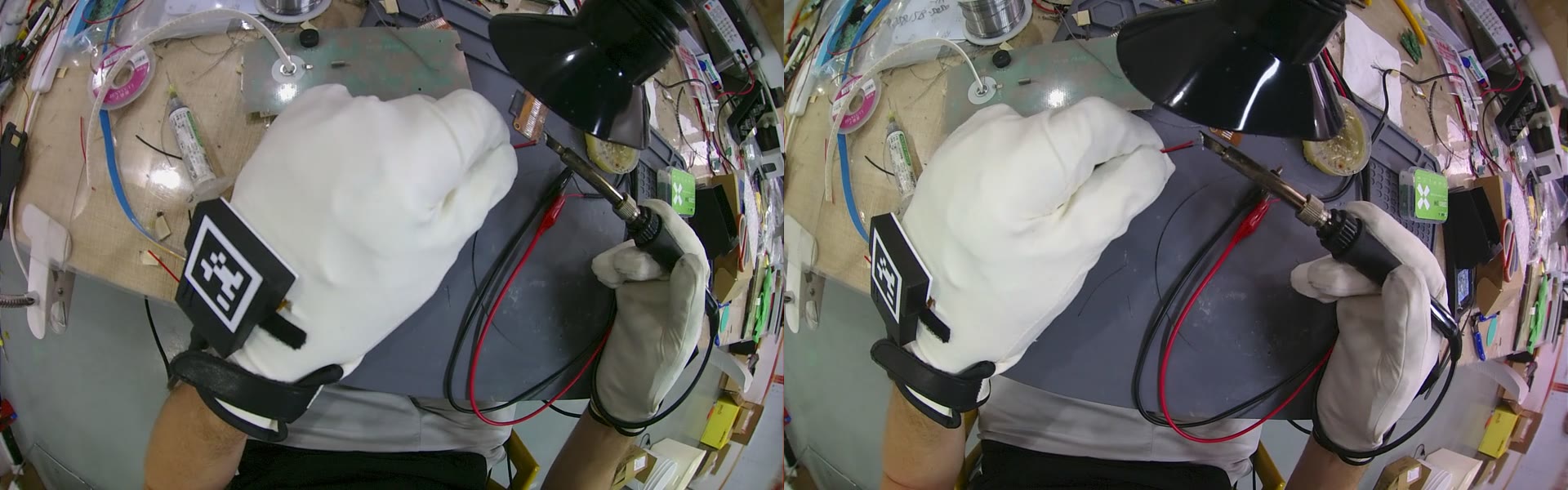
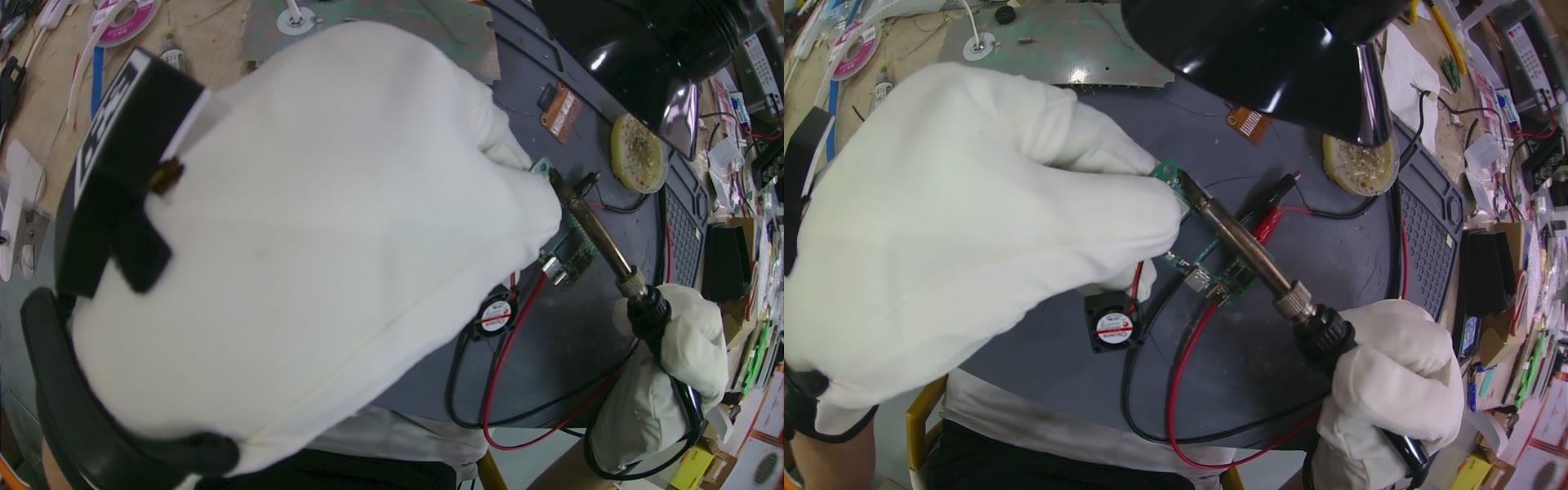
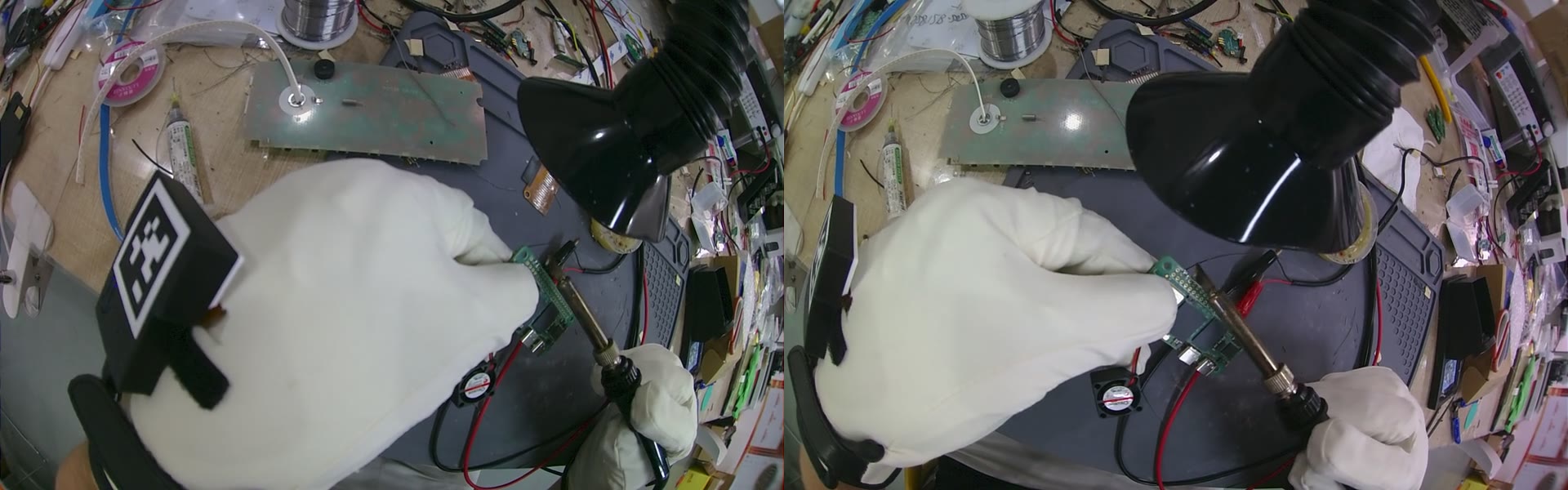
| 102.50–123.00 | Apply iron near board | Left holds board; iron tip is held at its edge/connection area for an extended interval. |
| 123.00–133.55 | Return iron, adjust assembly and place on mat | Right returns tool; both hands adjust the small assembly and set it down. |
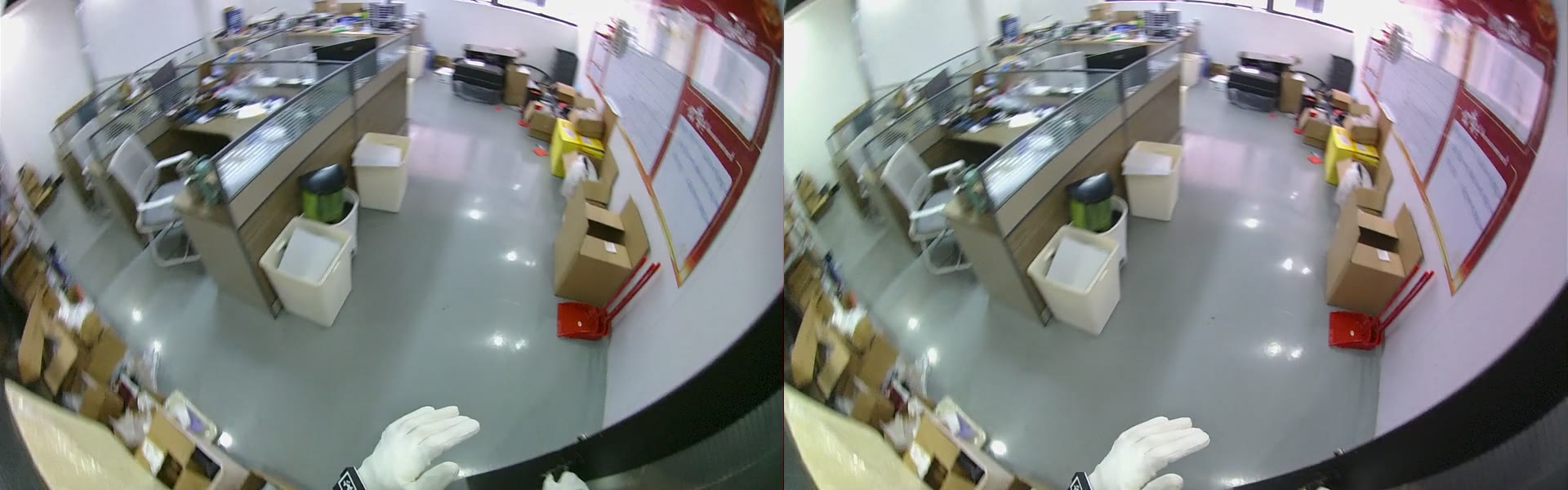
View moves around the dark partition toward a door edge.
Low visibility limits hand-interaction interpretation.
Start estimate range: [0, 1]s. End estimate range: [5.5, 7.5]s.
Right hand reaches to a vertical panel as the doorway opens into the lit room.
Start estimate range: [5.5, 7.5]s. End estimate range: [8, 10]s.
Workbench and chair grow larger as the wearer approaches.
Start estimate range: [8, 10]s. End estimate range: [13.5, 15.5]s.
Right hand reaches to chair back and the chair shifts.
Start estimate range: [13.5, 15.5]s. End estimate range: [16.5, 18.5]s.
Right hand repeatedly touches the black bench equipment/control area.
Power state, setting values and temperature are not readable.
Start estimate range: [16.5, 18.5]s. End estimate range: [22.5, 24.5]s.
View lowers toward lap and work mat; hands return to the near workspace.
Start estimate range: [22.5, 24.5]s. End estimate range: [25, 27]s.
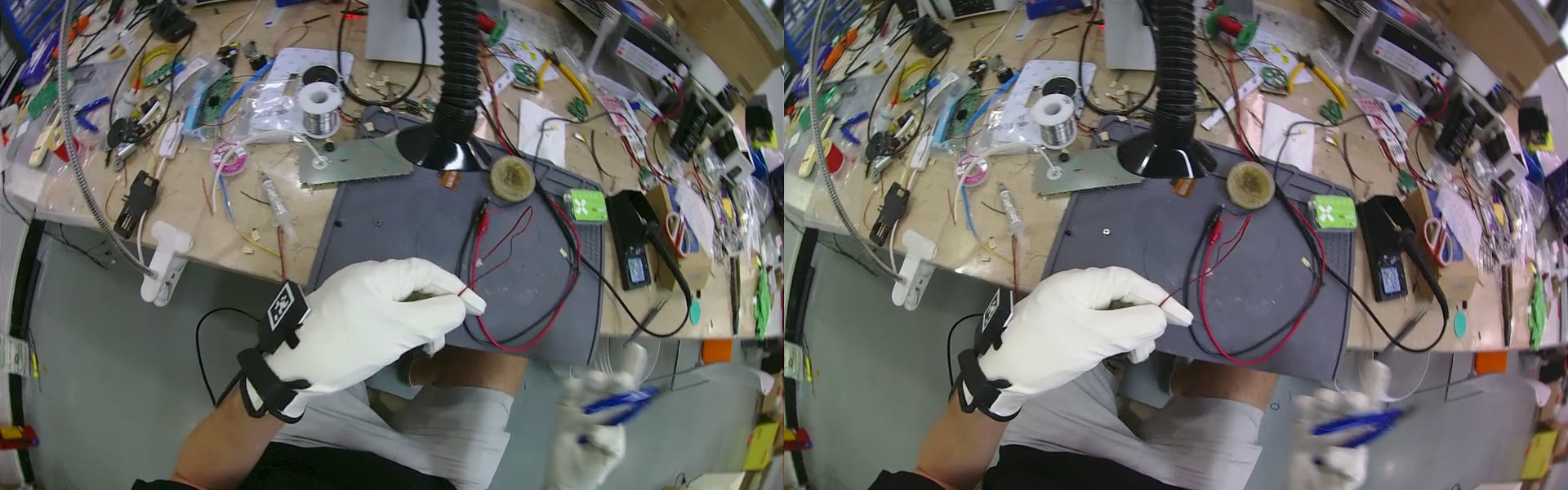
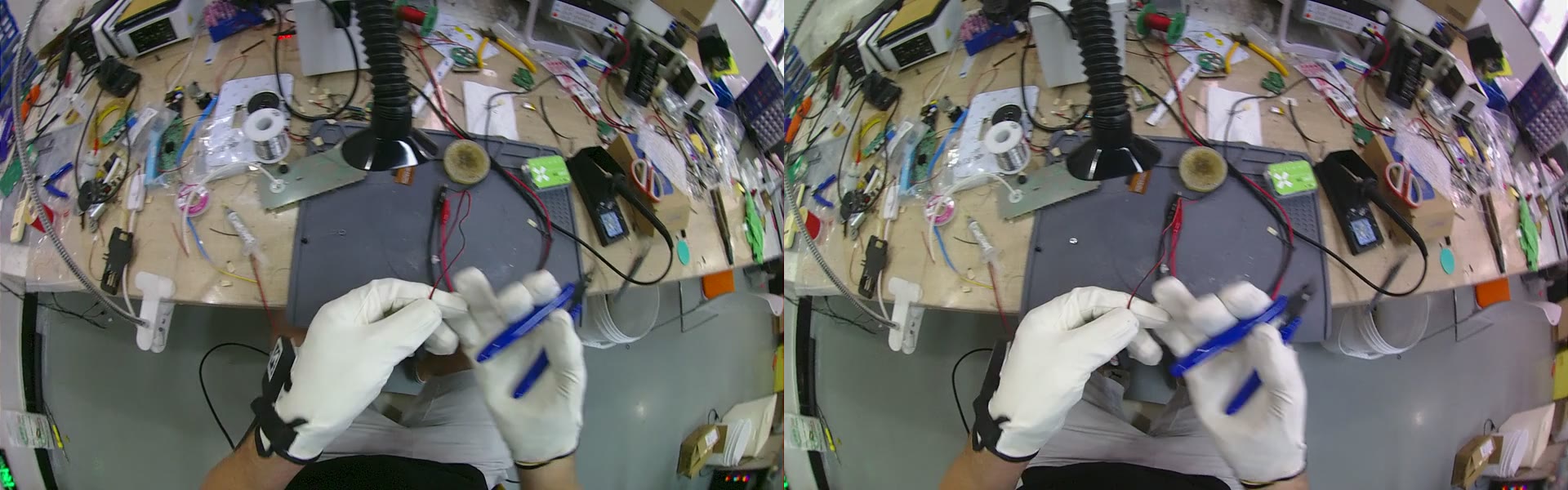
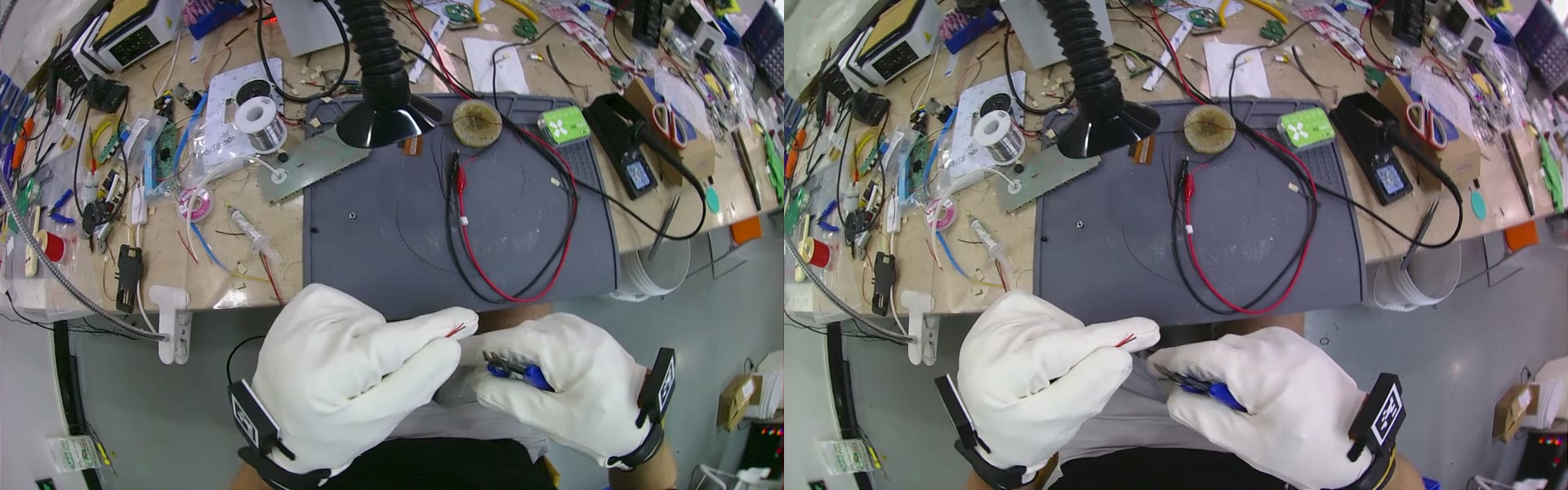
Both hands pinch and adjust a thin object above the mat.
Start estimate range: [25, 27]s. End estimate range: [29.5, 31.5]s.
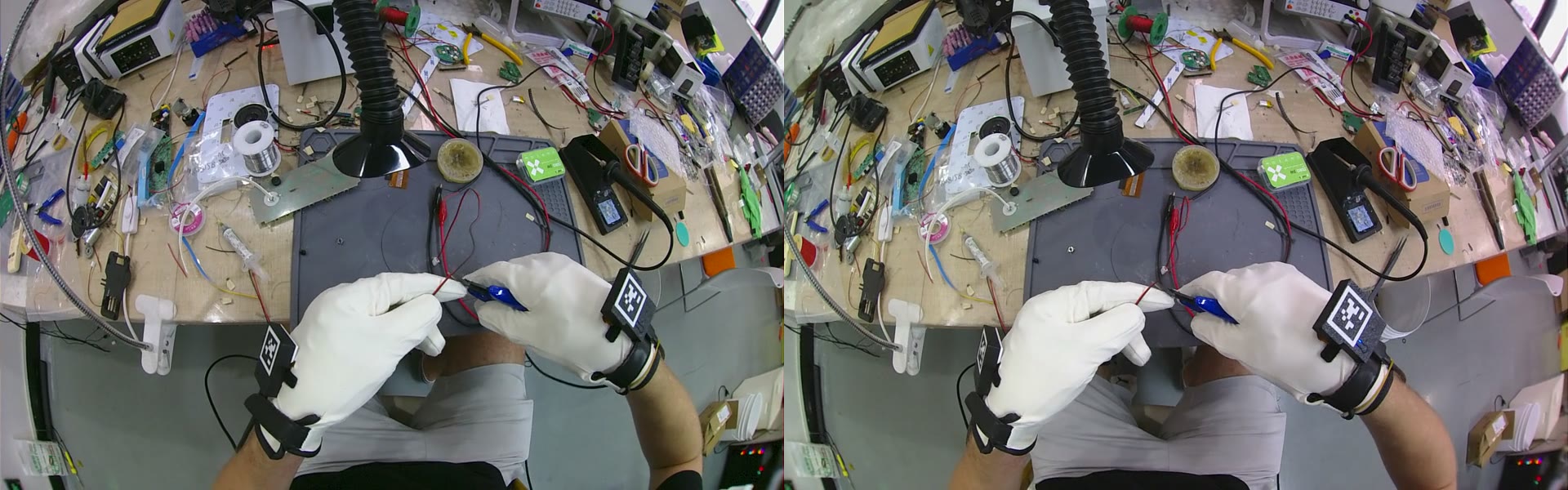
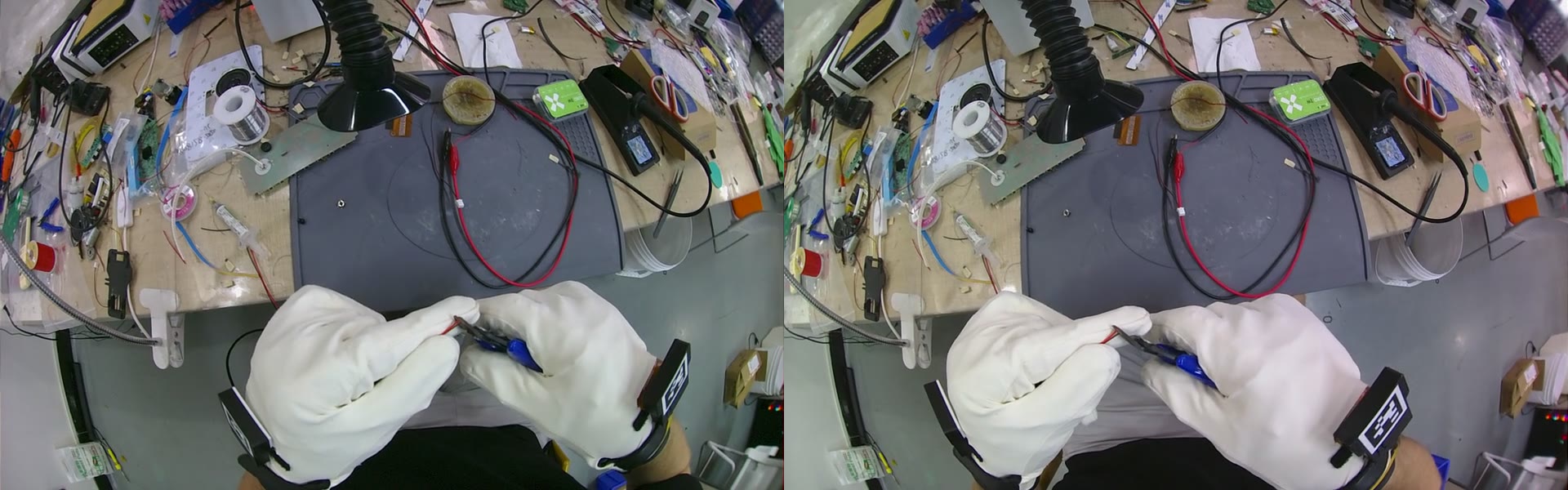
Right hand brings the blue tool into view while left holds the lead.
Start estimate range: [29.5, 31.5]s. End estimate range: [32, 34]s.
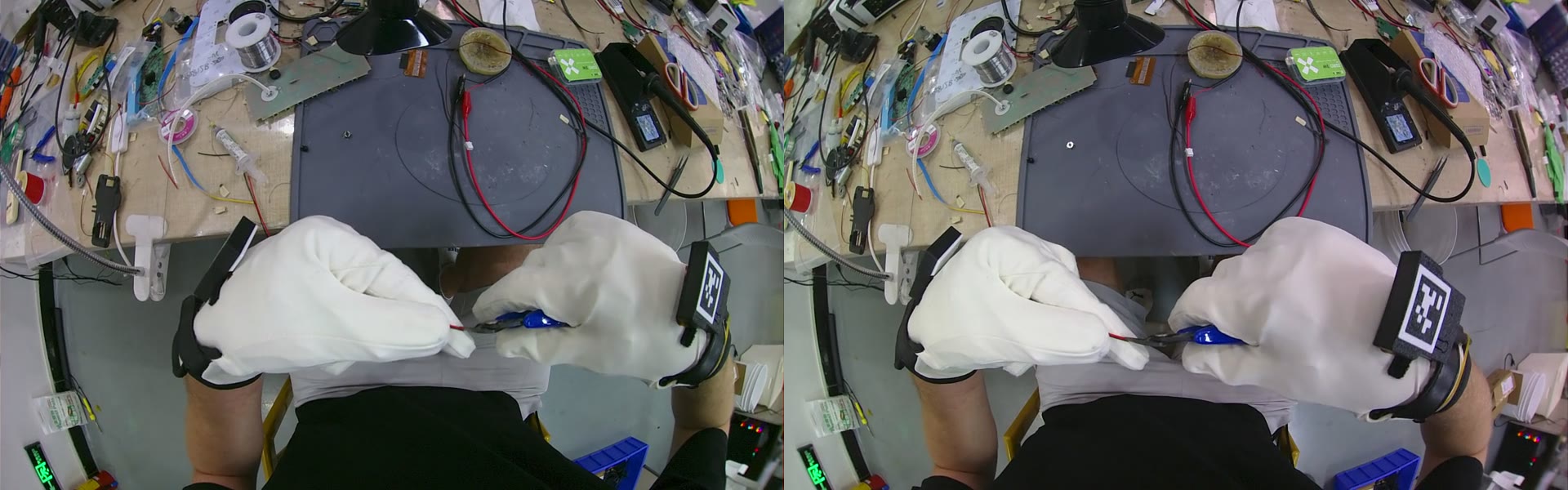
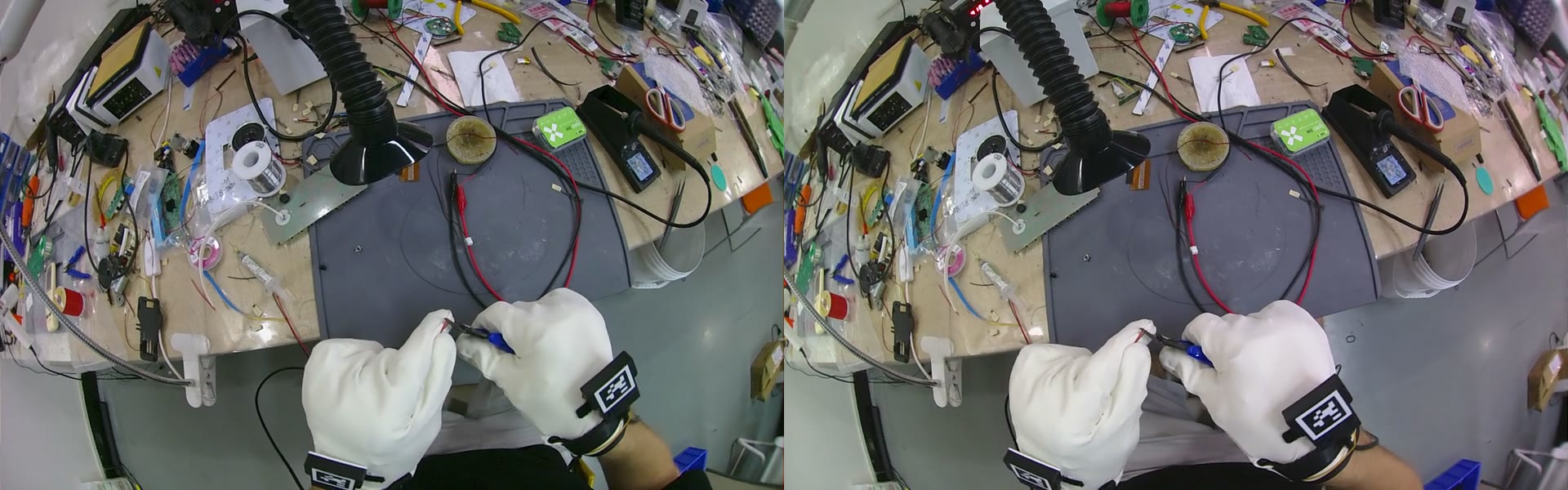
Right-hand tool closes repeatedly near the lead held by the left.
Cannot resolve cutting versus stripping from these sampled views.
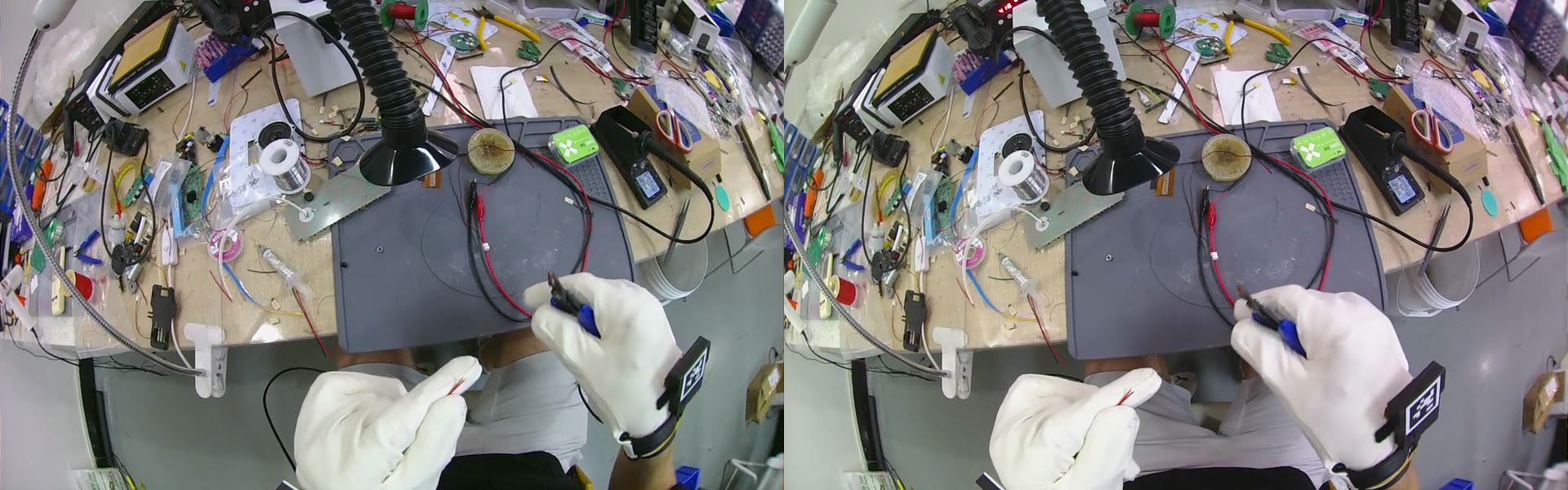
Start estimate range: [32, 34]s. End estimate range: [42, 44]s.
Hands change the lead angle and apply the blue tool again.
Start estimate range: [42, 44]s. End estimate range: [45, 47]s.
Right hand withdraws the tool toward the bench.
Start estimate range: [45, 47]s. End estimate range: [46, 48]s.
Right hand reaches and remains at bench equipment.
Control setting and purpose unknown.
Start estimate range: [46, 48]s. End estimate range: [50, 52]s.
Left retains lead while right reaches between bench locations.
Start estimate range: [50, 52]s. End estimate range: [56.5, 58.5]s.
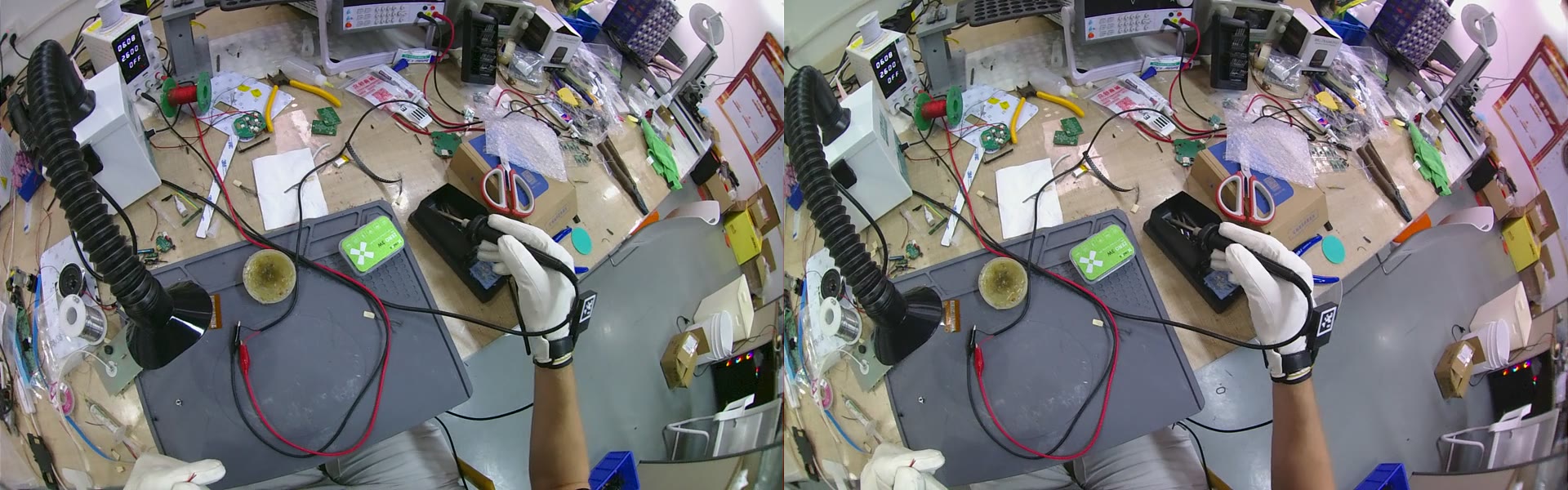
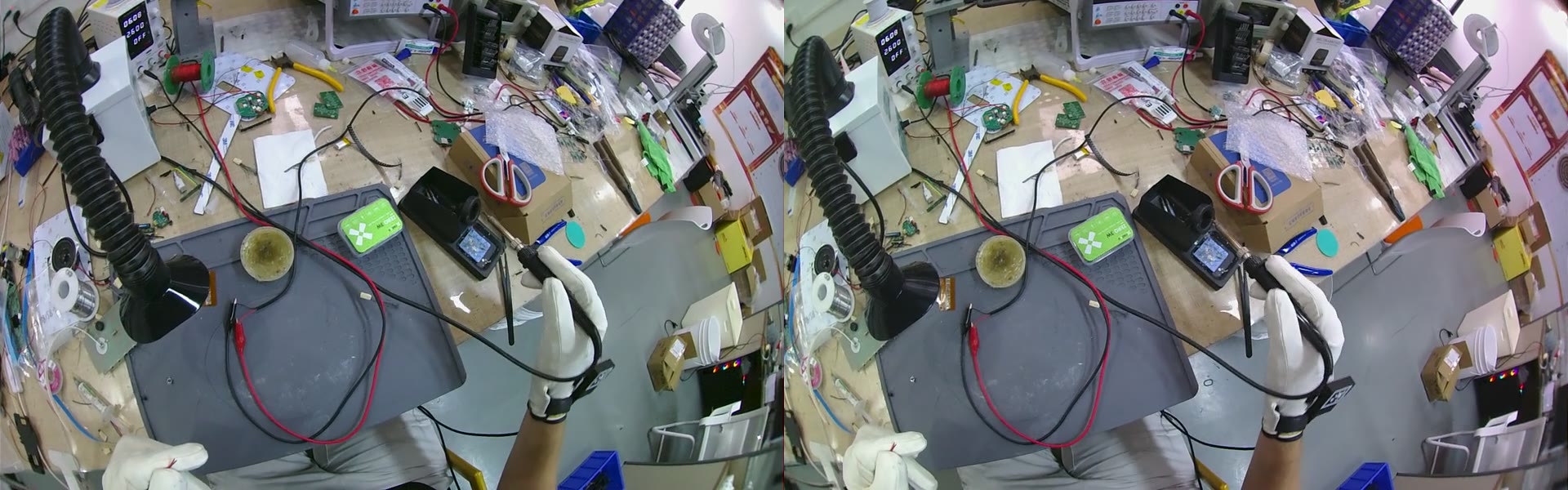
Right hand lifts the corded iron from the right-side stand area.
Start estimate range: [56.5, 58.5]s. End estimate range: [58, 60]s.
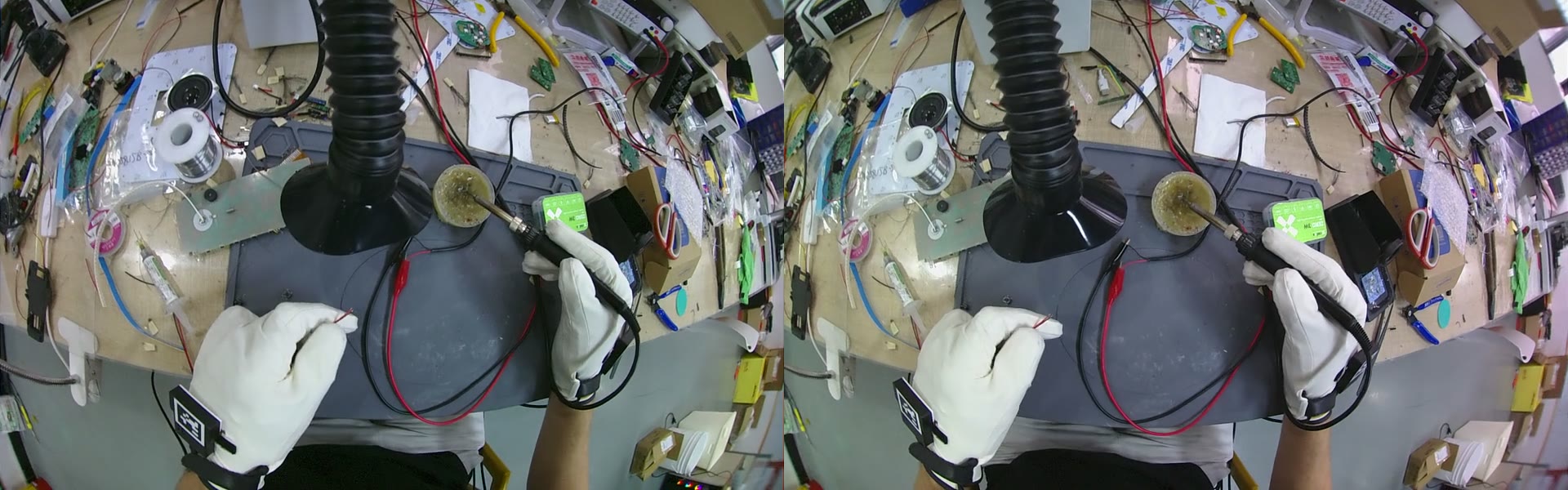
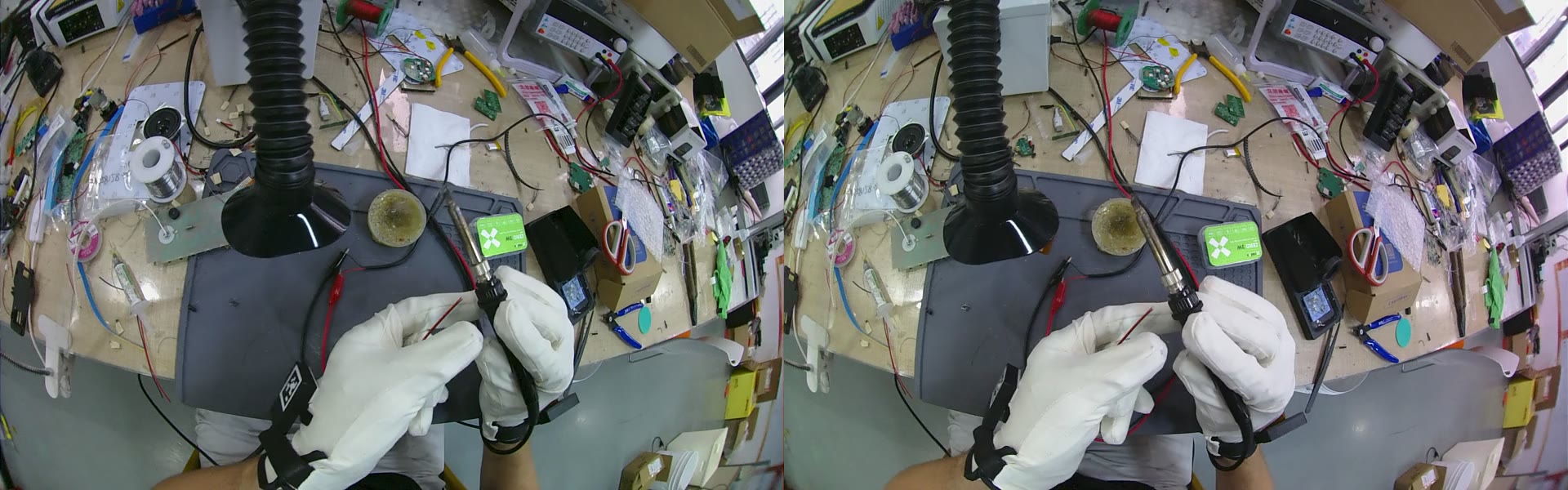
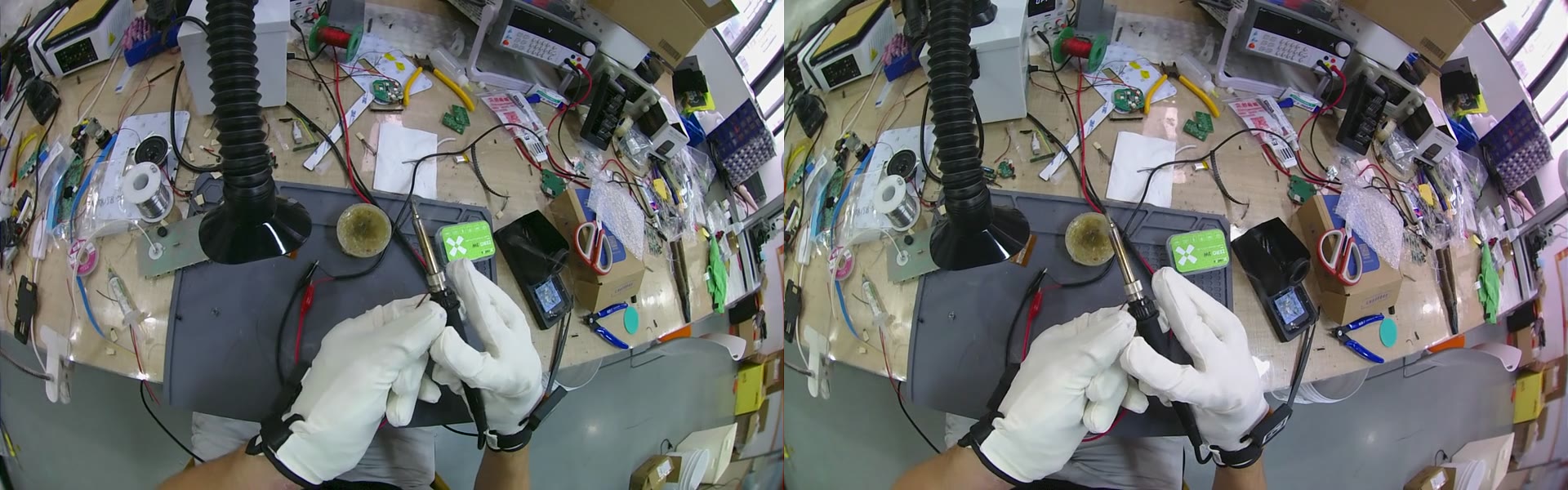
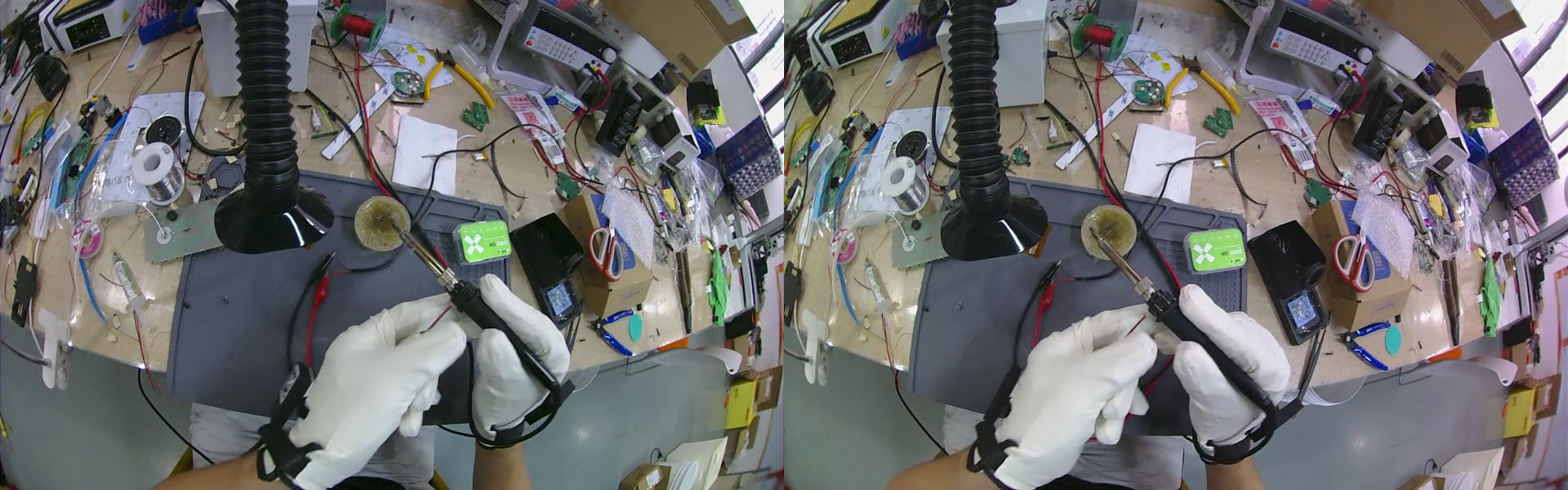
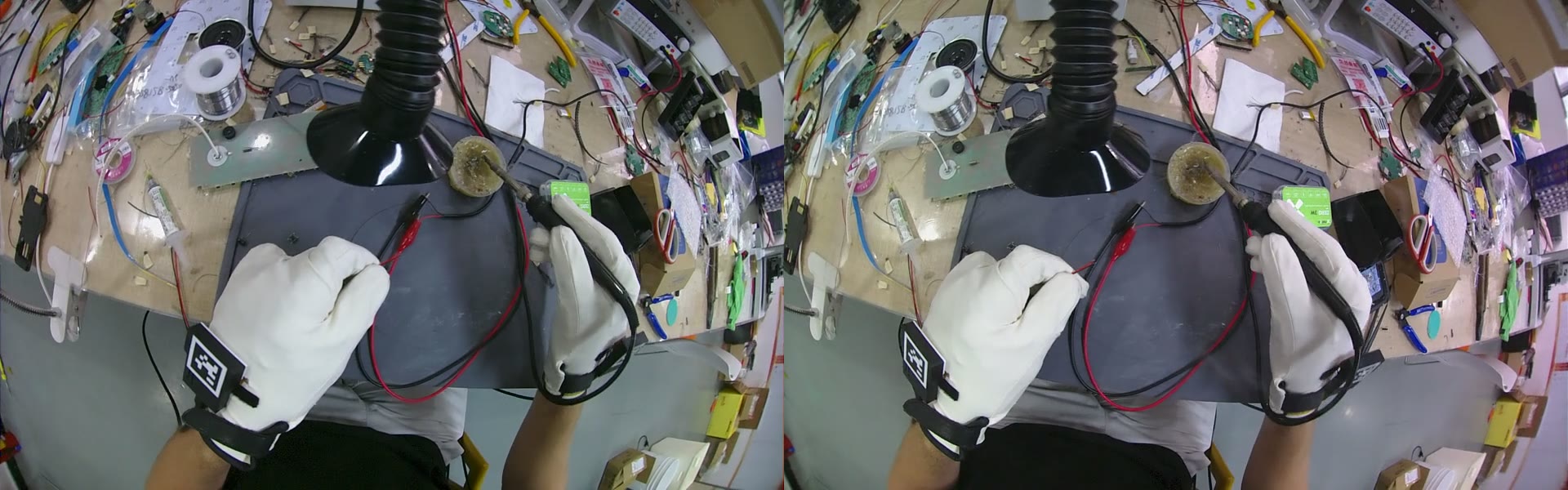
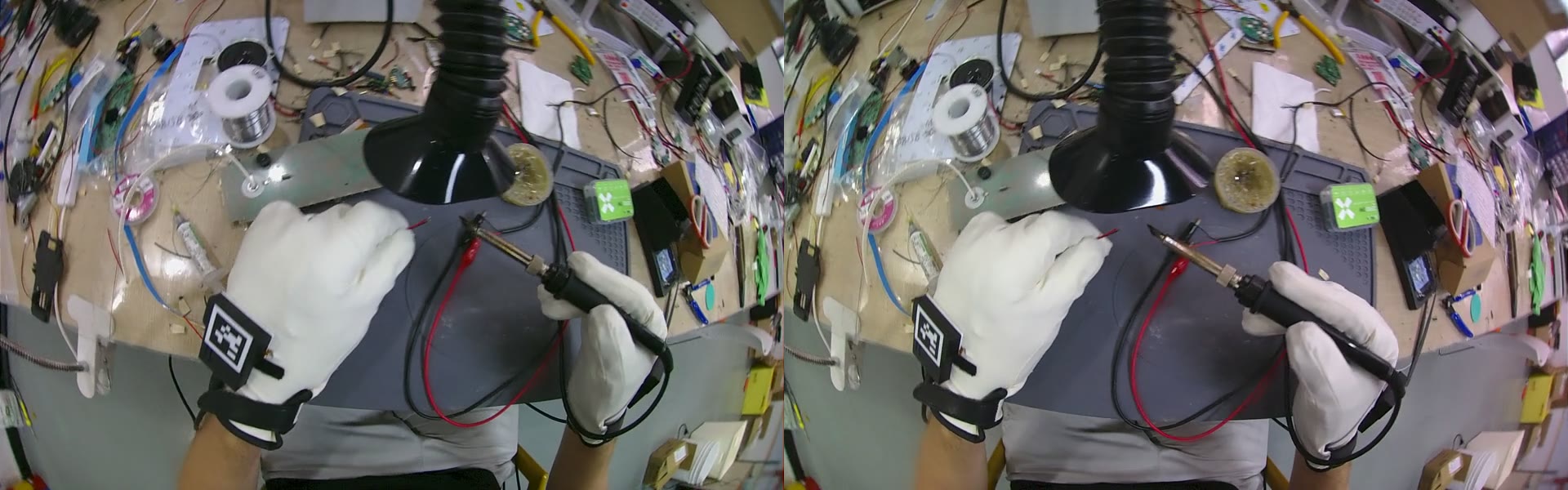
Iron tip moves near the round cleaning cup and then toward left-hand lead.
Tip-cleaning contact not continuously visible.
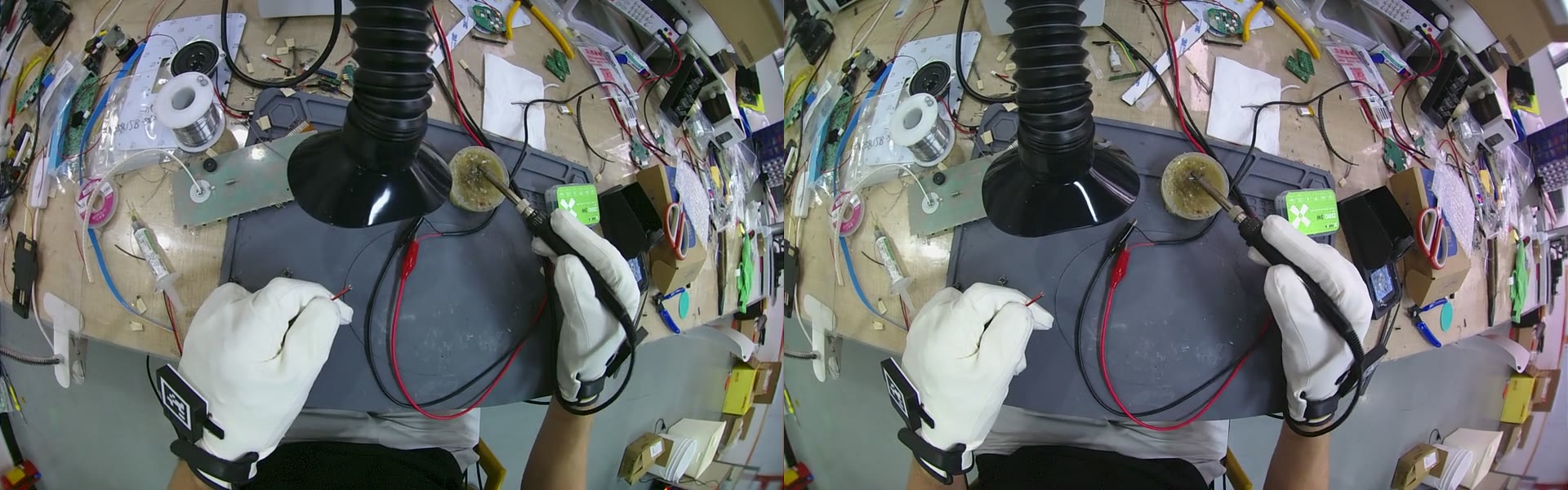
Start estimate range: [58, 60]s. End estimate range: [61.5, 63.5]s.
Hands converge with iron tip near the thin lead.
Apparent heating/tinning; material flow is not resolved.
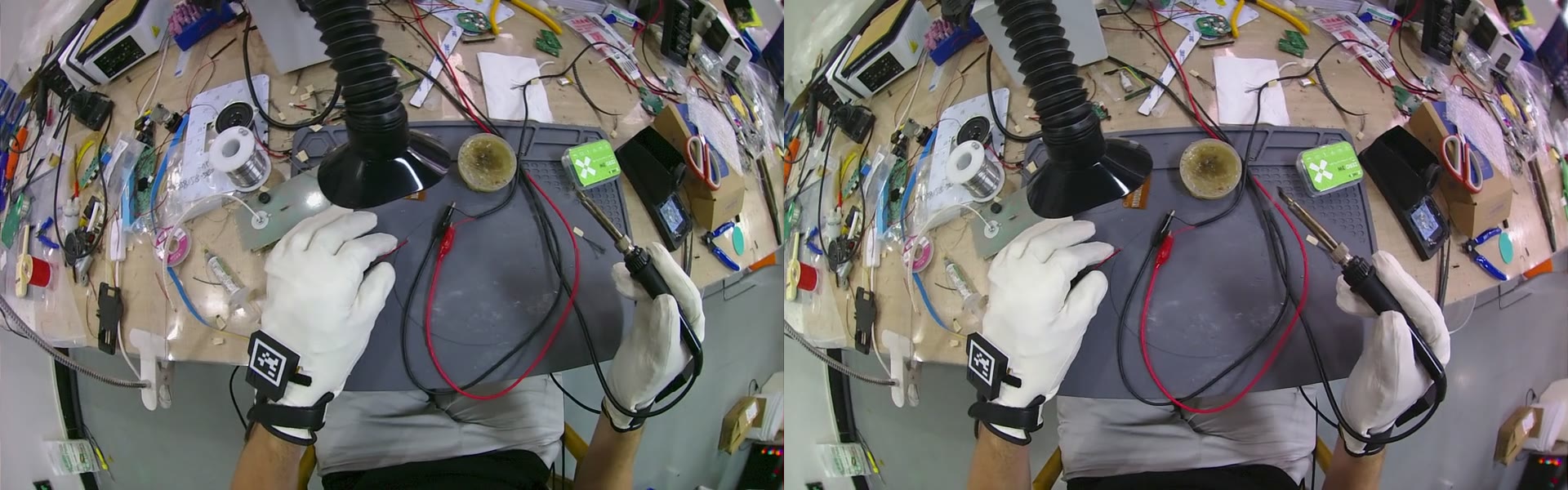
Start estimate range: [61.5, 63.5]s. End estimate range: [64.5, 66.5]s.
Hands separate then re-approach over the mat.
Start estimate range: [64.5, 66.5]s. End estimate range: [66.5, 68.5]s.
Right-hand tip remains near the left-hand lead during an extended close view.
Lead contact partly hidden; temperature and solder flow unknown.
Start estimate range: [66.5, 68.5]s. End estimate range: [77.5, 79.5]s.
Hands separate; lead moves down toward the mat.
Start estimate range: [77.5, 79.5]s. End estimate range: [79, 81]s.
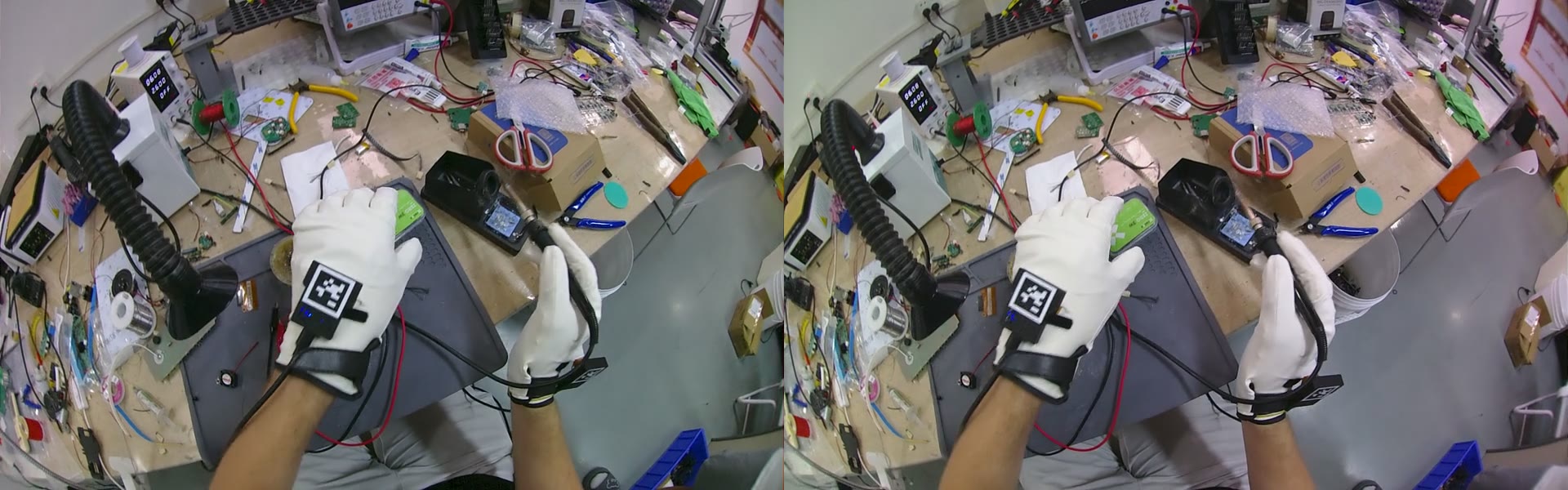
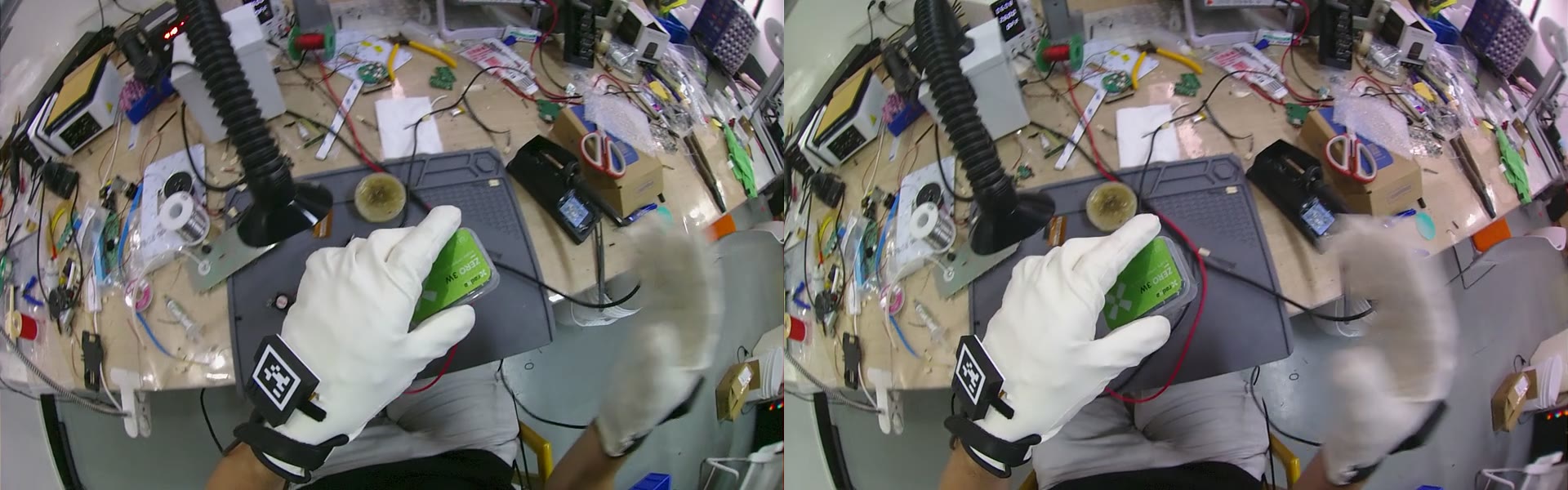
Left hand takes the green item from the right side of the mat.
Start estimate range: [79, 81]s. End estimate range: [83, 85]s.
Both hands turn the green board, exposing different surfaces.
Start estimate range: [83, 85]s. End estimate range: [90, 92]s.
Fingers work a small dark/round piece at the board.
Exact connector or attachment mechanism is occluded.
Start estimate range: [90, 92]s. End estimate range: [95, 97]s.
Both hands continue aligning and pressing at the board edge.
Do not infer a secure or conductive connection.
Start estimate range: [95, 97]s. End estimate range: [101.5, 103.5]s.
Right retrieves iron; left raises the board toward its tip.
Start estimate range: [101.5, 103.5]s. End estimate range: [103.5, 105.5]s.
Right holds iron near board while left supports it in an extended close view.
Glove obscures much of contact area. · Apparent soldering; no joint-quality evidence.
Start estimate range: [103.5, 105.5]s. End estimate range: [121, 123]s.
Left hand keeps board positioned while the right operates the iron.
Concurrent support track, not an additional independent task.
Start estimate range: [103.5, 105.5]s. End estimate range: [121, 123]s.
Iron separates from the board as the view moves back.
Start estimate range: [121, 123]s. End estimate range: [122, 124]s.
Right hand carries iron to right-side holder area while left retains board.
Final seating partly out of view.
Start estimate range: [122, 124]s. End estimate range: [124.5, 126.5]s.
Both hands turn board and press/adjust the small component.
No electrical test is visible.
Start estimate range: [124.5, 126.5]s. End estimate range: [130, 132]s.
Green board rests on dark mat while both hands move clear.
Start estimate range: [130, 132]s. End estimate range: [132.55264, 133.55264]s.
Joint quality, temperature and electrical continuity unknown. · Fine contacts are frequently hidden by gloves. · No evidence that every adjustment is a repair or failure. · Machine settings cannot be reliably read.
Original JSON · CSV · JSON Schema · Findings